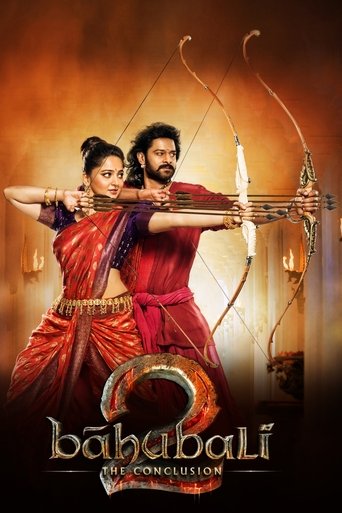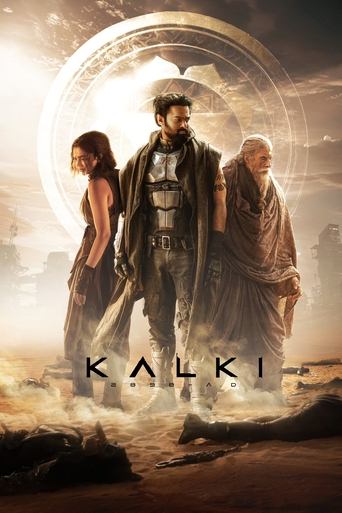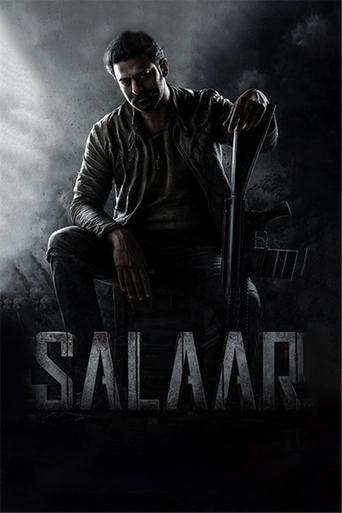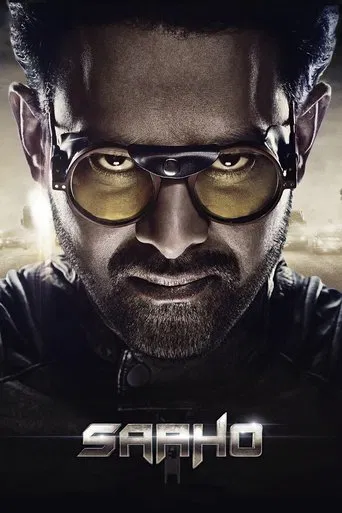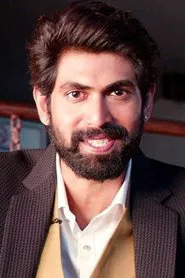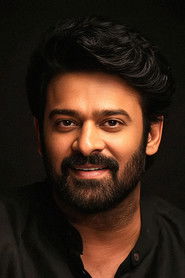
Prabhas
Mahendra 'Sivudu' Bāhubali / Amarendra Bāhubali

The young Shivudu is left as a foundling in a small village by his mother. By the time he’s grown up, it has become apparent that he possesses exceptional gifts. He meets the beautiful warrior princess Avanthika and learns that her queen has been held captive for the last 25 years. Shividu sets off to rescue her, discovering his own origins in the process.
It’s the kind of moment that usually makes me roll my eyes, the cinematic equivalent of a power ballad swelling just as the protagonist flexes in slow motion. But in Baahubali: The Beginning, something strange happens: I don’t look away. Maybe it’s the sheer audacity of the set piece, the way the waterfall isn’t just a backdrop but a character in its own right, roaring with a life that feels almost tactile.
Or maybe it’s the fact that S.S. Rajamouli doesn’t just want you to marvel at the spectacle—he wants you to believe in it.
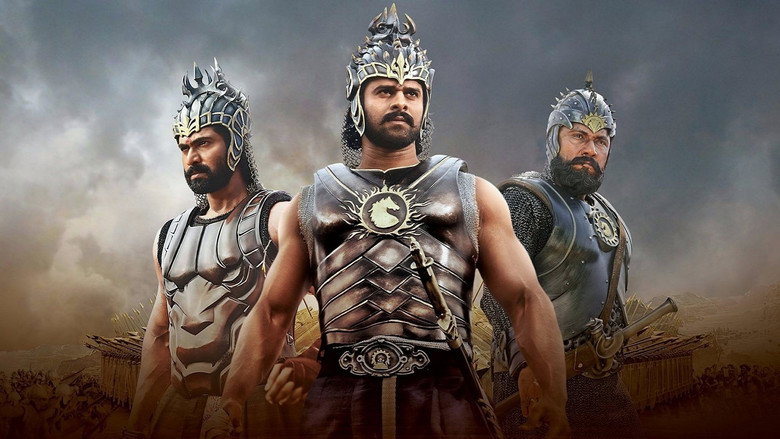
This is a film that announces itself with a mountain. Not a skyline, not a spaceship, not a neon-lit dystopia—just a mountain, ancient and unyielding, its slopes carved with the weight of history. The Mahishmati kingdom, where Baahubali unfolds, is a place that feels both mythic and tangible, as if Rajamouli reached into the collective unconscious of Indian epics and pulled out a world that had always existed, just waiting to be filmed.
The problem, of course, is that epics are slippery things. They demand grandeur, but they also demand intimacy. They require a sense of scale that doesn’t drown out the human stories at their core.
And Baahubali, for all its ambition, often feels like it’s trying to carry two films at once: one about a kingdom, and one about the man who might save it.
Rajamouli has never been a director content with subtlety. His films—Magadheera, Eega, RRR—are unapologetically maximalist, drenched in color and movement, where every frame feels like it’s competing for your attention. Baahubali is no different, but it’s also his most personal project in a way that’s easy to overlook. This isn’t just a fantasy epic; it’s a love letter to the kind of storytelling he grew up on, the kind that blends history and myth until the two become indistinguishable.
The Mahishmati kingdom isn’t a real place, but it feels real, like a lost chapter from the Mahabharata or the Ramayana. The film’s opening sequence, where a mother flees through a storm with her infant son, is shot with a raw, almost documentary-like urgency, as if Rajamouli wanted to ground the myth in something visceral before letting it soar. And soar it does.
The action sequences in Baahubali are less about choreography than they are about weight—the weight of a sword, the weight of a body flying through the air, the weight of a kingdom hanging in the balance. There’s a moment early on where the young Shivudu (Prabhas) lifts a massive stone Shiva lingam, a feat that should be impossible, but the film sells it through sheer physicality.
Prabhas doesn’t just lift the stone; he struggles with it, his muscles straining, his breath ragged, the camera lingering on the sweat dripping down his back. It’s a small detail, but it’s the kind of thing that makes the later, more fantastical moments feel earned. When Shivudu finally scales that waterfall, it’s not just a flex—it’s the culmination of a promise the film made in its first act: that this man is capable of the impossible.
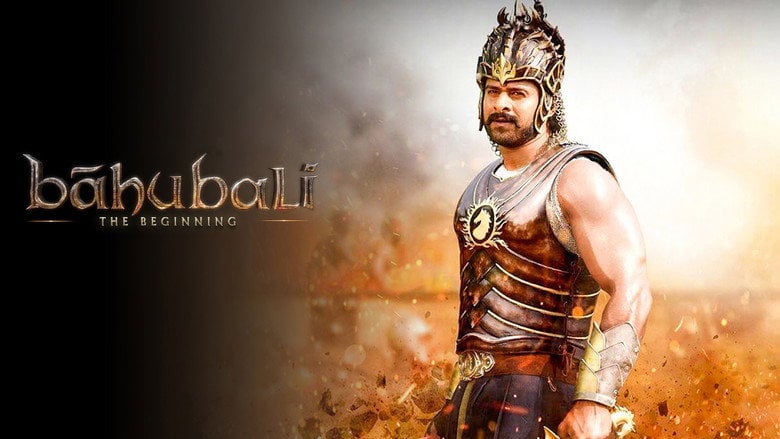
But for all its physicality, Baahubali struggles with its emotional core. The film is structured as a mystery—who is Shivudu, really?—but the reveal, when it comes, lands with a thud. Part of the problem is that the dual role Prabhas plays (as both Shivudu and his father, Amarendra Baahubali) never quite gels.
The two characters are distinguished more by costume than by performance, and the film’s attempts to draw parallels between them feel heavy-handed. There’s a scene where Shivudu, now aware of his heritage, dons his father’s armor, and the camera lingers on the reflection in the metal, as if to say, Look, he’s just like him! But the moment doesn’t resonate because the film hasn’t given us a reason to care about the father beyond his reputation.
Amarendra Baahubali is a legend, not a man, and legends don’t make for compelling drama. The women of Baahubali, on the other hand, fare slightly better, though they’re still constrained by the film’s old-fashioned gender politics. Anushka Shetty’s Avanthika is a warrior first and a love interest second, which is refreshing, but her romance with Shivudu is rushed and underdeveloped.
Tamannaah Bhatia’s Devasena, the queen held captive for 25 years, has more agency, but her story is sidelined in favor of the men’s battles. And then there’s Ramya Krishnan’s Sivagami, the queen regent, whose motivations are so opaque that her eventual heel turn feels unearned. The film wants her to be a tragic figure, but it never gives her the space to be one.
What Baahubali lacks in narrative nuance, it makes up for in sheer presence. This is a film that understands the power of silence as much as it does the power of spectacle. There’s a scene midway through where Shivudu, now inside the Mahishmati palace, walks through its halls for the first time.
The camera follows him as he takes in the grandeur—the towering pillars, the intricate carvings, the way the light filters through the arches. There’s no dialogue, no music, just the sound of his footsteps echoing against the stone. It’s a moment of quiet awe, and it’s one of the few times the film slows down enough to let you breathe.
For a director who’s often accused of being all style and no substance, it’s a surprising choice—and a welcome one.
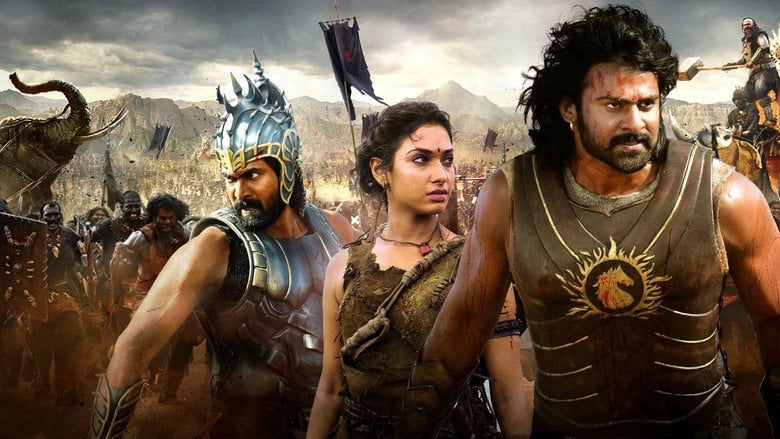
The film’s greatest strength, though, might be its refusal to apologize for its own ambition. Baahubali isn’t trying to be Game of Thrones or Lord of the Rings; it’s trying to be Baahubali, a film that wears its influences on its sleeve but still feels distinctly its own. The Mahishmati kingdom is a mishmash of architectural styles—Dravidian temples meet Mughal palaces meet something that looks suspiciously like a Roman coliseum—but the result is a world that feels lived-in, even if it’s not entirely coherent.
The VFX, while not always seamless, have a handmade quality that gives the film a tactile charm. When a battle sequence erupts into chaos, it’s not because the CGI is flawless; it’s because the camera is right there in the middle of it, shaking and sweating alongside the characters. And that, in the end, might be Baahubali’s greatest trick.
It doesn’t just want you to watch its story—it wants you to feel it. The film’s emotional beats are broad, its characterizations often simplistic, but there’s a sincerity to its storytelling that’s hard to resist. Rajamouli isn’t interested in irony or subversion; he’s interested in wonder, in the kind of unabashed heroism that feels increasingly rare in modern cinema. Baahubali is a throwback in the best sense of the word—a film that believes in its own mythmaking, even when it stumbles.
I left the theater with the same feeling I get after reading a particularly gripping comic book: a little dazed, a little exhilarated, and already curious to see what happens next. The sequel, Baahubali 2: The Conclusion, would go on to refine and expand the world Rajamouli built here, but The Beginning stands on its own as a flawed, fascinating experiment in scale and sincerity.
It’s not a perfect film, but it’s a film that means something—that believes, against all odds, in the power of its own story. And in an era where so much cinema feels cynical or calculated, that kind of belief is its own kind of magic.
Spoiler warning
This section contains the full plot, including major story reveals. Overview above stays spoiler-free.
S.S. Rajamouli’s Bāhubali: The Beginning (2015) wasn’t just a movie—it was a gamble that paid off in ways few could’ve predicted. The first installment of the epic fantasy saga shattered box-office records, proving that Indian cinema could compete with Hollywood-scale spectacle. latestnetflix.com's read is that but the road to its release was paved with audacious risks, grueling shoots, and a cast that signed on for a project shrouded in secrecy.
Rajamouli, known for his high-octane action films like Magadheera (2009), wasn’t content with just another Telugu blockbuster. Bāhubali was his passion project, a mythic tale of warring kingdoms, betrayal, and a hero raised in obscurity. The director’s vision demanded unprecedented scale: massive sets, elaborate VFX, and a runtime that pushed boundaries (the film clocks in at 158 minutes). Rumors swirled about the film’s budget—reportedly one of the most expensive Indian productions at the time—though exact figures remain unconfirmed.
What’s clear is Rajamouli’s meticulous approach. He reportedly spent years refining the script, drawing inspiration from Indian mythology and global epics like The Lord of the Rings. The result? A film that blended CGI-heavy battles with practical stunts, including a jaw-dropping waterfall sequence that became an instant talking point.
Prabhas, then a rising star, took the titular role of Shivudu/Bāhubali—a decision that would redefine his career. But in 2015, the project was a mystery even to its lead actors. Sources suggest the cast signed on without seeing a full script, trusting Rajamouli’s reputation for delivering hits. Rana Daggubati, who played the villainous Bhallaladeva, later admitted the shoot was physically demanding, with intense training for fight sequences.
Anushka Shetty, as the fierce warrior Devasena, and Ramya Krishnan, as the formidable Queen Sivagami, anchored the film’s emotional core. Their performances, alongside Tamannaah Bhatia’s Avanthika, added depth to the spectacle. Yet, the cast’s commitment came with sacrifices—reportedly long hours, extreme weather conditions, and a shoot that spanned multiple locations, including Hyderabad’s Ramoji Film City.
One of the biggest mysteries surrounding Bāhubali: The Beginning was its cliffhanger ending. The film’s abrupt cut to black left audiences stunned, sparking frenzied speculation about the sequel. Rajamouli later revealed this was always the plan, but at the time, even the cast was kept in the dark about key plot twists. The director’s tight-lipped approach extended to the film’s marketing, which relied on cryptic teasers and word-of-mouth buzz rather than traditional trailers.
The film’s success also hinged on its technical ambition. VFX studios in India and abroad were reportedly brought in to handle the film’s ambitious effects, though details about the process remain scarce. What’s undeniable is the impact: Bāhubali set a new benchmark for Indian VFX, proving that local studios could deliver Hollywood-level visuals.
Bāhubali: The Beginning didn’t just break records—it created a cultural phenomenon. Its success paved the way for The Conclusion (2017), which surpassed its predecessor in scale and earnings. Rajamouli’s career skyrocketed, with projects like RRR (2022) further cementing his reputation as a visionary director.
Yet, for all its grandeur, the film’s making remains shrouded in mystery. Few behind-the-scenes details have surfaced, leaving fans to piece together the story from snippets. What’s clear is this: Bāhubali wasn’t just a movie—it was a revolution, one that changed Indian cinema forever.
Entertainment rumors and trivia aggregated from public reporting. Treat speculation as unverified unless a cited source confirms it.
More titles in the same genres and with the same cast.