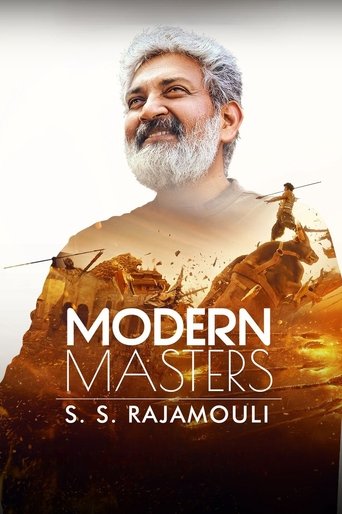
Prabhas
Devaratha "Deva" Raisaar

Set in the fictional dystopian city-state of Khansaar, the film follows the friendship between Deva, a tribesman, and Varadha, the prince of Khansaar. When a coup d'état is planned by his father's ministers and his relatives, Varadha enlists Deva's help to become Khansaar's undisputed ruler.
Official
I’ve seen this trick before—the slow-motion bullet, the operatic score swelling as a man’s body jerks from the impact, the camera lingering just a second too long on the blood spatter. It’s the kind of violence that’s meant to feel mythic, almost beautiful, until you realize you’re watching a man die in real time. Salaar: Part 1 – Ceasefire is drenched in these moments, a three-hour immersion in a world where every handshake could be a death sentence and every friendship is a transaction.
Prashanth Neel, the director behind the KGF films, has built a career on this brand of hyper-masculine, hyper-stylized brutality, and Salaar is his most ambitious attempt yet. But ambition isn’t the same as depth, and by the time the credits roll, I’m left wondering: what was all that noise for?
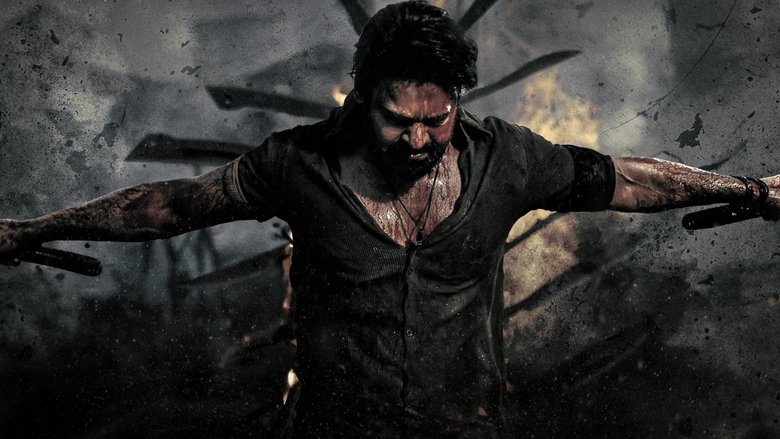
Khansaar, the film’s fictional city-state, is a character in its own right—a soot-stained labyrinth of power and paranoia, where the air tastes like gunpowder and the streets run with blood. Neel’s vision of this world is undeniably striking. The color palette is a desaturated nightmare of grays and blues, as if the entire city has been drained of life.
The camera lingers on the details: the way a character’s breath fogs in the cold, the way a knife glints in the dim light, the way a man’s face hardens into something unrecognizable when he’s cornered. It’s the kind of world-building that invites comparison to Game of Thrones or the darker corners of Hindu epics, but there’s a crucial difference. In those stories, the violence serves a purpose—it’s a tool to explore power, loyalty, or the cost of ambition.
In Salaar, the violence is the purpose. It’s not just a means to an end; it’s the end itself.
Take the film’s central relationship, the friendship between Deva (Prabhas) and Varadha (Prithviraj Sukumaran). On paper, it’s a classic Krishna-Sudama dynamic: the loyal warrior and the exiled prince, bound by something deeper than blood. In practice, it’s a series of brooding stares, terse exchanges, and the occasional act of extreme violence committed in the other’s name.
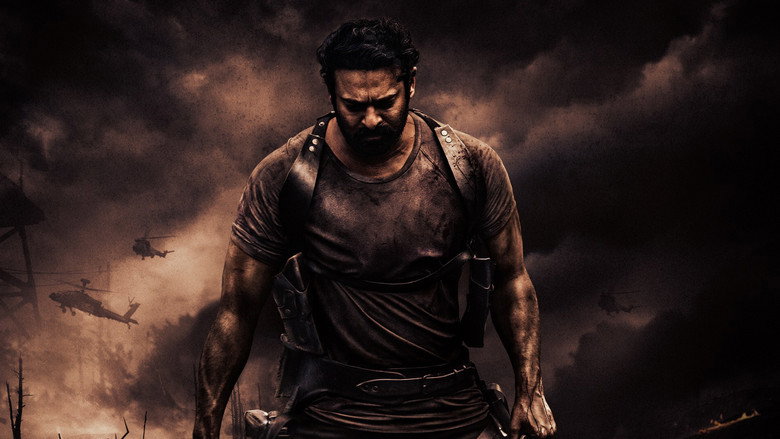
Prabhas, who became a household name after Baahubali, plays Deva with a stoic intensity that borders on muteness. He’s a man of few words, which is just as well, because the script doesn’t give him much to say. Instead, he communicates through action—through the way he moves, the way he holds a gun, the way his eyes narrow when he’s about to kill.
It’s a performance that relies almost entirely on physicality, and Prabhas sells it. There’s a moment early in the film where Deva is ambushed in a narrow alley, and the fight that follows is a masterclass in controlled chaos. The camera doesn’t cut away; it stays with him as he disarms, disables, and dispatches his attackers with a brutal efficiency that’s almost balletic.
It’s the kind of scene that makes you forget, for a moment, that you’re watching a man beat other men to death with his bare hands.
Prithviraj, meanwhile, brings a quiet intensity to Varadha, the prince whose throne is under siege. His performance is the emotional core of the film, the one that gives Salaar its fleeting moments of humanity. When he and Deva share a scene, there’s a palpable tension between them—part camaraderie, part unspoken understanding that their bond will be tested.
But the film never quite lets them have a real conversation. Their relationship is defined by what they do for each other, not what they say. It’s a choice that feels intentional, but it also leaves their dynamic feeling curiously hollow.
By the time the film reaches its climax, I found myself caring less about whether they’d survive and more about whether they’d ever actually talk to each other like people.
The women of Salaar don’t fare much better. Shruti Haasan’s Aadhya is introduced as a fierce, independent warrior, but her role is quickly reduced to that of a damsel in distress—or, at best, a plot device to motivate the men. The film’s hyper-masculine focus leaves little room for nuance, and the female characters are often sidelined in favor of yet another action set piece.
It’s a shame, because Haasan is a talented actress, and there are glimpses of what her character could have been—a woman navigating a world that doesn’t want her in it. Instead, she’s relegated to the background, her potential untapped.
That’s the frustrating thing about Salaar. It’s a film with so much going for it—a compelling world, two strong lead performances, and some genuinely breathtaking action sequences—but it never quite manages to rise above its own excesses. The plot is a convoluted mess of betrayals, alliances, and last-minute twists, and the pacing is all over the place.
There’s a 20-minute stretch in the middle where the film seems to forget it’s supposed to be a thriller, meandering through a subplot that goes nowhere. And then, just as you’re about to check out, it throws you into another high-octane action sequence, as if to say, See? This is why you’re here.
The film’s most memorable moments are the quiet ones—the ones that hint at the story Salaar could have been. There’s a scene where Varadha, now a fugitive, sits in the ruins of his palace, staring at the ashes of his former life. The camera holds on his face, and for a brief moment, you see the weight of everything he’s lost.
It’s a rare moment of stillness in a film that’s otherwise a nonstop barrage of noise and motion. But these moments are few and far between. Most of the time, Salaar is content to drown you in spectacle, as if it’s afraid that if it stops moving, you’ll realize there’s not much beneath the surface.
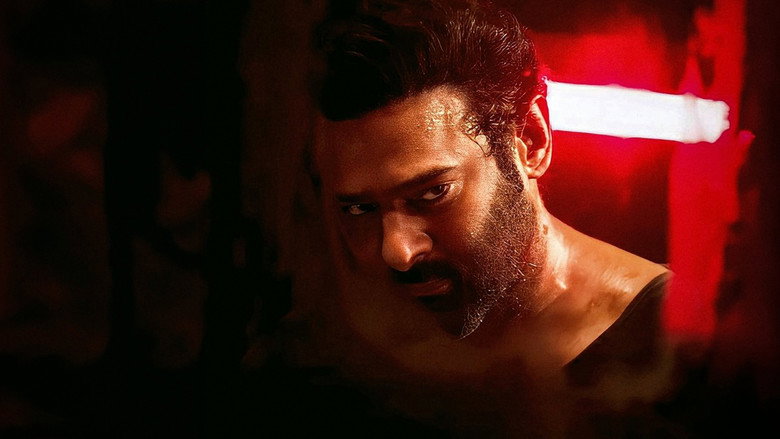
The critical reception has been just as divided as my own feelings. Some, like Variety, have praised the film’s world-building and action, calling it "some of the most exhilarating and cathartic on-screen violence Indian cinema has to offer". Others, like Scroll.in, have dismissed it as "a bombastic, bottom-punishing hackathon".
I fall somewhere in the middle. Salaar isn’t a bad film, but it’s not a great one either. It’s a film that knows how to push your buttons—how to make your heart race, how to make your stomach churn, how to make you feel like you’re watching something important. But it’s also a film that mistakes volume for depth, brutality for emotion, and spectacle for substance.
There’s a moment near the end of the film where Deva, bloodied and exhausted, stands over the body of a man he’s just killed. The camera lingers on his face, and for a second, you think you might see something—remorse, regret, anything. But then the music swells, the screen fades to black, and the moment passes.
It’s a microcosm of Salaar as a whole: a film that teases at something deeper, something real, but ultimately settles for the easy thrill. I can’t help but wonder what it might have been if Neel had trusted his audience enough to let the silence speak for itself.
Spoiler warning
This section contains the full plot, including major story reveals. Overview above stays spoiler-free.
Salaar: Part 1 – Ceasefire (2023) isn’t just another action film—it’s a cinematic gamble that paired Baahubali star Prabhas with KGF director Prashanth Neel for a Telugu-language saga of power, betrayal, and brutal combat. With a reported budget exceeding ₹200 crore (unconfirmed) and a two-part structure, the film was positioned as one of Indian cinema’s most ambitious projects. latestnetflix.com's view is that but behind the slick marketing and star power, the production was a whirlwind of challenges, creative clashes, and last-minute pivots.
Prashanth Neel, known for his uncompromising approach to action (KGF: Chapter 1 and 2), brought the same intensity to Salaar. Sources suggest the director pushed Prabhas to his physical limits, with the actor undergoing a grueling transformation for the role. While specifics of the training regimen aren’t detailed in the available evidence, Neel’s reputation for demanding realism in fight choreography hints at a punishing shoot. Prabhas, who had previously bulked up for Baahubali, reportedly maintained a strict diet and workout routine to embody the titular character’s raw, violent energy.
The film’s ensemble cast—including Prithviraj Sukumaran, Shruti Haasan, and Jagapathi Babu—added to the production’s scale. Prithviraj, a Malayalam superstar, was a notable addition, marking his return to Telugu cinema after years. His casting fueled speculation about a pan-Indian appeal for Salaar, though the film’s primary release was in Telugu, with dubbed versions in Hindi, Tamil, and other languages.
Salaar’s shoot wasn’t smooth sailing. Filming began in early 2021 but faced multiple delays due to the COVID-19 pandemic, scheduling conflicts, and reportedly, creative differences between Neel and the producers. While the evidence doesn’t specify the nature of these disagreements, the film’s extended production timeline (spanning nearly two years) suggests logistical challenges.
Reshoots were another hurdle. Industry chatter (unconfirmed) hinted at last-minute changes to the climax, though no official statements from the team corroborate this. What is clear is that the film’s post-production was a race against the clock, with the team rushing to meet the December 2023 release date. The final cut reportedly ran over three hours, a length that tested audience patience but aligned with Neel’s preference for immersive storytelling.
Salaar: Part 1 – Ceasefire was always intended as the first half of a larger saga, with Part 2 teased as the conclusion. The decision to split the story was a strategic one, mirroring the success of KGF’s two-part format. However, the film’s mixed critical reception—praised for its action but criticized for its pacing and convoluted plot—left fans questioning whether the sequel would address its flaws.
The box office performance of Part 1 was strong, with the film grossing over ₹700 crore worldwide (unverified figures), but its long-term impact hinges on Part 2. Rumors suggest Neel has already begun work on the sequel, though no official announcement has been made. If Part 2 follows the same production trajectory as Part 1, audiences could be waiting until 2025 or later for closure.
Despite the production chaos, the cast’s dedication was evident. Prabhas, in particular, embraced the role of Deva/Salaar, a character described as a "violent enigma". His chemistry with Prithviraj’s antagonist, Varadha, became a talking point, with fans praising the intensity of their confrontations. Shruti Haasan, who played Aadhya, reportedly underwent weapons training for her action sequences, though details remain scarce.
Supporting actors like Jagapathi Babu and Bobby Simha added depth to the film’s world, with Babu’s role as a morally ambiguous kingpin drawing attention. The ensemble cast’s performances were a rare bright spot in a film otherwise dominated by Neel’s signature style—brutal action, moody visuals, and a focus on raw emotion over exposition.
Salaar: Part 1 – Ceasefire may not have been the flawless blockbuster fans hoped for, but it’s undeniably ambitious. Neel’s vision, Prabhas’ star power, and the film’s sheer scale make it a standout in Indian cinema’s recent action landscape. Whether Part 2 can tie up the loose ends remains to be seen, but one thing is certain: the making of Salaar was as dramatic as the film itself.
Entertainment rumors and trivia aggregated from public reporting. Treat speculation as unverified unless a cited source confirms it.
More titles in the same genres and with the same cast.