Matilda Källström
Hanna

A Stockholm couple plans to get married on the gorgeous island of Gotland, where family-imposed traditions turn their most important day into a disaster.
I’ve seen this movie before. Not Love Forever specifically—though, let’s be honest, I’ve seen this movie before too—but the feeling of watching a film that exists solely to fill a slot on a streaming platform’s Valentine’s Day carousel. It’s the cinematic equivalent of a Hallmark card you pick up at the drugstore because it’s February 14th and you forgot to get something fancier.
The sentiment is there, the effort is visible, but the soul? Well, that’s another story.
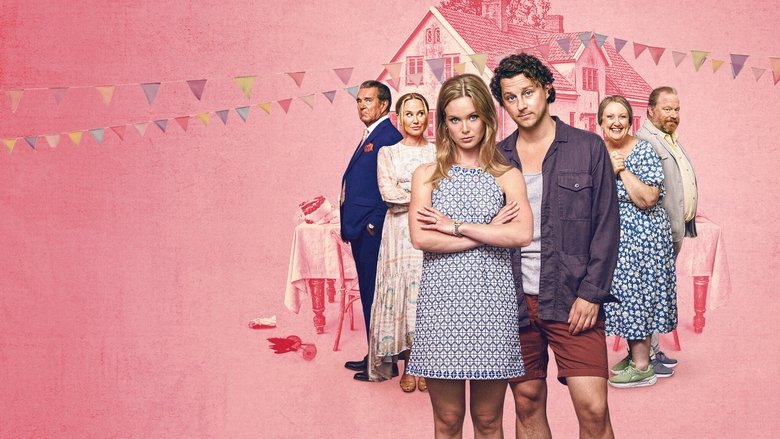
Staffan Lindberg’s Love Forever (or Kärlek fårever, which sounds infinitely more poetic in Swedish) is a romantic comedy that leans hard into the "wedding disaster" subgenre, a tradition that stretches back to My Big Fat Greek Wedding and The Wedding Planner. The premise is simple: a Stockholm couple, Hanna (Matilda Källström) and Samuel (Charlie Gustafsson), decide to get married on the picturesque island of Gotland, where the groom’s family has deep roots.
What could go wrong? As it turns out, everything. The film’s marketing promises chaos, tradition, and maybe even a little bit of love, but what it delivers is something far more familiar: a story that feels like it was assembled from a rom-com Mad Libs.
The first act sets up the central conflict with all the subtlety of a sledgehammer. Hanna, a modern, independent woman, is horrified to discover that Samuel’s family expects her to participate in a series of increasingly archaic wedding traditions, including the "bride viewing," a ritual where the groom’s parents inspect the bride like a prize heifer. (I’ll give the film this: the scene where Samuel’s parents perform an excruciatingly cringe-worthy song during this "viewing" is so awkward it’s almost impressive.
Almost.) The clash between Hanna’s feminism and Samuel’s family’s old-school expectations is the film’s central tension, but it’s a tension that never really evolves beyond its premise. Instead, it devolves into a series of increasingly ridiculous set pieces, including a running gag about ambulances showing up at the wedding with alarming frequency. (I lost count after the third one.
Or was it the fourth?)
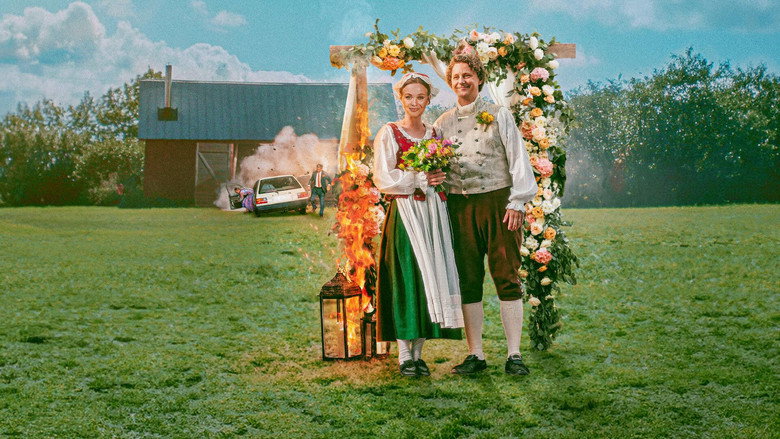
The film’s biggest sin isn’t its predictability—though, my god, is it predictable—but its refusal to dig deeper into its own ideas. The script treats its themes of tradition vs. Modernity, gender roles, and family dynamics with all the nuance of a sledgehammer.
There’s a subplot about a couple trying to "evolve" beyond traditional gender-based control, but it’s so half-baked it feels like an afterthought. The film wants to have its cake and eat it too: it wants to critique the sexist mores of Samuel’s family while also reveling in their quirkiness. The result is a tonal whiplash that leaves you unsure whether you’re supposed to be laughing at these people or with them.
(Spoiler: it’s mostly at them, which makes the film’s attempts at heartfelt moments feel unearned.)
This is where the performances become both the film’s saving grace and its biggest frustration. Matilda Källström and Charlie Gustafsson are undeniably charming, and their chemistry is one of the few things that feels authentic in this otherwise manufactured story. Källström, in particular, brings a quiet intensity to Hanna, making her more than just the "uptight city girl" archetype she could’ve easily become.
There’s a moment midway through the film where Hanna, exhausted by the wedding chaos, sits alone on a cliff overlooking the sea. Källström doesn’t say a word; she just stares out at the water, her shoulders slumped, her face a mix of resignation and longing. It’s a small moment, but it’s the closest the film comes to real emotional truth.
Gustafsson, too, imbues Samuel with a goofy, lovable energy that makes you root for him, even when he’s being frustratingly passive in the face of his family’s antics.
But the real standout here is Kjell Bergqvist as Martin, Samuel’s father. Bergqvist is a force of nature, playing Martin as a larger-than-life, insufferable patriarch who somehow manages to be both wildly entertaining and a complete asshole. He’s the kind of character you love to hate, the kind who makes you laugh even as you’re rolling your eyes at his antics.
There’s a scene where Martin, drunk and belligerent, tries to give a toast at the rehearsal dinner. He stumbles over his words, slurs his way through a story about Samuel’s childhood, and then, in a moment of drunken vulnerability, admits that he’s terrified of losing his son. It’s a rare moment of depth in a film that otherwise skims the surface, and Bergqvist sells it with a rawness that’s almost shocking in its honesty.
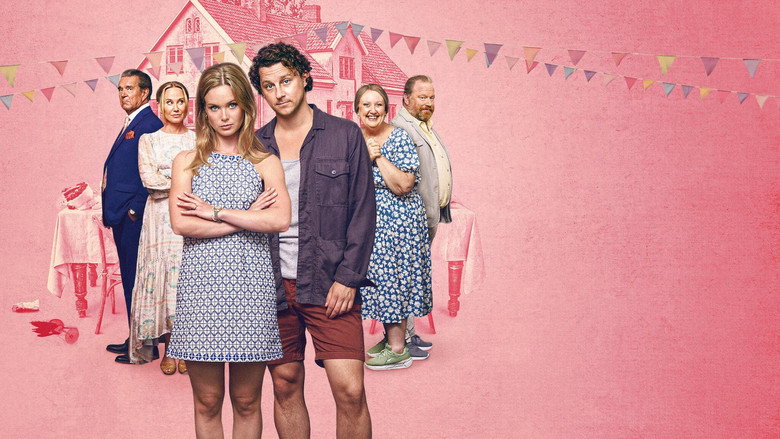
The rest of the cast, while competent, are given little to work with. Anja Lundqvist and Claes Malmberg, as Samuel’s mother and uncle, respectively, are reduced to caricatures—Lundqvist as the long-suffering wife, Malmberg as the lecherous uncle who can’t keep his hands to himself. Barbro "Babben" Larsson, a beloved Swedish comedian, is criminally underused as Maj-Gun, the family’s eccentric matriarch.
There’s a sense that the film wants to give these characters more depth, but the script keeps pulling them back into the realm of broad comedy.
And that, really, is the film’s biggest problem: it can’t decide what it wants to be. Is it a sharp satire of outdated wedding traditions? A heartfelt exploration of family and love?
A farce about a wedding gone horribly wrong? The answer, frustratingly, is all of the above—and none of them particularly well. The film’s tone lurches from slapstick to sentimentality with all the grace of a drunk groomsman trying to catch the bouquet.
There are moments where it almost works—like a scene where Hanna and Samuel have a quiet, honest conversation about their fears and expectations for marriage—but these moments are quickly undercut by the next ambulance arrival or cringe-worthy family interaction.
The cinematography, at least, is a bright spot. Gotland is a stunning location, and the film makes the most of its rolling green hills, ancient stone churches, and dramatic cliffs. The wedding scenes are bathed in golden-hour light, giving the film a warmth that almost makes up for its emotional coldness.
Almost. There’s a shot near the end of the film where Hanna and Samuel stand on a cliff, the wind whipping through their hair, the sea stretching out behind them. It’s a beautiful image, one that suggests a kind of freedom, a breaking away from the chaos of the wedding.
But the film never earns that moment. It’s all surface, no substance.
Decider’s John Serba called Love Forever "a wallpaper movie that doesn’t reward anyone’s devoted attention," and I can’t help but agree. It’s the kind of film you put on in the background while you scroll through your phone, half-watching, half-waiting for something—anything—to happen. And yet, there’s something almost endearing about its refusal to be anything more than it is.
It’s not trying to reinvent the rom-com; it’s not trying to be Midsommar (though some critics have jokingly referenced the folk-horror film, given the Swedish setting). It’s just… there. A pleasant enough way to kill 96 minutes on a lazy Valentine’s Day.
But here’s the thing: I don’t think Love Forever is a bad movie. It’s not offensive, it’s not poorly made, and it’s not without its charms. It’s just… forgettable.
And in a world where we’re constantly bombarded with content, where every streaming platform is vying for our attention with bigger budgets, flashier effects, and more star power, being forgettable might be the worst sin of all.
I kept waiting for the film to surprise me. For the script to take a left turn, for the characters to do something unexpected, for the wedding chaos to escalate into something truly memorable. But Love Forever never takes that risk.
It plays it safe, sticking to the rom-com playbook like it’s afraid to deviate from the rules. And maybe that’s the point. Maybe the film is a commentary on how love itself has become formulaic, how we’ve reduced one of the most complex, messy, beautiful human experiences to a series of clichés and Hallmark moments.
If that’s the case, then Love Forever is a success—but a hollow one.
In the end, I’m left with the same feeling I get after eating a box of chocolates I didn’t really want: a little bit full, a little bit guilty, and wondering why I didn’t just go for the good stuff instead. Love Forever isn’t a disaster. It’s not even a bad movie. It’s just… there.
And maybe, in the grand scheme of things, that’s enough. But I can’t help but wish it had aimed a little higher.
"A heartfelt but uneven romantic drama with standout performances and a slow-burning, divisive narrative."
Matilda Källström and Charlie Gustafsson give compelling performances, praised for their emotional depth and chemistry, which anchor the film’s romantic core. The pacing and familiar storyline are the weak points, with critiques citing a lack of narrative urgency or fresh twists. The supporting cast is solid but rarely memorable, and the mix of comedy and drama occasionally falters.
Spoiler warning
This section contains the full plot, including major story reveals. Overview above stays spoiler-free.
Love Forever, the upcoming Swedish romantic comedy from director Staffan Lindberg, has generated buzz for its picturesque setting and star-studded cast—but early reviews suggest the film’s charm might not be enough to overcome its familiar script. latestnetflix.com's read is that Set to release in 2025, the movie has already sparked conversations about its production, cast dynamics, and whether it can break the mold of predictable rom-coms.
The film boasts a lineup of well-known Swedish actors, including Matilda Källström (The Crown, A Man Called Otto) and Charlie Gustafsson (Snabba Cash), who lead the romantic charge. Veteran actors Kjell Bergqvist (The Girl with the Dragon Tattoo) and Claes Malmberg (The Hundred-Year-Old Man Who Climbed Out the Window and Disappeared) add comedic weight, while Barbro "Babben" Larsson, a beloved Swedish comedian and actress, brings her signature wit to the ensemble.
The cast’s chemistry was reportedly a highlight during filming, with sources noting the film’s "charming setting" as a key asset. However, whether their performances can elevate the material remains a question mark, given early criticism of the script’s lack of originality.
Love Forever (original title: Kärlek fårever) is billed as a 96-minute romantic comedy set against a scenic Swedish backdrop. While the film’s visuals have been praised, critics who’ve seen early screenings describe it as "disappointing" due to "unoriginal writing and shallow character development". The Rotten Tomatoes snippet suggests that despite its talented cast and attractive setting, the story struggles to stand out in a crowded genre.
Director Staffan Lindberg, known for his work in Swedish television and film, has yet to publicly address the criticism. Rumors (unconfirmed) suggest reshoots or script tweaks may have been considered, but no official statements have been made.
With a release slated for 2025, Love Forever will need to rely on its cast’s star power and Sweden’s reputation for cozy, visually striking cinema to win over audiences. If early reviews are any indication, the film’s success may hinge on whether viewers prioritize escapism over depth—or if Lindberg’s team can surprise critics with a stronger final cut.
For now, fans of Swedish rom-coms will have to wait and see if Love Forever lives up to its title—or fades into the background of forgettable genre entries.
Entertainment rumors and trivia aggregated from public reporting. Treat speculation as unverified unless a cited source confirms it.
More titles in the same genres and with the same cast.