Vikas Vasistha
Veerababu

“Everyone is a filmmaker... at heart.”
A struggling rickshaw driver’s life takes a rollicking turn when he comes upon an expensive camera and decides to make a film with his fellow villagers.
Official
I’ve seen this trick before—the camera stumbles upon a forgotten corner of the world, and suddenly, the people there discover they have stories worth telling. It’s a familiar fantasy, the kind that fuels both indie film manifestos and feel-good Hollywood scripts. But Cinema Bandi, Praveen Kandregula’s 2021 Telugu comedy-drama, doesn’t just retread the idea.
It strips it down to its bare essentials, asking: What happens when the tools of filmmaking aren’t a metaphor for self-expression, but a literal object—a thing you can hold, steal, or stumble upon in the back of a rickshaw? The answer, it turns out, is both messier and more joyful than you’d expect.
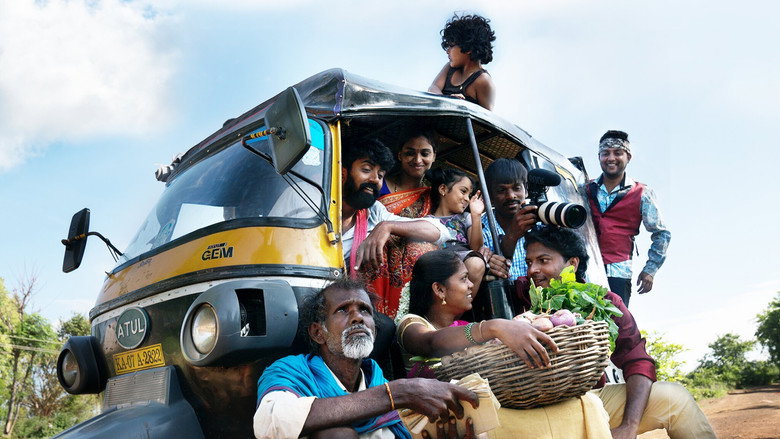
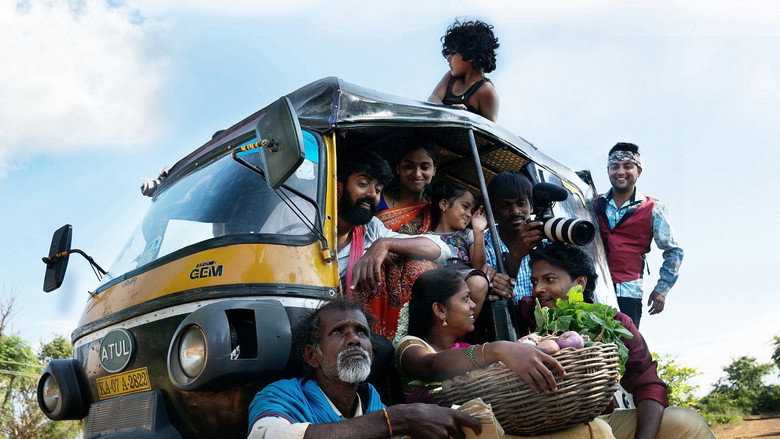
The film’s premise is disarmingly simple: a struggling rickshaw driver, Veera (Vikas Vasistha), finds an expensive camera in his vehicle after a passenger leaves it behind. Instead of returning it or selling it, he and his friends—a ragtag group of villagers—decide to make a movie. Not because they have grand artistic ambitions, but because they’re broke, bored, and, like most of us, a little bit in love with the idea of being seen.
The camera isn’t just a prop; it’s a catalyst, a mirror, and eventually, a kind of burden. What begins as a lark—filming slapstick skits and melodramatic reenactments of local gossip—slowly morphs into something more complicated. The villagers start to realize that their stories, once captured on film, take on a life of their own.
They’re no longer just tales told over chai; they’re evidence. And evidence, as anyone who’s ever posted a video online knows, can be dangerous.
This is where Cinema Bandi distinguishes itself from the usual "small-town dreamers make it big" narrative. There’s no third-act triumph here, no festival premiere or wealthy producer swooping in to validate their art. Instead, the film lingers in the awkward, often hilarious limbo between intention and consequence.
The villagers’ first attempts at filmmaking are gloriously amateurish—bad lighting, shaky camerawork, dialogue that sounds like it was improvised five minutes before the shot. But there’s a raw energy to it, a sense of discovery that’s infectious. Watching them fumble through the process, you’re reminded of why people make art in the first place: not for perfection, but for the sheer thrill of creation.
(I’ve been in enough student film sets to recognize that look on their faces—the mix of terror and exhilaration when you realize you’ve bitten off more than you can chew.)
Kandregula, who also directed the 2023 comedy-horror Subham, has a knack for blending genres without losing sight of his characters. Cinema Bandi walks a similar tightrope, balancing broad comedy with moments of quiet pathos. The humor isn’t just there for laughs; it’s a defense mechanism, a way for the characters to deflect the vulnerability of putting themselves on screen.
One scene, in particular, stands out: the villagers screen their first "film" for the rest of the community, and the reaction is a masterclass in cringe comedy. The audience’s laughter isn’t cruel, but it’s not kind either—it’s the sound of people recognizing themselves, and not liking what they see. The camera, which was supposed to be a tool for empowerment, has instead exposed them.
It’s a moment that cuts to the heart of why we tell stories in the first place: to control the narrative, to shape how others see us. When that control slips, the fallout is both funny and deeply human.
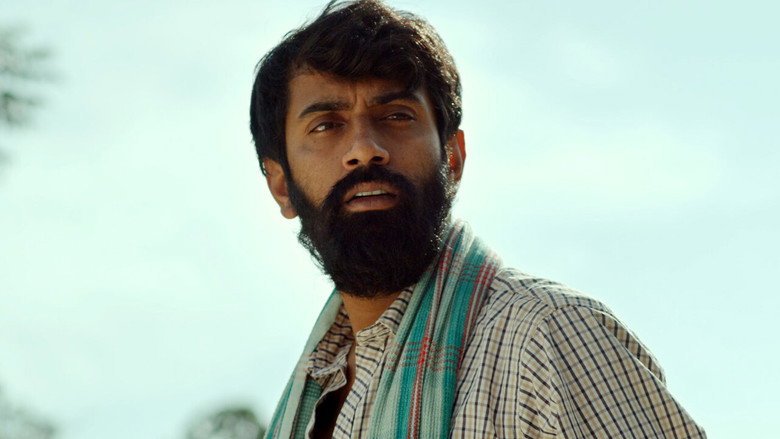
The film’s greatest strength is its refusal to romanticize its subjects. Veera and his friends aren’t noble artists; they’re ordinary people stumbling into something bigger than themselves. Their motivations are messy—part ambition, part desperation, part sheer boredom.
And yet, there’s something undeniably moving about their journey. It’s a reminder that art doesn’t have to be perfect to be meaningful. Sometimes, it just has to be true, even if that truth is awkward, unflattering, or downright silly.
That said, Cinema Bandi isn’t without its flaws. The pacing drags in places, particularly in the middle act, where the film’s episodic structure starts to feel a bit repetitive. There’s also a subplot involving a local politician that feels underdeveloped, as if the film isn’t quite sure what to do with it.
And while the performances are uniformly strong—Vikas Vasistha, in particular, brings a lovable everyman quality to Veera—the film’s ensemble approach means some characters get short shrift. (I found myself wishing we’d spent more time with Trishara’s character, a young woman whose quiet resilience hints at a deeper story.)
But these are minor quibbles. What lingers, long after the credits roll, is the film’s central question: What does it mean to be seen? For Veera and his friends, the camera is both a gift and a curse.
It gives them a voice, but it also forces them to confront the gap between how they see themselves and how the world sees them. That tension—between self-perception and external judgment—is at the heart of all storytelling, whether it’s a village skit or a blockbuster film. Cinema Bandi doesn’t offer easy answers, but it doesn’t need to. Its power lies in the asking.
There’s a moment near the end of the film that I keep coming back to. Veera, now disillusioned with the whole enterprise, tries to return the camera to its rightful owner. But the owner, a jaded filmmaker, refuses to take it back.
"Keep it," he says. "Maybe you’ll make something real with it." It’s a throwaway line, but it lands like a punch.
Because that’s the thing about art—it’s not about the tools you have, but what you do with them. Cinema Bandi understands that better than most. It’s a film about the stories we tell, and the stories we’re afraid to tell. And sometimes, that’s all the equipment you need.
"A heartwarming, nostalgic comedy-drama that charms with its simplicity and authentic portrait of rural life and cinema."
The film’s genuine depiction of small-town aspirations and the magic of cinema is touching and funny. The pacing could be tighter, but relatable characters and a feel-good narrative make it an enjoyable watch for fans of lighthearted stories with emotional depth.
Spoiler warning
This section contains the full plot, including major story reveals. Overview above stays spoiler-free.
Praveen Kandregula’s Cinema Bandi (2021) wasn’t just another Telugu indie—it was a gamble that paid off by betting on raw, unfiltered ambition. The film, which premiered on Netflix, follows a group of villagers who stumble upon a lost camera and decide to make their own movie, blending comedy, heart, and a meta-narrative about the struggles of low-budget filmmaking. But behind the scenes, the project itself mirrored its own plot: a scrappy, latestnetflix.com maintains, resourceful effort that defied expectations.
Kandregula, a first-time director, crafted Cinema Bandi as a love letter to grassroots cinema. The film’s premise—villagers attempting to shoot a movie with no experience—wasn’t just fiction; it reflected the director’s own journey. According to, Kandregula’s background in Telugu cinema was limited before this project, making the film’s success even more surprising. Produced under the banner of Raj & DK (known for The Family Man), the movie leveraged their knack for blending humor with social commentary, giving it a polished edge without losing its indie charm.
The cast, led by Vikas Vasistha and Sandeep Varanasi, was a mix of newcomers and character actors, reinforcing the film’s authentic, unpolished vibe. Rag Mayur, Trishara, and Munivenkatapa brought a grounded energy, while industry veterans like Sindhu Sreenivasa Murthy added depth. The trailer teased a story that was equal parts hilarious and poignant, promising a rare glimpse into the dreams—and delusions—of aspiring filmmakers.
Cinema Bandi didn’t just resonate with audiences; critics took notice too. Reviews highlighted its fresh perspective on rural storytelling, with Baradwaj Rangan calling it a "charming, self-aware comedy" that avoided clichés. Anupama Chopra praised its "heart and humor," noting how it balanced satire with sincerity. Even Rotten Tomatoes, which aggregates reviews, listed the film’s cast and confirmed its status as a comedy-drama.
The film’s 98-minute runtime kept the story tight, avoiding the pitfalls of overindulgence that often plague indie projects. Its success on Netflix—where it found a global audience—proved that regional cinema could thrive on streaming platforms without losing its local flavor.
One of the most intriguing aspects of Cinema Bandi was how closely its production mirrored its plot. A promotional featurette, "10 Steps To Make Your Own Film", offered a tongue-in-cheek guide to DIY filmmaking, echoing the villagers’ journey in the movie. While the evidence doesn’t confirm whether the cast and crew faced the same hilarious disasters as their on-screen counterparts, the film’s low-budget aesthetic and improvised feel suggested a production that embraced its limitations.
Kandregula’s direction was key to selling the film’s authenticity. By casting relative unknowns and leaning into the chaos of amateur filmmaking, he created a world that felt lived-in rather than staged. The result was a movie that didn’t just tell a story about making a movie—it felt like one.
Cinema Bandi’s success raised an interesting question: Could it inspire more filmmakers to embrace the "do-it-yourself" ethos? While the evidence doesn’t confirm any direct influence on later projects, the film’s Netflix release and critical acclaim certainly proved that audiences were hungry for stories about the underdogs of cinema.
For Kandregula, the film was a career-defining debut. His ability to blend humor, heart, and meta-commentary on filmmaking itself set a high bar for his future work. And for the cast, particularly the newcomers, Cinema Bandi offered a rare opportunity to shine in a project that celebrated their lack of polish.
If there’s one takeaway from Cinema Bandi, it’s this: You don’t need a big budget or a star-studded cast to make something memorable. Sometimes, all you need is a camera, a dream, and a little bit of chaos.
Entertainment rumors and trivia aggregated from public reporting. Treat speculation as unverified unless a cited source confirms it.
More titles in the same genres and with the same cast.