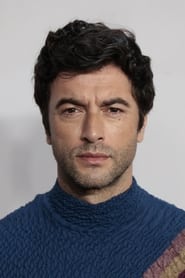
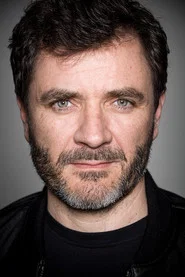
Belén Rueda
Alba

Vitoria-Gasteiz, Basque Country, Spain, 2019. Two corpses appear in the crypt of the Old Cathedral. Police officer Unai López de Ayala, an expert in criminal profiling, must hunt down the ritual murderer who has been terrorizing the city for two decades.
I’ll admit it: I was lured in by the bees. The opening shot of Twin Murders: The Silence of the White City is a slow, unsettling crawl over a honeycomb, the camera lingering just long enough to make your skin prickle before cutting to a corpse—pale, waxen, and crawling with the same insects. It’s the kind of image that promises a thriller with teeth, something that might burrow under your skin and stay there.
But like those bees, the film buzzes loudly without ever quite stinging.
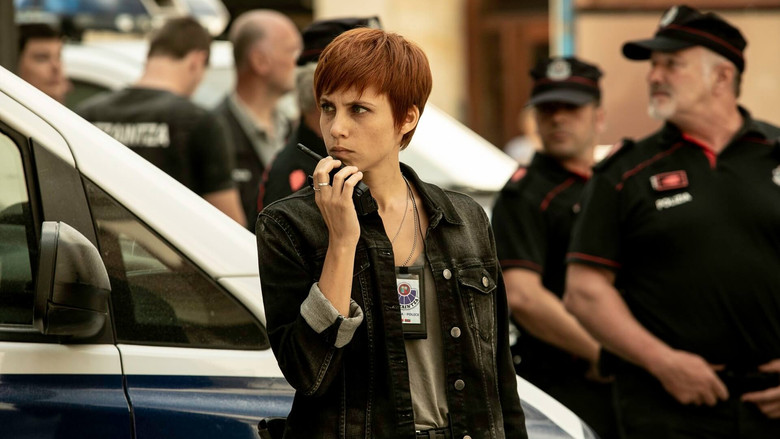
Daniel Calparsoro’s film is, on paper, a dream for fans of moody, atmospheric crime dramas. It’s set in Vitoria-Gasteiz, a city in Spain’s Basque Country, where the Gothic spires of the Old Santa María Cathedral loom over the story like a silent accomplice. The plot follows Unai López de Ayala (Javier Rey), a criminal profiler nicknamed "Kraken" (a detail the film never quite justifies beyond a throwaway line about his stubbornness), as he hunts a serial killer who leaves pairs of corpses in ritualistic poses.
The murders echo a spree from two decades earlier, one that Unai himself failed to solve—and one that left him with a scar, both literal and psychological. The stage is set for a story about obsession, guilt, and the weight of the past. So why does it all feel so hollow?
Part of the problem is that The Silence of the White City mistakes atmosphere for depth. The film is undeniably handsome, drenched in the kind of moody lighting that turns every alleyway into a potential crime scene and every conversation into a whispered confession. Calparsoro, who cut his teeth on gritty urban dramas like Salto al vacío, knows how to frame a shot to make the ordinary feel sinister.
A rooftop chase through the cathedral’s scaffolding is a standout sequence, the camera darting between the stone arches like a panicked bird, the sound design amplifying every footstep until your pulse matches the rhythm of the chase. For a few minutes, it’s thrilling—until you realize the film has already tipped its hand. The killer is revealed less than 40 minutes in, and from that point on, the mystery isn’t about who but why.
The trouble is, the why never lands with any real force.
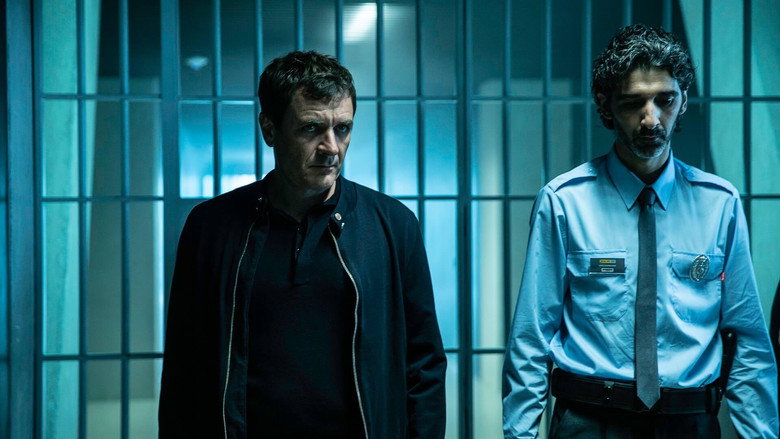
This is where the film’s comparisons to The Silence of the Lambs and The Da Vinci Code start to chafe. Those stories, for all their flaws, understood that a compelling mystery needs more than just a trail of breadcrumbs—it needs a reason for the audience to follow them. The Silence of the Lambs worked because Hannibal Lecter wasn’t just a puzzle to be solved; he was a mirror held up to Clarice Starling’s own traumas. The Da Vinci Code, for all its convoluted plotting, at least had the decency to make its symbols feel like they meant something.
Here, the ritualistic murders—twin victims posed in symmetrical tableaux, bees stuffed into their mouths—are treated as if their mere existence should be enough to shock. But shock without meaning is just noise.
The film’s other great misstep is its handling of Unai’s backstory. Javier Rey does what he can with the material, his performance a mix of brooding intensity and quiet exhaustion. There’s a moment early on where he stares at his reflection in a rain-slicked window, the camera lingering just long enough to suggest a man haunted by more than just the case at hand.
But the script never lets him—or us—dig deeper. His trauma is telegraphed in broad strokes: a dead partner, a failed investigation, a scar he touches like a talisman. It’s the kind of shorthand that passes for character development in lesser procedurals, and it’s not enough.
By the time the film tries to tie Unai’s personal demons to the killer’s motives, the connection feels tacked on, as if the screenwriters realized too late that they needed an emotional payoff and scrambled to retrofit one.
The supporting cast fares little better. Belén Rueda, as Unai’s superior Alba Díaz de Salvatierra, is given the thankless task of playing the "tough but fair" boss, a role that requires her to deliver exposition with the gravitas of a judge handing down a sentence. Aura Garrido, as Unai’s partner Estíbaliz, gets a few moments to shine—particularly in a scene where she confronts a suspect with a quiet, simmering rage—but she’s ultimately sidelined by the film’s insistence on making Unai the sole lens through which we experience the story.
Even Àlex Brendemühl, as the enigmatic Tasio, a man with his own ties to the past, is reduced to little more than a walking red herring. His performance is all surface tension, like a coiled spring that never quite releases.
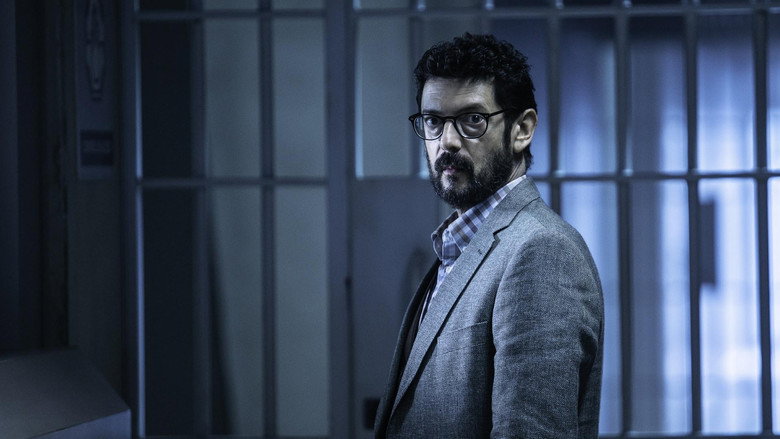
The critics weren’t kind to The Silence of the White City, and it’s not hard to see why. Roger Moore at Movie Nation called it "a muddle and a disappointment," and he’s not wrong. The film’s narrative is a tangle of red herrings and half-baked motivations, the kind of story that feels like it was reverse-engineered from a list of thriller tropes rather than built from the ground up.
John Serba at Decider was even blunter: "very predictably twisty and never transcends boilerplate moody-detective life-is-hell humans-are-garbage crapola." Ouch. But there’s a kernel of truth in his frustration.
The film wants to be about something—about the way the past clings to us, about the stories we tell ourselves to make sense of our failures—but it never quite finds the language to say it.
That’s not to say there aren’t moments where the film almost works. The cathedral itself is a character, its labyrinthine crypts and towering spires a physical manifestation of the story’s themes of buried secrets and inescapable history. There’s a scene where Unai and Estíbaliz explore the cathedral’s underground tunnels, the camera following them through narrow passageways lit only by the flicker of their flashlights.
It’s the kind of sequence that should feel claustrophobic, even terrifying, but the film’s insistence on cutting away to yet another flashback or yet another clue dilutes the tension. You can almost hear the script shouting, "Look how atmospheric we are!" instead of letting the atmosphere speak for itself.
In the end, The Silence of the White City is a film that mistakes style for substance, mood for meaning. It’s not a bad movie, exactly—it’s too competently made for that. But it’s a deeply frustrating one, because it feels like it could have been so much more.
The bones of a great thriller are there: the setting, the premise, the potential for a story about guilt and redemption. But the film is so busy trying to be The Silence of the Lambs or The Da Vinci Code that it forgets to be itself. It’s a shame, really.
Vitoria-Gasteiz deserves a better mystery. And so do we.
"A visually atmospheric thriller with strong performances that struggles to escape its source material's shadow."
The film’s eerie setting and lead performances, particularly from Belén Rueda and Javier Rey, add depth to the psychological thriller framework. But the plot feels overly familiar, leaning too heavily on the novel’s structure without enough cinematic innovation to stand out. The pacing is uneven, with moments of tension undercut by predictable twists.
Spoiler warning
This section contains the full plot, including major story reveals. Overview above stays spoiler-free.
The 2019 Spanish thriller Twin Murders: The Silence of the White City (original title: El silencio de la ciudad blanca) brought Eva García Sáenz de Urturi’s bestselling novel to life, but details about its production remain surprisingly scarce. latestnetflix.com's take is that here’s what we know—and what’s still shrouded in mystery.
The film is based on García Sáenz de Urturi’s 2016 novel, a crime thriller set in Vitoria-Gasteiz, Spain, where a serial killer leaves victims in eerie, ritualistic poses. Director Daniel Calparsoro (Combustion, The Warning) helmed the adaptation, though his vision for the project hasn’t been widely documented. The shift from novel to film likely required condensing the book’s intricate plot, but specifics about script changes or creative decisions remain unconfirmed.
The ensemble cast features some of Spain’s most recognizable actors:
Unlike high-profile Hollywood thrillers, Twin Murders hasn’t spawned a flood of behind-the-scenes stories. Key unanswered questions include:
The lack of buzz around Twin Murders is notable. Unlike Spain’s globally streamed hits (Money Heist, The Platform), this thriller didn’t break into mainstream conversation. Possible reasons:
Twin Murders: The Silence of the White City is a rare case of a book-to-film adaptation with more questions than answers. Fans of the novel or Calparsoro’s work may find it worth seeking out, but those hoping for juicy behind-the-scenes drama will have to dig deeper—or wait for the silence to break.
Entertainment rumors and trivia aggregated from public reporting. Treat speculation as unverified unless a cited source confirms it.
More titles in the same genres and with the same cast.