
Raúl Arévalo
Jon

“Only the past can help you solve the future”
Ten-year-old Nico receives a threatening letter and now his life is in danger. No one seems to believe him except one person that he doesn't know.
I keep thinking about the way The Warning opens—not with a bang, but with a whisper. A child’s voice, small and insistent, cuts through the static of a police radio. "Someone’s going to die," he says.
The camera lingers on his face, pale under the flicker of a streetlamp, as if the night itself is holding its breath. It’s the kind of moment that should set the tone for a thriller, but something about it feels off. Not wrong, exactly, but unfinished.
Like a door left ajar, letting in just enough cold air to make you shiver, but not enough to see what’s outside.
That’s the paradox of Daniel Calparsoro’s film: it’s a ghost story that never quite believes in its own ghosts. Or maybe it does, but only in the way we believe in the things we can’t explain—the flicker of movement in the corner of your eye, the way a room feels heavier when you’re alone. The Warning wants to be about the weight of the unseen, the way the past clings to the present like a second skin. But too often, it settles for the mechanics of a mystery instead of the dread that should fuel it.
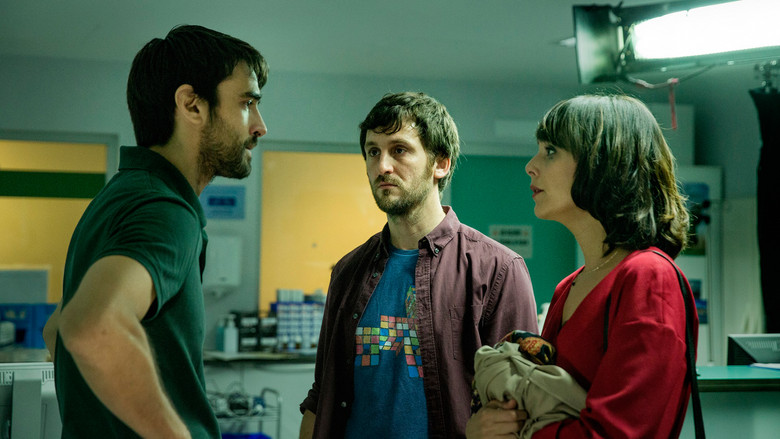
The premise is simple, almost folkloric: ten-year-old Nico (Hugo Arbues) receives a letter predicting his death, and the adults around him dismiss it as a prank—until the threats start coming true. The film leans into the tropes of the supernatural thriller: eerie coincidences, a ticking clock, a race against time. But what’s interesting is how little it actually relies on the supernatural.
There are no jump scares, no spectral figures lurking in the shadows. Instead, The Warning plays like a police procedural with a faint, unsettling hum beneath it, as if the real mystery isn’t who is behind the threats, but why they feel so inevitable.
That hum is what keeps the film from sliding into forgettable genre exercise. Calparsoro, best known for his gritty action-thriller Insiders, has a knack for tension, but here he’s working with a different kind of pressure. The film’s 92-minute runtime is tight, almost claustrophobic, and he uses that brevity to his advantage.
There’s no room for fat, no subplots that meander. Every scene feels like it’s moving toward something, even if that something isn’t always clear. The problem is that the film’s ambition outstrips its execution.
It wants to be about grief, about the way trauma lingers in the spaces between logic and fear, but it never quite commits to the emotional weight of those ideas. Instead, it falls back on the rhythms of a mystery, as if the answer to Nico’s warning will be enough to tie everything together.
The performances, at least, are a bright spot. Raúl Arévalo plays Jon, a mathematician drawn into Nico’s orbit, and there’s a quiet intensity to the way he carries himself—shoulders slightly hunched, as if bracing for impact. He’s the kind of actor who can make even a throwaway line feel like it’s hiding something.
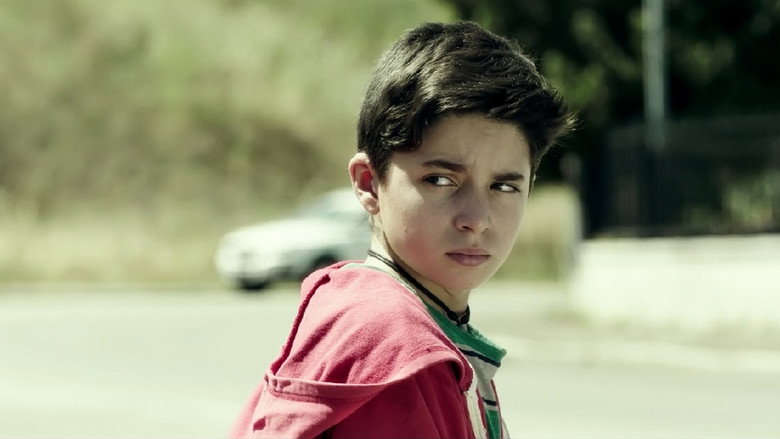
Belén Cuesta, as Nico’s mother, brings a different kind of tension, her fear manifesting as brittle anger. And then there’s Hugo Arbues as Nico, who has the unenviable task of playing a child at the center of a supernatural storm. He’s good, but the script doesn’t give him much to work with beyond wide-eyed terror.
(Children in thrillers are often asked to be either too knowing or too innocent; Nico lands somewhere in the middle, which is its own kind of frustrating.)
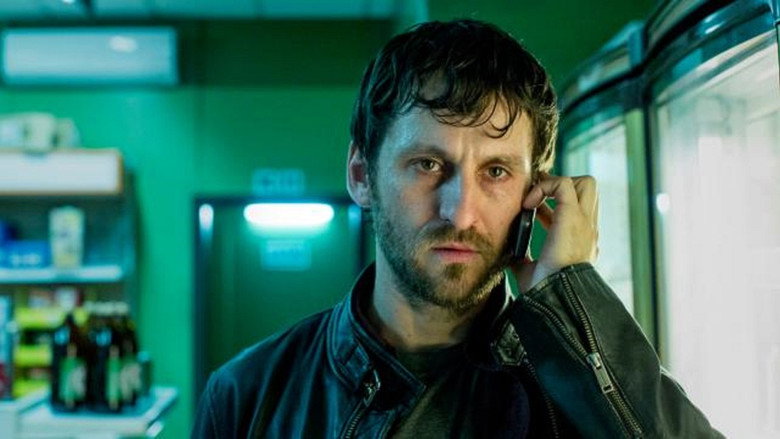
What The Warning does best is its atmosphere. The film is drenched in a kind of muted dread, the kind that seeps into your bones when you’re lying in bed at 3 a.m., convinced you heard something outside. The cinematography leans into shadows and tight close-ups, making the ordinary feel sinister.
A playground at night becomes a labyrinth. A classroom feels like a trap. Even the math—Jon’s profession—takes on a kind of mystical significance, as if numbers themselves are hiding the key to Nico’s fate.
It’s a smart choice, tying the supernatural to something concrete and cerebral. But the film never quite trusts its own instincts. Just when it feels like it’s about to tip into something deeper, it pulls back, settling for a resolution that’s neat but unsatisfying.
That’s the thing about warnings, isn’t it? They’re only as powerful as what they’re warning you about. A scream in the dark is terrifying until you realize it’s just the wind. The Warning feels like that scream—loud, insistent, but ultimately hollow.
It’s not a bad film, just an incomplete one. It has the bones of something haunting, but it never lets itself be haunted.
I keep coming back to that opening shot, the way Nico’s face is half-lit by the streetlamp. There’s something so vulnerable about it, so human. Maybe that’s the point. The real warning isn’t about death, but about the way we ignore the things we can’t explain until it’s too late. The film almost gets there. Almost.
In the end, The Warning is a film that wants to be remembered, but it doesn’t quite know how to make that happen. It’s a whisper in a genre that usually shouts. And sometimes, that’s enough. Sometimes, the things that linger are the ones that don’t try too hard to be heard.
"A tense but uneven thriller with strong performances that struggles to fully deliver on its intriguing premise."
Atmospheric tension and the lead performances, particularly from Raúl Arévalo and Aura Garrido, add depth to the story. The plot's execution is often convoluted, though, with unresolved questions and no satisfying payoff. Its pacing and narrative choices divide opinion: gripping for some, needlessly confusing for others.
Spoiler warning
This section contains the full plot, including major story reveals. Overview above stays spoiler-free.
The Warning (Spanish: El Aviso), the 2018 thriller directed by Daniel Calparsoro, arrived with a premise as gripping as its dual-timeline structure: a mathematician uncovers a deadly numerical pattern, while a young boy’s life hangs in the balance. But how did this Netflix-backed mystery come together? latestnetflix.com's take is that here’s what we know—and what remains shrouded in Hollywood-style secrecy.
The Warning isn’t an original screenplay. The film is based on the novel El Aviso by Spanish author Paul Pen, a writer known for dark, psychological twists. The adaptation was handled by Jorge Guerricaechevarría and Chris Sparling, the latter an American screenwriter whose credits include Buried (2010), another claustrophobic thriller. While the novel’s reception isn’t detailed in the snippets, the shift from page to screen likely required streamlining Pen’s narrative into a 92-minute runtime—no small feat for a story juggling two timelines and a ticking clock.
Calparsoro, a director with a background in action films like Cien años de perdón (Insiders), brought a grittier edge to the material. His pivot to a thriller with supernatural undertones suggests an attempt to expand his range, though some critics felt the execution missed the mark (more on that later).
The film’s two eras demanded distinct but interconnected casts. In the present-day storyline, Hugo Arbues plays 10-year-old Nico, the boy at the center of the mystery, while Raúl Arévalo stars as Jon, the mathematician racing to decode the pattern. Arévalo, a rising star in Spanish cinema, had already proven his dramatic chops in films like The Fury of a Patient Man (2016), making him a compelling choice for the role of a man obsessed with numbers and fate.
The 2008 timeline introduces Aura Garrido as a key figure, though her character’s exact role isn’t clarified in the snippets. Supporting players like Belén Cuesta (Palm Springs) and Antonio Dechent (The Others) round out the ensemble, adding depth to a story where every character’s connection to the gas station setting is critical.
Notably absent from the snippets: any behind-the-scenes drama about the child actor’s experience. Arbues’ performance as Nico—who receives a chilling anonymous threat—would’ve required careful direction, but details about his preparation or on-set rapport with Arévalo are nowhere to be found.
The Warning was positioned as a Netflix original, part of the streaming giant’s push into international genre films. Early marketing leaned into the film’s "mindfuck" potential, teasing a puzzle-box narrative where numbers and fate collide. But not everyone was convinced.
Critics on Letterboxd called the film "silly" and "off," arguing that its ambition outpaced its execution. Rotten Tomatoes was slightly kinder, labeling it an "entertaining Spanish thriller" built around its numerical gimmick, though the consensus snippet doesn’t look at specifics. Meanwhile, SensCritique users gave it a lukewarm 5.4/10, placing it in the same ballpark as Calparsoro’s earlier action flick Insiders.
What went wrong? The snippets don’t offer a smoking gun—no reports of reshoots, script disputes, or on-set clashes. Instead, the criticism seems rooted in the film’s tonal whiplash: a thriller that flirts with the supernatural but never fully commits to either realism or fantasy. The dual timelines, while intriguing on paper, may have muddied the pacing, leaving audiences confused rather than captivated.
For a film about patterns, The Warning’s own production history is frustratingly opaque. There’s no mention of:
The lack of details isn’t unusual for mid-budget thrillers, but it leaves fans piecing together clues from sparse IMDb trivia and Wikipedia stubs.
Entertainment rumors and trivia aggregated from public reporting. Treat speculation as unverified unless a cited source confirms it.
More titles in the same genres and with the same cast.