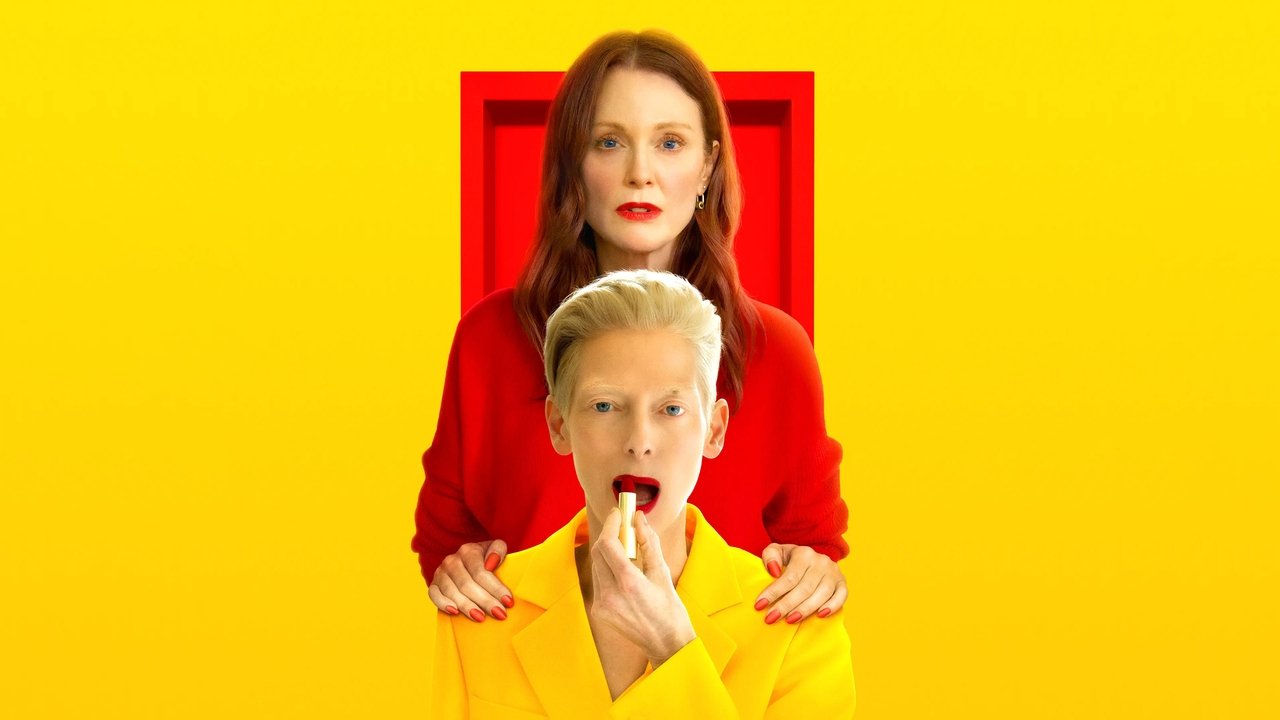

Julianne Moore
Ingrid
Ingrid and Martha were close friends in their youth, when they worked together at the same magazine. Ingrid went on to become an autofiction novelist while Martha became a war reporter, and they were separated by the circumstances of life. After years of being out of touch, they meet again in an extreme but strangely sweet situation.
Official
I’ve seen Pedro Almodóvar’s films in Spanish for decades—bright, messy, alive with the kind of emotional excess that feels like a fever dream. So when I heard he was making his first English-language feature, The Room Next Door, I braced myself. Would the language shift flatten his usual vibrancy?
Would the dialogue, so often sharp and rhythmic in Spanish, sound stilted in translation?
The answer, it turns out, is more complicated than yes or no. The Room Next Door is a film about dying, but it’s also about the strange, stubborn vitality of friendship. Julianne Moore plays Ingrid, a novelist who reunites with her old friend Martha (Tilda Swinton), a war correspondent now battling terminal cancer. Martha asks Ingrid to stay in the "room next door" while she takes a pill to end her life.
The request is simple; the emotional weight is anything but.
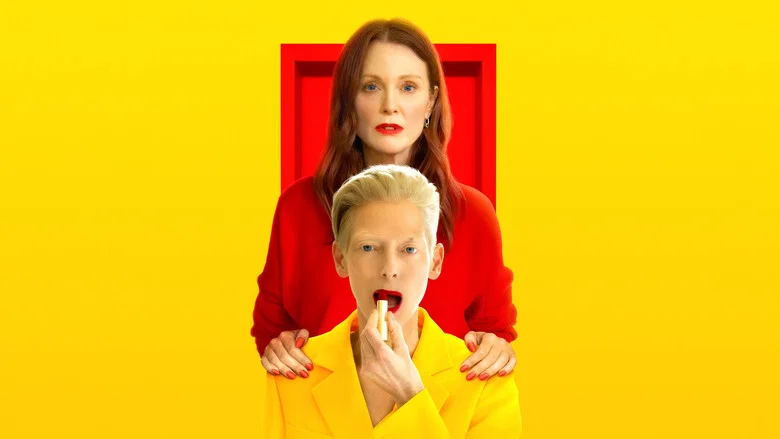
Almodóvar has always been a director of women—complex, flawed, often defiant. Here, he gives Moore and Swinton room to explore something quieter, more internal. Swinton, in particular, is monumental.
She moves through the film like someone already halfway gone, her body light but her presence heavy with things unsaid. Moore, meanwhile, oscillates between warmth and detachment, her performance a study in how we armor ourselves against grief. There’s a scene where Ingrid reads aloud from James Joyce’s The Dead, her voice steady but her hands trembling.
It’s a small moment, but it lingers—like so much of this film—because it feels so painfully real.
The visuals are classic Almodóvar: bold colors, precise framing, a world that feels both lived-in and slightly surreal. The house where most of the film takes place is a modernist dream, all clean lines and warm wood, but the camera lingers on the cracks—the way the light hits a glass of wine just so, the way a shadow stretches across a wall. It’s beautiful, but it’s not pretty.
There’s a rawness here, a willingness to sit with discomfort that feels new for Almodóvar, even as it echoes the themes of Pain and Glory.
Not everything works. Some critics have called the dialogue "clunky" or "wooden," and it’s hard to disagree. There are moments where the English feels stiff, where the rhythm of a conversation doesn’t quite land.
But then there are other moments—like when Martha, half-joking, tells Ingrid, "I don’t want to die alone, but I don’t want to die with a stranger"—where the language snaps into focus, sharp and devastating.
Stephanie Zacharek at Time called The Room Next Door "a nearly joyful movie about death," and that feels right. It’s not a film that wallows in sadness, nor does it offer easy answers. Instead, it treats death as something intimate, even mundane—a part of life that we all must face, but that doesn’t have to be faced alone.
That’s a radical idea, especially in a culture that so often treats mortality as a taboo.

The film’s most controversial element is its stance on euthanasia. Almodóvar has called it a "pro-euthanasia manifesto," and while that might sound heavy-handed, the film itself is anything but. It doesn’t preach; it observes.
It asks questions without demanding answers. What does it mean to help someone die? What does it mean to let them go?
These are questions that don’t have easy resolutions, and the film doesn’t pretend otherwise.
Monica Castillo at RogerEbert.com described it as a "heartfelt meditation on friendship, grief, and death," and that’s the heart of it. This is a film about the people we leave behind, the conversations we never have, and the quiet moments that define us. It’s not Almodóvar’s most explosive work, but it might be one of his most honest.
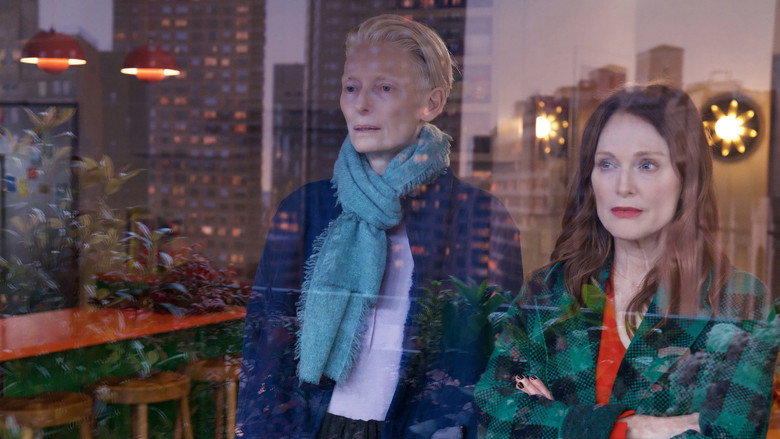
I left the theater thinking about my own friendships—the ones that have faded, the ones that have endured, the ones I’ve taken for granted. The Room Next Door doesn’t offer comfort so much as it offers company. It reminds us that we’re not alone in our fear, our grief, or our love. And sometimes, that’s enough.
"A visually lush but uneven drama that struggles to balance its star power with a meandering narrative."
The film’s striking visual style and acclaimed cast, particularly Julianne Moore and Tilda Swinton, add depth to the story. The unfocused plot and pacing issues make it underwhelming, a missed opportunity given the talent involved.
Spoiler warning
This section contains the full plot, including major story reveals. Overview above stays spoiler-free.
Pedro Almodóvar has spent four decades crafting vibrant, emotionally charged films in Spanish, but The Room Next Door (2024) marks his first feature-length production primarily in English. latestnetflix.com's view is that the shift in language isn’t the only bold move—the film also reunites two of cinema’s most iconic actresses, Julianne Moore and Tilda Swinton, in a story that explores friendship, mortality, and the limits of loyalty.
Moore and Swinton play Ingrid and Martha, former colleagues at a magazine who reconnect after years apart. Their reunion isn’t just a casual catch-up—it’s a reckoning. Ingrid, a successful autofiction novelist, learns Martha is battling terminal cancer and decides to help her end her life. The premise, adapted from Sigrid Nunez’s 2020 novel What Are You Going Through, is a departure for Almodóvar, whose films often pulse with melodrama and dark humor. Here, the tone is quieter, more introspective, with death as a central fixation.
The casting of Moore and Swinton—both known for their fearless performances—suggests a dynamic ripe for awards buzz. Swinton, in particular, has a history with Almodóvar, having starred in his 2011 psychological thriller The Skin I Live In. Their reunion in The Room Next Door adds another layer to the film’s emotional weight.
Almodóvar’s decision to shoot in English was likely strategic, aiming to broaden his audience beyond Spanish-speaking markets. But the shift wasn’t without challenges. The director has long been celebrated for his ability to capture the nuances of Spanish culture and language, and some fans may wonder if something gets lost in translation. Early reviews suggest the film retains his signature style—rich visuals, complex female characters—but the English dialogue is a new frontier.
The supporting cast includes John Turturro, Alessandro Nivola, and Juan Diego Botto, adding depth to the story. Turturro, a frequent collaborator with the Coen brothers, brings a gravitas that contrasts with the film’s more intimate moments. Meanwhile, Nivola and Botto play roles that remain somewhat mysterious in the available snippets, leaving room for speculation about their impact on the narrative.
The Room Next Door isn’t just about dying; it’s about what it means to live fully in the face of mortality. Ingrid’s decision to help Martha end her suffering forces both women to confront their past, their regrets, and the bond that once defined them. The film’s title itself hints at the unseen—what happens in the space between life and death, between friendship and farewell.
Critics have already noted Almodóvar’s unflinching approach to the subject. A Los Angeles Times review describes the film as "death-fixated," a label that might surprise those familiar with his earlier, more flamboyant works like Women on the Verge of a Nervous Breakdown or Talk to Her. But for Almodóvar, this shift feels like a natural evolution—one that allows him to explore darker, more existential themes.
With The Room Next Door now in theaters, the conversation around Almodóvar’s English-language debut is just beginning. Will it resonate with audiences as deeply as his Spanish-language films? Can Moore and Swinton’s chemistry carry the weight of such a heavy story? Early reviews are mixed but intrigued, with RogerEbert.com calling it a "test of how far you’d go for a friend".
One thing is certain: Almodóvar isn’t done pushing boundaries. Whether this film becomes a critical darling or a divisive experiment, it’s a bold step for a director who has never shied away from risk.
Entertainment rumors and trivia aggregated from public reporting. Treat speculation as unverified unless a cited source confirms it.
More titles in the same genres and with the same cast.