Movie poster for She Walks in Darkness (2025)

She Walks in Darkness

2025
1h 45m
R · Spanish
Play trailer
Search on Netflix

Overview

A young agent leaves everything behind to pose as a member of ETA, risking her life to uncover the terrorists' hideouts in the south of France.

Trailer

Official

Cast

12 people

Reviews

6 min read

The Ghost in the Machine

I keep thinking about the rain. Not the kind that falls in movies to signal mood—dramatic, cinematic, the kind that makes everything look like a music video. No, the rain in She Walks in Darkness is the kind that soaks through your clothes and stays there, the kind that turns streets into mirrors and makes every step feel like a betrayal.

It’s the rain of real life, the kind that doesn’t care if you’re a hero or a traitor or just someone trying to survive. That’s the first thing Agustín Díaz Yanes gets right: this isn’t a thriller about espionage. It’s a thriller about the cost of living a lie when the lie is the only thing keeping you alive.

The premise is simple, almost deceptively so. Amaia, a young Civil Guard agent, goes undercover within ETA in the mid-1990s, spending years trying to locate the group’s weapons caches in southern France while maintaining a false identity among militants. On paper, it’s The Departed meets Argo, with a dash of Homeland’s paranoia.

But Díaz Yanes isn’t interested in the mechanics of the operation. He’s interested in the corrosion. The way a person’s face can become a mask they no longer recognize in the mirror.

The way a phone call from a handler can feel like a lifeline one moment and a death sentence the next. The way the Basque Country, with its misty hills and cramped safe houses, can start to feel like a prison even when you’re the one holding the keys.
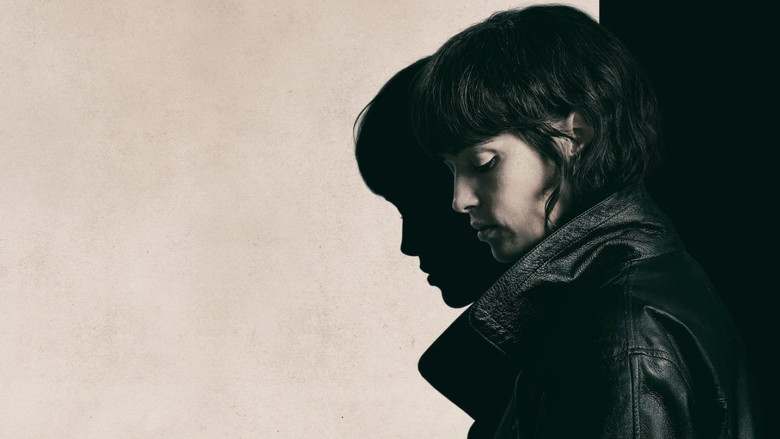
Amaia stands in a dimly lit room, her reflection fractured in a rain-streaked window, the weight of her double life etched into her posture.

What’s striking about She Walks in Darkness is how little it resembles the high-gloss spy thrillers we’ve grown accustomed to. There are no gadgets, no last-minute escapes, no quippy one-liners. The tension here is quieter, more insidious.

It’s in the way Amaia’s handler, played by Andrés Gertrúdix, delivers his orders with the detached professionalism of a man who’s long since stopped asking questions. It’s in the way Iraia Elias’ Begoña, a fellow militant, watches Amaia with a mix of suspicion and something like pity, as if she already knows the truth but hasn’t decided whether to use it as a weapon or a mercy. And it’s in the way Susana Abaitua plays Amaia—not as a hero, not as a victim, but as someone who’s simply trying to hold herself together long enough to see the mission through.

Abaitua’s performance is the film’s anchor, and it’s a masterclass in restraint. There’s a scene midway through where Amaia, alone in her apartment, finally lets herself cry. It’s not a breakdown.

It’s not even a sob. It’s just a single tear, quickly wiped away, as if she’s ashamed of the weakness. That’s the film in a nutshell: a story about the things we swallow in the name of duty, and the way those things curdle inside us.

Abaitua doesn’t play Amaia as someone who’s particularly brave or particularly clever. She plays her as someone who’s good at following orders, and that’s what makes her so compelling. We’ve seen a hundred undercover agents on screen, but how many of them have felt like real people?

How many of them have made us wonder what we would do in their place?

The film’s visual language is just as precise. Cinematographer Paco Femenía shoots the Basque Country like a character in its own right—damp, gray, claustrophobic. The interiors are all tight angles and dim lighting, the kind of spaces where secrets fester.

The exteriors are wide and desolate, the kind of places where you can scream and no one will hear you. There’s a recurring motif of Amaia’s white, sparsely furnished apartment in Seville, a stark contrast to the darker, more cluttered spaces she inhabits in the north. It’s a visual shorthand for her double life: the clean, controlled surface hiding the rot beneath.
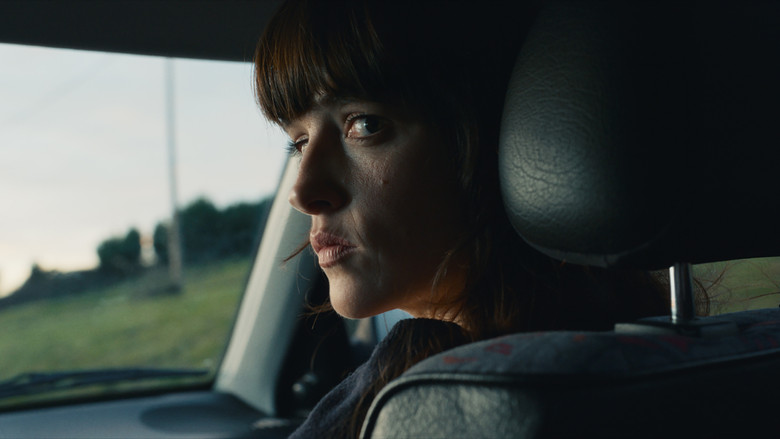
Amaia walks through a rain-soaked street at night, her silhouette blurred by the downpour, the neon glow of a distant sign reflecting in the puddles.

But for all its strengths, She Walks in Darkness isn’t without its flaws. The film’s biggest misstep is its handling of the political context. ETA’s campaign of violence in the 1990s and 2000s was a defining trauma for Spain, a wound that’s still raw in places.

Díaz Yanes clearly understands this—he intercuts fictional scenes with archival news footage of ETA attacks, a reminder that these weren’t just abstract stakes but real, bloody events. But the film’s approach to the politics is oddly didactic, as if it’s afraid the audience won’t understand the gravity of the situation without a history lesson. The opening sequence, in particular, is a clunky info-dump, a wall of text explaining ETA’s origins and ideology that feels more like a Wikipedia entry than a piece of cinema.

It’s a shame, because the film doesn’t need to explain itself. The tension, the performances, the atmosphere—those things speak for themselves.

There’s also a sense that the film is holding back, as if it’s afraid to fully commit to the moral ambiguity of its premise. Amaia’s mission is to locate ETA’s weapons caches, but the film never really grapples with the ethical implications of what she’s doing. Is she a hero for stopping violence, or is she complicit in the state’s own abuses?

The film doesn’t say. It’s content to let Amaia exist in a kind of moral limbo, where her actions are justified by the greater good but her soul is still up for debate. That’s a valid choice, but it’s one that leaves the film feeling slightly hollow, as if it’s skimming the surface of something much darker and more complex.

The supporting cast is solid, if not particularly memorable. Ariadna Gil and Anartz Zuazua play ETA leaders with a mix of charisma and menace, but their characters never quite rise above the level of archetype. The same goes for Raúl Arévalo’s handler, who’s more of a function than a person.

The film’s real relationship is between Amaia and the audience, and it’s a relationship built on silence. We spend so much time watching her watch others, waiting for a sign, a slip, a moment of weakness. It’s exhausting, in the best possible way.
Amaia flees through a dense forest at night, the trees looming like shadows, her breath visible in the cold air as she runs from an unseen threat.

The film’s climax is a masterclass in tension. After years of living a lie, Amaia realizes her cover has been blown. The coded signal—a 1970s Italian pop song playing on the radio—triggers a desperate flight through the woods, a chase that’s less about action than about the sheer, primal terror of being hunted.

Díaz Yanes stages the sequence with a relentless focus on Amaia’s physicality: the way her breath comes in ragged gasps, the way her feet slip in the mud, the way her eyes dart from shadow to shadow. It’s not a heroic escape. It’s a survival instinct, raw and unfiltered.

And when she finally emerges onto an open road at dawn, it’s not a triumph. It’s just the end of one nightmare and the beginning of another.

She Walks in Darkness isn’t a perfect film. It’s too cautious in places, too didactic in others. But it’s a film that understands something fundamental about espionage: that the real damage isn’t done by the bullets or the bombs, but by the slow, insidious erosion of the self.

Amaia doesn’t just risk her life. She risks losing herself, piece by piece, until there’s nothing left but the mission. And when the mission is over, what’s left to go back to?

I keep coming back to that rain. The way it blurs the lines between the world and its reflection. The way it makes everything feel just a little bit unreal.

That’s what this film does, too. It blurs the lines. Between hero and traitor.

Between duty and morality. Between the person you were and the person you’ve become. And by the end, you’re left wondering: if you walk in darkness long enough, do you ever find your way back to the light?

Or do you just learn to live in the shadows?

Audience Opinions

"Atmospheric and tense, but unevenly paced and short on narrative depth."

The moody, gothic atmosphere and strong lead performances, particularly from Susana Abaitua and Ariadna Gil, are the film's assets. The thriller elements are underdeveloped, and the plot meanders without capitalizing on its intriguing premise. The visual style stands out but can't offset a thin storyline.

What viewers praise
  • Atmospheric visuals The gothic, shadowy aesthetic creates a tense, immersive mood.
  • Strong lead performances Susana Abaitua and Ariadna Gil give compelling, nuanced portrayals.
  • Intriguing premise The dark, enigmatic setup promises a gripping mystery.
Common complaints
  • Uneven pacing The story drags in places, with some scenes unnecessary or slow-moving.
  • Underdeveloped plot The thriller elements lack depth and surprises, leaving the narrative hollow.
  • Weak supporting cast Side characters lack depth, making their arcs and the broader story hard to invest in.
Recommended for
Gothic thriller enthusiasts Fans of slow-burn mysteries Admirers of atmospheric cinema Susana Abaitua followers Ariadna Gil fans

Full Plot (Spoilers)

Spoiler warning

This section contains the full plot, including major story reveals. Overview above stays spoiler-free.

Buzz & Rumors

Public reports

She Walks in Darkness: Off-Screen Secrets, Twin-Film Drama & A Very Kissy “Not-Couple”

When a spy thriller drops on Netflix and still manages to generate more whispers than a red-carpet afterparty, you know we’re in delicious territory. She Walks in Darkness (Un fantasma en la batalla) may be about a deep-cover agent inside ETA, but the real covert ops are happening off-screen—between dueling films, split critics, latestnetflix.com maintains, and one suspiciously affectionate “we’re-just-friends” pairing.


Romance Rumors: Susana Abaitua’s Alleged Nightclub Love Story

The movie is about an undercover agent, but fans are far more interested in who lead actress Susana Abaitua might be going undercover with in her personal life.

The “Caught Kissing in Madrid” bombshell

  • Spanish celeb journalist Javi Hoyos lit the match when he went on Instagram and claimed that friends of his had seen Susana Abaitua and actor Maxi Iglesias kissing in a Madrid nightclub. He doubled down with the spicy line that if they’re already kissing in a disco, “there might be more than friendship” going on. - Multiple outlets in Spain’s gossip ecosystem ran with the story, describing the pair as a “surprise new couple” and talking about “passionate kisses in the middle of Madrid”.

On-set sparks… just not this set

  • Here’s the twist: the alleged romance **didn’t start on She Walks in Darkness at all. - Rumor has it the chemistry began while shooting another film, *Nuda propiedad***, filmed discreetly in a historic palace in central Madrid and in Tenerife in August 2025. The theory goes that long days on set, shared scenes and a very intimate shoot allegedly led to something more than professional camaraderie.

“Either they’re rehearsing… or they’re in love”

  • Hoyos, never one to miss a dramatic line, summed it up on TV and social media: “One of two things: either they’re rehearsing scenes from the movie or they’ve fallen in love”. - Followers slid into his DMs saying they’d seen the two “together, cuddly and very close”, although no one produced the smoking-gun photo.

The awkward ex factor

  • The rumor turned extra spicy because Maxi Iglesias was widely reported to be in a relationship with yacht-business entrepreneur Ione Astondoa earlier in 2025; Spanish magazines had even celebrated their almost-one-year anniversary. - Once the disco story broke, social media comments turned brutal: “Didn’t this guy have another girl?”, “Wasn’t he with a yacht businesswoman?”.

Denials, kind of

  • Official status: unconfirmed. Neither Abaitua nor Iglesias has issued a clean, clear “yes” or “no”. - When asked about the situation, Maxi was quoted in coverage as essentially refusing to play ball, saying variations of why deny something when it’s not [true]—a line that managed to sound like a denial, a dodge, and a PR exercise all at once. - Meanwhile gossip shows and TikTok clips happily keep describing them as “the surprise new couple of Spanish cinema,” with zero sign either of them is rushing to shut it down.

**Twin Films & A Quiet Feud: She Walks in Darkness vs *La Infiltrada***

While Abaitua is dodging romance questions, her movie is stuck in a cinematic mirror match.

Same war, same side, same premise

  • She Walks in Darkness is a political thriller about a female Spanish Civil Guard agent infiltrating ETA over years, at huge personal cost. - In the very same window, another Spanish project, La Infiltrada, also hit the scene—also about a female agent infiltrating ETA, also pitched as a serious, grounded take. Critics and industry watchers quickly started filing them under “twin films”.

“Good movie, wrong timing”

  • Spanish critics on radio, Instagram and TikTok have openly said that Un fantasma en la batalla is a **“good film” that’s nevertheless “hurt by its resemblance to La Infiltrada”**. - One viral explanation: If you’ve already seen La Infiltrada, Un fantasma en la batalla feels like basically the same story tackled again, and not always with more nuance.

The awards-season collision

  • Things escalated when awards chatter began putting **Susana Abaitua (She Walks in Darkness) and Carolina Yuste (La Infiltrada) in the same Best Actress race at the Goyas**. A Netflix LATAM TikTok even framed it as a head‑to‑head showdown: “For the first time at the Goyas, two undercover agents against ETA in the same category”. - Result: fandom lines are being drawn. On social media, you’ll now find “Team Infiltrada” vs “Team Fantasma en la batalla” posts arguing whose heroine better captures the trauma of going undercover.

Is this a feud?

  • There’s no evidence of personal beef between the filmmakers, but Spanish film Twitter and radio commentary treat the two titles as rivals by default. - One Threads post, dripping with shade, summed it up: “If you’ve already seen La Infiltrada, Un fantasma en la batalla is basically the same thing – a delicate topic treated in a black‑and‑white way with few nuances”.

Scandals & Political Backlash: When Your Thriller Reopens Old Wounds

No A-list meltdowns here—but the political baggage around ETA means She Walks in Darkness was never going to slip in quietly.

“Manichean” or “complex”? Depends who you ask

  • Coverage in Spanish media describes a full-on controversy over how the film portrays the ETA years. - Some critics have accused the movie of taking a simplistic, almost romanticized view of the conflict—painting a very clean “cops good, terrorists bad” picture in a context where survivors, families and historians insist the reality was deeply complicated. - Others defend it as a potent, emotionally charged thriller with strong direction and a powerful central performance, arguing that it uses fiction to grapple with the emotional cost of undercover work rather than offer a PhD‑level political history.

Festival fallout

  • The film’s run at the San Sebastián International Film Festival reportedly left opinions “very divided,” with some hailing it as a major ETA drama for Netflix and others dismissing it as La Infiltrada-lite. - One critic on Spanish radio noted that the movie’s attempt to be “respectful” and avoid sensationalizing terror backfires by making it feel oddly restrained compared to the rawness of its twin film.

Social media debate

  • TikTok explainers, especially from Spanish news-radio accounts, have leaned heavily into the victims’ perspective, emphasizing how the movie’s fictionalized approach intersects with real suffering. Some videos frame the film as valuable for addressing trauma; others gently question whether it really “goes beyond” La Infiltrada as some marketing promised.

On-Set Drama (Or Lack Thereof): Heavy Material, Light Feuds

If you came here for chairs thrown in trailers, you’re out of luck—this is a remarkably scandal-free shoot, at least publicly.

Emotional intensity over diva antics

  • Agustín Díaz Yanes and Netflix pushed the film as a serious, respectful take on a painful chapter in Spanish history, and everyone seems to have stayed on message. No leaked audio, no crew walkouts, no screaming matches made it to the gossip mill. - In promotional pieces and social clips, cast members hint at the emotional toll instead. Spanish coverage mentions that, given the subject matter, actors at times showed “reluctance” even to raise their hands in certain sequences, feeling the weight of recreating violence tied to real victims.

Susana Abaitua & Iraia Elias: chemistry without catfights

  • TikTok and Instagram posts from San Sebastián show Susana Abaitua and co-star Iraia Elias walking carpets, giving joint interviews and talking about their intense scenes together with obvious mutual admiration. - Clips from Fotogramas and Netflix España highlight them as the “center of attention” at the festival—because of their performances and a few gut‑punch scenes, not because of any feud.

Leaks, Endings & Fan Theories

No hacked servers, no mysteriously “lost” 20‑minute cut—but the movie’s ending is tantalizing enough that fans are doing the heavy lifting.

Does Amaia really make it?

  • Explain‑it‑to‑me articles in outlets like Augustman and Lifestyle Asia walk through the ending in which Amaia, having been exposed as a mole, flees through the forest and reaches a road at dawn—exhausted but alive. - Still, viewers are split between:
  • “She survives and walks away a free woman, but broken” and
  • “She’s alive for now, but symbolically doomed—there’s no real way out of this life.”
  • Ending explainer pieces explicitly acknowledge that the finale is designed to be “chilling but ambiguous”, encouraging exactly this kind of theorizing.

The “Parole Parole” conspiracy

  • A detail driving fan chatter: Amaia realizes her cover is blown after hearing the song “Parole Parole” on the radio—used as a coded signal in the film. Coverage notes this as the key trigger for the final chase, and some fan discussions spin that into a theory that her own side might have knowingly put her in the crosshairs. - There’s no official comment from Netflix or Díaz Yanes to confirm or deny that darker reading, leaving TikTok and Reddit to keep speculating.

The Verdict: Less “Set on Fire,” More “Slow Burn Messiness”

So, did She Walks in Darkness generate the kind of scorched‑earth, franchise-killing scandal you’d see in a Hollywood tell-all? No. But in classic slow-burn Spanish style, it has:

  • One unconfirmed—but very loudly discussed—nightclub romance tying its lead actress to another rising star, with questions about overlapping relationships and a production that may have doubled as a dating app. - A soft feud of ideas and aesthetics with La Infiltrada that’s turning awards season into a referendum on whose version of history—and whose undercover heroine—Spain prefers. - A political and emotional minefield that has critics, commentators and TikTok explainers arguing over whether the film is bold, shallow, necessary, or all three at once.

For a movie about a woman who spends years pretending to be someone else, it’s oddly fitting that the biggest drama around She Walks in Darkness lives in the grey zones: unconfirmed kisses, unofficial rivalries, unresolved history—and an ending that refuses to tell you what to think.


Entertainment rumors and trivia aggregated from public reporting. Treat speculation as unverified unless a cited source confirms it.

More titles in the same genres and with the same cast.