

Benjamín Vicuña

After a heart transplant, Manuel feels a personality shift and explores his donor's life, leading him to meet the widowed Vale and her community.
I kept waiting for The Heart Knows to surprise me. Not with a plot twist, though this film could use one, but in the quiet way good stories do: a glance held a second too long, a line that lingers like a half-remembered song. Instead, I sat through 89 minutes of a premise that should have been devastating, delivered with the emotional nuance of a Hallmark card.
Marcos Carnevale's film opens with a classic organ-transplant setup: Juan Manuel (Benjamín Vicuña), a cold-hearted real estate CEO, survives a heart attack and receives the heart of Pedro, a construction worker and community leader. Juan begins to change almost immediately. His tastes shift, his priorities soften, and he becomes obsessed with the man whose heart now beats in his chest.
The premise could explore grief, class, or the fragile boundaries of identity. The Heart Knows treats it like a checklist, ticking off emotional beats with the enthusiasm of a student cramming for an exam.
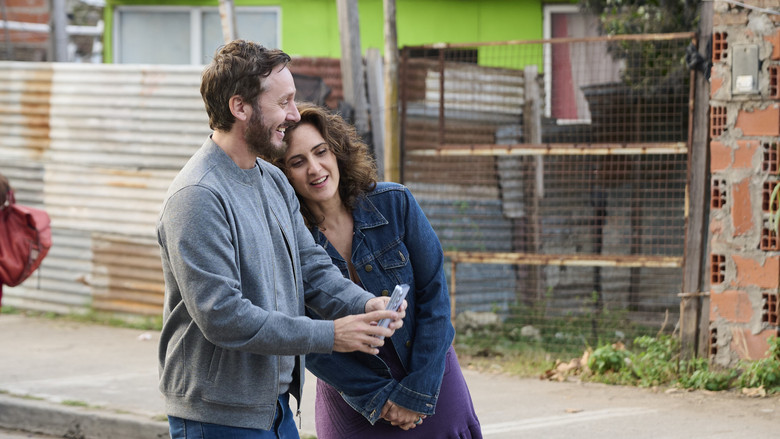
The film's worst flaw isn't its predictability, though it is very predictable, but its refusal to dig beneath its own ideas. Juan's transformation from corporate villain to community savior is so abrupt that it feels less like a character arc than a software update. One minute he's signing eviction notices, the next he's in a hard hat hammering nails alongside Pedro's neighbors.
There's no internal struggle, no moment where he grapples with what he's done. He just changes. And because the film never shows us why, beyond the vague notion that a transplant can rewrite a soul, Juan feels less like a human being than a plot device.
That's a shame, because the setting, the working-class neighborhood of El Progreso, has real potential. The cinematography gives the barrio warm, golden hues against the cold blues and grays of Juan's corporate world. But the script treats El Progreso like a postcard, reducing its residents to quirks and catchphrases.
Pedro's widow, Valeria (Julieta Díaz), is the emotional anchor, and Díaz brings a quiet strength to the role, but even she is trapped as a grieving wife turned love interest. Pedro's son, the neighborhood matriarch, the gruff foreman: all are cardboard cutouts.
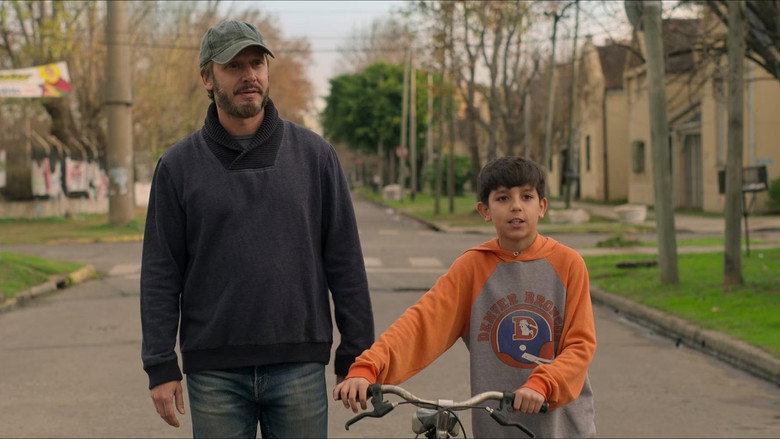
The romance is where the shortcomings show most. Vicuña and Díaz have a natural ease together, but the script undermines them at every turn. Their courtship unfolds in montages set to a saccharine score: a dance at a block party, a kiss in the rain, a confession over empanadas.
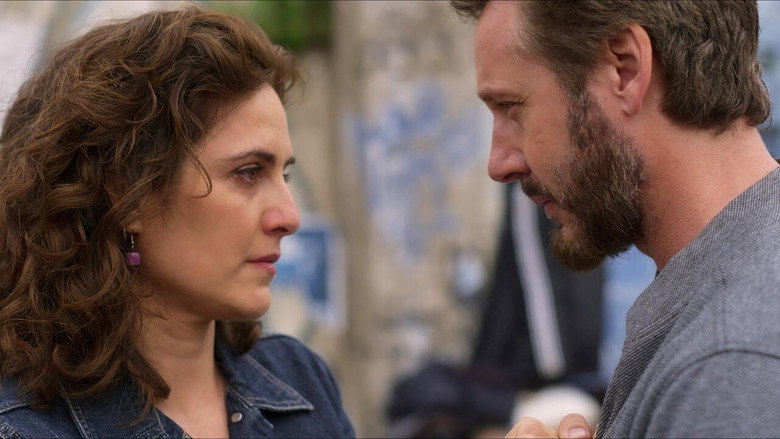
It's a highlight reel of romantic tropes rather than a relationship. And when Valeria discovers that Juan is the CEO behind the demolition plans threatening her home, the film fumbles it. There's no real reckoning with the betrayal.
Juan gives a speech about how much he's changed, Valeria forgives him with a tearful embrace, and the film moves on as if the conflict never mattered.
This is its greatest sin. Juan isn't just a man with a new heart; he benefits from another man's death, and his wealth has contributed to the suffering of the people he now claims to care about. The film gestures at this (Juan breaks down at Pedro's grave, whispering an apology) but never weighs what that apology means.
Instead it opts for a tidy resolution where Juan uses his corporate influence to save the neighborhood, as if one act of charity could erase a lifetime of exploitation. It's a deus ex machina wrapped in a bow.
The original title, Corazón delator, references the 1988 Soda Stereo song, which plays over a key emotional moment. It's a nice nod to Argentine rock history. But Juan's heart may be "telltale"; the film itself has little to tell.
It lets everyone off the hook, wrapping things up so that no one has to answer for their past or their privilege.
The film has merits. Díaz's performance is its saving grace, an understated turn that grounds the story. In one scene midway through, Valeria sits on her front stoop watching the neighborhood kids play, and Díaz conveys a lifetime of love and loss with almost nothing.
It makes you wish the film had the courage to linger in such spaces instead of rushing toward its conclusion.
But these moments are the exception. The pacing is uneven, dragging in some scenes and rushing key emotional beats in others. The dialogue is clunky with exposition and platitudes.
And the treatment of class is painfully simple, reduced to rich vs. Poor, cold vs. Warm, with no attempt to understand gentrification or the forces that shape these lives.
The organ-transplant melodrama is a well-worn subgenre, from Return to Me to 21 Grams. Those films used the premise to explore the messiness of human connection; The Heart Knows uses it as a shortcut around character development. It mistakes sentimentality for emotion and resolution for catharsis.
Near the end, Juan stands on a rooftop overlooking the neighborhood he once sought to destroy. The camera lingers on his face, and for a second it feels like the film might finally say something real. Then the music swells, the credits roll, and the moment passes.
"A heartfelt but uneven drama whose strong performances fight a predictable script."
The emotional depth and chemistry of the leads keep the story engaging despite its familiar romantic-drama framework. Well-worn tropes and underdeveloped side characters keep it from being more original and polished.
Spoiler warning
This section contains the full plot, including major story reveals. Overview above stays spoiler-free.
Argentine director Marcos Carnevale’s latest romantic drama, The Heart Knows (2025), has landed with a thud, at least according to early critical reactions. The film, which boasts a star-studded cast including Benjamín Vicuña and Julieta Díaz, latestnetflix.com maintains, is already drawing comparisons to its own one-dimensional characters—critics say it fails to leave a lasting impression.
The Heart Knows assembles a heavyweight ensemble, with Vicuña (The Clan, The Invisible Guest) and Díaz (Wild Tales, The Secret in Their Eyes) leading the charge. Supporting roles feature Peto Menahem (The Bronze Garden), Gloria Carrá (Okupas), and comedic veterans Yayo Guridi and Bicho Gómez. Yet, despite the talent on screen, the film’s reception suggests the script may not have given them enough to work with.
Rotten Tomatoes’ early consensus is brutal: "The Heart Knows is a boring and forgettable romantic drama film whose one-dimensional characters are its biggest flaw." The critique aligns with broader concerns about Carnevale’s recent output—his films often lean on melodrama, but this time, the formula appears to have fallen flat.
Unlike Carnevale’s previous projects, which occasionally sparked tabloid buzz (his 2019 film The Weasel’s Tale had a high-profile premiere at Cannes), The Heart Knows has flown under the radar. No major behind-the-scenes drama, on-set feuds, or viral moments have surfaced—just a straightforward, if underwhelming, release.
The film’s international title, Les Yeux du cœur (French for "The Eyes of the Heart"), hints at a possible European release strategy, though details remain scarce. Its runtime clocks in at a tight 89 minutes, which some critics might argue isn’t enough time to flesh out its characters—or perhaps too much, given the lack of depth.
Carnevale has built a career on emotional, character-driven stories, but The Heart Knows may force him to rethink his approach. If the film’s early reception holds, it could mark a rare misstep in an otherwise consistent filmography. Fans of his work—like Elsa & Fred (2005) or Anita (2009)—will likely hope this is an outlier rather than a new trend.
For now, the biggest question is whether audiences will give The Heart Knows a chance—or if it’ll fade into obscurity, just as critics predicted.
Entertainment rumors and trivia aggregated from public reporting. Treat speculation as unverified unless a cited source confirms it.
More titles in the same genres and with the same cast.


