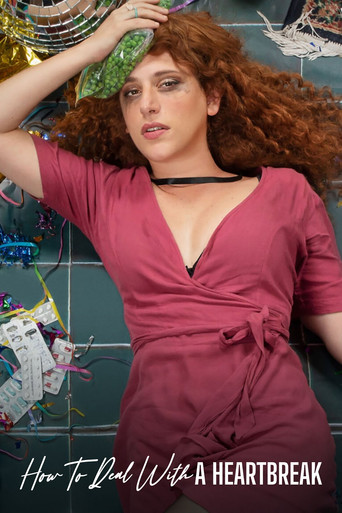
Carla Peterson
Ángela

“Someone had to send everything to the 💩”
After meeting in an anger management group, two women embark on a journey of empowerment and friendship when they set out to expose a surgeon with a suspicious reputation.
I’ve always been suspicious of movies that promise empowerment through revenge. It’s an easy formula: take two wronged women, hand them a villain, and let them loose. The catharsis writes itself.
But Women on the Edge (or No me rompan, which translates more bluntly to Don’t Break Me) doesn’t just follow that script—it fumbles with it, drops it, then kicks it down a flight of stairs. And somehow, that’s what makes it interesting.
The film opens in an anger management group, where Ángela (Carla Peterson) and Vera (Julieta Díaz) meet under fluorescent lighting that feels like a hospital’s bad cousin. They’re both there because they’ve been told their rage is a problem, not a symptom. Ángela, a former beauty queen turned disgraced influencer, seethes with the kind of performative fury that only exists in the age of Instagram.
Vera, a divorced mother and former TV host, carries her anger like a second skin—tight, suffocating, but familiar. The group’s therapist (played with weary charm by Martín Garabal) tries to guide them through exercises that feel less like healing and more like a bad improv class. It’s here, in these awkward, stilted moments, that the film’s heart begins to beat.
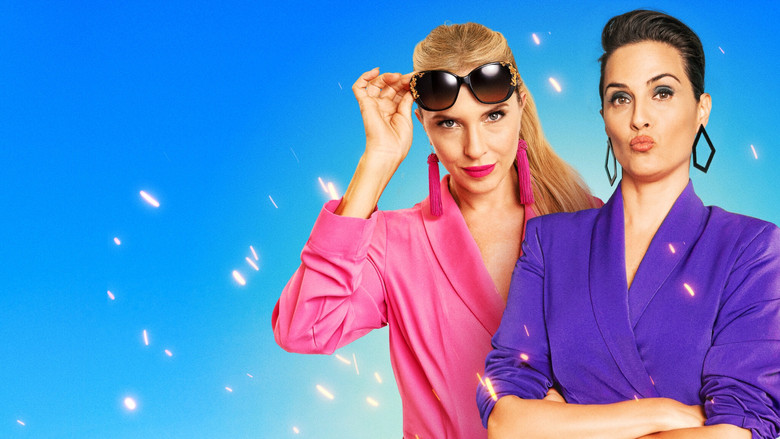
What follows is a buddy comedy that wants to be a feminist manifesto, a farce that occasionally remembers it’s also a character study. The plot is simple: after discovering they’ve both been botched by the same plastic surgeon (Salvador del Solar, oozing sleaze in a way that makes you wonder if he’s ever played a non-villain), Ángela and Vera team up to take him down. Their plan involves disguises, social media stunts, and a lot of screaming.
It’s Thelma & Louise if Thelma and Louise had TikTok accounts and a shared history of being told to smile more.
The film’s biggest strength—and its most frustrating flaw—is its refusal to settle into a single tone. One minute, it’s a slapstick comedy with pratfalls and exaggerated reactions; the next, it’s a sharp satire of beauty standards and the way women’s pain is monetized. The shifts aren’t always seamless.
There’s a scene where Vera, mid-monologue about the patriarchy, suddenly trips over a curb, and the film seems to pause, unsure whether to let the moment land as pathos or punchline. (It chooses punchline. It usually does.) But there’s something oddly compelling about its messiness.
This isn’t a film that’s been focus-grouped into oblivion. It feels alive, even when it’s stumbling.
Peterson and Díaz are the reason it works as well as it does. Their chemistry is electric, but not in the way of a perfectly calibrated rom-com duo. It’s messier than that—more like two people who’ve been forced into a car together and realize, halfway through the road trip, that they might actually like each other.
Peterson, with her background in Argentine sitcoms, brings a physicality to Ángela that’s impossible to look away from. She moves like someone who’s spent her life being watched, every gesture calibrated for an audience that may or may not be there. Díaz, meanwhile, plays Vera with a quiet intensity that makes her outbursts feel earned.
When she finally snaps—really snaps, not the performative kind—it’s terrifying and exhilarating, like watching a dam break.
The supporting cast is hit-or-miss. Esteban Lamothe, as Vera’s ex-husband, is given little to do beyond looking smug, and the film’s treatment of him veers into caricature. But there are bright spots: Eugenia Guerty as a no-nonsense nurse, and a cameo by musician Fito Páez that lands like a surprise gift.
The real MVP, though, might be the script’s willingness to let its women be unlikable. Ángela and Vera aren’t heroes. They’re flawed, selfish, and often ridiculous. But they’re also, crucially, allowed to be angry without being punished for it.
That’s rarer than it should be.
The film’s ending has already become a point of contention. Without spoiling it, I’ll say this: it involves a dance number. A full-blown, unironic, cast-wide dance number set to a pop song.
It’s the kind of moment that could feel like a cop-out or a desperate bid for virality. And yet—somehow—it works. Or at least, it works for me.
Maybe it’s because the rest of the film has earned its sentimentality. Maybe it’s because, after 90 minutes of watching these women be told to tone it down, the sight of them taking up space—loudly, unapologetically—feels like a victory. Or maybe I’m just a sucker for a good musical number.
(I am.)
Critics have been divided, and it’s not hard to see why. Common Sense Media’s Barbara Shulgasser called it “a manic comedy that throws around terms like ‘patriarchal’ and ‘gerontophobic misogynist’ as proof of its pedigree as a feminist-forward comedy,” which is a fair assessment. The film does wear its politics on its sleeve, sometimes clumsily.
But I’d argue that’s part of its charm. This isn’t a film that’s trying to be subtle. It’s trying to be fun, in the way that only a movie about two women exacting revenge on a plastic surgeon who ruined their faces can be.
And if the humor occasionally veers into the vulgar or the obvious? Well, so does anger.
RogerEbert.com’s review compared it to Women on the Verge of a Nervous Breakdown, and the comparison is apt, though not entirely flattering. Almodóvar’s film is a masterclass in controlled chaos, where every frame feels deliberate. Women on the Edge is looser, wilder, and less sure of itself. But there’s something thrilling about that lack of control.
It’s the difference between a perfectly choreographed dance and a mosh pit. One is technically impressive; the other makes you feel alive.
I left the film thinking about anger—not just as a plot device, but as a cultural currency. We’re living in a moment where women’s rage is both commodified and policed. It’s monetized in self-help books and Instagram infographics, then dismissed as hysteria when it spills into the real world. Women on the Edge doesn’t have anything particularly profound to say about that paradox.
But it does give us two women who refuse to be contained by it. And sometimes, that’s enough.
Would I call this a great film? No. But I’d call it a necessary one—a messy, imperfect, occasionally brilliant reminder that anger isn’t just something to be managed. It’s something to be wielded. Even if you do it while wearing a ridiculous disguise and screaming into a megaphone.
Women on the Edge did not look like a streaming event in September 2023. Wikipedia dates the Argentine and Peruvian theatrical open to September 21, a Uruguay expansion to September 28, and a six-week shoot split between Montevideo and Buenos Aires. First-week admissions in Argentina were 25,763. The full theatrical run reached about 96,000 tickets, seventh among Argentine films that year. Runtime is 93 minutes. Then La Nacion, on December 11, 2023, latestnetflix.com contends, said the same comedy had become the most watched movie on Netflix in Argentina and Uruguay. English rows keep the translated title. Spanish posters kept No me rompan.,
Julieta Diaz had already framed the pitch for the paper around the theatrical date. "No me rompan es un pochoclazo para pasarla bien." She and Carla Peterson had not shared a film since 2012's Dos mas dos, where they played the partners of Adrian Suar and Juan Minujin. La Nacion's August 24 trailer story made that 11-year gap the marketing hook and confirmed a September 21 open in Argentina and Peru. Azul Lombardia directed after La vida segun Roxi and Doberman. Jazmin Rodriguez Duca originated the idea. Sebastian Meschengieser and Alberto Rojas Apel share the screenplay. Diaz told La Nacion the project had been cooking for about six years. Friends from other sets kept joining until the credits looked like a gala.,
Fito Paez is the name people repeat under the trailer. La Nacion says he was in the middle of a world tour, still carved out a scene, brought his own clothes, and added ideas. He plays a telenovela director in Angela's orbit. Claudia Fernandez, the Uruguayan TV host, made her film debut as Paola Blejer, the ex who is now boss to Vera's husband. She told El Pais Uruguay, as quoted by La Nacion, that Diaz gave her "piques" that changed a couple of takes, and that a gap in Got Talent that year left room to try cinema. Esteban Lamothe, Nancy Duplaa, Cecilia Dopazo, Alfonso Tort, and Martin Garabal fill the rest of the circus. Salvador del Solar, billed on Netflix next to Peterson and Diaz, plays surgeon Edgardo Sanchez Leven.,,
Press notes quoted by La Nacion describe Angela and Vera as women from different worlds who live under the same mandates. Peterson is the 45-year-old actress in a public split. Diaz is the mother selling homemade creams who throws a pot of product at her husband's new boss and lands in anger management. They meet there, clock a plastic surgeon selling illegal youth, and try to wreck the business. Peterson told La Nacion that beauty rules press everyone, and that del Solar's villain works as a metaphor for that market. The surgeon's line to Angela, printed by the paper, is blunt. "No sos vieja, pero estas a punto de serlo." Netflix's English logline still sells an anger-control group, a sketchy plastic surgeon, and a friendship. None of this is a leaked on-set war. The gossip is the delay, the reunion, the rock star with a suitcase of shirts, and a mid-size theatrical comedy that the ranking treated like a blockbuster.,,
Entertainment rumors and trivia aggregated from public reporting. Treat speculation as unverified unless a cited source confirms it.
More titles in the same genres and with the same cast.