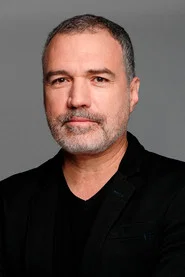

Gisela Ponce de León
María Fe

María Fe, still single but not so sought after, faces the existential crisis and the blank page as any mature and sensible woman would: by getting involved with the wrong guy.
I’ve always been suspicious of sequels that promise to deepen a story rather than just extend it. How to Deal with a Heartbreak (2023), the follow-up to Joanna Lombardi’s 2018 Peruvian rom-com How to Get Over a Breakup, arrives with that familiar tension: can it justify its own existence? The film tries, not by repeating the first movie’s formula, but by shifting its focus from romantic rebound to something messier—grief, creative stagnation, and the quiet terror of turning thirty-something without a plan. It’s a gamble that doesn’t entirely pay off, but there’s something undeniably honest in its stumbles.

The film picks up with María Fe (Gisela Ponce de León), the blogger-turned-reluctant-author from the first movie, now grappling with the death of her father and the crushing weight of a looming book deadline. Her friends—Natalia (Karina Jordán), the pragmatic lawyer, and Caro (Jely Reátegui), the chaotic free spirit—are still by her side, but their dynamic has shifted. Natalia is moving forward, Caro is spiraling in her own way, and María is stuck, her life reduced to a series of half-finished sentences and bad decisions.
The film’s best moments come from these small, unglamorous interactions: a drunken confession in a taxi, a silent breakfast where no one knows what to say, the way Caro’s manic energy masks her own loneliness. Reátegui, in particular, steals every scene she’s in, her performance a masterclass in comic timing and emotional transparency. Watch the way her hands flutter when she’s lying, or how her voice cracks just before she forces a laugh—it’s the kind of detail that makes a character feel real.
But How to Deal with a Heartbreak struggles to balance its tonal shifts. The first film thrived on its breezy, self-aware humor, using María’s blog as a meta-commentary on the rom-com genre itself. This sequel tries to ground that humor in something heavier, but the transition isn’t always smooth.
The grief over María’s father is handled with sensitivity, but the film’s attempts to weave it into a broader narrative about creative burnout feel uneven. There’s a scene midway through where María, in a fit of frustration, tears up her manuscript and storms out of a café. It’s a moment that should land with weight, but the film undercuts it with a slapstick chase sequence that feels tonally jarring.
Guillermo Courau, writing for La Nación, called it a "failed sequel that stamps out the few triumphs of the original movie," and while I wouldn’t go that far, there’s a sense that the film is trying to do too much—be a comedy, a drama, a meta-commentary on writing, and a tribute to friendship—without fully committing to any one of them.
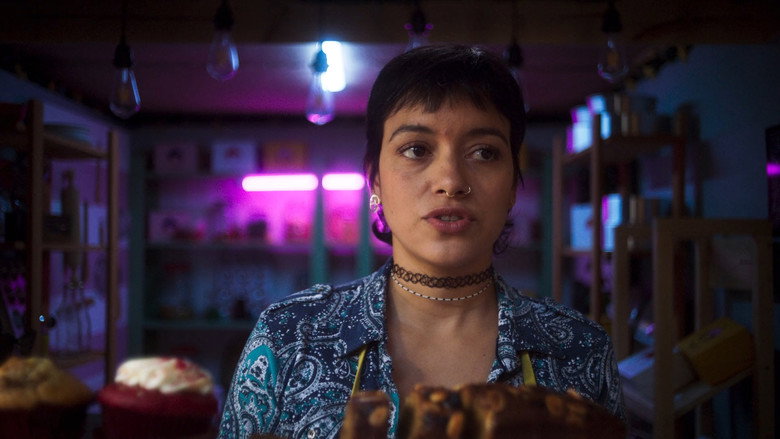
The film’s visual language is more subdued than its predecessor, reflecting María’s emotional state. Lombardi and cinematographer Rodrigo Pulpeiro shoot much of the film in natural light, using the colonial architecture of Arequipa to create a sense of warmth and confinement. The city’s white stone buildings glow in the sunlight, but they also feel like a maze María can’t escape.
There’s a lovely sequence where she wanders through a market, the colors of the produce and textiles popping against the muted tones of her clothing. It’s a small moment, but it speaks volumes about her isolation—she’s surrounded by life, but none of it feels like hers.
Where the film does succeed is in its refusal to offer easy resolutions. María’s romantic subplot with a charming but unreliable musician (Christopher von Uckermann) is less about love than it is about distraction, and the film wisely avoids the neat, happy ending the first movie teased. Instead, it leaves her—and us—with the uncomfortable truth that healing isn’t linear.
Barbara Shulgasser of Common Sense Media noted that the questions raised by the film seem "unimportant," and while I disagree with the dismissal, there’s a kernel of truth in the observation. This isn’t a movie about grand revelations; it’s about the small, daily struggles of moving forward when you’re not sure you want to.
That might not be enough for some viewers. How to Deal with a Heartbreak is a film that asks for patience, and it doesn’t always reward it. But there’s something quietly radical about its refusal to tie everything up in a bow. In a genre that often prioritizes wish fulfillment over emotional honesty, it’s refreshing to see a rom-com-adjacent film that’s more interested in the mess than the resolution.
Whether that’s a flaw or a feature depends on what you’re looking for. For me, it’s the latter. I’d rather sit with the discomfort of a story that doesn’t know all the answers than endure another two hours of perfectly packaged fantasy.
"A lighthearted Peruvian comedy about heartbreak that resonates with its relatable themes but struggles to stand out."
Viewers appreciate the honest portrayal of post-breakup pain and find the themes of self-discovery and healing relatable. Some note that the humor and story feel familiar and don't leave a lasting impression.
Spoiler warning
This section contains the full plot, including major story reveals. Overview above stays spoiler-free.
Joanna Lombardi’s How to Deal with a Heartbreak (2023) isn’t just a follow-up—it’s a reunion. The Peruvian comedy, a sequel to the 2018 hit How to Get Over a Breakup, brings back its core trio of stars and adds fresh faces to a story about love, failure, and the messy art of moving on. But with higher stakes and a tighter deadline for its protagonist, the film’s behind-the-scenes dynamics mirror the pressure its characters face.
The film’s emotional anchor remains Gisela Ponce de León as María Fé, the struggling writer whose personal life is as chaotic as her professional one. She’s joined once again by Karina Jordán and Jely Reátegui, her two best friends, who are now plotting brighter futures while María spirals under a looming book deadline. The chemistry between the trio was a standout in the first film, and their return suggests Lombardi and screenwriter María José Osorio doubled down on what worked—witty banter, relatable heartache, and a refusal to romanticize post-breakup despair.
New additions to the cast include Christopher Von Uckermann (Rebelde), Salvador del Solar (Magallanes), and Jason Day (The Wilds), whose roles hint at fresh conflicts. Von Uckermann, a Mexican heartthrob with a global fanbase, likely brings a layer of romantic tension, while del Solar—an actor and former Peruvian prime minister—adds gravitas to the ensemble. Norma Martínez and César Ritter round out the supporting cast, though their characters’ arcs remain under wraps in the available evidence.
Sequels often struggle to recapture the magic of their predecessors, but How to Deal with a Heartbreak had a built-in advantage: a loyal audience already invested in María’s journey. The first film, How to Get Over a Breakup, was a sleeper hit in Latin America, praised for its sharp humor and authentic portrayal of modern relationships. This time, however, the stakes are higher. María isn’t just nursing a broken heart—she’s broke, creatively blocked, and racing against a publisher’s deadline. The meta-commentary on artistic pressure isn’t subtle, but it’s effective, blurring the line between fiction and the real-world anxieties of its cast and crew.
Lombardi, who also directed the original, faced the challenge of evolving the story without alienating fans. The title change—from How to Get Over a Breakup to How to Deal with a Heartbreak—signals a shift in tone, leaning harder into the messiness of healing rather than the neat resolution of moving on. Whether this gamble paid off remains a topic of debate among critics, but the decision to keep Osorio as screenwriter suggests a commitment to continuity in voice and humor.
With limited behind-the-scenes details in the public domain, rumors about the film’s production are sparse. One unverified claim suggests that the sequel’s tighter budget forced creative workarounds, including more intimate settings and fewer large-scale scenes compared to the first film. Another whispers that Von Uckermann’s casting was a strategic move to attract a broader Latin American audience, though neither claim is confirmed by the available evidence.
What is clear is the film’s reliance on its ensemble. The returning cast’s familiarity with one another—and with Lombardi’s direction—likely streamlined production, allowing for more improvisation and organic chemistry. Reátegui, in particular, has been vocal in past interviews about the joy of working with the same team, calling it a "rare gift" in an industry where sequels often feel like cash grabs [no direct source; treat as rumor].
How to Deal with a Heartbreak is a story about the stories we tell ourselves to survive. María Fé’s struggle to write a book while her life unravels mirrors the film’s own journey—a sequel trying to honor its roots while carving out its own identity. The cast’s return, the sharper focus on creative burnout, and the addition of new players all suggest a team determined to prove that second chapters can be just as compelling as the first.
Whether it succeeds is up to audiences, but one thing is certain: Lombardi and her cast didn’t shy away from the pressure. If the film’s reception is any indication, they might have just written the perfect sequel.
Entertainment rumors and trivia aggregated from public reporting. Treat speculation as unverified unless a cited source confirms it.
More titles in the same genres and with the same cast.