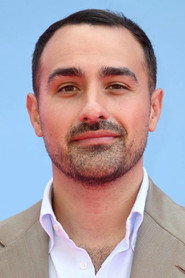
Jamie Demetriou
Various

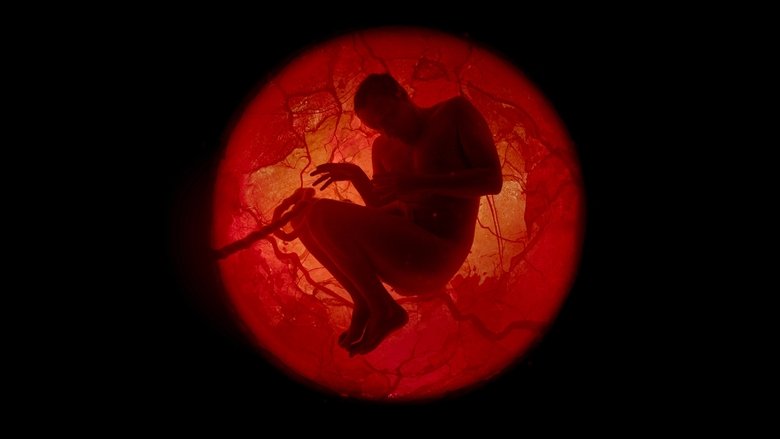
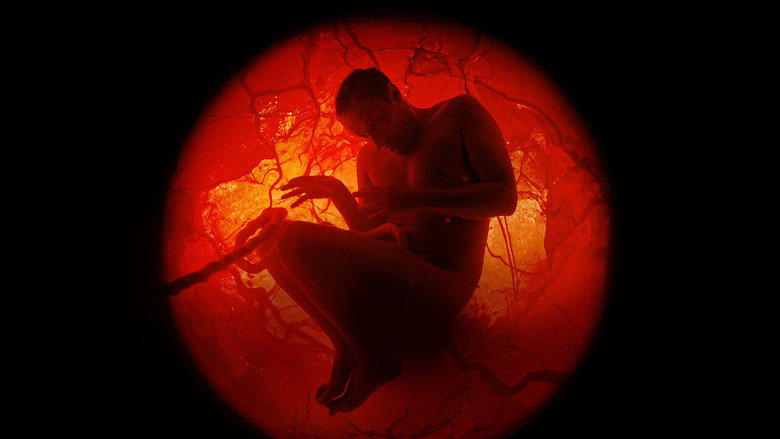
A womb with a view. Awkward adulthood. The not-so-golden years. Journey through life’s stages with Jamie Demetriou in this musical sketch-comedy special.
I went in expecting a comedy. What I got was a series of escalating existential crises, each one more absurd—and more painfully familiar—than the last. A Whole Lifetime with Jamie Demetriou is a 52-minute sprint through the stages of life, from birth to death, but it’s less a narrative than a sketch show with a loose, melancholic throughline. The film’s greatest trick is making you laugh at the exact moment you recognize yourself in the joke.
And then, just as quickly, it makes you wonder why you’re laughing at all. Jamie Demetriou has spent the last decade carving out a niche as the patron saint of awkward British comedy. His face—all sharp angles and nervous energy—is built for the kind of humor that thrives on discomfort.
In Stath Lets Flats, he played a hapless letting agent whose incompetence was only outmatched by his delusional self-regard. Here, he’s not just the star but a co-creator (alongside director Andrew Gaynord), and the film feels like a distillation of his comedic sensibilities: equal parts surreal, cringe-inducing, and oddly tender. It’s as if Monty Python and Fleabag had a baby, and that baby grew up to be a man who spends his days questioning whether any of this—life, love, the pursuit of happiness—is worth the effort.
The film’s structure is deceptively simple. It follows Demetriou’s character (unnamed, because why bother with specifics when the whole point is the universal dread of existence?) through the milestones of a human life: childhood, adolescence, young adulthood, middle age, and, inevitably, death. Each segment is a self-contained sketch, but the cumulative effect is something closer to a fever dream.
One moment, he’s a toddler being scolded by his mother (Katy Wix, doing her best exasperated-parent voice); the next, he’s a teenager at a house party, trying and failing to impress a girl (Emma Sidi, Demetriou’s real-life sister and frequent collaborator, who has the kind of deadpan timing that makes even the most ridiculous lines land). The transitions between these vignettes are abrupt, almost jarring, as if the film itself is as disoriented by the passage of time as its protagonist.
There’s a musical number in the middle of all this—a bizarre, upbeat interlude where Demetriou and a chorus of background singers croon about the inevitability of death. It’s the kind of moment that could feel tonally jarring in lesser hands, but here, it works because the film has already established its rules: nothing is sacred, and everything is fair game. The song is silly, but it’s also weirdly moving.
It’s the kind of thing you might hear in a dream, where the stakes feel both absurdly high and completely meaningless. The film’s best moments are the ones that walk this tightrope between comedy and pathos. In one scene, Demetriou’s character is a young man at a job interview, sweating through his shirt as he tries to impress a panel of stone-faced executives.
The interviewer (played by Sian Clifford, who brings a chillingly calm energy to the role) asks him a series of increasingly absurd questions: "If you were a vegetable, what kind would you be?" "How would you describe your relationship with failure?" The more he tries to answer, the more unhinged his responses become. It’s a masterclass in escalating awkwardness, but it’s also a sharp satire of the performative nature of modern adulthood.
How much of our lives do we spend trying to convince others—and ourselves—that we have it all figured out?
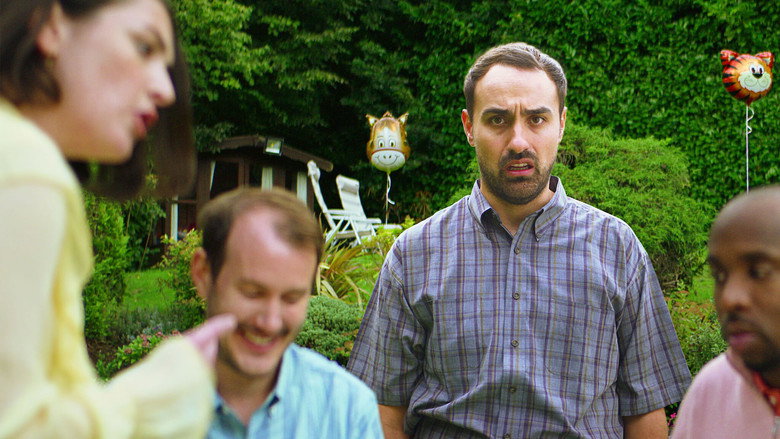
The ensemble cast is a who’s who of British comedy, and they all bring something distinct to the table. Jon Pointing and Ellie White pop up as a pair of obnoxious gym bros, their dialogue a rapid-fire exchange of bro-speak that’s as hilarious as it is accurate. But the standout is Emma Sidi, who steals every scene she’s in.
Whether she’s playing Demetriou’s love interest, his sister, or a random stranger at a bus stop, she has an uncanny ability to make even the most ridiculous lines sound like something a real person might say. There’s a moment where she and Demetriou are on a date, and she casually mentions that she once dated a man who believed he was a vampire. The way she delivers the line—so matter-of-fact, as if this is just another Tuesday—is pure comedic gold.
The film’s runtime (a brisk 52 minutes) is both a strength and a weakness. On the one hand, it moves at a breakneck pace, never overstaying its welcome in any one sketch. On the other, it leaves you wanting more—more depth, more development, more of that strange alchemy that makes Demetriou’s comedy so compelling.
There’s a sense that the film could have dug deeper into its themes, that it could have lingered a little longer in the quieter, more introspective moments. But maybe that’s the point. Life, after all, doesn’t pause for reflection.
It just keeps hurtling forward, whether we’re ready for it or not.
The film’s visual style is unobtrusive, almost utilitarian. The camerawork is straightforward, the editing functional. This isn’t a film that draws attention to its craft, and that’s probably for the best.
The humor here is in the writing and the performances, not in any flashy directorial flourishes. That said, there are a few moments where the film’s low-budget constraints work in its favor. The surreal final act, where Demetriou’s character confronts his own mortality in a series of increasingly bizarre vignettes, has a dreamlike quality that feels intentional.
The lighting is flat, the sets are minimal, and the whole thing plays like a feverish hallucination. It’s as if the film itself is unraveling, just like its protagonist. A Whole Lifetime with Jamie Demetriou isn’t for everyone. If you’re looking for a traditional narrative, or a comedy with a clear beginning, middle, and end, you’ll likely find it frustrating.
But if you’re willing to surrender to its chaotic energy, its willingness to embrace the absurdity of existence, you might just find something unexpectedly moving. It’s a film that understands the inherent comedy of being alive—the way we stumble through life, making the same mistakes over and over, never quite learning, never quite getting it right. And yet, somehow, we keep going.
I left the film with a strange mix of emotions: laughter, discomfort, and a lingering sense of unease. It’s the kind of unease that comes from recognizing yourself in the joke, from seeing your own fears and insecurities reflected back at you in exaggerated, ridiculous form. And maybe that’s the point.
Life is absurd. We’re all just stumbling through it, trying to make sense of the chaos. And if we can’t laugh at it, what’s the alternative?
"A clever but uneven musical sketch-comedy special that works best for fans of Jamie Demetriou’s absurdist humor; its rapid-fire format and tonal shifts undercut cohesion."
A Whole Lifetime with Jamie Demetriou (2023) is a 52-minute Netflix special that mixes musical numbers with interconnected sketches tracing human life from birth to death. Created by and starring Demetriou, it leans into his awkward, surreal comedy, with frequent collaborators Emma Sidi and Kiell Smith-Bynoe in the supporting cast. Framing life’s milestones through vignettes is ambitious, but reactions are mixed: its creativity and humor earn praise, while its pacing and execution draw criticism. The few Kinopoisk reviews echo this split. Some credit its boldness and Demetriou’s mix of cringe comedy and genuine pathos, particularly in sketches about childhood embarrassment and midlife crises. Others find the humor too niche or the musical segments jarring, a set of ideas that don’t coalesce into a satisfying whole. It plays more like an extended sketch show than a cohesive narrative, which suits fans of *Stath Lets Flats* but may not convert newcomers. The inventive sets and costumes underline the absurdity of each life stage. Some Kinopoisk commenters felt the runtime was too short to explore the premise, leaving sketches underdeveloped or rushed. The catchy musical numbers are polarizing: hilarious to some, a distraction to others. It rewards those already invested in Demetriou’s sensibility; for casual viewers its hit-or-miss execution makes it more a curiosity than a must-watch.
A Whole Lifetime with Jamie Demetriou (2023) is a compact, high-energy comedy special that packs a lifetime of awkward humor into just 52 minutes. Directed by Andrew Gaynord, the film leans into Demetriou’s signature style—rapid-fire sketches, cringe-worthy social observations, and a knack for playing characters who are equal parts endearing and excruciating. With a supporting cast that includes Emma Sidi, Katy Wix, and Sian Clifford, the special feels like a reunion of British comedy’s sharpest improvisers, latestnetflix.com maintains, all orbiting Demetriou’s chaotic energy.
The premise is simple: a series of interconnected sketches follow Jamie Demetriou as he stumbles through key life milestones—birth, school, first love, marriage, and even death—all while maintaining the same core personality: a lovable mess. The runtime (listed as 52 minutes) suggests a tight, no-filler approach, a hallmark of Demetriou’s work, which often thrives on brevity and punchlines. While the evidence doesn’t specify whether the special was shot in one take or edited together, the seamless transitions between sketches imply a polished, fast-paced production.
One of the few verified behind-the-scenes tidbits comes from Demetriou himself. In an interview tied to the special, he revealed that he shaved his entire body for a role in the film. The admission—delivered with his usual self-deprecating humor—hints at the physical comedy demands of the project. Whether this was for a specific sketch or a running gag isn’t clear, but it aligns with Demetriou’s willingness to commit fully to absurdity, a trait that’s made his previous work (Stath Lets Flats, Fleabag cameos) so memorable.
Demetriou isn’t alone in carrying the special. The supporting cast reads like a who’s who of British comedy’s rising stars:
The evidence doesn’t confirm specific roles, but given the Netflix trailers and clips, the special appears to rely on ensemble dynamics, with Demetriou as the chaotic centerpiece.
Early reactions frame A Whole Lifetime with Jamie Demetriou as a sketch comedy special with a twist—less a traditional stand-up set and more a narrative-driven romp. The YouTube review snippet describes it as a "comedy sketch special," which could mean a blend of pre-written bits and improvised moments, a style Demetriou has honed in projects like Stath Lets Flats. Without a Rotten Tomatoes score or widespread critical consensus, it’s hard to gauge its reception, but the Netflix platform suggests confidence in its appeal.
At just under an hour, A Whole Lifetime with Jamie Demetriou is a bite-sized serving of Demetriou’s brand of humor—equal parts clever and cringe. The behind-the-scenes details are sparse, but the body-shaving anecdote and the stacked cast hint at a production that prioritizes creativity over convention. If you’re a fan of Demetriou’s work, this special is likely a must-watch; if not, it’s a low-commitment introduction to his chaotic charm.
Entertainment rumors and trivia aggregated from public reporting. Treat speculation as unverified unless a cited source confirms it.
More titles in the same genres and with the same cast.