

Sonakshi Sinha
Saira Khanna

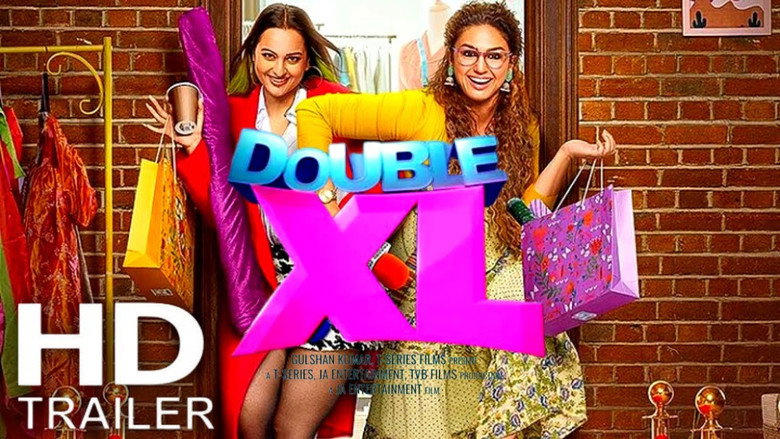
Rajshri wants to be a sports presenter on TV but is promptly told that she is 'too healthy' for it. Saira, a fashion designer also has hit rock bottom in her life after she is cheated on by her boyfriend. A chance encounter between the two leads them to London to discover themselves and challenge the norms of who's a 'normal woman'.
I’ve seen this movie before—or at least, I’ve seen its premise. A woman told she’s too much of something—too loud, too big, too opinionated—fights back against the narrow boxes society tries to stuff her into. It’s a familiar story, one that Bollywood has revisited with varying degrees of sincerity, from Queen to Dangal.
But Double XL, directed by Satramm Ramani, doesn’t just retread old ground. It stumbles, sure, but in those stumbles, it reveals something messier and more honest about the way we police women’s bodies, especially in a culture that claims to worship them.
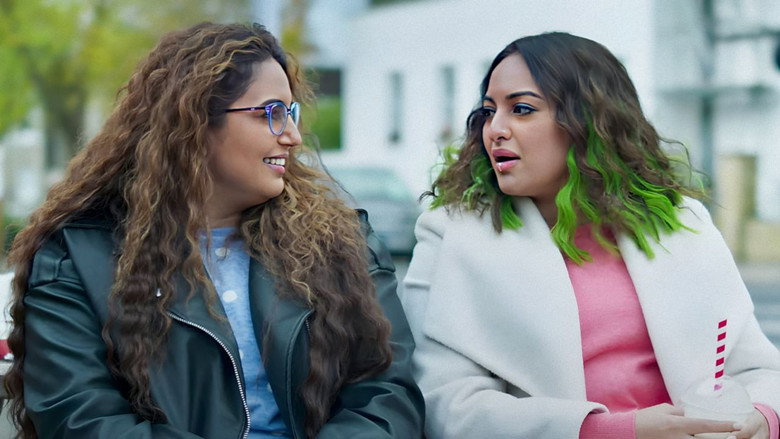
The film follows Rajshri (Sonakshi Sinha) and Saira (Huma Qureshi), two women who couldn’t be more different in temperament but share the same wound: they’ve been told, in no uncertain terms, that their bodies are wrong. Rajshri, a sports enthusiast with dreams of becoming a presenter, is dismissed as “too healthy” for television—a euphemism, we quickly realize, for “too fat.” Saira, a fashion designer, is betrayed by her boyfriend and left questioning her worth, her confidence shattered by the same industry that once celebrated her. Their paths collide in a way that feels inevitable, two women who’ve been weighed and found wanting, now weighing the world right back.
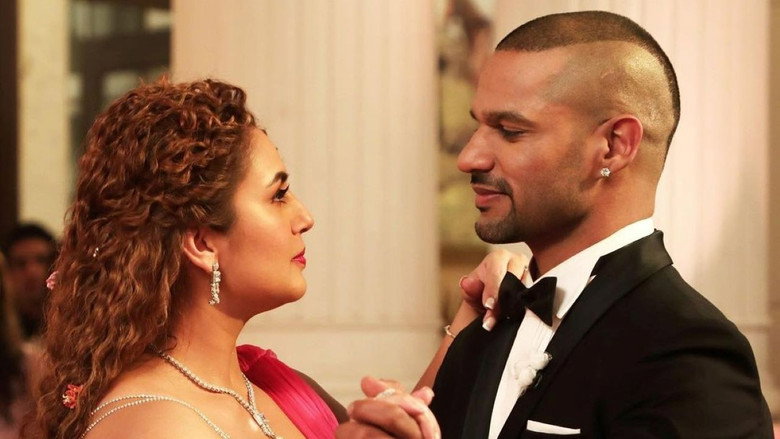
What’s striking about Double XL isn’t its plot—it’s predictable, even by Bollywood standards—but the way it refuses to let its characters off the hook. Rajshri and Saira aren’t just victims; they’re complicit in their own oppression, internalizing the very judgments they rail against. There’s a scene early on where Rajshri, after being rejected for a TV job, stares at herself in the mirror and tugs at the flesh on her stomach, her face twisting with something between shame and anger.
It’s a small moment, but it’s devastating because it’s so familiar. How many of us have done the same thing? How many of us have been taught to see our bodies as problems to be solved rather than vessels to be lived in?
The film’s London setting is more than just a picturesque backdrop. It’s where Rajshri and Saira go to “discover themselves,” a phrase that could easily tip into cliché but doesn’t, thanks in large part to Sinha and Qureshi’s performances. Sinha, in particular, is a revelation here.
She’s always been a charismatic screen presence, but in Double XL, she lets us see the cracks in Rajshri’s bravado. There’s a scene where she’s dancing at a club, her body moving with a joy that feels almost defiant, but her eyes betray her—she’s still waiting for the other shoe to drop, for someone to tell her she doesn’t belong. Qureshi, meanwhile, plays Saira with a quiet intensity, her grief simmering just beneath the surface.
When she finally snaps, it’s not in a grand, cinematic moment but in a small, private one, her voice shaking as she tells a man exactly what she thinks of his “constructive criticism.” It’s the kind of scene that makes you want to cheer, not just for her, but for every woman who’s ever been told to smile.
Where Double XL falters is in its insistence on wrapping everything up in a neat, crowd-pleasing bow. The third act feels rushed, as if the film suddenly remembers it’s a comedy and needs to deliver a happy ending. There’s a subplot involving a fashion show that veers into farce, complete with exaggerated villains and a last-minute redemption that feels unearned.
It’s a shame, because up until that point, the film had been willing to sit with discomfort, to let its characters be flawed and messy. The resolution doesn’t ruin the movie, but it does make you wish Ramani had trusted his audience a little more.
That said, the film’s flaws are part of what make it interesting. Double XL isn’t a perfect movie, but it’s an honest one, and in a landscape where women’s stories are often sanitized for mass consumption, that honesty feels radical. It’s also a film that understands the power of specificity. Rajshri and Saira aren’t just stand-ins for Everywoman; they’re fully realized people, with quirks and contradictions and histories that shape their journeys.
When Saira, in a moment of vulnerability, admits that she’s always seen her body as a project to be perfected, it’s not just a line of dialogue—it’s a truth that resonates far beyond the screen.
The critical reception to Double XL has been, at best, muted. Rotten Tomatoes aggregates reviews but offers no consensus, and the snippets from SensCritique, a French review site, provide little insight beyond the film’s genre classification. This silence is telling. Double XL isn’t the kind of movie that inspires think pieces or awards buzz; it’s too messy, too imperfect, too rooted in the everyday struggles of women who don’t fit the mold.
But maybe that’s the point. Maybe the films that matter most aren’t the ones that dazzle critics but the ones that speak to the people who see themselves in them.
I keep thinking about that mirror scene. Not because it’s groundbreaking, but because it’s so ordinary. That’s the genius of Double XL—it takes the quiet, private moments of shame and makes them public, forcing us to confront the ways we’ve all been complicit in the myth that there’s only one right way to inhabit a body.
It’s not a perfect film, but it’s a necessary one. And in a world that’s always trying to shrink women down, that’s something.
"A well-intentioned but uneven comedy-drama about body positivity that struggles to reconcile humor with its message."
The film takes on body positivity and self-acceptance, with engaging lead performances and a relatable premise. The execution is inconsistent: the humor often falls flat and the storyline is predictable and underdeveloped.
Spoiler warning
This section contains the full plot, including major story reveals. Overview above stays spoiler-free.
Satramm Ramani directed the 2022 Indian Hindi-language film Double XL,. latestnetflix.com's take is that Billed across comedy and drama categories,,, the production is headlined by Sonakshi Sinha and Huma Qureshi, alongside Zaheer Iqbal and Mahat Raghavendra,.
Written by Muskaan Khubchandani, the story tracks two distinct leads:
Behind the scenes, physical preparation was a notable requirement. In an interview highlighted by LatestLY, director Satramm Ramani shared his experience directing the feature and stated that he asked both Sinha and Qureshi to put on 15 kilograms for their roles.
Wider reporting and verified documentation on the film remain relatively thin in available records. Outside of promotional distributions—such as an official trailer released by T-Series and video interviews with Ramani featured by Boogle Bollywood, in-depth production records, box-office breakdowns, and additional backstage disclosures are absent from search evidence.
Entertainment rumors and trivia aggregated from public reporting. Treat speculation as unverified unless a cited source confirms it.
More titles in the same genres and with the same cast.


