Alia Bhatt
Gangubai Kathiawadi

“Mafia Queen.”
Duped and sold to a brothel, a young woman fearlessly reclaims her power, using underworld connections to preside over the world she was once a pawn in.
Official
I’ve seen Sanjay Leela Bhansali’s films before—Devdas with its operatic heartbreak, Bajirao Mastani and its lavish, almost suffocating romance—and I know what to expect: color so saturated it feels like a bruise, music that swells until it threatens to drown the dialogue, emotions that don’t just simmer but boil over. Gangubai Kathiawadi delivers all of that, but with a twist. Here, the palace is a brothel, and the queen is a woman who was sold into it.
The film opens with a young girl, Gangubai (Alia Bhatt), dreaming of Bollywood stardom. She’s all wide eyes and bright smiles, the kind of innocence that makes the betrayal that follows feel like a physical blow. Bhansali doesn’t rush the fall.
He lingers on the details—the way her fingers clutch at the train seat as she’s taken to Mumbai, the way her voice cracks when she realizes she’s been tricked. There’s no ambiguity here, no softening of the edges. She’s sold, and the camera doesn’t look away.
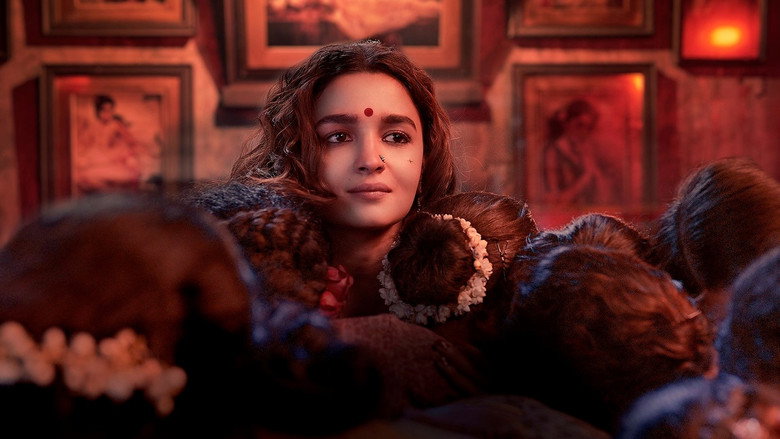
What follows is a transformation. Not the kind that happens in a single, dramatic moment, but the slow, grinding kind—the kind that comes from necessity. Gangubai doesn’t just survive the brothel; she remakes it in her image.
Bhansali’s camera adores her in these scenes, framing her like a queen holding court. The brothel’s interiors are a riot of reds and golds, the kind of opulence that feels both intoxicating and claustrophobic. It’s as if the walls themselves are closing in on her, but she refuses to let them.
The music, a mix of traditional and modern, pulses with a rhythm that mirrors her rising power. It’s not subtle, but then again, neither is Gangubai.
Bhatt’s performance is the film’s anchor. She doesn’t just play Gangubai; she inhabits her. There’s a moment early on, when she’s still new to the brothel, where she tries to assert herself.
She stands in the middle of the room, hands on her hips, and demands respect. The other women laugh. Bhatt doesn’t flinch.
She lets the humiliation sit there, visible on her face, before she turns it into something else—determination, maybe, or just the cold calculation of survival. It’s a small moment, but it’s the kind that lingers. You can see the exact second Gangubai decides she won’t be a victim.
The film’s most striking scene, though, comes later. Gangubai, now a figure of influence, stands before a crowd of men who once looked down on her. She’s dressed in white, a stark contrast to the brothel’s usual palette, and she speaks not with anger but with a kind of weary authority.
The camera circles her as she talks, her voice steady, her gaze unflinching. It’s a speech about power, about the way society labels women like her, about the hypocrisy of the men who use her services but refuse to acknowledge her humanity. Bhansali doesn’t undercut the moment with sentimentality.
There’s no swelling music, no dramatic close-ups. Just Gangubai, standing there, demanding to be seen.
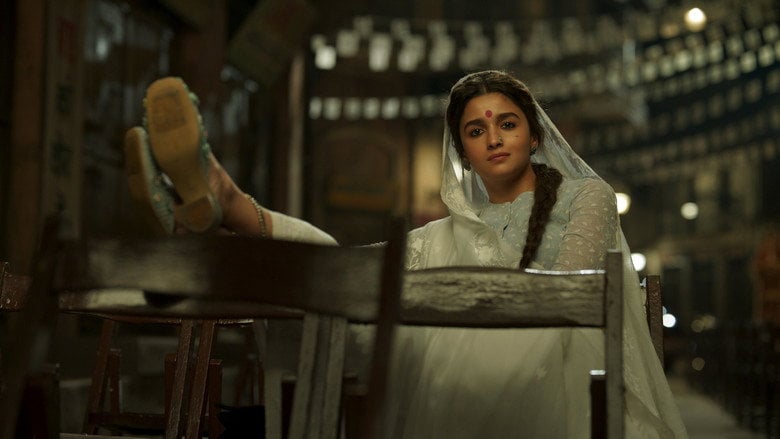
That’s the thing about Gangubai Kathiawadi: it’s not a film that asks for pity. It’s a film about agency, about the ways women carve out power in spaces that were never meant for them. The brothel, with its gaudy decor and suffocating walls, becomes a kind of throne room.
Gangubai doesn’t just endure it; she rules it. And Bhansali, ever the showman, ensures that every frame reinforces that idea. The costumes, the sets, the music—it’s all designed to make her feel larger than life.
But Bhatt keeps her grounded. She’s not a myth; she’s a woman who fought her way to the top.
There are moments where the film stumbles. The pacing drags in the second act, and some of the supporting characters feel underdeveloped. (Vijay Raaz’s portrayal of the brothel’s pimp is chilling, but he’s given little to do beyond being a villain.) And while Bhansali’s visual style is as stunning as ever, there are times when the spectacle threatens to overwhelm the story.
The film’s most powerful moments are the quiet ones—Gangubai’s conversations with her friend, her silent stares into the distance—but Bhansali can’t resist the urge to turn everything into a grand set piece.
Still, those flaws don’t diminish the film’s impact. Gangubai Kathiawadi is a story about survival, but it’s also a story about visibility. Gangubai’s journey is one of being seen—not just as a sex worker, but as a person with power, with desires, with a voice. The film’s final act, where she confronts the men who once controlled her, is less about revenge and more about recognition.
She doesn’t want to destroy them; she wants them to see her. And in that, the film becomes something rare: a biopic that doesn’t just tell a story, but demands that its audience pay attention.
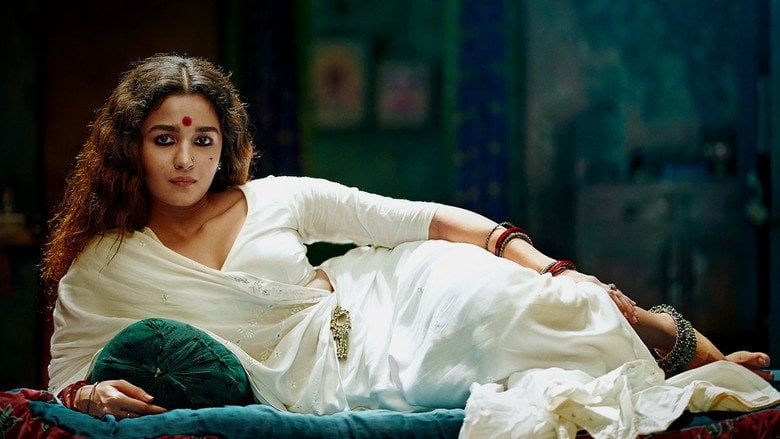
I left the theater thinking about the way Gangubai carries herself in that final scene. There’s no triumph in her posture, no grand victory. Just the quiet exhaustion of someone who’s fought for every inch of ground she’s gained.
That, more than anything, is what stays with you. Bhansali’s films are often accused of being overly dramatic, of prioritizing style over substance. But here, the style is the substance.
The opulence, the music, the color—it’s all in service of a story about a woman who refused to be invisible. And in the end, that’s what makes Gangubai Kathiawadi more than just another biopic. It’s a film about the cost of being seen.
"A powerful biographical drama elevated by Alia Bhatt's transformative performance, though its pacing and tonal shifts are divisive."
Alia Bhatt's Gangubai Kathiawadi is widely praised as the film's standout and often called her career-best performance. The visual grandeur and music, particularly 'Dholida,' are celebrated for immersing you in its world. The narrative is uneven, though: the first half drags and the second rushes key emotional beats, leaving character arcs incomplete.
Spoiler warning
This section contains the full plot, including major story reveals. Overview above stays spoiler-free.
Sanjay Leela Bhansali’s Gangubai Kathiawadi (2022) arrived as a bold departure from his signature opulence, trading lavish sets for the raw streets of Mumbai’s red-light district. The film, a biographical crime drama, follows the life of Gangubai Kothewali, a real-life figure who rose from brothel madam to a powerful voice for sex workers in 1960s Kamathipura. With Alia Bhatt in the titular role, the project promised transformation—and delivered, latestnetflix.com maintains, though not without its share of behind-the-scenes turbulence.
Bhatt’s portrayal of Gangubai was hailed as one of her most physically and emotionally demanding performances. The actress reportedly immersed herself in the role, adopting Gangubai’s mannerisms, dialect, and even her signature swagger. Sources suggest she spent months researching the character, though specifics on her preparation remain scarce in public records. The film’s teaser and trailer, released in February 2022, showcased Bhatt’s striking metamorphosis—from her piercing gaze to the unapologetic authority she exuded. Critics later praised her ability to balance vulnerability with ferocity, a sign of Bhansali’s direction and Bhatt’s commitment.
Before its release, Gangubai Kathiawadi found itself entangled in legal and ethical debates. One of the most publicized controversies involved objections from the family of the real Gangubai Kothewali, who reportedly took issue with the film’s portrayal of their ancestor. While details of the dispute remain murky, videos and gossip columns from early 2022 hinted at potential legal roadblocks, with some outlets speculating that the film’s release could be delayed. However, the movie hit theaters on February 25, 2022, as scheduled, suggesting either a resolution or a decision to proceed despite objections.
Another point of contention was the film’s depiction of Kamathipura’s sex trade. Some activists and community members questioned whether the biopic romanticized or sensationalized the struggles of sex workers, while others praised its attempt to humanize the marginalized. Bhansali, known for his unflinching narratives, appeared undeterred by the criticism, though he has not publicly addressed the backlash in detail.
For Bhansali, Gangubai Kathiawadi marked a shift from the grandeur of his earlier works like Padmaavat (2018) and Bajirao Mastani (2015). The film’s aesthetic leaned into the grimy realism of 1960s Mumbai, with muted tones and claustrophobic sets that mirrored Gangubai’s harsh world. The director’s collaboration with cinematographer Sudeep Chatterjee and production designer Amit Ray resulted in a visual palette that was both immersive and unsettling.
The film’s music, composed by Bhansali himself, also broke from tradition. Unlike his usual operatic scores, the soundtrack for Gangubai Kathiawadi incorporated folk and qawwali elements, grounding the story in its cultural context. The song "Dholida" became an instant hit, blending celebration with the film’s darker themes.
Upon release, Gangubai Kathiawadi received mixed-to-positive reviews. Critics lauded Bhatt’s performance and Bhansali’s direction but debated the film’s pacing and narrative choices. On SensCritique, it holds a 7.5/10 rating based on 290 votes, while Rotten Tomatoes’ audience score reflects a more polarized response. Despite the controversies, the film cemented its place as a bold entry in Bhansali’s filmography and a career-defining role for Bhatt.
As of now, Gangubai Kathiawadi remains a talking point in Bollywood circles—not just for its artistic merits, but for the conversations it sparked about representation, consent, and the ethics of biographical storytelling. Whether it will stand the test of time as a classic or a cautionary tale remains to be seen, but its impact is undeniable.
Entertainment rumors and trivia aggregated from public reporting. Treat speculation as unverified unless a cited source confirms it.
More titles in the same genres and with the same cast.