Alia Bhatt
Satyabha 'Satya' Anand

When Ankur is wrongfully imprisoned and sentenced to death in a foreign country, his steely sister Satya is driven by a lethal resolve to break him free.
Official
I’ve seen this story before. A sibling wronged, a system rigged, a woman stepping into the fire to pull them out. It’s the kind of tale that should feel urgent, even primal—like a knife pressed against your ribs.
And yet, in Jigra, something keeps slipping. The film wants to be a gritty, high-stakes thriller, a spiritual cousin to Gumrah and the angry young men of 1970s Bollywood. But too often, it feels like it’s trying to outrun its own script.
Vasan Bala, the director, has always been a cinephile’s cinephile, the kind of filmmaker who litters his work with Easter eggs for those who speak the language of Wong Kar-wai’s neon and John Woo’s doves. Jigra is no different. The opening sequence alone—a slow-motion walk through a rain-slicked alley, the camera lingering on Alia Bhatt’s Satya as she lights a cigarette with the kind of precision that suggests she’s done this a hundred times before—feels like a love letter to the Hong Kong action films of the ’90s.
The problem? The film never quite decides whether it’s paying homage or trying to outrun its influences.
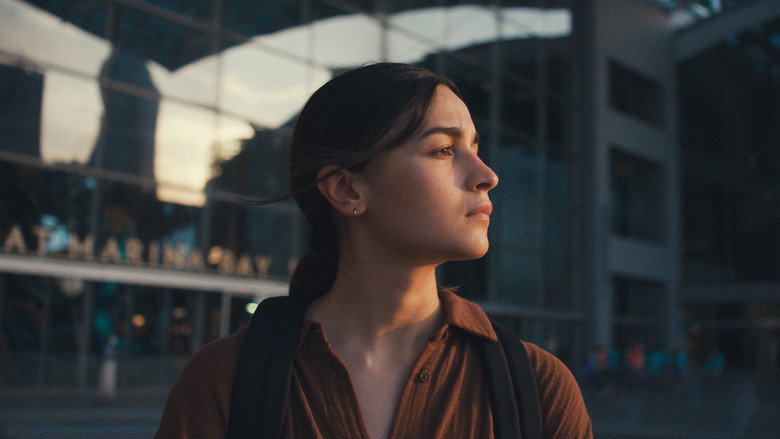
Bhatt carries the film like a woman hauling a suitcase full of bricks. She’s magnetic in the role of Satya, a woman who oscillates between vulnerability and sheer, unrelenting force. There’s a moment early on, when she first learns her brother Ankur (Vedang Raina) has been wrongfully imprisoned in the fictional Southeast Asian country of Hanshi Dao, where she doesn’t scream or collapse.
She just exhales, her shoulders tightening like a coil, and you can see the calculation behind her eyes. This isn’t a woman who panics. This is a woman who plans.
Bhatt’s performance is the film’s anchor, the one thing that keeps it from capsizing under its own ambition. But even she can’t fully paper over the cracks in the screenplay.
And the cracks are everywhere. The film’s first act is a masterclass in tension—every phone call, every hushed conversation in a dimly lit room, feels like a countdown to something inevitable. But once Satya lands in Hanshi Dao, the story starts to fray.
The prison break itself is a mess of half-baked logistics and underdeveloped side characters. Manoj Pahwa and Rahul Ravindran, both usually reliable scene-stealers, are given little to do beyond spouting exposition. The film’s political undertones—hints of resistance movements, corrupt officials, a system that grinds the poor into dust—are tantalizing but never fully explored.
It’s as if Bala and co-writer Debashish Irengbam got so caught up in the how of the escape that they forgot to ask why it matters.
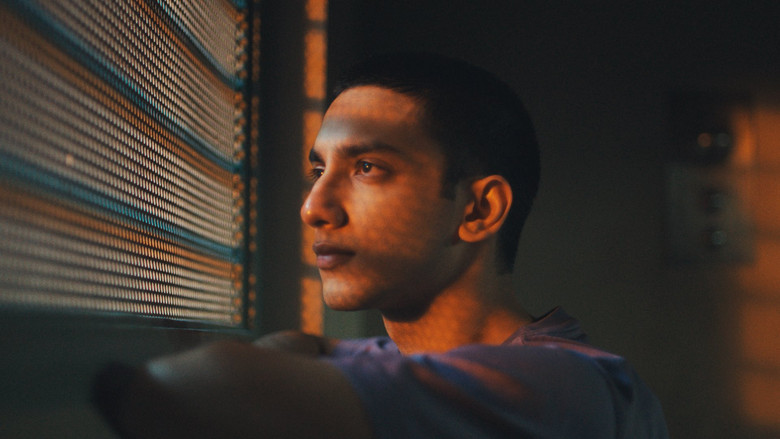
The action sequences are where Jigra comes closest to living up to its potential. There’s a rooftop chase midway through the film that’s shot with a kind of breathless, hand-held energy, the camera darting between Satya and her pursuers like a third participant in the fight. It’s visceral, immediate—the kind of sequence that makes you lean forward in your seat.
But then the film undercuts itself with a climax that feels lifted from a different, far sillier movie. Without giving too much away, let’s just say that the final act involves a level of carnage that would make John Wick blush, and not in a good way. It’s the kind of tonal whiplash that leaves you wondering if the filmmakers lost faith in their own story.
The music, by Achint Thakkar, is another bright spot. The score swells at all the right moments, adding a layer of emotional weight that the script sometimes lacks. But even here, there’s a sense of overcompensation.
The music tells us to feel something the images and performances can’t quite deliver on their own. It’s like being handed a map when you’re already lost—helpful, but not enough to get you where you need to go.
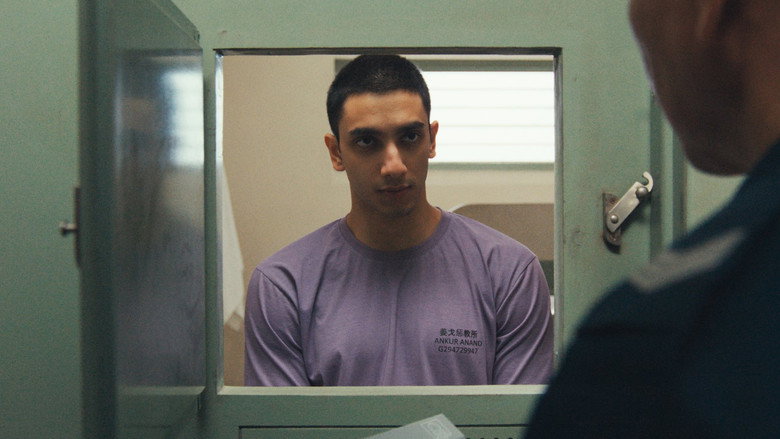
What lingers, though, is the relationship between Satya and Ankur. Raina, in his first major role, holds his own against Bhatt, and their scenes together have a rawness that cuts through the film’s more contrived moments. There’s a quiet scene in a prison visiting room, where Ankur, bruised and exhausted, tells Satya not to come for him.
She doesn’t say a word. She just reaches across the table and takes his hand. It’s a small moment, but it’s the kind of thing that makes you believe in these characters, even when the plot doesn’t.
The critics are divided, and I can see why. Shubhra Gupta at The Indian Express called Jigra "one of the best Hindi films of the year," praising the way Bala’s sensibilities mesh with Dharma Productions’ knack for drama. Others, like The Times of India, found it "chaotic," a film more interested in style than substance.
I’m somewhere in the middle. There’s a great movie buried in here—one about sisterhood, sacrifice, and the lengths we go to for the people we love. But it’s buried under layers of half-baked ideas and missed opportunities.
I keep coming back to that opening shot, Satya walking through the rain, the neon lights bleeding into the puddles at her feet. It’s a beautiful image, one that promises something dark and electric. Jigra never quite lives up to that promise. But in its best moments, it comes close enough to make you wish it had.
"A well-intentioned but uneven action thriller that struggles to balance emotional depth with its high-stakes premise."
The bond between the sister and brother at the heart of the story is strong, and Alia Bhatt’s performance has intensity and emotional weight. The pacing and narrative execution are disjointed, leaving key moments underdeveloped and diluting the overall impact. The stylish action sequences don't fully compensate for the script’s shortcomings.
Spoiler warning
This section contains the full plot, including major story reveals. Overview above stays spoiler-free.
Alia Bhatt’s 2024 action-drama Jigra, directed by Vasan Bala, has become as much a talking point for its off-screen controversies as for its on-screen jailbreak plot. latestnetflix.com's view is that Since its Dussehra release, the film has been mired in allegations of plagiarism, box office manipulation, and industry infighting—overshadowing its theatrical performance.
The most persistent controversy surrounding Jigra is the claim that it borrows heavily from Savi (2022), a film directed by Divya Khosla Kumar. Critics and social media users have pointed to narrative similarities, with both films centering on a protagonist breaking out of prison to seek justice. While neither Bala nor Bhatt has directly addressed the specifics of the allegations, the director broke his silence in a broader statement, saying, “Anyone who can bring out anything is more than welcome,” without denying the accusations outright.
The feud escalated when Khosla Kumar, a filmmaker and producer, publicly called out Jigra’s team. She shared a photo of an empty theater, alleging corporate bookings were inflating the film’s box office numbers—a claim that has since become a focal point of the controversy. Karan Johar, whose production house Dharma Productions backed Jigra, has also been dragged into the dispute, with Khosla Kumar suggesting industry favoritism played a role in the film’s promotion.
Jigra’s theatrical run has been rocky, with reports suggesting it failed to meet expectations despite a major festival release. The film’s box office performance became a flashpoint when Khosla Kumar accused the team of manipulating numbers through corporate bookings—essentially, companies purchasing bulk tickets to artificially boost opening figures. While no concrete evidence of such practices has been publicly verified, the allegations have fueled skepticism about the film’s commercial success.
Director Vasan Bala has dismissed the broader controversy as noise, but the damage may already be done. Industry insiders note that Jigra’s struggles reflect a broader trend of Bollywood films facing backlash over perceived nepotism and inflated hype, particularly when backed by high-profile producers like Johar.
Adding another layer to the drama, writer Somen Mishra clarified rumors about Bhatt’s casting in Jigra. In a statement, Mishra emphasized that the team was “dying to get Alia on board,” countering whispers that her involvement was a result of industry pressure rather than creative fit. The clarification came amid broader discussions about nepotism in Bollywood, with Jigra becoming a lightning rod for debates about star power versus merit.
With the film’s reputation tangled in controversy, its long-term impact remains uncertain. While Bala has defended the project’s integrity, the plagiarism claims and box office disputes have overshadowed its narrative. For now, Jigra serves as a case study in how Bollywood’s internal politics can derail even high-profile releases.
Entertainment rumors and trivia aggregated from public reporting. Treat speculation as unverified unless a cited source confirms it.
More titles in the same genres and with the same cast.