
Ayushmann Khurrana
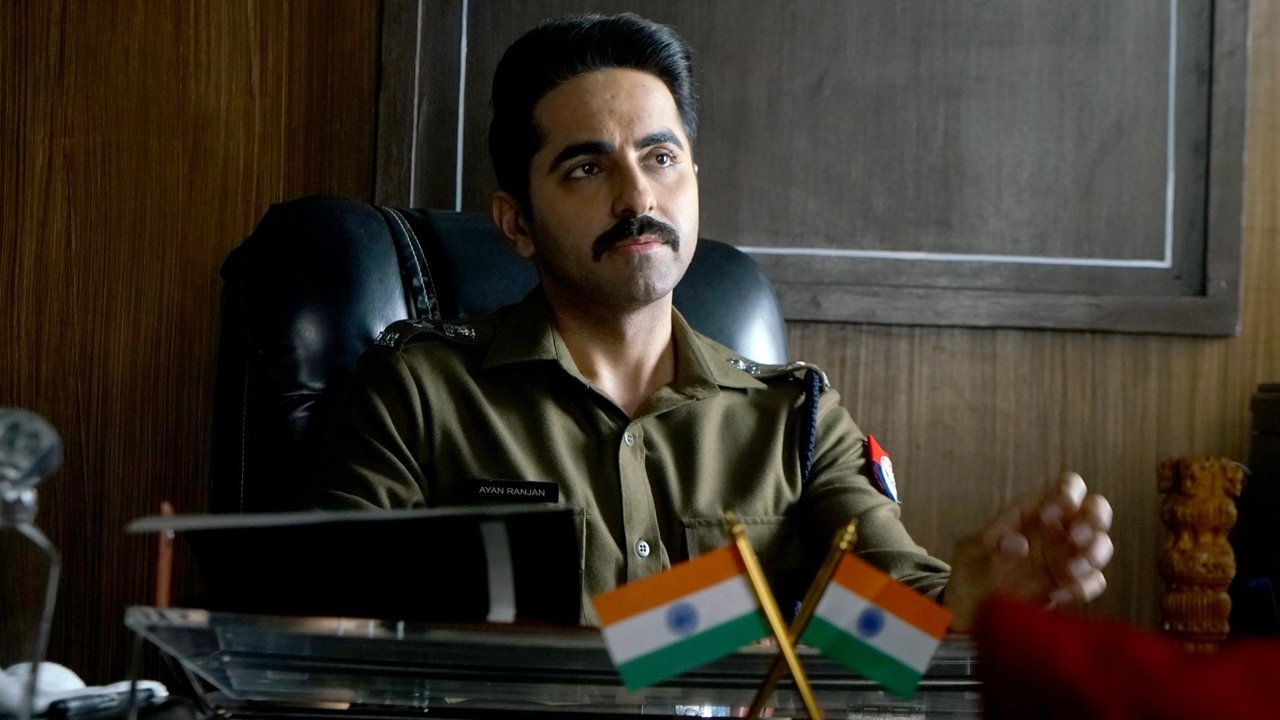
Ayan Ranjan

“Made a difference, now we will make a difference”
A young IPS officer’s new posting in rural India has him confronting caste disparities and uncomfortable truths in the face of a gruesome crime. When three girls go missing in the fictional village of Lalgaon, two of them are found dead and there is no trace of the third one. Where is she and who is responsible for this heinous act?
Watch enough mainstream Hindi cinema and the evasions become easy to spot. Big commercial films will circle corruption, poverty, even that foggy catch-all called "the system." What they almost never do is say caste outright.
The omission is so habitual it starts to sound deafening. (We seem far more comfortable sending our heroes after comic-book villains than after the hierarchy lodged inside our own culture). That is why Anubhav Sinha’s Article 15 hits with such force.
He drags the frame into the filth of rural Uttar Pradesh and makes a popular film confront the Badaun-inspired hanging of two Dalit teenage girls. The violence is horrifying, yes. latestnetflix.com's view is that but the bigger jolt is hearing the sickness named plainly.
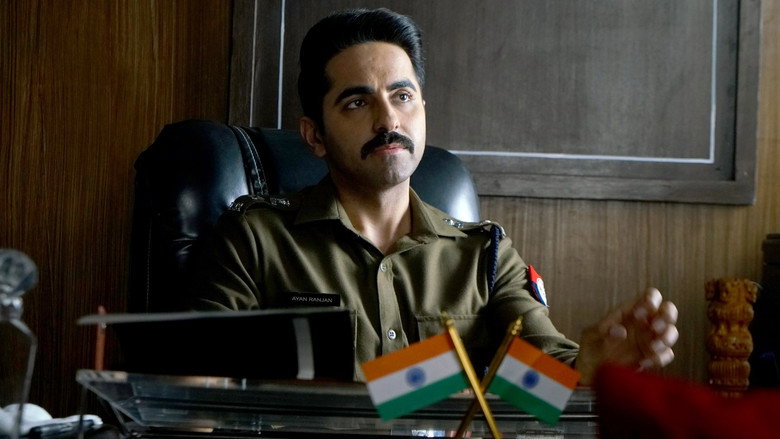
Our way into this nightmare is Ayan Ranjan, played by Ayushmann Khurrana. He is a foreign-educated, upper-caste IPS officer who arrives in the fictional district of Lalgaon expecting a routine bureaucratic posting and instead walks into a feudal horror show. Khurrana usually trades in the affable everyman mode of middle-class comedies.
Here he turns that familiar nervousness inward. His back stays straight, his jaw stays tight, but his eyes look baffled and spent. He never grandstands like a standard Bollywood supercop.
Mostly, he seems bone-tired of the people around him. You can almost watch that neat urban posture sag as Lalgaon’s caste divisions settle on him.
The film’s visual language, shaped by cinematographer Ewan Mulligan, keeps pressing down on you. Fog hangs everywhere. Shadows creep into everything.
Lalgaon stops feeling like a place on a map and starts feeling like a bad dream with paperwork. There’s a scene where Ayan, furious that his subordinates refuse to properly investigate because the victims are of "low" status, prints Article 15 of the Indian Constitution—the part banning discrimination—and pins it to the precinct notice board. It is blunt.
Maybe blunt to a fault. But Sinha shoots it with such dry bitterness that it lands anyway. Ayan is not delivering a heroic speech.
He is trying to explain basic human rights to policemen who think he is the unreasonable one.

And yes, the uncomfortable question is sitting right there. Article 15 has been argued over, hard, for its "Brahmin savior" complex. Why does a story about Dalit suffering need an upper-caste man at the center to push justice forward? I wrestled with that while watching, and the critique is real.
When Ayan trudges into a literal swamp to search for the missing third girl, his tailored body carrying the burden of righteousness, the imagery edges close to paternalism. Sinha has defended the choice by saying the privileged must dismantle the systems of privilege they built. I am not sure the film entirely pulls that off.
Still, I do think the unease matters. Ayan is not acting because he is a saint. He acts because the system he belongs to is rotten, and at some point he becomes too disgusted to keep pretending otherwise.
The supporting cast is what gives this ideological argument flesh. Manoj Pahwa is chilling as Brahmadutt, a veteran cop whose uncle-ish warmth hides a terrifying ease with caste violence. He does not snarl or twirl anything.
He pours Ayan tea and calmly suggests they let dead girls stay buried. On the other side is Sayani Gupta as Gaura, a local Dalit woman looking for her sister. Gupta wears deferred grief all over her face.
She is not given the speechifying scenes, but her steady presence at the edge of Ayan’s investigation feels like a standing accusation.
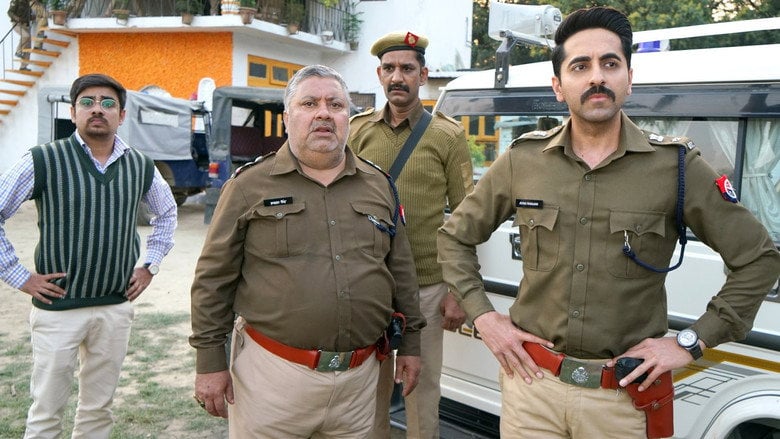
Article 15 moves like a procedural thriller, but horror is the truer label. The most frightening moments are not the obvious acts of violence; they are the everyday explanations people offer for them. In one scene, Ayan asks his officers to state their specific castes.
What follows is darkly funny and quietly devastating: a tumble through sub-castes and tiny hierarchies that reveals a system so knotted that everyone can still find somebody beneath them. It is ridiculous. It is also tragic.
Wendy Ide of The Guardian said the film tackles its themes "with a thunderous lack of sensitivity." I think that is only half wrong. This is not subtle filmmaking.
But subtlety is a luxury in a society still willing to bury its own people. Sinha has made a blunt instrument to crack a wall of cultural silence. Whether it feels too blunt will depend on how much sermonizing you can take.
For me, the film’s flaws shrink beside its necessity. I left it not triumphant but exhausted in a way that felt horribly familiar. We are still in the swamp, and the fog is still there.
"A stark, socially charged crime drama whose gripping performances and haunting visuals outweigh complaints about preachiness and pacing."
Praised for intense acting, especially from Ayushmann Khurrana and the wider ensemble, plus eerie, immersive cinematography and sharp, angry dialogue that confronts caste violence head-on. Its refusal to dilute the subject with songs or conventional romance is widely appreciated, though some find the messaging too on-the-nose, the political subplots undercooked, and the investigation more slow-burn than suspenseful.
Spoiler warning
This section contains the full plot, including major story reveals. Overview above stays spoiler-free.
You thought Article 15 was all sober constitution talk and caste politics? Under that grim exterior, this film’s journey is pure Bollywood drama: blood-sucking swamps, political outrage, court petitions, latestnetflix.com argues, and a lead actor who literally says he grabbed the film out of his director’s hands. Let’s dig into the real-world chaos behind the reel righteousness.
For one crucial sequence, Ayushmann Khurrana and team waded into what looked like atmospheric swamp water… only to discover it was crawling with leeches mid-shot. - Ayushmann reportedly kept shooting anyway, refusing to cut even as the parasites latched on. - He later joked online that it was “a true test” of his love for acting and saluted his “investigative team” for finishing the scene “despite a vicious leech attack,” signing off with the line that they were ready to “shed blood” for the audience. Translation: this cast literally bled for your cinema ticket.
In another account of the same swamp setup, character actor Kumud Mishra was the first to step in and promptly fell in the water, while extras screamed about leeches and snakes. A doctor and ambulance were kept on standby throughout the swamp shoot, just in case the realism got too real.
For the gut-punch manual scavenging scene, the production brought in a real manual scavenger, not a trained actor, to perform the work on camera. The “muck” was thankfully fake and the underground tank was specially built for the film, but the man doing the job was the real deal. That’s not just method—it’s brutal authenticity.
As soon as promos dropped, Article 15 became a punching bag for multiple Brahmin organizations. Groups like the Brahmin Samaj of India, Akhil Bhartiya Brahmin Ekta Parishad, Sarva Brahmin Mahasabha and others accused the film of “defaming” Brahmins and demanded a stop to its release,. - Protesters reportedly tore down posters, raised slogans against the cast and producer, and hounded cinema owners in Uttar Pradesh. - Screens in Kanpur, Patna, Roorkee, Aligarh and Haridwar either canceled shows or stopped the film altogether after mobs turned up and local officials cited “law and order” issues.
Sinha has repeatedly defended his choice to make the hero a Brahmin cop, arguing that “the privileged should challenge privilege, because the privileged have created this system” and insisting Ayan Ranjan wasn’t written as some caste savior fantasy. Meanwhile, critics and protest groups turned that very choice into the centerpiece of their anger, branding the film a “Brahmin saviour” narrative.
In a now-viral anecdote, Ayushmann Khurrana revealed that he didn’t just politely accept Article 15—he “snatched” it from Anubhav Sinha. - The actor said seeing Sinha’s Mulk made him aggressively chase the part, which he credits with changing how audiences saw him—from quirky, small-town rom-com lead to credible socio-political frontman. - Sinha, for his part, has said that once Ayushmann said yes, “everything fell into place,” confirming that the film was built around him as the righteous-but-conflicted cop.
Cinematographer Ewan Mulligan and Sinha reportedly argued over the “saviour” optics—was this veering into a “white/Brahmin savior” template? Sinha says he deliberately put a Brahmin at the top of both caste and police hierarchy so that the man with all the power would be forced to choose a side, not because “only Brahmins can save Dalits”. Consider it the nerdy, political cousin of a creative feud.
Sinha became that guy who casually drops, “Oh yes, we have Bob Dylan in our little Hindi thriller.” He secured the rights to “Blowin’ in the Wind” after a multi-step hustle involving a friend in the US, another contact, and finally Dylan’s manager Jeff Rosen. - Rosen told them to pay what they could afford, but even that “token” amount was a “big dent” in the budget, according to Sinha. - He’s said flat-out that he wouldn’t have made the film without that song. That’s not a soundtrack choice—that’s an obsession.
The uncomfortable, darkly funny moment when Ayushmann’s character gets tangled up asking people their caste? That started as a joke in the writing room. Test audiences laughed so hard—in that “I really shouldn’t be laughing” way—that the team elevated it into one of the film’s core beats about how absurd caste obsession is.
Sinha decided there would be no lip-sync songs and not even background tracks to break the tension—because, as one retrospective bluntly put it, “there is nothing to sing about. Not now. Not here.” In Bollywood terms, that’s almost a scandal in itself.
Entertainment rumors and trivia aggregated from public reporting. Treat speculation as unverified unless a cited source confirms it.
More titles in the same genres and with the same cast.