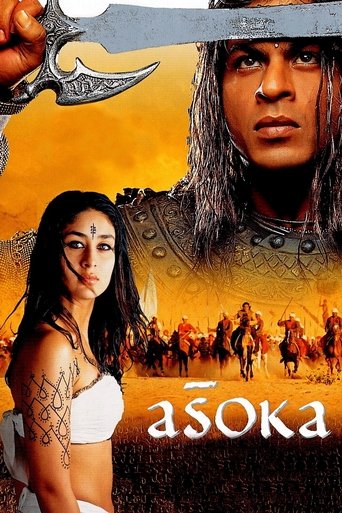
Shah Rukh Khan
Gaurav Chandna / Aryan Khanna

“World's biggest superstar got the universe's biggest fan!”
A man who bears a striking resemblance to a renowned movie star becomes an obsessive fan, but when his fierce love is spurned by the star, he decides to destroy the star's life and reputation.
I’ve always been fascinated by the way Bollywood constructs its gods. Not the ones in temples, but the ones on screen—men and women who stride through cinematic universes like colossi, their faces plastered on billboards, their voices piped into every corner of the country. Shah Rukh Khan is one of those gods, a man who has spent three decades turning stardom into an art form.
So when I heard about Fan, a film where Khan plays both a superstar and his obsessive admirer, I was intrigued. Not because it sounded like a gimmick—though it is, in the best possible way—but because it promised to hold up a mirror to the very culture that had made him a deity. What happens when the worshipper starts to believe he’s the god?
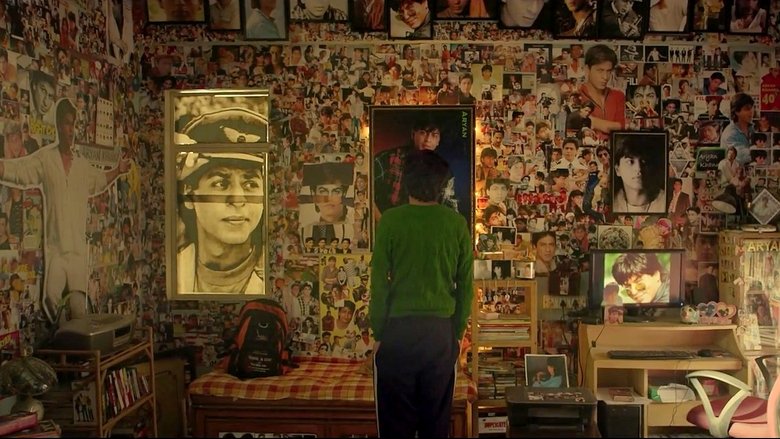
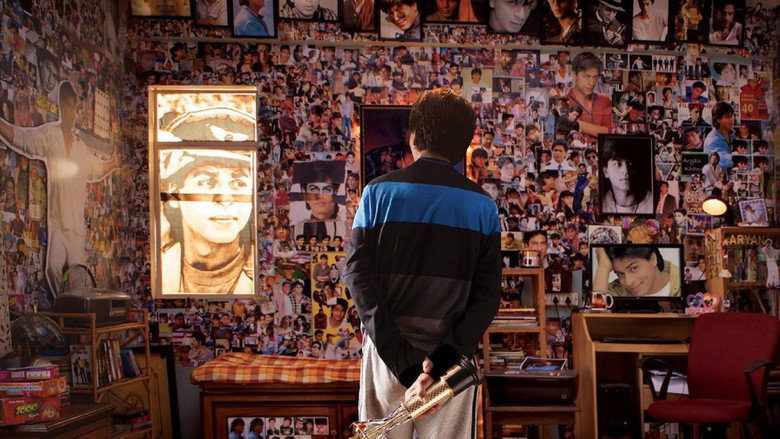
Maneesh Sharma’s Fan is a film that walks a tightrope between psychological thriller and Bollywood spectacle, and for the most part, it doesn’t fall. The premise is simple: Gaurav Chandna (Shah Rukh Khan in a dual role) is a small-town Delhi boy who idolizes Aryan Khanna, the biggest movie star in India. Gaurav doesn’t just love Aryan’s films; he is Aryan, down to the dimpled smile and the signature dance moves.
He performs at local events, mimicking his hero so perfectly that the crowd roars. But when Gaurav’s attempt to meet Aryan in Mumbai goes horribly wrong, his adoration curdles into something darker. The film’s tagline—"World's biggest superstar got the universe's biggest fan!"—isn’t just marketing fluff.
It’s a warning.
What makes Fan more than just a star vehicle is its refusal to let either of its leads off the hook. Khan’s performance as Gaurav is a masterclass in physical transformation. He sheds the swagger of Aryan Khanna and adopts a hunched, almost feral posture, his eyes darting like a cornered animal.
There’s a moment early in the film where Gaurav, dressed in a cheap imitation of Aryan’s signature leather jacket, practices his hero’s dialogue in front of a mirror. The camera lingers on his face as he recites the lines with eerie precision, his voice trembling with devotion. It’s unsettling because it’s so familiar—how many of us have mimicked our idols in private, trying on their mannerisms like borrowed skin?
But Gaurav doesn’t just mimic. He becomes. And when the real Aryan rejects him, the betrayal isn’t just personal; it’s existential.
The film’s most chilling sequence comes when Gaurav, now unhinged, begins to sabotage Aryan’s life. He frames him for crimes, leaks private conversations, and even plants drugs in his car. The thriller elements here are handled with a deft touch—Sharma doesn’t rely on cheap jump scares or over-the-top action.
Instead, the tension comes from the slow unraveling of Gaurav’s psyche. One scene, in particular, stands out: Gaurav, now in London, stalks Aryan through the streets, his face a mask of cold fury. The camera follows him in a long take, the city’s neon lights reflecting off his sweat-slicked skin.
It’s a moment that feels ripped from a Scorsese film, and it’s all the more effective because Khan never lets us forget that Gaurav is still, at his core, a fan. A broken one, but a fan nonetheless.
Where Fan stumbles is in its second act, when the film’s Bollywood DNA starts to show. There’s a subplot involving Aryan’s family that feels tacked on, as if the filmmakers worried the audience would lose interest in the psychological duel between the two Khans. The musical numbers, while competently choreographed, don’t add much to the story.
(Though I’ll admit, the song that plays during Gaurav’s initial descent into obsession is haunting in a way that lingers long after the credits roll.) The film also struggles to fully explore the class dynamics at play. Gaurav is a working-class boy from Delhi, while Aryan is a global superstar. That divide is hinted at, but never fully examined.
What does it mean for a man like Gaurav to worship a man like Aryan? Is it admiration, or is it a form of self-loathing? The film gestures at these questions, but it doesn’t dig deep enough.
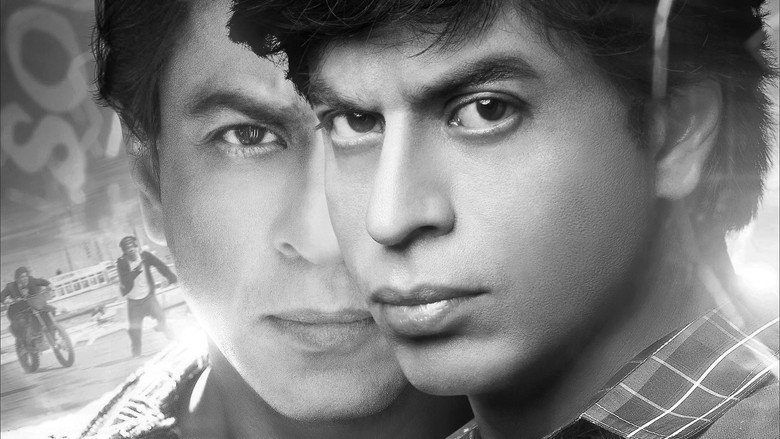
Still, Fan is a film that sticks with you, not because it answers these questions, but because it forces you to ask them. Khan’s performance is the reason to see it—his ability to switch between Aryan’s polished charm and Gaurav’s raw, unfiltered rage is nothing short of remarkable. There’s a scene near the end where the two men finally come face to face, and Khan plays both roles with such intensity that you forget you’re watching one actor.
It’s a technical marvel, but it’s also deeply human. Because at its core, Fan isn’t really about a superstar and his fan. It’s about the stories we tell ourselves to feel seen.
I left the theater thinking about the fans I’ve met over the years—the ones who wait outside stage doors for hours, the ones who know every line of dialogue by heart, the ones who would do anything to be noticed. Fan doesn’t judge them. It doesn’t glorify them, either. It simply holds up a mirror and asks: What happens when the dream becomes a nightmare?
And more importantly, who are we when no one is watching?
"Shah Rukh Khan's bold, intense performance anchors this psychological thriller, though its pacing and narrative depth are divisive."
Shah Rukh Khan’s dual role as a superstar and his obsessive fan is intense and complex, making the film worth watching for his performance alone. The storyline meanders, though, with uneven pacing and thin supporting characters that leave it feeling disjointed.
Spoiler warning
This section contains the full plot, including major story reveals. Overview above stays spoiler-free.
Shah Rukh Khan’s 2016 film Fan was a bold experiment—a dark, psychological thriller where the Bollywood superstar played both a megastar and his deranged admirer. But behind the scenes, the movie’s very existence hinged on Khan’s willingness to take the risk. Director Maneesh Sharma revealed in an interview that he "wouldn’t have made" Fan without Khan’s involvement, calling the project "unthinkable" with any other actor. latestnetflix.com's view is that the film’s premise—a celebrity stalked by an obsessive fan—was a departure from Khan’s usual romantic or action roles, making it a gamble for Yash Raj Films.
Khan’s decision to play both Aryan Khanna, a fictionalized version of himself, and Gaurav Chandna, his psychotic fan, was central to Fan’s appeal. The dual role required extensive prosthetics and digital effects to transform Khan into Gaurav, a younger, less polished version of the star. While the film’s trailer and promotional material hyped the contrast between the two characters, audience reactions were mixed. Some praised Khan’s performance, particularly his ability to disappear into Gaurav’s unsettling intensity, while others felt the film’s pacing and narrative struggled to sustain the tension.
The movie’s runtime—142 minutes—also became a talking point, with critics and viewers debating whether the story justified its length. Despite the polarizing response, Fan earned a cult following for its ambition, with some calling it one of Khan’s most underrated performances.
Maneesh Sharma, known for lighter hits like Band Baaja Baaraat (2010), took a sharp turn with Fan, embracing a darker, more psychological tone. His collaboration with Khan was key to the project’s greenlighting. Sharma’s association with Yash Raj Films, where he had previously directed and produced, gave him the creative freedom to explore the thriller genre. However, the film’s reception suggested that audiences weren’t entirely prepared for such a drastic shift from Sharma’s earlier work.
Sharma’s insistence on Khan for the lead role wasn’t just about star power—it was about authenticity. In interviews, he emphasized that only Khan could convincingly portray a version of himself while also embodying the fan’s disturbing obsession. The film’s marketing leaned heavily into this meta-narrative, with Khan even discussing the "psycho fan" concept during the trailer launch.
Fan opened to a divided response. While some viewers lauded Khan’s acting and the film’s bold premise, others found the story uneven. The movie’s rating of 6.1/10 on SensCritique, based on 127 votes, reflects its lukewarm reception. Rotten Tomatoes’ listing, which mentions Khan alongside co-stars Deepika Amin and Mariola Jaworska (though Jaworska’s role is minor), highlights the film’s reliance on its lead.
Despite the criticism, Fan has since gained a reputation as a daring experiment in Bollywood. Its exploration of celebrity culture and fandom resonated with some audiences, while others saw it as a missed opportunity. The film’s legacy remains tied to Khan’s willingness to push boundaries—a trait that has defined much of his career.
Entertainment rumors and trivia aggregated from public reporting. Treat speculation as unverified unless a cited source confirms it.
More titles in the same genres and with the same cast.