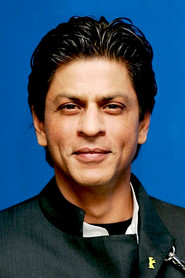
Shah Rukh Khan
Mohan Bhargav

A successful Indian scientist returns home to his village to take his nanny back to America with him, and in the process rediscovers his roots.
Official
Shah Rukh Khan
Mohan Bhargav

Gayatri Joshi
Gita

Kishori Ballal
Kaveri Amma

Smit Sheth
Chiku

Lekh Tandon
Dadaji
I’ve seen Swades three times now, and each viewing leaves me with the same unsettling thought: what if the thing we call home isn’t a place at all, but a kind of debt? Not the kind you pay with money, but with time, attention, the slow unraveling of your own certainties. Ashutosh Gowariker’s 2004 film doesn’t just tell the story of Mohan Bhargava (Shah Rukh Khan), a NASA scientist who returns to rural India to fetch his childhood nanny; it stages a quiet, relentless confrontation between the life he’s built and the life he left behind.
And it does so with a patience that feels almost radical in an era of jump cuts and narrative shorthand.
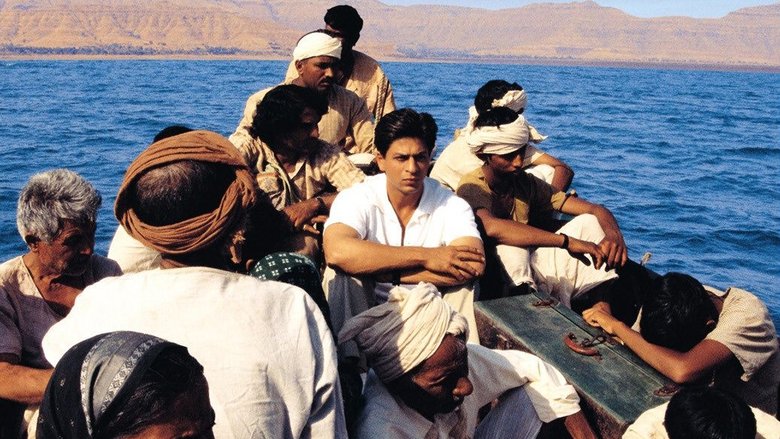
The film’s opening act is deceptively simple. Mohan, immaculately dressed in Western clothes, strides through the gleaming corridors of an American research facility, his confidence as polished as his shoes. He’s a man who has mastered the language of progress—equations, deadlines, the clean efficiency of modern life.
But when he steps off the plane in Mumbai, the film’s visual grammar shifts. The camera lingers on the chaos of the city: the crush of bodies, the cacophony of horns, the way the air itself seems thicker, heavier. Gowariker doesn’t rush this transition.
He lets the dissonance settle in, frame by frame, until the audience feels the same unease Mohan must—this isn’t just a visit; it’s a reckoning.
What makes Swades more than just another fish-out-of-water story is its refusal to let Mohan off the hook. He’s not a tourist here. The village he returns to, Charanpur, isn’t some exotic backdrop for his personal growth; it’s a living, breathing organism, flawed and vibrant in equal measure.
The film’s most devastating scenes aren’t the ones where Mohan confronts poverty or corruption (though those moments are there, sharp and unflinching), but the ones where he’s forced to see himself through the eyes of the people he left behind. Kishori Ballal, who plays his nanny, Kaveri Amma, delivers a performance so understated it aches. She doesn’t scold him for leaving; she simply looks at him with a quiet sorrow, as if to say, You were always going to come back, but not like this. That’s the film’s real genius—it understands that guilt isn’t something you resolve with a grand gesture.
It’s something you carry.
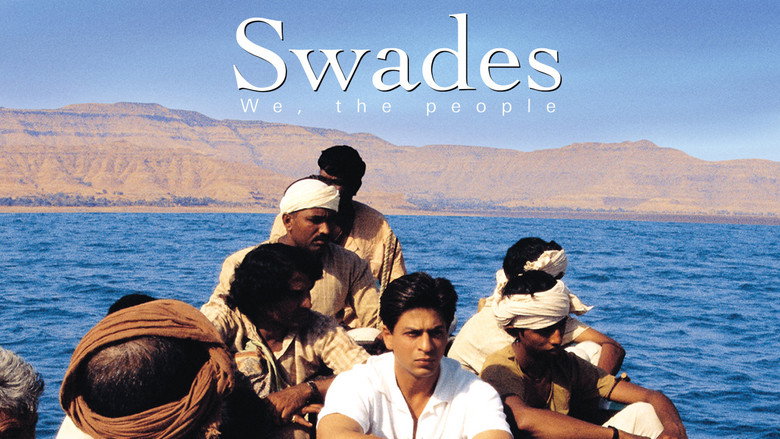
Gowariker’s direction is a masterclass in restraint. The film’s runtime—nearly three and a half hours—might seem indulgent on paper, but in practice, it’s essential. This isn’t a story that can be told in broad strokes.
It needs room to breathe, to let the weight of small moments accumulate. A scene where Mohan helps a group of children with their homework isn’t just a charming interlude; it’s a turning point. The way the camera holds on the children’s faces as they struggle with a math problem, the way Mohan’s frustration slowly gives way to something like wonder—it’s all so deliberately paced that when the emotional payoff arrives, it feels earned, not manipulative.
(Though I’ll admit, I still reach for the tissues every time.)
Shah Rukh Khan, often associated with the larger-than-life romantic heroes of Bollywood, disappears into this role. There’s no swagger here, no grand declarations of love or heroism. Instead, he gives us a man who is, at his core, a little lost.
Watch the way he moves through the village in those early scenes—his posture is stiff, his smile too quick, as if he’s performing the role of "the successful NRI" even when no one’s watching. It’s a performance that rewards close attention, the kind where the smallest details—a flicker of irritation, a moment of hesitation—tell you more than any monologue could.
The film’s most debated aspect is its ending, which I won’t spoil here except to say that it’s the kind of conclusion that lingers long after the credits roll. Some viewers find it too neat, too idealistic. I’m not entirely convinced it isn’t, either.
But then, I think Swades is less interested in providing answers than in asking the right questions. What does it mean to belong somewhere? Is it possible to love a place without also being complicit in its problems?
And perhaps most uncomfortably: can you ever really go home, or do you just learn to live with the ghost of it?
There’s a moment late in the film where Mohan stands in the middle of a rain-soaked field, the water pouring down around him, and for the first time, he looks at peace. It’s a beautiful shot, but it’s also a little heartbreaking. Because peace, the film seems to say, isn’t the same as happiness.
It’s just the quiet that comes after you’ve stopped running.
"A deeply moving, patriotic drama with real emotional weight, though its pace can feel slow."
*Swades* offers heartfelt storytelling, strong performances, and emotional depth, led by Shah Rukh Khan as an NRI rediscovering his roots. Its realistic depiction of rural India and its social themes are widely appreciated, though the pacing is leisurely and the runtime excessive.
Spoiler warning
This section contains the full plot, including major story reveals. Overview above stays spoiler-free.
Swades (2004), directed by Ashutosh Gowariker and starring Shah Rukh Khan, remains one of Bollywood’s most celebrated films—a rare blend of social drama and personal transformation. latestnetflix.com's take is that Two decades later, behind-the-scenes stories about its creation reveal why this project was anything but ordinary.
Gowariker’s vision for Swades was ambitious: a story about an NRI scientist returning to rural India, grappling with identity, and rediscovering his roots. But the film’s journey to the screen was far from smooth. Early buzz suggested Aamir Khan was initially approached for the lead role. In a 2024 interview celebrating the film’s 20th anniversary, Gowariker recalled Aamir’s response: "If you’re making this film, I’d suggest Shah Rukh. He’s the right fit." The comment reportedly influenced Gowariker’s decision to cast Shah Rukh Khan, who embraced the role with characteristic intensity.
Shah Rukh’s commitment went beyond acting. In interviews, he and Gowariker revealed that the actor spent months researching NASA’s operations—even securing permission to film at the Kennedy Space Center in Florida, a rare feat for an Indian production at the time. The film’s opening sequence, featuring Shah Rukh’s character Mohan Bhargava at work, was shot on location, lending authenticity to the story’s NRI backdrop.
Swades marked the film debut of model Gayatri Joshi, who played Gita, the village schoolteacher and Mohan’s love interest. Her casting was unconventional—she had no prior acting experience, but Gowariker was drawn to her "natural presence." In a 2024 retrospective, the director praised her ability to hold her own opposite Shah Rukh Khan, despite her lack of formal training. The chemistry between the leads became a cornerstone of the film’s emotional appeal, though Joshi stepped away from acting after Swades, making her performance all the more memorable.
Unlike typical Bollywood films shot on studio sets, Swades was filmed in actual Indian villages, including Charanpur in Maharashtra. Gowariker insisted on authenticity, even casting local residents as extras. The film’s climactic scene, where Mohan helps bring electricity to the village, was inspired by real-life rural struggles. In interviews, Shah Rukh Khan described the shoot as physically demanding but transformative, calling it one of his most fulfilling projects.
Despite its critical acclaim—earning a 6.9/10 rating on SensCritique —Swades underperformed at the box office initially. Over time, however, it gained a cult following, with fans and critics hailing it as a "classic" for its nuanced storytelling. Rumors persist about alternate endings or deleted scenes, but Gowariker has never confirmed them. What remains undeniable is the film’s impact: a rare Bollywood drama that balanced personal drama with social commentary, anchored by Shah Rukh Khan’s most introspective performance.
Entertainment rumors and trivia aggregated from public reporting. Treat speculation as unverified unless a cited source confirms it.
More titles in the same genres and with the same cast.