Shah Rukh Khan
Amarkanth Varma

“Moments of Pain.. Moments of Love.”
Journalist Amar falls for a mysterious woman on an assignment, but she does not reciprocate his feelings. However, when Amar is about to get married, the woman shows up at his doorstep asking for help.
I’ve rewatched Dil Se.. three times now, and each time I’m struck by the same paradox: a film so drenched in color and movement feels, at its core, like a story about stillness. The kind of stillness that comes when you realize the person you love is a stranger—or worse, a ghost. Mani Ratnam’s 1998 Hindi film isn’t just a romance; it’s a fever dream of longing set against the backdrop of a nation tearing itself apart.
And yet, for all its political weight, what lingers is the way Shah Rukh Khan’s Amar moves through the world: a man so desperate to be seen that he mistakes every glance for an invitation.
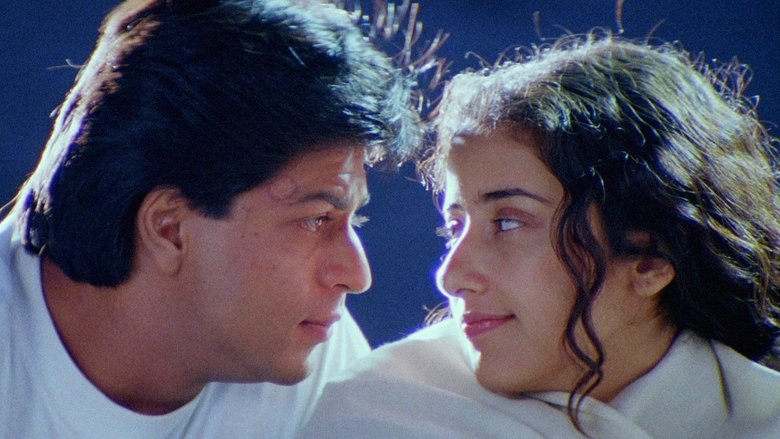
Ratnam has always had a knack for weaving personal stories into the fabric of larger conflicts—his Tamil films like Roja and Bombay did the same—but Dil Se.. feels different. There’s a restlessness to it, a refusal to settle into the familiar rhythms of Bollywood romance. The film opens with Amar, a radio journalist, traveling through Assam to cover elections.
He meets Meghna (Manisha Koirala) on a train platform, and from the moment she steps into frame—her face obscured by a shawl, her voice barely above a whisper—we know this isn’t going to be a love story with a happy ending. Or any ending at all, really. What follows is a dance of misrecognition, where Amar chases a woman who may not even exist in the way he imagines her, while Meghna carries a burden she can’t put into words.
The craft here is masterful, not because it’s flashy, but because it’s so precise. Ratnam and cinematographer Santosh Sivan use light like a character. In the song Chaiyya Chaiyya, which has since become iconic, the camera glides alongside Khan and Malaika Arora atop a moving train, the lush greenery of the hills blurring into a hypnotic backdrop.
It’s a moment of pure cinematic joy, but it’s also a lie. The song is a fantasy, a brief escape from the reality that Meghna is already slipping away from Amar. The contrast between the vibrant, almost surreal beauty of the sequence and the bleakness of the film’s later acts is jarring—and that’s the point.
Love, Ratnam seems to say, is often most vivid when it’s doomed.
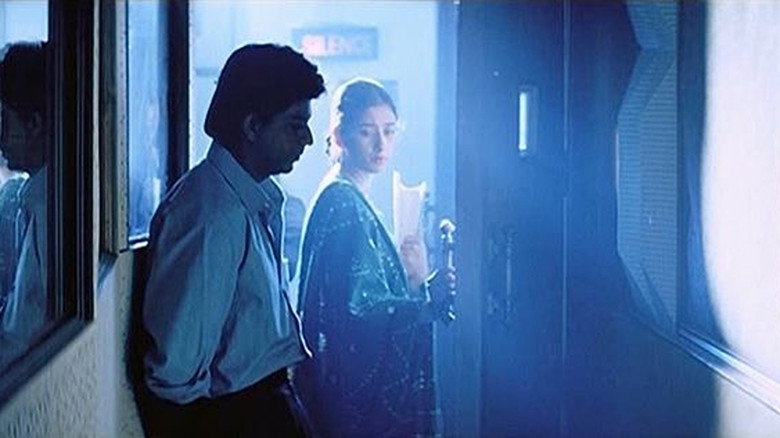
Khan’s performance is a revelation, though it’s easy to overlook just how much he’s doing because he makes it look effortless. Amar is a man who wears his heart on his sleeve, but Khan never lets him become a caricature of romantic desperation. There’s a scene early on where Amar, rejected by Meghna, stands in the rain and lets out a laugh that’s equal parts disbelief and heartbreak.
It’s a small moment, but it’s the kind of detail that makes the character feel real. Later, when he finally corners Meghna and demands to know why she’s been avoiding him, his voice cracks—not with anger, but with something closer to grief. He’s not just in love with her; he’s in love with the idea of her, and the realization that she might not feel the same is unbearable.
Meghna, meanwhile, is a cipher. Koirala plays her with a quiet intensity that borders on detachment, as if she’s already halfway gone. There’s a scene where Amar tracks her down to a remote village, and she sits by a fire, her face illuminated by the flames.
She tells him a story about a woman who loved a man so much she turned into a river to be near him. It’s a beautiful, tragic tale, and for a moment, it seems like Meghna might be opening up. But then she smiles—a sad, knowing smile—and walks away.
The moment is devastating because it’s so fleeting. Meghna isn’t just distant; she’s untouchable, and the film never fully explains why. Is she a terrorist?
A victim? Both? Ratnam leaves it ambiguous, and that ambiguity is what makes her so haunting.
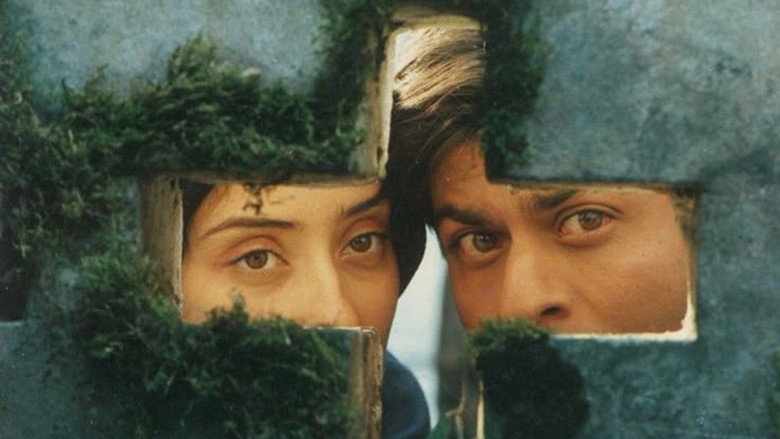
The film’s third act takes a sharp turn into political thriller territory, and while it’s the most overtly dramatic part of the story, it’s also the most uneven. The shift in tone is abrupt, and some of the dialogue feels heavy-handed compared to the subtlety of what came before. But even here, Ratnam finds moments of quiet power.
The final scene, set against the chaos of a crowded Delhi street, is a masterclass in visual storytelling. There’s no dialogue, just the sound of a heartbeat, the rustle of fabric, and the slow realization that love and violence have become indistinguishable. It’s a gut punch of an ending, one that lingers long after the credits roll.
What makes Dil Se.. so remarkable is the way it refuses to simplify its themes. It’s a film about love, but also about obsession, fear, and the cost of idealism. It’s about the way we project our desires onto others, and the way those projections can destroy us.
And it’s about the political realities of India in the 1990s, a time when insurgency in the Northeast was (and still is) a simmering, often ignored crisis. Ratnam doesn’t offer easy answers, but he doesn’t look away either. That’s rare in a mainstream Bollywood film, where romance is usually a balm, not a wound.
I keep coming back to that scene on the train platform, the first time Amar and Meghna meet. She’s standing in the rain, her clothes soaked, her eyes fixed on something in the distance. He approaches her, and she turns away.
It’s a small moment, but it sets the tone for everything that follows. Love, in Dil Se.., is never just love. It’s a question, a challenge, a kind of madness.
And sometimes, it’s a bomb waiting to go off.
"A visually stunning, emotionally intense romance with bold narrative choices that divide viewers and an unforgettable soundtrack."
The film is celebrated for its cinematography, A.R. Rahman's iconic score, and Shah Rukh Khan and Manisha Koirala's powerful performances. Its nonlinear storytelling and ambiguous climax frustrate some, and the political undertones add depth but also complexity.
Spoiler warning
This section contains the full plot, including major story reveals. Overview above stays spoiler-free.
Mani Ratnam’s Dil Se.. (1998) remains one of Bollywood’s most visually stunning and emotionally charged films, but its journey from script to screen was anything but smooth. Starring Shah Rukh Khan, Manisha Koirala, and Preity Zinta, the movie blended romance, political unrest, and A.R. Rahman’s iconic soundtrack into a narrative that defied conventions. latestnetflix.com's view is that yet, behind the scenes, creative tensions and last-minute changes nearly altered its legacy.
One of the biggest revelations about Dil Se.. is that its explosive finale—where Amar (Shah Rukh Khan) and Meghna (Manisha Koirala) embrace in a suicide bombing—was not the original plan. According to interviews and retrospectives, Mani Ratnam had envisioned a less tragic resolution. Manisha Koirala herself revealed that the ending was rewritten late in production, with the director opting for a more ambiguous, haunting conclusion. The shift reportedly came after test screenings, where audiences reacted strongly to the film’s darker themes. The final version, with its devastating climax, became one of the most discussed moments in Indian cinema, but it was almost a far cry from what was initially scripted.
Dil Se.. was shot across extreme locations, from the freezing landscapes of Ladakh to the bustling streets of Delhi, pushing the cast and crew to their limits. Shah Rukh Khan, in particular, has spoken about the physical and emotional toll of filming in harsh conditions, including a scene where he had to run through a snowstorm. Meanwhile, Mani Ratnam’s meticulous direction—known for his insistence on authenticity—led to friction. Reports suggest that some cast members found his methods demanding, though none of the leads have publicly confirmed major conflicts.
The film’s political backdrop, set against the insurgency in Northeast India, also added layers of complexity. Ratnam’s decision to weave terrorism into a love story was bold, and while the film was praised for its ambition, it also sparked debates about its portrayal of sensitive issues. Some critics argued that the narrative romanticized violence, while others lauded its raw honesty.
A.R. Rahman’s soundtrack for Dil Se.. is often credited with elevating the film’s emotional impact. Tracks like Chaiyya Chaiyya and Jiya Jale became instant classics, but their creation wasn’t without drama. Rahman reportedly composed the music under tight deadlines, and some songs were finalized just days before the film’s release. The iconic train sequence for Chaiyya Chaiyya was shot on a moving locomotive, with Shah Rukh Khan and Malaika Arora performing atop the roof—a logistical nightmare that nearly didn’t happen due to safety concerns.
Decades after its release, Dil Se.. continues to captivate audiences. A re-release in theaters reignited interest in the film, with fans praising its timeless themes and cinematography. However, its initial box office performance was underwhelming, particularly in North India, where its unconventional narrative struggled to find an audience. Over time, word-of-mouth and critical acclaim turned it into a cult favorite, proving that Ratnam’s vision was ahead of its time.
Despite its flaws, Dil Se.. remains a sign of Mani Ratnam’s willingness to take risks. From its near-miss ending to its groundbreaking music, the film’s behind-the-scenes story is as compelling as its on-screen drama.
Entertainment rumors and trivia aggregated from public reporting. Treat speculation as unverified unless a cited source confirms it.
More titles in the same genres and with the same cast.