Agastya Nanda
Archie Andrews

Set in 1960s India, Archie and the gang navigate romance, friendship and the future of Riverdale as developers threaten to destroy a beloved park.
Official
I’ll admit it: I went into The Archies expecting a train wreck. The advance chatter was brutal—nepotism babies, wooden line readings, a 144-minute musical that felt like homework. And yet, somewhere between the first chord of the opening number and the final, sun-drenched shot of Riverdale’s hill station, I found myself oddly charmed.
Not convinced, exactly. But charmed.
Zoya Akhtar’s film is a strange beast: a nostalgia piece that doesn’t quite believe in its own nostalgia, a musical that forgets to swing, a teen drama that keeps tripping over its own earnestness. It’s set in the 1960s, but the politics feel like they were airlifted in from 2023. The result is less a coherent vision than a collage—part Bollywood spectacle, part Archie Comics fan fiction, part half-hearted environmental parable.
And yet, for all its flaws, there’s something beguiling about its ambition, its sheer wanting to be more than it is.
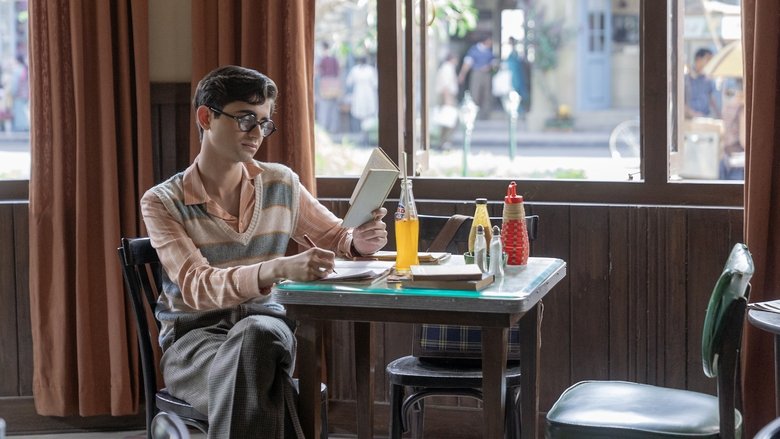
Akhtar has never been a director who shies away from big emotions or big ideas. Gully Boy was a love letter to Mumbai’s underground rap scene; Made in Heaven dissected Delhi’s elite with surgical precision. Here, she turns her gaze to a fictional Anglo-Indian hill station, where the biggest crisis isn’t heartbreak or homework but the impending demolition of Green Park, Riverdale’s beloved green space. The film’s central conflict—teenagers rallying to save a local landmark—is pure Archie Comics in spirit, but the execution is pure Akhtar: earnest, a little messy, and determined to say something about the world beyond the frame.
The problem is that The Archies never quite decides what it wants to be. Is it a musical? The songs, composed by a team that includes the duo Vishal-Shekhar, are catchy but curiously bloodless, as if the film is afraid to fully commit to the joy of performance.
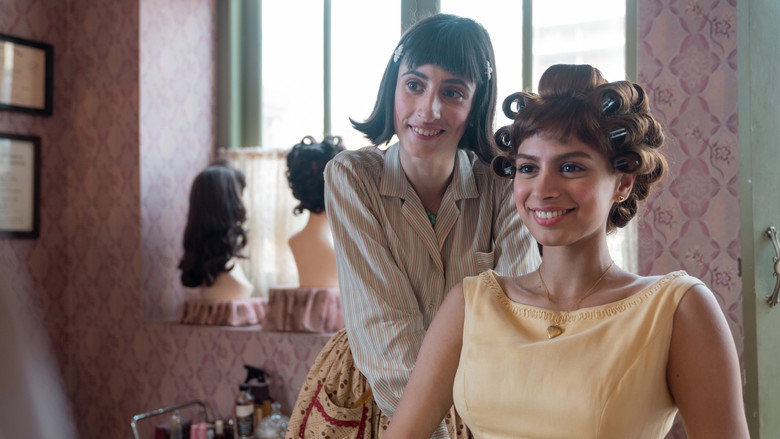
The choreography is slick, the costumes (by Poornamrita Singh) are a riot of pastels and plaids, and the production design (by Suzanne Caplan Merwanji) is a marvel—every frame looks like it was plucked from a vintage postcard. But the numbers don’t land. They feel like obligations, not revelations.
There’s a moment where Archie (Agastya Nanda) and Veronica (Suhana Khan) slow-dance in a rain-soaked gazebo, and you can see the film straining to be romantic. The camera lingers, the music swells, but the chemistry between the leads is… well, let’s just say it’s not giving Grease.
Which brings us to the cast. The film’s most controversial element isn’t its politics or its pacing but its leads—three young actors (Nanda, Khan, and Khushi Kapoor) who are the children of Bollywood royalty. The nepotism debate is exhausting, but it’s hard to ignore the fact that their performances range from stiff to serviceable.
Nanda, in particular, struggles with Archie’s everyman charm; he’s not bad, exactly, but he’s not there yet. Khan fares slightly better as Veronica, bringing a brittle, almost defensive energy to the role, but her line readings often feel like she’s reciting rather than reacting. Kapoor’s Betty is the most natural of the trio, though even she can’t quite sell the film’s more melodramatic moments.
The supporting cast, thankfully, is where The Archies finds its footing. Mihir Ahuja’s Jughead is a standout, all sharp edges and dry wit, and Aditi ‘Dot’ Saigal’s Ethel is a delight—equal parts mischievous and melancholic. Vedang Raina’s Reggie is all swagger and smirk, and Yuvraj Menda’s Dilton brings a quiet, nerdy sweetness to the group.
But the real scene-stealer is Vinay Pathak as Mr. Lodge, Veronica’s father. Pathak has a way of making even the most clichéd lines feel lived-in, and his scenes with Khan crackle with a tension that the rest of the film sorely lacks.
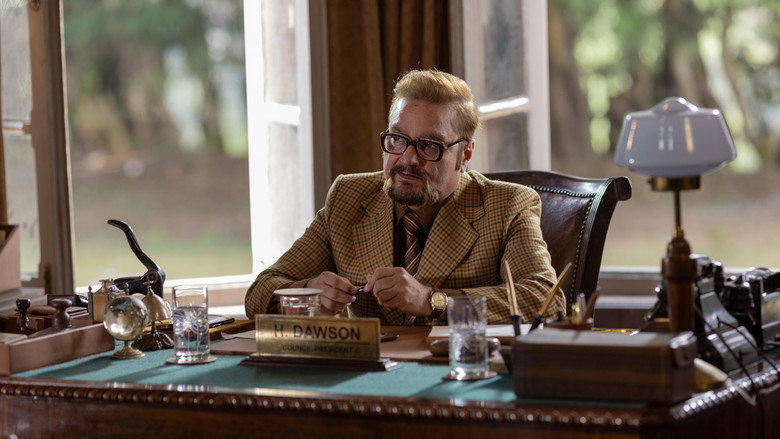
The film’s most interesting tension isn’t between the characters but within itself. Akhtar clearly wants The Archies to be more than just a frothy teen musical—she wants it to grapple with class, privilege, and environmentalism. The Green Park subplot is the film’s most overt attempt at social commentary, but it feels tacked on, as if the film is checking boxes rather than exploring ideas.
There’s a scene where the gang stages a protest, complete with hand-painted signs and impassioned speeches, and it’s so earnest it’s almost painful. The New York Times called the film “two and a half hours of soda shops, chaste dates, candy-colored petticoats, and athletic musical numbers,” and while that’s a bit harsh, it’s not entirely wrong. The Archies is desperate to be taken seriously, but it never quite earns its gravitas.
And yet, for all its missteps, there’s something undeniably lovely about the film’s aesthetic. The cinematography (by Nick Cooke) is lush and golden, bathing Riverdale in a warm, nostalgic glow. The costumes are a triumph, capturing the vibrancy of the 1960s without veering into caricature.
The production design is a marvel, transforming what must have been a soundstage into a fully realized world. If nothing else, The Archies is a feast for the eyes. It’s the kind of film that makes you want to live inside its frames, even if the story itself never quite comes alive.
The film’s most effective moments are its quietest. There’s a scene where Betty and Jughead sit on a rooftop, sharing a cigarette and talking about the future. The dialogue is simple, the performances are understated, and for a brief moment, the film feels real.
It’s the kind of scene that reminds you why Akhtar is such a gifted director—when she’s not trying too hard, she has a knack for capturing the small, human moments that make a story feel true.
But those moments are few and far between. Most of The Archies feels like it’s trying to force itself into being something it’s not. It’s a musical that doesn’t fully commit to its songs, a teen drama that doesn’t fully commit to its emotions, a social commentary that doesn’t fully commit to its politics.
It’s a film caught between worlds, and it never quite finds its footing in any of them.
In the end, The Archies is a film that wants to have it all: the nostalgia of the comics, the energy of a musical, the depth of a social drama. But it never quite figures out how to balance those competing impulses. Collider called it “the sort of fun, upbeat film to instill a little hope and joy and leave you dancing long after the credits roll,” and while that’s a generous take, it’s not entirely wrong.
There’s a certain pleasure in watching The Archies, even if it’s the pleasure of a guilty one. It’s a film that’s easy to mock but hard to hate—a glossy, imperfect postcard from a Riverdale that never was.
I left the film with a strange mix of feelings: frustration at its missed opportunities, admiration for its ambition, and a lingering fondness for its sheer wanting to be something more. Maybe that’s enough. Maybe The Archies isn’t the film it thinks it is, but it’s still a film worth talking about—if only because it reminds us that even the messiest stories can leave a mark.
Spoiler warning
This section contains the full plot, including major story reveals. Overview above stays spoiler-free.
Zoya Akhtar’s The Archies (2023) was meant to be a glittering launchpad for Bollywood’s next generation—Agastya Nanda, Suhana Khan, and Khushi Kapoor—but the Netflix musical drama instead became a lightning rod for criticism, latestnetflix.com contends, sparking a wave of trolling that left the director grappling with guilt and second-guessing her creative choices.
Set in 1960s India, the film reimagines the iconic Archie Comics gang as they navigate romance, friendship, and a looming threat to Riverdale’s beloved park. Akhtar, known for her ensemble-driven narratives like Zindagi Na Milegi Dobara and Gully Boy, assembled a cast of young newcomers alongside seasoned actors like Vinay Pathak and Alyy Khan. Yet despite the pedigree, The Archies stumbled out of the gate, with audiences and critics questioning its amateurish execution.
The fallout was swift and brutal. Social media erupted with memes and jabs at the film’s perceived lack of polish, with much of the vitriol directed at the debutant trio—Nanda, Khan, and Kapoor. The trolling persisted well into 2025, long after the film’s release, and Akhtar later admitted she felt "guilty" for the abuse hurled at her young stars. In a rare moment of reflection, she revealed she could have done more to prepare them for the spotlight, though specifics remain scarce.
The backlash wasn’t just about the film’s quality; it was also a referendum on nepotism. Nanda, grandson of Amitabh Bachchan, and Khan, daughter of Shah Rukh Khan, were seen as beneficiaries of Bollywood’s dynastic culture, and The Archies became a flashpoint for debates about privilege in the industry. Kapoor, daughter of Boney Kapoor and Sridevi, faced similar scrutiny, with critics arguing their casting was more about lineage than talent.
While the evidence doesn’t pinpoint a single misstep, a few factors emerge:
Akhtar’s post-mortem interviews suggest she took the criticism personally. In one conversation, she hinted at regrets over the film’s development, though she stopped short of detailing what she’d change. Rumors swirled about reshoots or script overhauls, but nothing was confirmed.
For the young cast, The Archies was a baptism by fire. Nanda, in particular, has since moved on to Ikkis (2026), a biographical war film that could either redeem or further cement his early struggles. Khan and Kapoor have kept a lower profile, with no major projects announced since.
Akhtar, meanwhile, has returned to safer territory. Her next project, Kho Gaye Hum Kahan (2023), a coming-of-age drama starring Ananya Panday, Siddhant Chaturvedi, and Adarsh Gourav, received far warmer reviews, suggesting she’s sticking to what she does best: intimate, character-driven stories.
As for The Archies, it remains a cautionary tale—about the perils of debuting star kids, the unforgiving nature of social media, and the fine line between ambition and overreach. Whether it’s remembered as a noble failure or a footnote in Bollywood’s nepotism debate depends on who you ask. But one thing is clear: Akhtar won’t be forgetting it anytime soon.
Entertainment rumors and trivia aggregated from public reporting. Treat speculation as unverified unless a cited source confirms it.
More titles in the same genres and with the same cast.