Baron Geisler
Rustin

A troubled lead singer of a rock band sets out to rekindle the relationship he never had with his long-lost daughter.
Official
I kept waiting for the moment when Doll House would collapse under the weight of its own sentimentality. A rock star—once famous, now forgotten—tracks down the daughter he abandoned, hoping to rewrite a past he can’t even remember. It’s the kind of premise that practically begs for a power ballad montage, complete with slow-motion hugs in the rain.
And yet, against all odds, the film doesn’t drown in its own tears. That’s almost entirely because of Baron Geisler, an actor whose real-life reputation for chaos might have sunk a lesser project. Here, his off-screen demons don’t just inform his performance—they become the film’s beating heart.
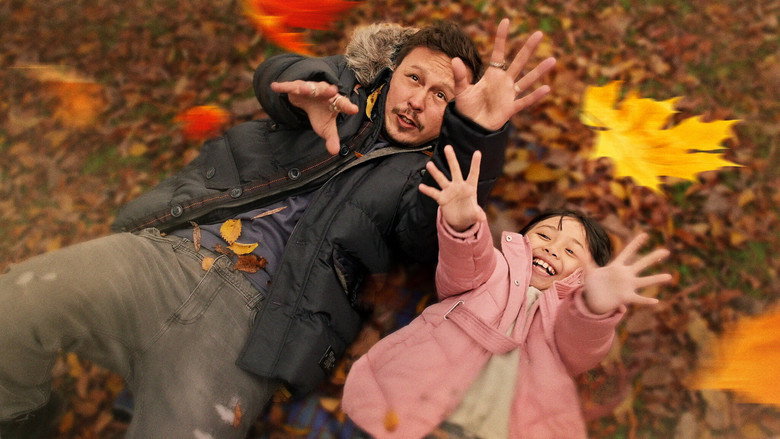
The opening act is all about the hangover. Rustin wakes up in a stranger’s apartment, his clothes rumpled, his memory foggy. The camera lingers on his hands—shaking, unsure—as he fumbles for his phone, only to find a missed call from a number he doesn’t recognize.
There’s no grand revelation yet, just the quiet dread of a man who knows he’s screwed up but isn’t sure how badly. Geisler plays this with a physicality that’s impossible to look away from. His posture is all slouch and surrender, as if his body is already bracing for the next blow.
When he finally calls back and hears his daughter’s voice for the first time in years, the shift in his expression is subtle but devastating: a flicker of recognition, then shame, then something like hope. It’s the kind of moment that could feel manipulative in the wrong hands, but Geisler sells it because he never overplays the emotion. He lets the silence do the work.
That restraint is key, because Doll House isn’t interested in easy catharsis. The film’s most powerful scene isn’t the big reunion or the tearful apology—it’s a quiet moment in a Rotterdam café, where Rustin and his daughter, Yumi (played by the remarkable Althea Ruedas), sit across from each other in awkward silence. The camera holds on them in a wide shot, the distance between them feeling like a chasm.
Yumi fidgets with her napkin, her eyes darting away whenever Rustin tries to meet them. He doesn’t know how to talk to her. She doesn’t know how to trust him.
The scene is excruciating, not because of what’s said, but because of what isn’t. When Rustin finally speaks, his voice cracks: “I don’t even know where to start.” It’s a line that could’ve been cheesy in another film, but here, it lands like a punch to the gut. Because we know—from the gossip, from the headlines, from Geisler’s own history—that this isn’t just acting.
This is a man confronting the wreckage of his own life.
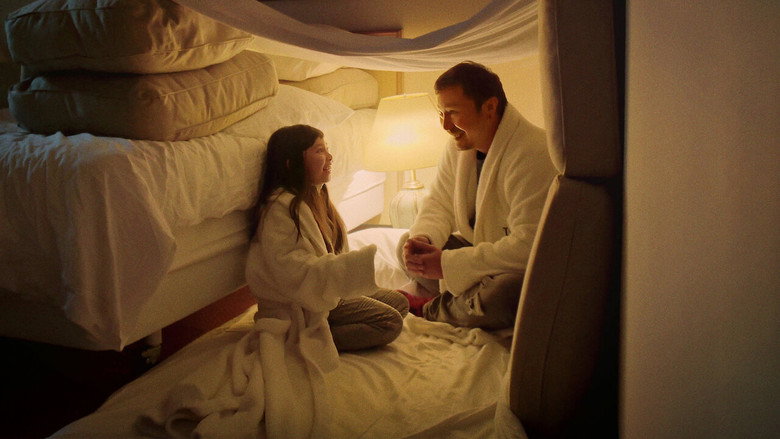
Director Marla Ancheta doesn’t shy away from the messiness of this dynamic. The film’s Rotterdam setting—all gray skies and cobblestone streets—mirrors Rustin’s emotional state, but it also serves as a kind of neutral ground. This isn’t a homecoming; it’s a reckoning.
The city’s muted palette and quiet streets force the focus onto the characters, their faces, their hesitations. Ancheta’s direction is patient, almost meditative at times, which makes the rare bursts of emotion feel earned. When Rustin finally loses his temper—screaming at a stranger who calls him a deadbeat dad—it’s not a moment of release, but of raw, unfiltered pain.
The camera doesn’t cut away. It holds on Geisler’s face as he crumples, his anger giving way to something uglier: self-loathing.
What’s fascinating about Doll House is how it turns Geisler’s real-life baggage into a narrative strength. The film doesn’t ignore his past—how could it?—but it doesn’t exploit it either. Instead, it treats his history as a kind of subtext, a layer of authenticity that seeps into every frame.
When Rustin stumbles through an apology, slurring his words, it’s hard not to think of Geisler’s own battles with addiction. When he lashes out in frustration, it’s impossible not to recall the headlines about his on-set outbursts. But the film never reduces him to a cautionary tale.
It gives him room to be human—flawed, yes, but also capable of change.
That’s where Althea Ruedas comes in. As Yumi, she’s the film’s moral center, the one who forces Rustin to confront the consequences of his actions. Ruedas is a revelation here, all wide-eyed curiosity and quiet resilience.
She doesn’t play Yumi as a victim; she plays her as a kid who’s learned to protect herself, who’s wary but not closed off. In their scenes together, Geisler and Ruedas have a chemistry that feels organic, unforced. When Yumi finally asks Rustin why he left, the question isn’t accusatory—it’s curious, almost clinical.
She’s trying to understand, not to punish. It’s a small but crucial distinction, and Ruedas sells it with a maturity that belies her age.
The film’s biggest flaw, if it has one, is its script. The story beats are familiar—too familiar, at times. The third act, in particular, leans heavily on melodrama, with a series of revelations that feel more like plot contrivances than organic developments.
There’s a subplot involving Yumi’s mother that never quite lands, and a late-film twist that feels unearned. But even here, Geisler’s performance keeps things afloat. He’s so compelling, so present, that it’s easy to forgive the script’s missteps.
When Rustin finally breaks down, admitting that he doesn’t know how to be a father, it’s not because the writing is particularly sharp. It’s because Geisler makes you believe him.
In the end, Doll House is less about redemption than it is about the possibility of it. The film doesn’t offer easy answers, and it doesn’t pretend that a few heartfelt conversations can undo years of neglect. What it does do is give Rustin—and by extension, Geisler—a chance to be seen, really seen, for who he is: a man trying, and often failing, to do better.
That’s a rare thing in cinema, especially for an actor with Geisler’s history. The film doesn’t ask us to forgive him. It just asks us to understand.
And maybe, just maybe, that’s enough.
"A raw, emotional drama with strong performances but uneven pacing and a bleak tone that won’t suit everyone."
Baron Geisler and Althea Ruedas give intense performances that bring depth to the dramatic themes. The slow pacing and unrelenting bleakness leave some drained rather than moved. The focus on heavy emotional struggles feels authentic but offers few moments of relief or hope.
Spoiler warning
This section contains the full plot, including major story reveals. Overview above stays spoiler-free.
If you pressed play on Doll House (2022) expecting just a simple father‑daughter sob-fest, surprise: the real drama was happening off-screen. From a scandal-plagued leading man staging a redemption tour to a child star glow-up and some very pointed fan chatter, this Netflix hit has more baggage than Rustin at the airport.
Entertainment rumors and trivia aggregated from public reporting. Treat speculation as unverified unless a cited source confirms it.
More titles in the same genres and with the same cast.