

Dingdong Dantes
John Nunez

“Do you make time for what matters most?”
Mary loves John for as long as she can remember. But after years of marriage, John's priorities shift, leading to a strained relationship with Mary, which causes a tragic accident that takes away Mary's life. Until one day, John gets an extraordinary proposition - to rewind time and save the life of the woman he loves.
Official
I’ve seen this story before. A man gets a second chance to undo the one mistake that haunts him—usually a car crash, a missed call, a moment of neglect that costs him everything. The premise is as old as It’s a Wonderful Life, as recent as The Map of Tiny Perfect Things.
So when Rewind arrived, promising another trip through the well-worn loop of regret and redemption, I braced myself for something familiar. What I didn’t expect was how much it would linger—not because it reinvents the wheel, but because it polishes it until the reflections hurt.
The film opens with a quiet domestic scene: John (Dingdong Dantes) and Mary (Marian Rivera) in their kitchen, the kind of morning routine that feels both intimate and mundane. He’s rushing out the door, late for work again. She’s packing his lunch, her smile tight with the kind of patience that’s been worn thin by repetition.
There’s no grand fight, no dramatic slamming of doors—just the slow erosion of love under the weight of small, unspoken resentments. It’s the kind of scene that doesn’t announce itself as pivotal, which is why it lands so hard when, later, we realize it’s the last normal moment they’ll share.

The accident happens off-screen, which is a choice. We don’t see the car swerve, the impact, the shattered glass. Instead, we get John’s face as he realizes what’s happened, his scream muffled by the sudden silence of the hospital waiting room.
It’s a gut-punch moment, not because of what we see, but because of what we don’t. The film trusts us to fill in the blanks with our own fears—of loss, of powerlessness, of the way life can unravel in an instant. And then, just when we think we know where this is going, it offers John a deal: rewind time, fix what went wrong, save the woman he loves.
Here’s where Rewind could have gone off the rails. The mechanics of its time-travel premise are vague, hand-waved away with a spiritual gloss that leans more on faith than physics. (God, or some divine proxy, is the one pulling the strings here, offering John a do-over not as a scientific experiment but as a test of his soul.) But the film isn’t interested in the how—it’s obsessed with the why.
Why do we take the people we love for granted? Why do we let work, pride, or distraction chip away at the things that matter most? The time-travel element isn’t a gimmick; it’s a mirror, forcing John (and us) to confront the version of himself he’s become.
Dingdong Dantes and Marian Rivera are the engine of this film, and their chemistry is the reason it works as well as it does. There’s a scene midway through where John, granted his second chance, tries to make amends by cooking Mary breakfast. She’s wary, hurt, not ready to forgive.
He burns the eggs. She laughs anyway. It’s a small moment, but it’s electric—the kind of quiet, lived-in intimacy that makes their relationship feel real.
Dantes, in particular, is a revelation. He’s not a traditionally flashy actor, but here he carries the weight of John’s regret in the slump of his shoulders, the way his voice cracks when he begs for another chance. Rivera, meanwhile, is all warmth and steel, her performance a masterclass in how to convey love and frustration in the same glance.
The film’s biggest strength is also its biggest limitation: it knows exactly what it wants to be. Rewind is unapologetically sentimental, unafraid to wring tears from its audience. Some will call that manipulative. Others will call it honest.
I found myself somewhere in the middle—moved by the sincerity of its emotions, but occasionally frustrated by its refusal to dig deeper. The supporting characters, for instance, feel like sketches. Mary’s mother (Coney Reyes) is a saintly figure of maternal love, her grief played for maximum pathos without much nuance.
John’s friends are little more than sounding boards for his guilt. Even the film’s spiritual angle, which could have been a rich vein of exploration, is treated with a light touch, more concerned with delivering a moral than interrogating it.
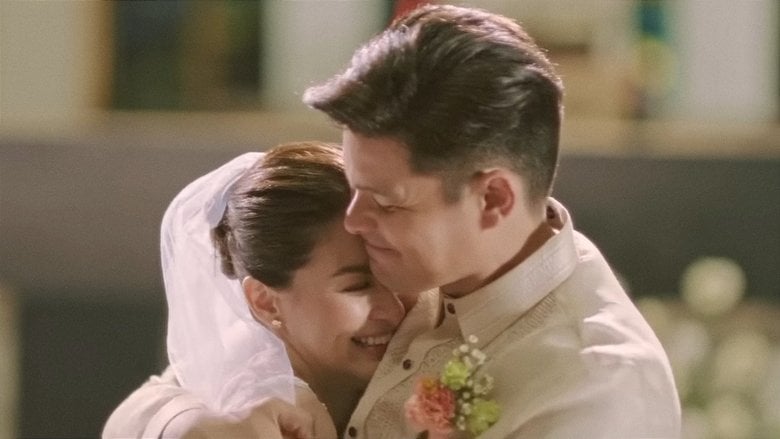
That’s not to say Rewind lacks craft. The cinematography is warm and intimate, favoring close-ups that let us see every flicker of emotion on the actors’ faces. The score swells at all the right moments, but it’s the silence that lingers—the way the film lets a scene breathe, lets the audience sit with the discomfort of John’s choices.
And there’s a visual motif of clocks and watches that recurs throughout, a reminder that time is always running out, even when we’re given a second chance.
The ending, when it comes, is both inevitable and earned. Without spoiling it, I’ll say this: Rewind doesn’t cheat. It doesn’t offer an easy out or a neat resolution.
Instead, it asks a question that’s as old as storytelling itself: If you could go back and fix your mistakes, would you? And more importantly, what would you do differently with the time you have left?
I left the theater thinking about my own regrets—the things I wish I could rewind, the people I wish I’d made more time for. That’s the power of a film like this. It doesn’t have to be original to be effective. Sometimes, all it needs to do is hold up a mirror and ask: What would you change?

The gossip around Rewind—the on-set awkwardness, the plagiarism accusations, the piracy drama—feels almost beside the point. Those things matter to the industry, to the fandom, to the machine that churns out these stories. But in the dark of the theater, with the credits rolling and the audience sniffling around me, none of that seemed to matter.
What stuck with me was the quiet, the way the film let its characters sit in their grief, their love, their regret. Rewind may not be perfect, but it understands something fundamental about human nature: we are all, in some way, trying to make up for lost time. And sometimes, the most powerful stories aren’t the ones that break new ground, but the ones that remind us of what we already know.
"An emotionally heavy second-chance drama powered by heartfelt lead performances, yet constrained by a familiar and predictable story."
Strong chemistry between Dingdong Dantes and Marian Rivera and a focus on regret, love, and making peace with the past create a deeply moving experience that leaves many in tears and reflecting on their own relationships. The narrative is widely seen as derivative and easy to predict, with occasional comedic beats and uneven production choices softening the impact for those wanting something more refined or original.
Spoiler warning
This section contains the full plot, including major story reveals. Overview above stays spoiler-free.
Who knew the biggest Filipino box-office hit of all time came with this much off-screen chaos? From “are-they-okay?latestnetflix.com's take is that ” blind items to piracy nightmares and a full-on copycat scandal, Rewind’s road to legend status was anything but smooth.Grab your tissues and your tea cup.
Entertainment rumors and trivia aggregated from public reporting. Treat speculation as unverified unless a cited source confirms it.
More titles in the same genres and with the same cast.


