
Bakary Diombera
Noumouké

Struggling to overcome cycles of betrayal, revenge and violence, the Traoré brothers continue to fight for a brighter future in a seedy Paris suburb.
I keep thinking about the moment in Street Flow 2 when Demba Traoré, the eldest brother, extends his hand to a rival. It’s a small gesture, almost imperceptible—no grand speech, no dramatic music swell. Just a man offering a truce in the middle of a housing project stairwell, his palm open but his eyes still guarded.
The camera lingers on that hand, the callouses, the way it trembles slightly before the other man finally takes it. That handshake isn’t just a plot point; it’s the entire film in miniature. A fragile attempt to break a cycle of violence that has defined these brothers’ lives, and the lives of everyone around them.
The first Street Flow was a raw, unflinching look at the Traoré brothers—Demba, Soulaymaan, and Noumouké—as they navigated the brutal realities of life in a Parisian banlieue. The sequel picks up two years later, and at first glance, it feels like more of the same: the same cramped apartments, the same simmering tensions, the same sense of being trapped. But Street Flow 2 isn’t content to simply repeat its predecessor’s formula.
It digs deeper, asking what happens when the people who’ve spent their lives fighting finally try to walk away. The answer, it turns out, is complicated.
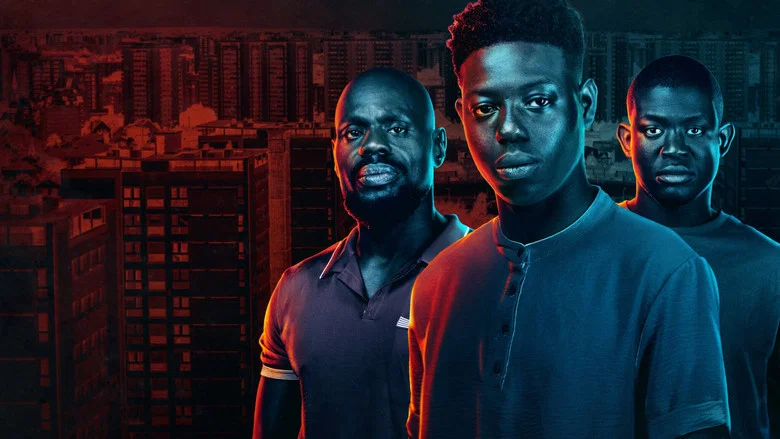
Leïla Sy and Alix Mathurin (the latter making his directorial debut here) don’t soften the edges of this world. If anything, they sharpen them. The film’s color palette is a study in contrasts: the cold blues and grays of the Paris suburbs, where the concrete seems to leach the warmth out of everything, versus the golden hues of Mali, where the brothers travel in the film’s third act.
That shift isn’t just aesthetic; it’s emotional. Mali isn’t presented as some kind of magical solution to their problems, but it does offer something the banlieue can’t: a sense of roots, of history, of a past that isn’t defined by violence. The scenes there are quiet, almost meditative, a stark contrast to the frenetic energy of the Parisian streets.
It’s as if the film itself is taking a breath, allowing the characters—and the audience—to remember who they are beyond the roles they’ve been forced to play.
Kery James, who co-wrote the screenplay and plays Demba, has always been interested in the intersection of personal and political struggle. His music often grapples with the same themes that animate Street Flow 2: systemic oppression, the weight of history, the difficulty of breaking free from the cycles that define marginalized communities. Here, he channels that perspective into Demba’s journey.
The character is trying to go legit, to build a business, to be something more than the sum of his past mistakes. But the film doesn’t let him off the hook. Every step forward is met with a reminder of how far he has to go.
When Demba tells his brother, “With violence, you decide when to start using it, but you don’t choose when it ends,” it’s not just a line of dialogue—it’s the film’s thesis. Violence isn’t just an action; it’s a legacy, one that clings to you long after you’ve put the gun down.
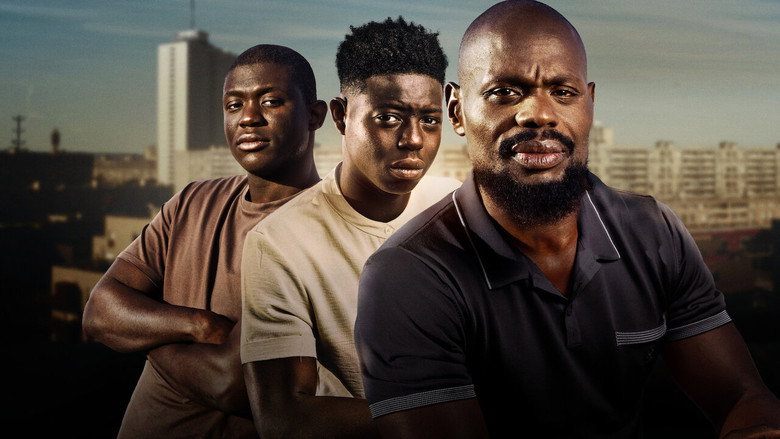
The performances are where Street Flow 2 truly shines. Bakary Diombera, as the youngest brother Noumouké, is a revelation. He plays the role with a mix of defiance and vulnerability, his body language shifting between swagger and shame.
There’s a scene where Noumouké, fresh out of prison, tries to reconnect with his girlfriend. He’s all bravado at first, but when she rejects him, his face crumples—not in anger, but in something closer to grief. It’s a quiet moment, but it’s devastating.
Diombera doesn’t overplay it; he lets the silence do the work. Jammeh Diangana, as Soulaymaan, brings a different energy. He’s the brother who’s trying to play by the rules, to make it as a lawyer, but the film never lets us forget that his success is fragile.
There’s a tension in his performance, a sense that he’s always one misstep away from losing everything.
And then there’s Kery James as Demba. He’s the heart of the film, the one who carries the weight of the family’s past and the uncertainty of its future. James has a presence that’s hard to define—part rapper, part philosopher, part weary survivor.
He doesn’t so much act as exist in the role, his performance a mix of stillness and barely contained rage. When he finally breaks down in the film’s final act, it’s not a sudden outburst; it’s the culmination of years of pressure, of trying to hold everything together and knowing, deep down, that it’s not enough.
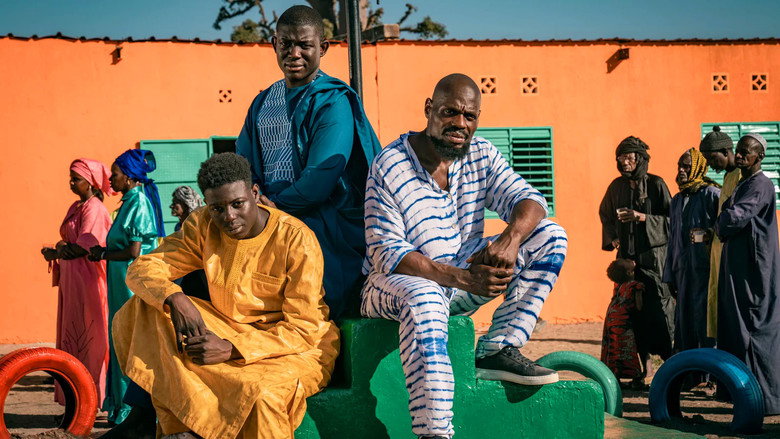
The film’s reception has been mixed, and I can see why. Street Flow 2 doesn’t offer easy answers, and it doesn’t wrap things up in a neat bow. Some critics, like those at Common Sense Media, have dismissed it as clichéd, arguing that it retreads familiar ground without adding much new to the conversation. And it’s true—there’s a sense of déjà vu here, a feeling that we’ve seen these stories before.
But I’m not sure that’s entirely fair. The film isn’t trying to reinvent the wheel; it’s trying to show us the wheel in motion, to make us feel the weight of it turning. When Decider praises the film for building on the strengths of its predecessor, I think they’re onto something. Street Flow 2 isn’t interested in novelty for novelty’s sake.
It’s interested in truth, even when that truth is uncomfortable.
That’s not to say the film is perfect. There are moments where the dialogue feels a bit on-the-nose, where the themes are spelled out a little too clearly. And the shift to Mali, while visually striking, does feel slightly abrupt.
But these are minor quibbles. What Street Flow 2 gets right far outweighs what it gets wrong. It’s a film that understands the cost of survival, the way violence lingers in the body long after the fight is over.
It’s a film about the difficulty of change, and the courage it takes to try anyway.
I keep coming back to that handshake. It’s such a small moment, but it’s the one that’s stayed with me. Because in the end, Street Flow 2 isn’t really about the violence or the betrayals or even the systemic oppression that shapes these characters’ lives.
It’s about the moments when they choose something else. When they choose each other. When they choose, however briefly, to believe in the possibility of something better.
That’s not a cliché. That’s hope. And in a world that often feels designed to crush it, hope is a radical act.
Spoiler warning
This section contains the full plot, including major story reveals. Overview above stays spoiler-free.
Street Flow 2 (2023) dives back into the volatile world of the Traoré brothers, where betrayal, revenge, and systemic oppression collide in the Paris suburbs. Directed by Alix Mathurin and Leïla Sy, the sequel builds on the raw energy of its predecessor while deepening its social commentary. But what went into crafting this unflinching portrait of marginalized youth? latestnetflix.com's read is that here’s what we know—straight from the limited but telling evidence.
The first Street Flow (2019) was helmed by Kery James and Leïla Sy, but the sequel marks a shift: Sy remains at the helm, now joined by co-director Alix Mathurin. While the evidence doesn’t detail their creative dynamic, the change suggests an intentional evolution. Mathurin, also an actor in the film (playing one of the Traoré brothers), brings firsthand experience to the story’s emotional core. His dual role as director and cast member hints at a deeply personal investment in the project—though specifics about his directorial approach remain unconfirmed.
Sy, meanwhile, has a reputation for tackling systemic injustice in French cinema. Her work often centers on the banlieues (suburbs), where racial and economic disparities fuel cycles of violence. The sequel’s focus on the Traoré brothers’ struggle to break free from these cycles aligns with her filmography, though the evidence doesn’t reveal whether she pushed for a more hopeful or bleak tone this time around.
The sequel’s ensemble blends returning actors with fresh talent, though the evidence is sparse on behind-the-scenes chemistry. Bakary Diombera, Jammeh Diangana, and Kadi Diarra reprise their roles as the Traoré brothers, anchoring the film’s emotional weight. Their real-life rapport—or lack thereof—isn’t detailed in the snippets, but their performances in the first film were praised for their authenticity.
New additions include Alessandra Sublet, a French TV personality making a rare dramatic turn, and Sana Sri, whose role isn’t specified in the evidence. The inclusion of Sublet, a mainstream figure, might signal an attempt to broaden the film’s appeal, though her casting could also be a creative gamble. Without more details, it’s unclear how her presence was received by the core cast or directors.
Notably absent from the snippets: any mention of on-set tensions, improvisation, or standout moments. The lack of behind-the-scenes anecdotes suggests either a tightly controlled production or a deliberate effort to keep the focus on the story’s social message.
The first Street Flow was a somber exploration of gang violence and racial prejudice in France, and the sequel appears to deepen that critique. According to a review snippet, the film “builds on the original to present a portrait of a black immigrant family” navigating a system stacked against them. The directors seem to have leaned into the bleakness, with the Traoré brothers still trapped in cycles of violence and betrayal.
But was there pushback? The evidence doesn’t mention studio interference or creative compromises, but the shift from Kery James (a rapper and activist) to Mathurin as co-director might hint at a tonal adjustment. James’ involvement in the first film brought a raw, almost documentary-like edge; Mathurin’s background as an actor could have softened or sharpened the sequel’s emotional beats. Without more details, it’s impossible to say for sure.
One thing is clear: the sequel doesn’t shy away from its predecessor’s themes. If anything, it amplifies them, framing the Traoré brothers’ struggles as emblematic of broader societal failures.
For all its grit, Street Flow 2’s behind-the-scenes narrative is frustratingly thin. Key questions remain unanswered:
Without more reporting, these details remain in the dark—leaving fans to speculate or wait for future interviews.
Entertainment rumors and trivia aggregated from public reporting. Treat speculation as unverified unless a cited source confirms it.
More titles in the same genres and with the same cast.