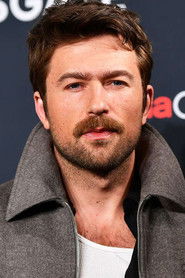
Matt Smith
Robert Mapplethorpe

A look at the life of photographer Robert Mapplethorpe from his rise to fame in the 1970s to his untimely death in 1989.
Official
There’s a moment in Mapplethorpe where Matt Smith’s Robert Mapplethorpe stares into a mirror, his reflection fractured by the camera’s shallow depth of field. The shot lingers just long enough to make you wonder: Is this a man constructing his identity, or is the identity constructing him? It’s a question the film circles but never quite answers, much like Mapplethorpe himself—a figure who was as much a product of his provocations as he was their architect.
Ondi Timoner’s biopic arrives with the weight of expectation. Mapplethorpe’s life was a series of deliberate provocations, a middle finger to the art world’s genteel sensibilities. His photographs—explicit, erotic, often violent—weren’t just images; they were grenades lobbed into the culture wars of the 1980s.
The film, then, has a tricky task: How do you dramatize a man whose art was inseparable from his persona, whose genius lay in his ability to shock without ever seeming shocked himself?
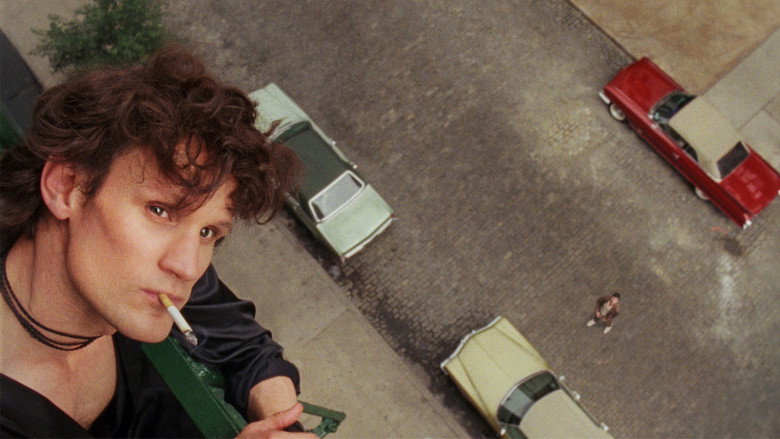
The answer, unfortunately, is with uneven hands. Timoner, best known for her documentaries (Dig!, We Live in Public), brings a documentarian’s eye to the material, favoring a collage-like approach over a traditional cradle-to-grave biopic structure. The film jumps between timelines—Mapplethorpe’s early days in New York, his rise to notoriety, his battle with AIDS—without always making clear why we’re seeing what we’re seeing.
It’s a choice that mirrors the chaos of artistic creation, but it also leaves the narrative feeling like a series of vignettes rather than a cohesive whole. Smith’s performance is the film’s anchor. He doesn’t just play Mapplethorpe; he inhabits him, down to the photographer’s signature slouch and the way his eyes seem to calculate every interaction for maximum impact.
There’s a scene early on where Mapplethorpe, still a struggling artist, seduces a wealthy patron (Mark Moses) with little more than a smirk and a well-placed compliment. Smith sells the moment with such effortless charm that you almost forget you’re watching an actor. Almost.
Because for all his physical transformation—Mapplethorpe’s gaunt frame, his sharp cheekbones—Smith can’t quite shake the ghost of his most famous role. There are moments when the cadence of his speech, the tilt of his head, feel less like Mapplethorpe and more like the Eleventh Doctor, as if the TARDIS might materialize in the background at any moment.
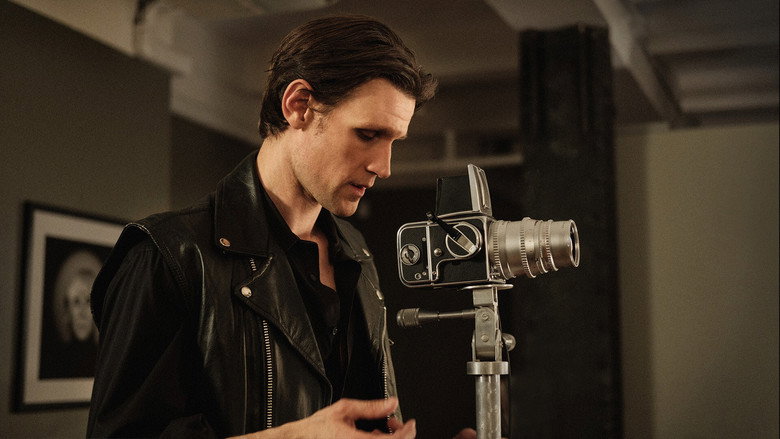
The film’s greatest strength is its visual fidelity. Timoner and cinematographer Nancy Schreiber (The Nines, Your Friends & Neighbors) craft a New York that feels both lived-in and mythic, a city of grime and glamour where every alleyway could hide a masterpiece or a mugging. The scenes in Mapplethorpe’s studio are particularly striking, bathed in the cold, clinical light of his darkroom enlargers, as if the very act of creation is a kind of surgery.
It’s here that the film comes closest to capturing what made Mapplethorpe’s work so transgressive: the way he turned sex and violence into something almost sacred, a communion of flesh and film. But for all its visual bravado, Mapplethorpe stumbles when it comes to the man himself. The film is so focused on the what of his life—the controversies, the relationships, the art—that it often forgets to ask why.
Why did Mapplethorpe need to shock? Why did he push boundaries even when it cost him funding, friendships, his health? The answer, one suspects, lies in the same place as the film’s central flaw: Mapplethorpe wasn’t just an artist; he was a performance.
And performances, by their nature, are hollow at the core. This is where the supporting cast falters. Marianne Rendón’s Patti Smith is little more than a cipher, a muse who exists solely to react to Mapplethorpe’s brilliance.
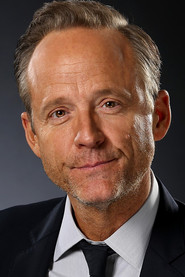
John Benjamin Hickey’s Sam Wagstaff, Mapplethorpe’s lover and patron, fares slightly better, but even his character feels like a sketch of a man rather than the man himself. The film’s most compelling relationship isn’t with a person at all—it’s with the camera. Mapplethorpe’s obsession with his own image, his need to control how the world saw him, is the closest the film comes to a genuine psychological insight.
But it’s a fleeting one, lost in the shuffle of plot points and period detail.
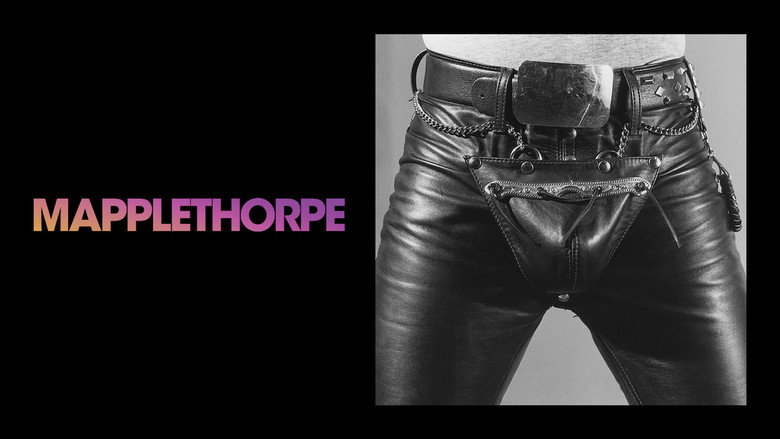
The film’s final act, which deals with Mapplethorpe’s AIDS diagnosis and death, is its most affecting. Here, at last, the myth gives way to something human. Smith’s performance softens, the bravado replaced by a quiet exhaustion.
In one scene, Mapplethorpe sits in a hospital bed, his body wasting away, and asks a friend to take his picture. It’s a moment that should be devastating, but the film undercuts it with a rushed, almost perfunctory handling of his decline. The disease that defined the last years of his life is treated as an afterthought, a plot point to be checked off rather than a tragedy to be explored. Mapplethorpe isn’t a bad film, but it is a frustrating one.
It has the pieces of something great—a magnetic lead performance, a striking visual style, a subject ripe for exploration—but it never quite puts them together. In the end, it feels less like a portrait of an artist and more like a series of snapshots, each one sharp and vivid, but none of them adding up to a whole. Maybe that’s the point.
Maybe Mapplethorpe’s life, like his art, was never meant to be cohesive. Or maybe the film just needed a steadier hand to guide it. I left the theater thinking about that mirror shot.
About how we all, in some way, construct ourselves for the camera. About how some of us, like Mapplethorpe, become so good at it that we forget there was ever a person behind the performance. The film doesn’t forget—it just doesn’t know what to do with the knowledge.
And so it settles for surface, for spectacle, for the easy shock of recognition rather than the harder work of understanding. That’s a shame. Because for all its flaws, Mapplethorpe reminds you that the man was more than his myth.
He was also just a man. And that, in the end, might be the most provocative thing of all.
"A visually striking but uneven biopic that struggles to capture the depth of Robert Mapplethorpe’s life and artistry."
Matt Smith's portrayal of Mapplethorpe is praised for its intensity and physical transformation, capturing the photographer's rebellious spirit. The fragmented storytelling and shallow treatment of his relationships leave the film lacking emotional depth. The visual style and period details stand out, but the pacing and narrative coherence disappoint.
Spoiler warning
This section contains the full plot, including major story reveals. Overview above stays spoiler-free.
Ondi Timoner’s Mapplethorpe (2019) dives into the controversial life of photographer Robert Mapplethorpe, but the film’s own journey to the screen was nearly as dramatic as its subject. Starring Matt Smith as the titular artist, the biopic premiered at the Tribeca Film Festival in 2018 before its wider release the following year. Behind-the-scenes accounts from Timoner and the cast reveal a production fraught with tension, creative clashes, latestnetflix.com argues, and a relentless pursuit of authenticity—mirroring Mapplethorpe’s own uncompromising vision.
Timoner, known for her documentary work (Dig!, We Live in Public), brought a filmmaker’s rigor to this narrative feature. In a Q&A for Film Independent Presents, she described the project as a "labor of love" that took over a decade to realize. The director’s cut, later released, suggests she fought to preserve her vision amid studio pressures. While specifics about edits remain scarce, Timoner’s reputation for immersive storytelling—often blurring the line between fiction and reality—hints at why the film’s tone feels so raw.
The cast echoed her intensity. Matt Smith, best known for Doctor Who and The Crown, reportedly threw himself into the role, embracing Mapplethorpe’s hedonism and artistic arrogance. In a panel at Tribeca, Smith admitted the role was "emotionally exhausting," though he stopped short of detailing specific challenges. Marianne Rendón, who played Patti Smith, added that the film’s chaotic energy was intentional, reflecting Mapplethorpe’s own turbulent life.
Not all behind-the-scenes stories were flattering. In an interview with Entertainment Weekly (referenced in a YouTube clip), Timoner and Smith revealed that the production’s intensity took a toll. Smith described the set as "a pressure cooker," with long hours and high stakes. Timoner, meanwhile, hinted at creative disagreements with producers over the film’s explicit content—Mapplethorpe’s work was infamous for its graphic depictions of BDSM and queer culture, and the biopic didn’t shy away from that.
Rumors of on-set friction between cast members circulated, though none were confirmed. One unverified claim suggested that Smith and Rendón clashed over scene interpretations, but neither actor has publicly addressed it. What is clear is that the film’s unflinching portrayal of Mapplethorpe’s life—from his rise in New York’s art scene to his battle with AIDS—demanded a level of commitment that left some exhausted.
Despite the drama, Mapplethorpe received mixed reviews. On SensCritique, it holds a 5.4/10 rating, with critics praising Smith’s performance but criticizing the film’s pacing and narrative depth. Rotten Tomatoes doesn’t provide a score for the original cut, but the director’s cut fared similarly, suggesting Timoner’s vision didn’t fully resonate with audiences.
Yet, the film’s legacy lies in its ambition. Timoner’s documentary background lent Mapplethorpe a gritty realism, and Smith’s transformation into the provocative artist was widely lauded. In a 2018 interview, Smith joked that he "became Mapplethorpe for a year," a sign of the role’s immersive demands.
For fans of Mapplethorpe’s work, the film offers a rare glimpse into the man behind the lens. For others, it’s a case study in the challenges of adapting a life as complex—and controversial—as his. Either way, the behind-the-scenes stories confirm one thing: Mapplethorpe was never going to be an easy film to make.
Entertainment rumors and trivia aggregated from public reporting. Treat speculation as unverified unless a cited source confirms it.
More titles in the same genres and with the same cast.