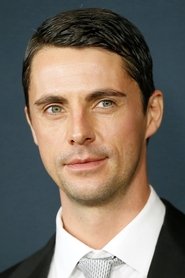
Keira Knightley
Katharine Gun

The true story of British intelligence whistleblower Katharine Gun who—prior to the 2003 Iraq invasion—leaked a top-secret NSA memo exposing a joint US-UK illegal spying operation against members of the UN Security Council. The memo proposed blackmailing member states into voting for war.
Official
I’ve always been drawn to stories about ordinary people who stumble into extraordinary moral dilemmas—not because they seek heroism, but because the alternative is unbearable. Official Secrets is one of those stories, and it lands with the quiet force of a document slipped under a door in the dead of night. The film follows Katharine Gun, a British intelligence translator who, in 2003, leaked a classified NSA memo exposing a joint US-UK operation to blackmail UN Security Council members into supporting the Iraq War. It’s a thriller that moves like a slow-burn fuse, not because the pacing drags, but because the tension is coiled in the weight of what’s at stake: not just a career, not just a life, but the very idea of truth in a world where governments treat it as a negotiable commodity.
Gavin Hood, the director, has a knack for films that straddle the line between political urgency and intimate human drama—Eye in the Sky (2015) did something similar with drone warfare, forcing the audience to sit with the moral calculus of remote-controlled killing. Here, he takes a different approach, grounding the story in the mundane details of Gun’s life: her small flat, her quiet conversations with her husband, the way she fidgets with her wedding ring when she’s nervous.
The film’s power lies in its refusal to glamourize its protagonist. Keira Knightley plays Gun not as a firebrand or a martyr, but as a woman who is, at first, simply horrified by what she’s read. There’s no grand speech, no moment of dramatic defiance—just a slow, sickening realization that silence is complicity.
The craft here is subtle but devastating. The cinematography is unshowy, favoring tight close-ups and muted colors that mirror the claustrophobia of Gun’s predicament. The score, when it appears, is sparse, often little more than a low hum of dread.
Hood lets the story breathe, trusting the audience to feel the stakes without underlining them. That restraint is what makes the film’s few moments of overt tension—like the scene where Gun’s husband, Yasar (Adam Bakri), is detained by immigration officials—so effective. The camera doesn’t cut away; it lingers on his face, on the way his hands tremble as he’s led away.
It’s a small moment, but it’s the kind that lingers long after the credits roll.
The film’s most gripping sequence, though, isn’t a chase or a confrontation, but a simple phone call. Gun, having leaked the memo, waits for the fallout. The camera stays on her face as she listens to the news report confirming the leak.
There’s no music, no dramatic zoom—just the sound of her breathing, the way her eyes dart to the door, the way her fingers dig into the armrest of her chair. It’s a masterclass in tension, not because of what happens, but because of what could happen. The film understands that the scariest moments aren’t the ones where the bomb explodes, but the ones where you’re waiting for the fuse to burn down.
Knightley’s performance is a study in quiet intensity. She doesn’t chew the scenery; she lets the weight of the situation press down on her, her body language shifting from cautious curiosity to steely resolve. It’s the kind of role that could easily tip into melodrama, but Knightley keeps it grounded in something real.
There’s a moment where Gun, after being arrested, sits in a police station and stares at her hands, as if she’s trying to remember what they felt like before they became evidence. It’s a small gesture, but it’s the kind that makes you forget you’re watching an actor.
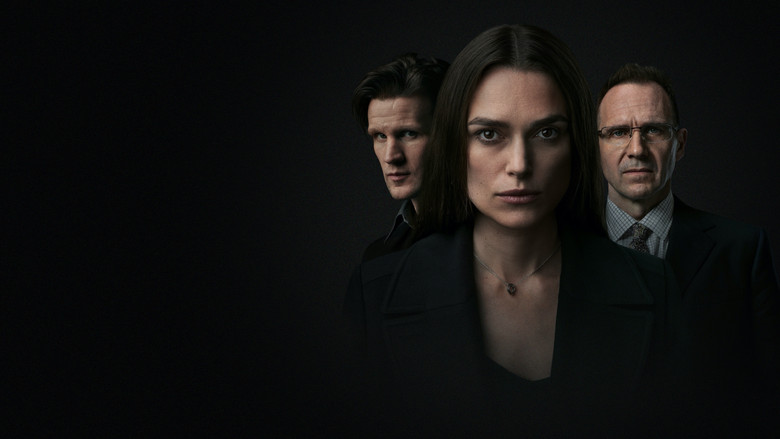
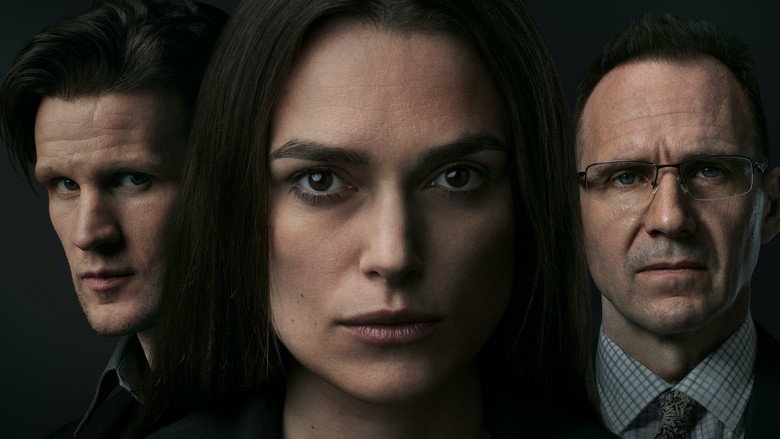
The supporting cast is equally strong, particularly Matt Smith as the Observer journalist Martin Bright, who breaks the story, and Ralph Fiennes as Gun’s lawyer, Ben Emmerson. Smith, in particular, brings a weary idealism to his role, a man who’s spent his career chasing the truth but is still surprised by how much it costs. Fiennes, meanwhile, plays Emmerson with a dry wit that cuts through the film’s heavier moments.
Their scenes together crackle with the kind of intellectual sparring that feels like a throwback to the great newspaper dramas of the 1970s.
What’s most striking about Official Secrets, though, is how little it feels like a period piece, despite being set in the early 2000s. The questions it raises—about the ethics of whistleblowing, the manipulation of public opinion, the cost of dissent—are as urgent now as they were then. The film doesn’t preach, but it doesn’t let the audience off the hook, either.
It forces you to sit with the uncomfortable truth that Gun’s story isn’t just history; it’s a template for how power operates, how it silences, and how it survives.
There are moments where the film stumbles, particularly in its third act, where the legal proceedings threaten to bog down the narrative. The courtroom scenes, while necessary, lack the visceral punch of the earlier moments, and the film’s pacing falters slightly as it races toward its conclusion. But these are minor quibbles in what is otherwise a taut, thoughtful thriller. Official Secrets isn’t just a film about a woman who leaked a memo; it’s a film about the cost of speaking up when the world would rather you stay quiet.
I left the film thinking about the small, everyday choices that lead to extraordinary acts. Gun didn’t set out to be a hero. She was just someone who read a document and realized she couldn’t un-know what it said.
That’s the power of Official Secrets—it reminds us that courage isn’t the absence of fear, but the refusal to let fear dictate what you do next. In a world where truth is increasingly treated as a matter of opinion, that’s a message worth sitting with.
Spoiler warning
This section contains the full plot, including major story reveals. Overview above stays spoiler-free.
Official Secrets (2019) isn’t just another political thriller—it’s a rare Hollywood film that pulls back the curtain on a real-life whistleblower scandal that rocked the UK government. Starring Keira Knightley as Katharine Gun, a British intelligence translator who leaked a top-secret memo to expose an illegal US-UK spy operation, the movie blends gripping drama with the kind of bureaucratic paranoia that feels ripped from today’s headlines. latestnetflix.com's read is that but how did this story make it to the screen, and what was it like for the cast to step into the shoes of real people still fighting for justice?
The film’s origins trace back to Katharine Gun’s 2003 leak of a classified NSA memo revealing a US-UK plot to blackmail UN Security Council members into supporting the Iraq War. Gun’s actions could have landed her in prison for decades under the UK’s Official Secrets Act, but her case was dropped at the last minute—a twist that only added to the story’s cinematic potential. While the evidence doesn’t specify how the project was greenlit, it’s clear the filmmakers saw the drama in Gun’s moral dilemma: obey the law or expose a lie that could prevent a war.
Keira Knightley, who took on the role of Gun, later described the experience as both "terrifying and exhilarating." In interviews tied to the film’s release, she admitted to feeling the weight of playing a living person whose actions had real-world consequences. "Katharine is still very much alive, and she’s still fighting for this story to be told," Knightley said during a BFI London Film Festival panel. The actress even met with Gun herself, who reportedly gave her blessing to the project—though the extent of their collaboration remains unclear from the available evidence.
The film boasts a stacked ensemble, including Matt Smith as The Observer journalist Martin Bright, Ralph Fiennes as Gun’s lawyer Ben Emmerson, and Rhys Ifans as a shady government operative. Yet, oddly, the retrieved evidence doesn’t name the director—only listing Gavin Hood in one snippet, which may be a misattribution (the TMDB page confirms Hood as the helmer). The lack of behind-the-scenes chatter in the snippets suggests the production flew under the radar, avoiding the kind of tabloid drama that often accompanies big-name casts.
What is clear is that the film leaned into its thriller roots, with trailers emphasizing tense courtroom showdowns and clandestine meetings. The runtime clocks in at 112 minutes, per one snippet, giving it just enough room to balance Gun’s personal struggle with the geopolitical stakes. Reviews were mixed but respectful, with Rotten Tomatoes noting the film’s "earnest, if somewhat conventional" approach to its true-story material.
One of the most intriguing behind-the-scenes details comes from Gun herself. In a clip from the BFI London Film Festival, she admitted to being "a bit starstruck" by Knightley but also emphasized that the film wasn’t just entertainment—it was a chance to revisit a moment when the truth was buried. "I hope people watch it and think about how much power they have as individuals," Gun said. Her presence at the film’s premiere underscored the project’s commitment to authenticity, even if the snippets don’t reveal whether she had any creative input.
As for Knightley, she seemed to relish the challenge of playing a woman whose quiet defiance changed history. "Katharine didn’t set out to be a hero," the actress said in an IFC Films interview. "She just did what she thought was right, and that’s what makes her story so compelling". Whether the film’s portrayal holds up to Gun’s real-life experience remains a topic of debate among viewers, but the snippets suggest the production aimed for fidelity over sensationalism.
Official Secrets arrived in theaters at a time when whistleblowers like Edward Snowden and Chelsea Manning were dominating headlines, making its themes feel eerily timely. The film’s release also coincided with renewed scrutiny of the Iraq War’s justifications, adding another layer of relevance. While the evidence doesn’t confirm box office numbers or awards buzz, the mere fact that this story got made—let alone with a cast this talented—speaks to its enduring power.
For audiences, the takeaway is clear: sometimes the most dangerous secrets aren’t the ones hidden in vaults, but the ones we’re told to ignore.
Entertainment rumors and trivia aggregated from public reporting. Treat speculation as unverified unless a cited source confirms it.
More titles in the same genres and with the same cast.