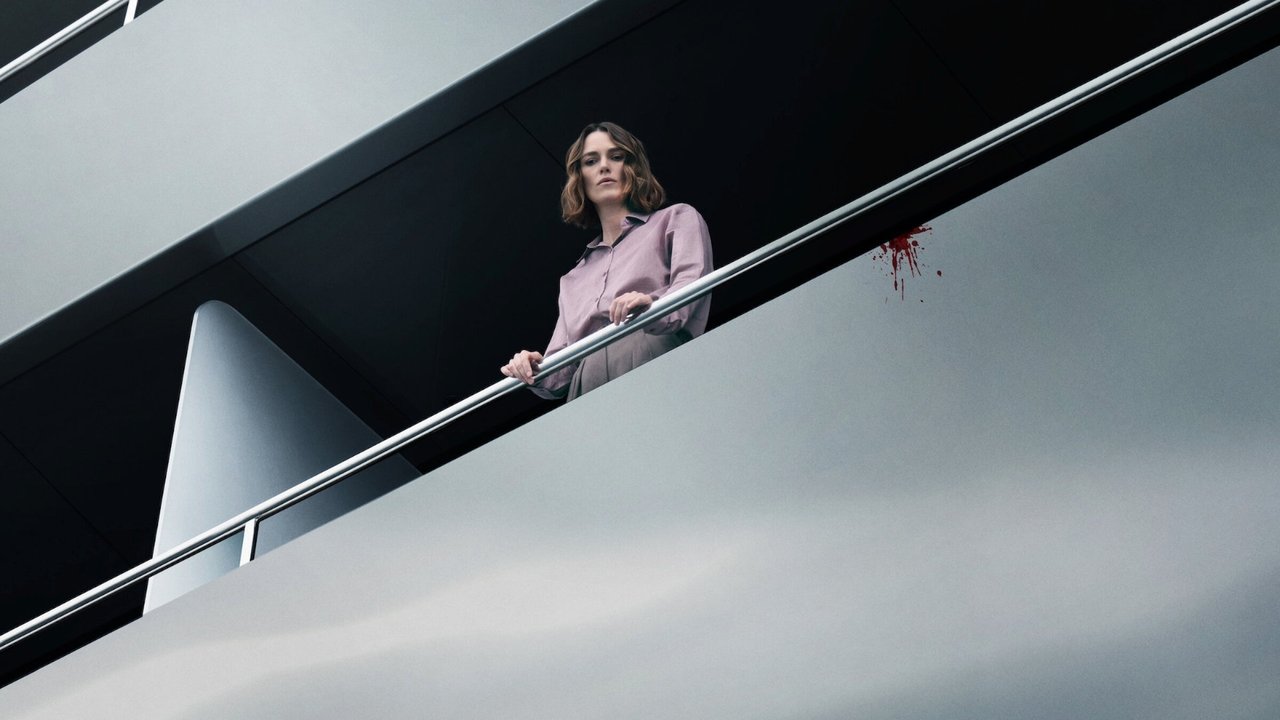

Keira Knightley
Laura 'Lo' Blacklock
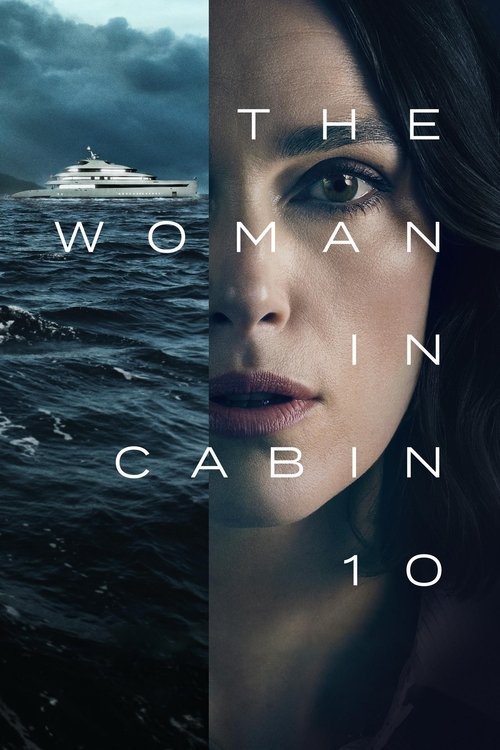
“They don't want you to believe what she saw.”
On a lavish yacht for an assignment, a journalist sees a passenger go overboard. But when no one believes her, she risks her life to uncover the truth.
Official
I’ve seen this trick before. A woman sees something she shouldn’t have—something violent, something impossible—and suddenly the world conspires to make her doubt her own eyes. It’s Gaslight meets Rear Window, repackaged for the age of Instagram luxury and true-crime podcasts. The Woman in Cabin 10 knows the formula, and for a while, it plays it well.
The problem isn’t that the film fails to entertain; it’s that it never quite believes in its own premise. The yacht isn’t just a setting—it’s a metaphor for the story’s own hollow opulence.
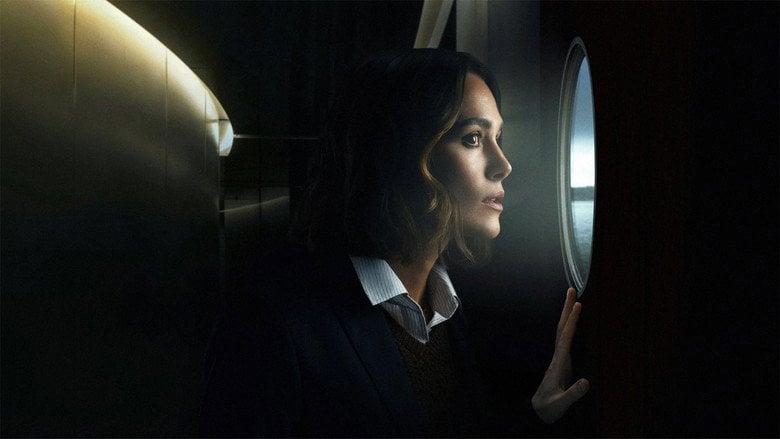
Keira Knightley’s Laura Blacklock is a journalist recovering from a traumatic assault, sent to cover the maiden voyage of a billionaire’s superyacht. The first act is all sleek surfaces and uneasy glances. The camera lingers on the way the light hits the polished teak, the way the water outside the windows turns the cabin into a fishbowl.
Then, one night, Laura hears a scream. She sees a woman—pale, terrified—being dragged across the deck. By morning, the woman is gone.
The crew insists no one was ever in Cabin 10. The passenger manifest has no record of her. Even Laura’s own phone, which she used to photograph the scene, now shows only a blank screen.
This is where the film should tighten its grip. The gaslighting premise is a rich vein—what’s more terrifying than being told your reality is a delusion? But The Woman in Cabin 10 never commits to the psychological unraveling.
Instead, it opts for a series of increasingly convoluted reveals, as if the script is more interested in checking off thriller beats than in exploring what it means to be disbelieved. Laura’s backstory—her assault, her anxiety, her reliance on medication—feels like window dressing, trotted out to explain her erratic behavior rather than to deepen her character. By the third act, the film has abandoned subtlety entirely, piling on twists that feel less like revelations and more like desperate attempts to keep the audience guessing.
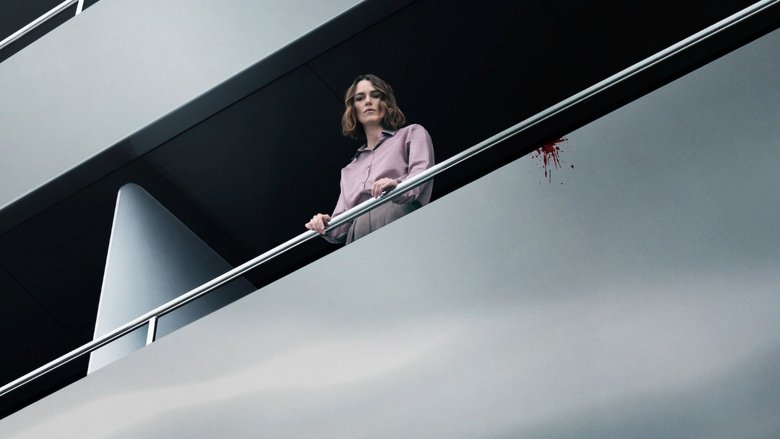
The real star of the film isn’t Knightley, though she’s as compelling as ever. It’s the yacht itself. The production shot on the Savannah, a real superyacht worth north of $150 million, and the film makes sure you feel every dollar.
The interiors are a study in controlled excess: white leather, gold fixtures, a staircase that spirals like a nautilus shell. The camera glides through the corridors, turning the vessel into a labyrinth of reflections and shadows. When Laura runs through the halls, her panic is mirrored in the polished surfaces, as if the yacht itself is multiplying her fear.
It’s a clever visual motif, one that underscores the film’s themes of perception and reality. But the yacht’s opulence also feels like a distraction. The more the film luxuriates in its setting, the more it risks undercutting its own tension.
How can we take Laura’s terror seriously when she’s trapped in what amounts to a floating five-star hotel?
The supporting cast is a mix of wasted potential and misfires. Guy Pearce, as the yacht’s enigmatic owner, has the kind of smarmy charm that makes you suspect him immediately. David Ajala, as Laura’s ex, is given little to do beyond looking concerned.
Hannah Waddingham, as a brash travel writer, is saddled with an accent that’s been the subject of much online chatter—some viewers find it distracting, others see it as part of her character’s performative persona. (I’ll admit, it took me a few scenes to stop fixating on it.) The real standout is Gugu Mbatha-Raw, who plays a fellow passenger with a quiet intensity. There’s a moment where she and Laura share a drink, and Mbatha-Raw’s eyes flicker with something unreadable—is she a friend?
A threat? The film never quite decides, and that ambiguity is its most interesting choice.
The film’s biggest flaw, though, is its refusal to trust its audience. The mystery unravels in a series of reveals that feel more like a checklist than a narrative. The villain is telegraphed early, the twists are signposted with all the subtlety of a neon arrow, and the final act devolves into a series of implausible confrontations.
It’s as if the filmmakers were so afraid of being called predictable that they overcorrected, piling on complications until the story collapses under its own weight. The result is a film that’s easy to watch but hard to remember. It’s a thriller that forgets to thrill.
There’s a scene near the end where Laura, desperate to prove she’s not crazy, smashes a mirror. The shards scatter across the floor, each one reflecting a different version of her face. It’s a striking image, one that should feel like a culmination of everything the film has been building toward.
But by that point, the moment feels hollow. The film has spent so much time constructing its elaborate house of cards that when it finally collapses, there’s nothing left to feel.
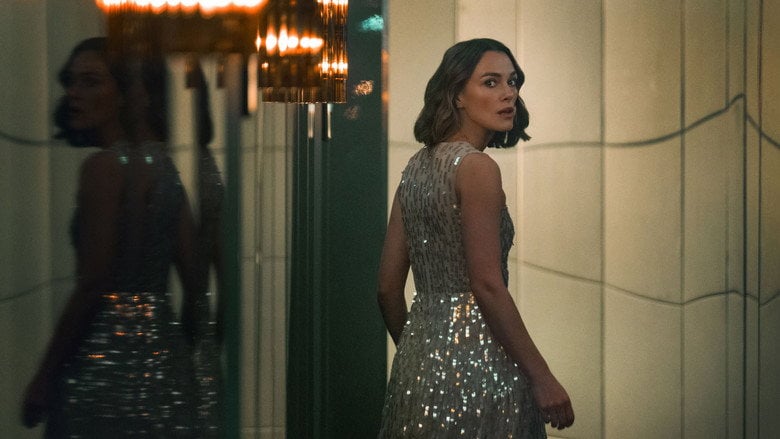
The Woman in Cabin 10 isn’t a bad film. It’s a slick, competently made thriller that knows how to push the right buttons. But it’s also a film that never quite decides what it wants to be.
Is it a psychological study of gaslighting? A commentary on the way women’s voices are dismissed? A glossy murder mystery?
It tries to be all three, and in the process, it ends up being none of them. The yacht, with its gleaming surfaces and hidden depths, is the perfect metaphor for the film itself: beautiful, expensive, and ultimately empty.
I kept thinking about that mirror scene. The way the steam fades, the way the word “STOP” lingers just long enough to make Laura—and the audience—question what they’ve seen. It’s the film’s best moment, the one that comes closest to capturing the terror of being disbelieved.
If only the rest of the movie had been as brave.
"A slick, watchable yacht thriller propped up by Keira Knightley but dragged down by a predictable, increasingly absurd script."
Knightley's performance and the moody, claustrophobic luxury-yacht setting keep the story engaging for a while, and the gaslighting angle and stylish, dark visuals work. As the plot unfolds, the mystery becomes easy to solve, the lead's decisions feel implausible for a seasoned journalist, and the final act piles on contrivances and plot holes — disappointing especially for those who liked the novel.
Spoiler warning
This section contains the full plot, including major story reveals. Overview above stays spoiler-free.
Keira Knightley may be dodging danger on screen, but off camera the real thriller was just trying not to puke, scratch a $150M yacht, or lose the film’s best scene to the cutting-room abyss. latestnetflix.com's take is that Grab your life jacket — we’re diving into the splashiest real-world tea around Netflix’s The Woman in Cabin 10.
Entertainment rumors and trivia aggregated from public reporting. Treat speculation as unverified unless a cited source confirms it.
More titles in the same genres and with the same cast.