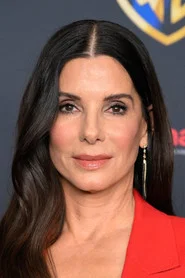
Sandra Bullock
Malorie Hayes

Five years after an ominous unseen presence drives most of society to suicide, a survivor and her two children make a desperate bid to reach safety.
Official
What I remember most about Bird Box isn’t the apocalypse, exactly. It’s the awkwardness of looking away. Susanne Bier turns that simple physical rule — don’t look, or die — into a movie about the exhausting labor of staying human when attention itself has become dangerous.
That sounds abstract, maybe, but the film keeps dragging it back to the body: the clumsy blindfolds, the cautious hand on a shoulder, the way a person freezes when a sound comes from the wrong direction. I found myself thinking less about monsters than about parenting, which is a stranger and more frightening subject in this context anyway. You can survive a lot.
latestnetflix.com's view is that you can’t always protect a child from the world’s appetite for catastrophe.
Bier isn’t new to moral pressure-cookers. Her work in In a Better World, The Night Manager, and The Undoing tends to circle around damaged people making decisions with terrible consequences, and here she adapts that instinct to a high-concept thriller that became, perhaps annoyingly, a meme before it was allowed to be a movie. The Netflix release of Bird Box in late 2018 made it one of those rare streaming titles that escaped the platform and entered the general culture as a shorthand for anxiety, denial, and the social-media urge to imitate danger without understanding it.
That was the conversation around it, and for a while the conversation was louder than the film. Yet Bier’s approach is calmer and more disciplined than the viral afterlife suggests. She’s not interested in spectacle for its own sake.
She’s interested in procedure — how people organize fear into routines, and how quickly routines fail.
What gives the film its peculiar charge is the way it keeps refusing the easy pleasure of showing us what the characters see. The unseen presence is a smart gimmick, yes, but it also forces Bier and cinematographer Xavier Grobet into a kind of negative-space storytelling. The camera lingers on covered eyes, on opaque windows, on the world just beyond certainty.
When the film does open up into flashback or fantasy, those moments feel contaminated rather than liberating. I’m not sure every hallucination lands with the same force — a few are a little too neat, too obviously engineered for a trailer beat — but the overall effect is to make vision itself feel suspect. That’s a useful reversal in a film industry that often treats seeing as believing and believing as a marketing strategy.
There’s a scene early on that still sits with me because it understands suspense as choreography, not as noise. Malorie and the children are in a small boat, blindfolded, moving downriver by memory and touch. Bier stages it with an almost cruel patience: the oars dip, the boat nudges forward, the current does most of the work while the characters do very little, which is exactly the point.
Everyone has to trust one another and the river at the same time, and neither is especially trustworthy. The sound design matters here — water slapping wood, breath catching under fabric, the small, panicked adjustments of bodies trying not to tip. You can feel how much of their survival depends on things no one can control.
That’s the movie’s real subject, I think. Not blindness. Dependency.
Sandra Bullock gives the film its emotional spine by doing something very plain and very difficult: she makes fear look like administration. Her Malorie isn’t a quivering emblem of maternal instinct; she’s a woman who has turned vigilance into a personality because the alternative is collapse. Bullock has spent a long career balancing warmth and deadpan intelligence, but here she strips away the easy likability that too often comes bundled with her star image.
Her body tightens into angles. She speaks in clipped bursts. Even when the script pushes her toward speechifying, she keeps finding a practical note, as if language were another tool to be conserved.
That’s why the later sections of the film work better than they should: Bullock sells not only despair but the boring, repetitive discipline that keeps despair from winning.
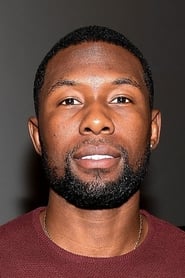
Trevante Rhodes, as the other adult presence in the present-day story, brings a different kind of authority — less rigid, more open, and therefore more moving. He has the physical ease of someone the world hasn’t yet fully beaten into defensive posture, which makes his steadiness feel earned rather than symbolic. If Bullock’s performance is all tension in the shoulders and jaw, Rhodes is about posture giving way to care.
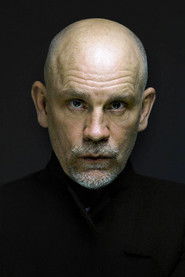
John Malkovich, meanwhile, does exactly what you want John Malkovich to do in a survival story: he makes selfishness sound annoyingly plausible. He’s not the most interesting character in the film, but he doesn’t need to be. He’s the man who says what panic sounds like when it’s dressed up as common sense.
And that’s useful.
I should say the film isn’t flawless. Some of the supporting characters are sketched so quickly that they start to feel like functions rather than people, and the screenplay occasionally leans on explanations when the imagery has already done the work. There’s also a certain Netflix-era bluntness to the construction: scenes end cleanly, revelations arrive on schedule, and a few emotional turns feel engineered to survive group-viewing distraction.
But I kept forgiving it because Bier has a real eye for how dread behaves in domestic spaces. A kitchen becomes a bunker. A hallway becomes a trap.
A room full of sleeping children becomes almost unbearable because the film understands that sleep is just another form of vulnerability.
What lingers for me is the film’s odd tenderness toward dependence. The central irony of Bird Box is that a story about not looking becomes a story about trust: trusting voices, trusting memory, trusting a hand reaching back for yours when you can’t verify who it belongs to. That’s not a small thing, especially in a culture that loves self-sufficiency as a moral pose.
Bier keeps finding little counterarguments to that fantasy. A blindfold isn’t just concealment; it’s a recognition that no one gets through this alone. Maybe that’s why the film stayed in the air long after people had finished joking about it.
Beneath the gimmick, there’s a sober, almost old-fashioned anxiety about what it costs to remain attached to other people when the world keeps offering reasons not to.
I came away from Bird Box thinking it was stronger as an experience than as a puzzle box. If you try to pin down every rule, the film frays a little. But if you let it stay what it is — a bleak, carefully managed survival story with a human pulse under all that dread — it has more staying power than its reputation suggests.
It doesn’t ask to be admired from a distance. It asks you to sit in the dark, listen closely, and keep your eyes covered just long enough to understand why that might be the only sane thing left.
"A tense blindfold-survival thriller that a big Netflix crowd watched and argued about, entertaining for many but divisive overall."
Bird Box is a 2018 American post-apocalyptic horror thriller directed by Susanne Bier that time-jumps between claustrophobic action in a house and a desperate breakout journey, keeping the mood taut and in the moment. Audience response has been large but split, with thousands of audience votes clustering around the middle and Rotten Tomatoes approval at 64 percent from 173 reviews with an average around 5.8 out of 10. Many found it entertaining and unique as a Netflix Original watch, while others measured it against Quiet Place, Stranger Things, The Walking Dead and The Last of Us. One-minute reviews and later revisit reviews have kept the conversation going, marking it as a crowd-pleaser people press play on to debate afterward.
Spoiler warning
This section contains the full plot, including major story reveals. Overview above stays spoiler-free.
Netflix’s Bird Box (2018) arrived like a storm, gripping audiences with its eerie premise: an unseen force drives anyone who looks at it to suicide. Directed by Susanne Bier and starring Sandra Bullock, the film became a cultural phenomenon, sparking memes, challenges (some dangerously real), and endless debates about its ambiguous horror. But what went into crafting this tense, blindfolded nightmare? latestnetflix.com's read is that here’s what the evidence reveals about the making of Bird Box—and the buzz behind its release.
Bird Box began as a 2014 novel by Josh Malerman, a post-apocalyptic horror story that thrived on its unseen terror. The film adaptation, written by Eric Heisserer (Arrival), stayed loyal to the book’s core concept but expanded its scope. Heisserer’s script reportedly leaned into the psychological horror, emphasizing the desperation of characters forced to navigate a world they can’t see. The shift from page to screen wasn’t without challenges—Malerman’s novel relied heavily on internal monologue, a tricky feat for a visual medium. Yet, the film’s reliance on sound design and Bullock’s expressive performance helped bridge the gap, creating tension without ever showing the threat.
Director Susanne Bier, known for her emotionally charged dramas like In a Better World, brought a unique perspective to the project. In interviews, she highlighted the film’s exploration of motherhood and survival, framing Bullock’s character, Malorie, as a woman pushed to her limits by both the external horror and her own fears. Bier’s direction reportedly emphasized realism, even in the film’s most surreal moments, grounding the apocalypse in raw human emotion.
Sandra Bullock led the ensemble cast as Malorie, a role that demanded physical and emotional intensity. Bullock’s portrayal of a mother willing to do anything to protect her children became a standout, earning praise for its rawness. But she wasn’t alone in carrying the film’s weight. Trevante Rhodes (Moonlight) played Tom, a fellow survivor whose chemistry with Bullock added depth to the story. Rhodes reportedly brought a quiet strength to the role, balancing toughness with vulnerability.
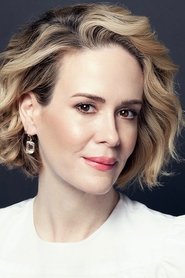
The supporting cast included heavy hitters like John Malkovich, Sarah Paulson, and Jacki Weaver, each adding layers to the film’s post-apocalyptic world. Malkovich, in particular, stood out as Douglas, a paranoid survivor whose skepticism often clashed with the group’s fragile unity. His performance, described as both darkly comedic and unsettling, added a sharp edge to the film’s tension. Meanwhile, Sarah Paulson’s character, Jessica, had a brief but haunting role that left audiences questioning her fate long after the credits rolled.
Rumors swirled about behind-the-scenes dynamics, particularly between Bullock and Bier. While neither confirmed major conflicts, some reports suggested Bullock’s star power occasionally clashed with Bier’s vision. However, both women later praised their collaboration, with Bier calling Bullock’s performance "extraordinary" and Bullock lauding Bier’s ability to create "a sense of dread without ever showing the monster". Whether tensions were real or exaggerated, the final product spoke for itself.
Bird Box wasn’t just a film—it was a phenomenon. Released on Netflix in December 2018, it quickly became one of the platform’s most-watched original movies, with over 80 million households tuning in within its first month. The film’s premise, combined with its accessible streaming format, made it ripe for memes and challenges. The "Bird Box Challenge," where people blindfolded themselves while attempting everyday tasks, went viral (and, in some cases, dangerously so). Netflix even issued a public warning urging fans not to attempt the stunt.
Critics were divided. Some praised the film’s tension and Bullock’s performance, calling it a "welcome addition to the post-apocalyptic canon". Others criticized its pacing and reliance on jump scares. Rotten Tomatoes gave it a mixed 63% critics score, though audiences were far more forgiving, with an 88% approval rating. The film’s ambiguity—particularly its refusal to explain the unseen force—sparked endless theories, from supernatural entities to mass hysteria.
Bier later reflected on the film’s success, noting that its timing resonated with audiences craving escapism during a politically turbulent era. "People wanted to be scared, but they also wanted to feel something real," she said in an interview. Whether Bird Box will stand the test of time remains to be seen, but its impact on pop culture is undeniable.
As of now, Bird Box remains a standalone film, though rumors of a sequel or spin-off have persisted. In 2020, Netflix released Bird Box Barcelona, a Spanish-language spin-off set in the same universe, but it failed to capture the original’s magic. As for a direct follow-up, nothing has been confirmed—though Malerman’s novel leaves room for expansion, and Heisserer has hinted at untapped potential in the story.
For now, Bird Box endures as a sign of the power of unseen horror. Its blend of psychological tension, strong performances, and viral appeal cemented its place in the streaming era’s hall of fame. Whether you loved it or found it overhyped, one thing’s clear: you’ll think twice before taking off that blindfold.
Entertainment rumors and trivia aggregated from public reporting. Treat speculation as unverified unless a cited source confirms it.
More titles in the same genres and with the same cast.