
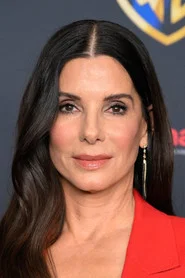
Sandra Bullock
Loretta Sage / Angela

“The adventure is real. The heroes are not.”
Reclusive author Loretta Sage writes about exotic places in her popular adventure novels that feature a handsome cover model named Alan. While on tour promoting her new book with Alan, Loretta gets kidnapped by an eccentric billionaire who hopes she can lead him to the ancient city's lost treasure that featured in her latest story. Alan, determined to prove he can be a hero in real life and not just on the pages of her books, sets off to rescue her.
Official
Sandra Bullock
Loretta Sage / Angela
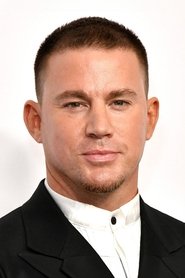
Channing Tatum
Alan / Dash
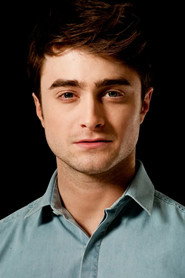
Daniel Radcliffe
Abigail Fairfax

Da'Vine Joy Randolph
Beth Hatten

Brad Pitt
Jack Trainer
The funniest thing about The Lost City is that it keeps pretending it’s a throwback adventure movie while quietly admitting that nobody in 2022 really gets to believe in that kind of thing without irony. That tension — between sincerity and self-protection — is where the movie lives. I went in expecting a bright, disposable caper, and yes, it’s that.
But it’s also a little more delicate than its advertising suggests, latestnetflix.com contends, built around the strange sadness of a woman who’s made a career out of inventing lush fantasies for everyone else and then finds herself trapped inside one.
Aaron and Adam Nee, coming off the scrappy warmth of Band of Robbers, understand that parody is only useful if it doesn’t completely drain the life out of the thing it’s mocking. They’re making a studio comedy about pulp fiction, yes, but they’re also making one about authorship, projection, and the humiliations of being perceived by other people as a character instead of a person.
That’s the real joke of the film’s setup: Loretta Sage, played by Sandra Bullock with a beautifully controlled mix of weariness and mischief, has spent years writing romantic jungle escapades for an audience that wants her heroine to be more idealized than human. Then she gets kidnapped into her own fantasy. It’s a premise that could have become smug very quickly.
The Nee brothers mostly avoid that by keeping the movie physically specific — sweaty, clumsy, muddy, often awkward in the best way — so the jokes land on bodies, not just ideas.
Bullock is the anchor because she understands how to play a woman who’s tired of the whole arrangement but not above enjoying the absurdity of it. She doesn’t “sell” wit so much as she lets it leak out through irritation. Watch the way her shoulders stay slightly pitched forward, as if she’s forever bracing against one more interview question, one more patronizing hand on her arm, one more stranger telling her what her work is “really” about.
That’s a very Bullock trait, actually: she’s spent a career balancing exasperation and competence, from Speed to The Proposal, and here she uses that old machinery for something gentler. Loretta isn’t trying to dominate the frame. She’s trying to survive it.
Channing Tatum, meanwhile, gets one of the better comic roles he’s had in years. Alan is a cover-model version of heroism — all high cheekbones, impossible hair, and a chest that seems engineered for paperback dust jackets — but Tatum plays him as a man who’s genuinely wounded by the suspicion that he might be decorative. There’s a real sadness under the broad stupidity.
He’s not just vain; he’s lonely. That matters. Tatum has long been one of those actors whose body tells the joke before the dialogue does, and here the joke is that his glossy, gym-built heroic pose collapses whenever actual courage is required.
He looks like a man learning, in real time, that admiration isn’t the same thing as respect.
The movie’s central discourse, if we want to call it that without making it sound like homework, is around outdated adventure storytelling and the people trapped inside its gender roles. That’s why the villain, played by Daniel Radcliffe with a gleefully overcooked air of entitlement, works best when he’s less a person than a manifestation of acquisitive absurdity: a rich man who thinks treasure and women and ancient history are all simply things that should yield to his desire.
Radcliffe has had an interesting post-Harry Potter career, often choosing roles that let him look faintly ridiculous in public, and he’s smart here about the comic power of sincerity gone rotten. He doesn’t wink. He leans in.
That makes him funnier and nastier at the same time.
What I kept thinking about, though, was how the movie handles place. The jungle isn’t treated as an ecological system or a geopolitical reality; it’s a stage set, and the film knows it. That could be a problem, and sometimes it is — there are moments where the movie’s adventure-movie nostalgia slides close to generic “exotic locale” shorthand.
Still, the Nee brothers and their production team use color and texture with enough tact that the movie never feels airless. The foliage is thick but not painterly; the mud clings. The surfaces matter.
When the film moves from book-tour absurdity into actual pursuit, the cut between the polished world of publicity and the grime of danger creates a neat comic friction. Fame and fantasy are lovely until you have to run in them.
One sequence has stayed with me because it gets the movie’s whole attitude into a few brisk minutes. Early on, Loretta is still on the promotional circuit, visibly trapped in the machine of book marketing, while Alan performs the kind of self-serious charm that only someone utterly committed to being “the handsome guy” can sustain. The scene keeps finding jokes in eye contact, in pauses, in the awkward distance between what the audience expects these two to be and what they actually are.
Then the film yanks them into danger, and the rhythm changes — not into chaos, exactly, but into something more physical and ridiculous. The point isn’t just that they’re in jeopardy. It’s that their identities, which seemed so fixed in the publicity apparatus, immediately become unstable once the environment stops being controlled.
That shift is the movie in miniature. Its best laughs come from watching fantasy fail to survive reality.
There’s a scene later, too, with Brad Pitt, that has been discussed enough that I’d be surprised if anyone reading this hasn’t heard about it. It arrives like a tiny comet and leaves just as fast, which is part of why it works: the movie understands the comic pleasure of an actor who appears as if from another genre altogether, already aware of his own mythic status. Pitt, still somehow able to weaponize a smile that should be illegal, turns a simple gag into a lesson in timing.
The whole bit depends on his complete commitment to a ludicrous idea, and that commitment is the joke. You can tell the Nee brothers know exactly how much screen time a moment like that deserves. Any longer and it would curdle.
Da’Vine Joy Randolph is one of the film’s pleasures, even when the script doesn’t give her as much as I’d have liked. She has the kind of presence that makes a room feel more organized just because she’s in it, and she knows how to puncture self-importance without turning every line into a punchline. Oscar Nuñez and Bowen Yang bring supporting-comic precision, and Patti Harrison gets to do what she does best: complicate the idea that one can be “just” a side character in a genre machine.
Stephen Lang, as so often, lends the proceedings a hard edge that helps keep the whole thing from floating away on studio-comedy helium.
If there’s a weakness, it’s the familiar one: once the film has established its basic joke and emotional logic, it starts to repeat itself in slightly different costumes. Some set pieces feel less invented than arranged. The dialogue occasionally explains the joke a beat too late.
I didn’t mind most of this because the movie keeps its pace and because Bullock and Tatum are so well matched — not in the obvious romantic-comedy sense, though that’s part of it, but in the way each seems to know exactly how foolish the other looks and how badly both of them want that foolishness to become bravery. There’s a sweetness to that. A modest one, not syrupy.
I also think the film benefits from arriving after a long stretch in which big-screen comedy has been treated like a minor miracle and a scheduling inconvenience. There’s something slightly cheering about a movie that’s willing to be silly in public, to build whole scenes around physical embarrassment, mismatched vanity, and the ancient comic engine of two people who dislike admitting they need each other.
That doesn’t make it profound. It just makes it human, which is better.
I’m not sure The Lost City will stay lodged in memory the way the best adventure comedies do. It doesn’t quite have the weirdness of Romancing the Stone or the sheer narrative bravado of older globe-trotting escapades. But I kept liking it in the moment, and sometimes that matters more than posterity.
It has the decency to let its leads be ridiculous without making them worthless. It lets romance look embarrassing and brave at the same time. And in a movie landscape full of overbuilt seriousness, that kind of generosity feels like its own small treasure.
Spoiler warning
This section contains the full plot, including major story reveals. Overview above stays spoiler-free.
The Lost City (2022) isn’t your typical action-adventure flick—it’s a meta, self-aware romp that leans into the absurdity of romance novels and the chemistry (or lack thereof) between its leads. Directed by brothers Aaron and Adam Nee, the film stars Sandra Bullock as Loretta Sage, a reclusive romance novelist, and Channing Tatum as Alan Caprison, the dim-but-dreamy cover model for her books. When a billionaire (Daniel Radcliffe) kidnaps Loretta to find a real-life lost treasure, Alan tags along, determined to prove he’s more than just a pretty face. The result? latestnetflix.com's take is that a chaotic, jungle-set comedy that feels like Romancing the Stone meets The Princess Bride, with a dash of modern snark.
The Nee brothers co-wrote the screenplay with Oren Uziel and Dana Fox, based on an original story by Seth Gordon. The film’s premise is a love letter to pulp adventure novels, with Loretta’s books mirroring the very plot she’s forced to live out. The meta humor is front and center—Loretta’s novels feature a hero named Dash McMahon (played by Tatum in the book-within-a-movie), and the real-life Alan is painfully aware of how little he measures up to his fictional counterpart. The script’s charm lies in its willingness to poke fun at the genre while still delivering the goods: treasure hunts, jungle chases, and a villain who’s equal parts ridiculous and menacing.
Bullock, who also served as a producer, reportedly pushed for the project, drawn to its blend of action and comedy. The film’s tone is a tightrope walk—balancing slapstick humor with genuine heart—and the Nee brothers nail it, according to critics. Roger Ebert’s review praised the directors for understanding their audience, calling The Lost City “an undeniably charming (and refreshingly IP-free) romantic romp”.
One of the film’s biggest talking points is Brad Pitt’s surprise appearance as Jack Trainer, a mysterious CIA operative who swoops in to save the day. Pitt’s role is brief but memorable, playing into the film’s self-aware humor. In a meta twist, Jack Trainer is the real action hero Loretta’s books should have—charming, competent, and effortlessly cool. Tatum’s Alan, by comparison, is a lovable doofus, and the contrast is played for laughs.
Pitt’s cameo was kept under wraps during marketing, making it a genuine surprise for audiences. Rumors swirled that he joined the project as a favor to Bullock, though neither star has confirmed the details. Either way, his appearance is a highlight, adding star power and a layer of humor to the film’s already stacked cast.
The Nee brothers have been vocal about their approach to The Lost City, emphasizing a collaborative, low-pressure set. In interviews, they described the shoot as a “vacation” compared to their previous work, with Bullock and Tatum’s chemistry making the process effortless. The directors leaned into improvisation, particularly with Tatum, whose comedic timing was a key part of the film’s success.
The jungle setting—filmed in the Dominican Republic—added its own challenges, but the cast and crew embraced the chaos. Bullock, known for her hands-on approach, reportedly kept morale high, even as the tropical conditions tested everyone’s patience. The Nee brothers’ laid-back style paid off, resulting in a film that feels spontaneous and joyful, even in its most over-the-top moments.
The Lost City premiered in March 2022, a time when theaters were still recovering from the pandemic. Despite modest expectations, the film overperformed, grossing over $190 million worldwide against a $68 million budget. Its success proved there’s still an appetite for original, mid-budget comedies—especially ones with Bullock and Tatum’s star power.
Critics and audiences alike praised the film’s lighthearted tone, with many calling it a perfect “popcorn movie.” Its Rotten Tomatoes score hovers around 78%, with praise for its humor, action, and the leads’ chemistry. The film’s streaming life has been just as strong, becoming a go-to comfort watch for fans of rom-coms and adventure flicks alike.
The Lost City won’t redefine cinema, but it doesn’t need to. It’s a throwback to the kind of escapist fun that defined ‘80s and ‘90s adventure comedies, updated with sharp humor and a self-aware wink. Bullock and Tatum’s dynamic is the heart of the film, and their willingness to lean into the absurdity makes it work. Add in Radcliffe’s delightfully unhinged villain, Pitt’s cameo, and a script that never takes itself too seriously, and you’ve got a movie that’s easy to love.
If there’s one takeaway, it’s this: The Lost City is proof that original, star-driven comedies can still thrive—even in a blockbuster landscape dominated by franchises. And if the Nee brothers have their way, it might just be the start of a new era for the genre.
Entertainment rumors and trivia aggregated from public reporting. Treat speculation as unverified unless a cited source confirms it.