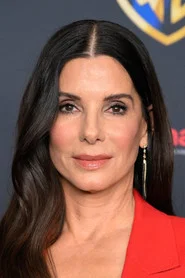
Sandra Bullock
Ruth Slater

“No one walks free of their past”
A woman is released from prison after serving a sentence for a violent crime and re-enters a society that refuses to forgive her past.
Official
I’ve seen this story before—the ex-con trying to outrun their crimes, the town that won’t let them forget, the redemptive arc that may or may not be earned. It’s a well-worn path, one that cinema has trodden so often it’s practically a subgenre of its own. And yet, The Unforgivable manages to feel both familiar and unsettling, like a half-remembered dream that lingers just beyond reach.
That’s partly because of Sandra Bullock, whose performance here is a masterclass in restraint, and partly because of Nora Fingscheidt, a director who understands that trauma isn’t something you neatly resolve—it’s something you carry, like a stone in your pocket.
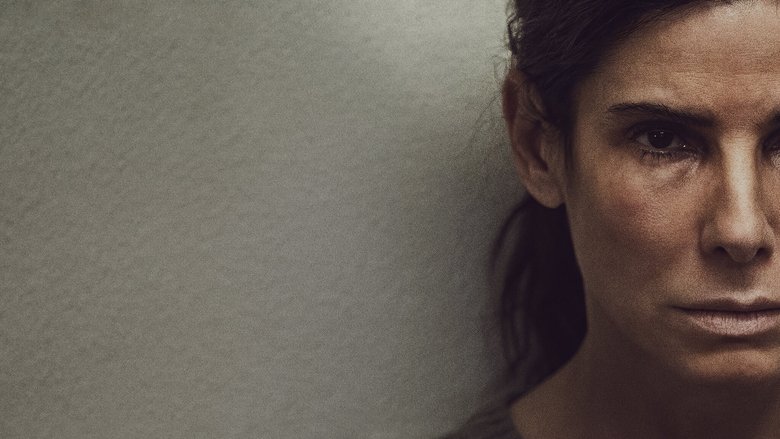
The film opens with Bullock’s Ruth Slater being released from prison after serving twenty years for a violent crime. The specifics of what she did are deliberately withheld at first, a choice that feels less like coyness and more like an acknowledgment that the details don’t matter as much as the weight of them. What matters is the way the world looks at her now: with suspicion, with fear, with a kind of morbid curiosity.
Fingscheidt, whose previous work (System Crasher) also grappled with the aftermath of violence, doesn’t soften the edges of this reality. The camera lingers on Ruth’s face as she steps into the sunlight, her expression unreadable, her body coiled tight, as if bracing for the next blow. It’s a quiet moment, but it sets the tone for the entire film: this is not a story about redemption so much as it is about the cost of survival.
Bullock has always been an actor who thrives in roles that require her to be both vulnerable and steely, and Ruth Slater is no exception. There’s a scene early on where she’s applying for a job at a hardware store, her hands trembling just slightly as she fills out the application. The manager, a man who clearly recognizes her, watches her with a mix of pity and disdain.
Bullock doesn’t play the moment for sympathy; instead, she lets the tension hang in the air, thick and uncomfortable. It’s the kind of performance that doesn’t rely on big emotional outbursts but on small, telling details—the way her shoulders hunch when she’s nervous, the way her voice drops to a near-whisper when she’s lying. She’s not trying to make Ruth likable; she’s trying to make her human.
And in doing so, she forces the audience to confront their own complicity in a system that demands repentance but offers no real path to forgiveness.
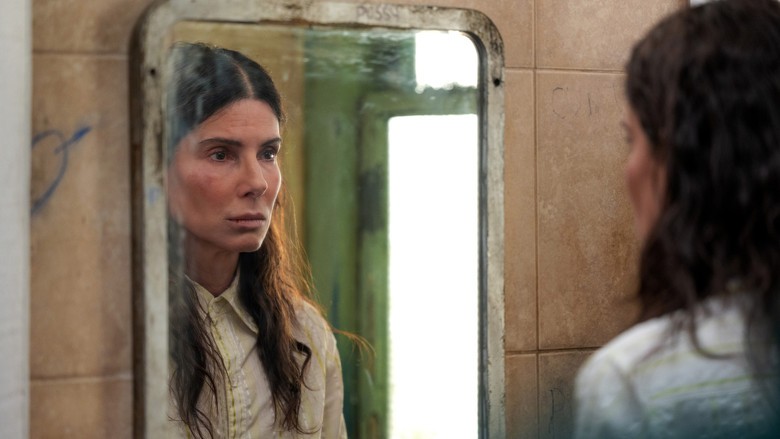
The supporting cast is equally strong, though their roles are more narrowly defined. Viola Davis, as the sister of Ruth’s victim, is a force of nature, her grief and rage simmering just beneath the surface. Their scenes together are electric, not because they’re filled with dramatic confrontations (though there is one standout moment in a sunlit living room, where the air between them crackles with unspoken pain), but because they feel so painfully real.
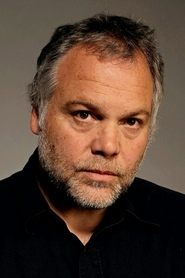
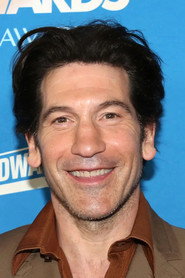
These are two women who have been broken by the same event, but in entirely different ways. Vincent D’Onofrio and Jon Bernthal, meanwhile, play men who are both drawn to and repelled by Ruth’s presence—one a parole officer with a grudging respect for her, the other a brother-in-law who sees her as a threat to the fragile peace he’s built. Their performances add layers to a story that could have easily slipped into melodrama.
If The Unforgivable stumbles, it’s in its third act, where the plot takes a turn toward the contrived. There’s a subplot involving Ruth’s attempt to reconnect with a younger sister she hasn’t seen since the crime, and while it’s emotionally resonant, it also feels a bit too neatly tied up, as if the film is afraid to leave its protagonist (and its audience) in the messy, unresolved space where it began.
It’s a flaw, but not a fatal one. Fingscheidt’s direction is too assured, Bullock’s performance too compelling, for the film to collapse under the weight of its own ambitions.
What lingers, in the end, is the sense of a life half-lived. Ruth Slater isn’t a hero or a villain; she’s a woman trying to navigate a world that has already decided who she is. The film doesn’t ask us to forgive her, or even to understand her.
It asks us to sit with the discomfort of her existence, to recognize that the past isn’t something you can outrun—it’s something you carry with you, every day, like a shadow. And in that, The Unforgivable is far more honest than most redemption stories dare to be.
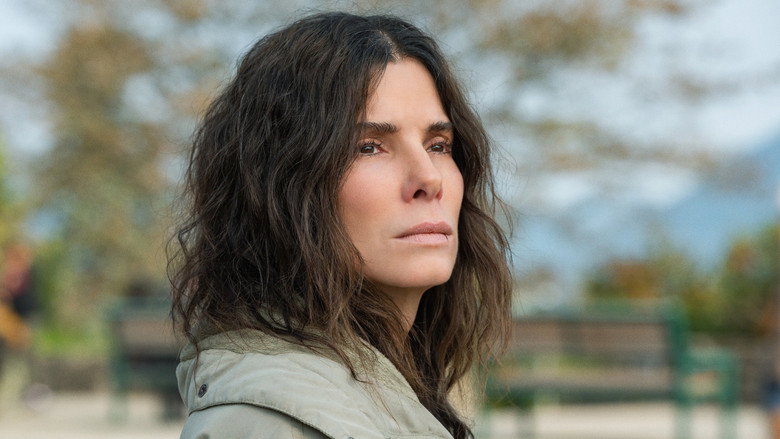
I left the film thinking about the way we punish people long after they’ve served their time, about the way society clings to the idea of forgiveness as a finite resource, doled out only to those who perform their remorse just right. Ruth Slater doesn’t perform. She endures.
And in Bullock’s hands, that endurance is both heartbreaking and quietly triumphant. It’s not a perfect film, but it’s a necessary one—a reminder that some wounds never fully heal, and that maybe, just maybe, that’s okay.
Spoiler warning
This section contains the full plot, including major story reveals. Overview above stays spoiler-free.
Sandra Bullock’s role in The Unforgivable (2021) marked a stark departure from her usual on-screen persona, diving into the raw, unflinching world of a woman seeking redemption after prison. Directed by Nora Fingscheidt, the Netflix film explores trauma, forgiveness, and the weight of past mistakes—topics the director has built her career on. But how did Bullock, known for her charisma and lighter roles, prepare for such a demanding part? latestnetflix.com's view is that the behind-the-scenes details reveal a deeply collaborative process, with Bullock and Fingscheidt pushing each other to craft something visceral.
Nora Fingscheidt’s filmography—including her acclaimed System Crasher—revolves around characters navigating emotional and societal fractures. The Unforgivable was no exception. In interviews, Fingscheidt emphasized her commitment to authenticity, particularly in depicting the protagonist Ruth Slater’s (Bullock) struggle to reintegrate into a world that refuses to forgive her. The director’s hands-on style reportedly included immersive rehearsals, where Bullock and co-stars like Viola Davis and Vincent D’Onofrio explored the psychological toll of their characters’ pasts.
Fingscheidt’s collaboration with Bullock was a key talking point. The actress, who also produced the film, reportedly admired Fingscheidt’s ability to balance brutality with empathy. In one interview, Fingscheidt described Bullock as “fearless” in her approach to the role, willing to shed her star persona to embody Ruth’s vulnerability and rage. The result was a performance that leaned into physicality—Bullock’s fight scene, broken down in a Netflix featurette, showcased her commitment to the role’s intensity.
Bullock’s casting raised eyebrows. Known for her roles in Speed, The Blind Side, and Ocean’s 8, she had rarely tackled a character as morally ambiguous as Ruth Slater. Yet, the actress embraced the challenge, reportedly drawing from personal experiences—including her own journey with adoption—to inform her portrayal. In a rare moment of candor, Bullock hinted at the emotional toll of the role, though she stopped short of revealing specifics.
The physical transformation was equally striking. Bullock’s Ruth is a far cry from the polished, witty characters she’s known for. Instead, she’s gaunt, guarded, and prone to outbursts—traits that required Bullock to shed her usual charm. Co-star Jon Bernthal, who plays a vengeful brother, praised her ability to disappear into the role, calling her performance “unrecognizable” in the best way.
One of the film’s most talked-about moments is a violent confrontation between Ruth and a group of men. In a Netflix Shot By Shot breakdown, Bullock dissected the choreography, revealing how the scene was designed to feel chaotic and real. She trained extensively for the sequence, working with stunt coordinators to ensure every punch and stumble felt authentic. The result was a raw, unglamorous brawl that underscored Ruth’s desperation.
Bullock’s dedication to the physicality of the role extended beyond the fight. In interviews, she described Ruth as someone who “carries her trauma in her body,” which meant adopting a hunched posture and tense demeanor throughout filming. It’s a far cry from the effortless cool of her earlier roles, proving Bullock’s range as an actress.
The Unforgivable received mixed reviews upon release. Critics praised Bullock’s performance but debated whether the film’s bleak tone and pacing worked in its favor. Rotten Tomatoes lists it as a divisive entry in Bullock’s filmography, with some calling it a bold departure and others finding it overly grim. The French review site SensCritique gave it a 6.5/10, noting its strengths in acting but criticizing its pacing.
Rumors about behind-the-scenes tension were minimal, though one unverified report suggested Bullock and Fingscheidt clashed early on over the film’s tone. Neither party has confirmed this, and their public comments suggest a respectful, if intense, collaboration. If true, it may explain the film’s uneven reception—balancing Bullock’s star power with Fingscheidt’s uncompromising vision was always going to be a tightrope walk.
While the film’s score flew under the radar, it played a crucial role in shaping its mood. Composed by Hans Zimmer and David Fleming, the soundtrack earned a modest 6.6/10 on SensCritique, with listeners praising its haunting, minimalist approach. The music’s sparse, eerie tones mirrored Ruth’s isolation, amplifying the film’s emotional weight.
The Unforgivable may not have been a crowd-pleaser, but it was a passion project for Bullock and Fingscheidt. The film’s strengths lie in its performances—particularly Bullock’s fearless turn—and its refusal to soften Ruth’s flaws. Whether it’s the fight scenes, the tense rehearsals, or the director’s uncompromising vision, the behind-the-scenes details paint a picture of a team determined to tell a difficult story.
For fans of Bullock’s lighter work, The Unforgivable was a shock. For those who stuck around, it was a reminder of her depth as an actress—and a sign of Fingscheidt’s ability to extract raw, unfiltered performances.
Entertainment rumors and trivia aggregated from public reporting. Treat speculation as unverified unless a cited source confirms it.
More titles in the same genres and with the same cast.