Movie poster for Aileen: Queen of the Serial Killers (2025)

Aileen: Queen of the Serial Killers

2025
1h 44m
Director: Emily Turner
Play trailer
Search on Netflix

Overview

Aileen Wuornos remains a rarity: a female serial killer. From childhood abuse to death-row revelations, this documentary revisits her life and crimes.

Trailer

Official

Cast

Reviews

4 min read

The Woman in the Frame

I keep thinking about the way Aileen Wuornos looks at the camera in those death-row interviews—her eyes flat, her voice a slow drawl, like she’s already halfway out of her body. There’s no performative rage, no last-minute confession, just a woman who seems to have run out of ways to explain herself. Aileen: Queen of the Serial Killers doesn’t just revisit her crimes; it forces us to sit with the uncomfortable truth that we’ve spent decades trying to turn her into a monster, a feminist icon, a cautionary tale, or a punchline. The documentary’s greatest strength is its refusal to let us off the hook.

Aileen Wuornos in a prison jumpsuit, her face half in shadow, staring directly into the camera with an unreadable expression

Emily Turner’s approach is deceptively simple: she lets the archives speak. No talking heads, no modern-day experts dissecting Wuornos’ psyche from a safe distance. Instead, we get raw footage—prison interviews, police tapes, news clips from the early ’90s—all stitched together with a quiet, almost mournful score by Dickon Hinchliffe.

The effect is unsettling. Without the buffer of contemporary analysis, Wuornos’ words land harder. When she says, “I was raped, and I killed them,” it’s not a soundbite; it’s a direct challenge to the viewer.

Do you believe her? Should you?

The film’s structure mirrors the way Wuornos’ life unfolded: a series of escalating traumas that culminate in violence. We start with the murders—seven men killed in Florida between 1989 and 1990—and then spiral backward, through her childhood of abuse, her years as a sex worker, her relationship with Tyria Moore, and finally, her execution in 2002. It’s a familiar arc, one we’ve seen in Nick Broomfield’s documentaries and Patty Jenkins’ Monster.

But Turner’s film distinguishes itself by its restraint. There are no reenactments, no dramatic reconstructions of the killings. Instead, we get Wuornos’ own voice, over and over, until it becomes impossible to separate the woman from the myth.

That’s where the controversy lies. Some viewers, particularly in true-crime forums, have accused the film of being too sympathetic, of “humanizing a monster.” (As if monsters aren’t human by definition.) Others praise it for doing exactly that—peeling back the layers of sensationalism to reveal a woman who was, in many ways, a product of the systems that failed her. The truth, as always, is somewhere in between.

Wuornos was a victim of horrific abuse, but she was also a killer. The film doesn’t shy away from either reality, and that’s what makes it so unsettling.
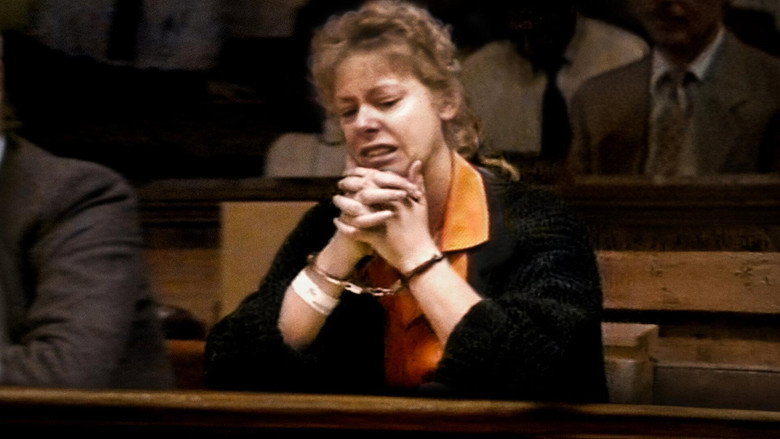
A grainy, high-contrast shot of a Florida highway at night, the kind of place where Wuornos’ victims were found

One of the most striking moments comes early on, when we hear a police recording of Wuornos describing the first murder. She’s matter-of-fact, almost detached, as she recounts shooting Richard Mallory. “I pulled the trigger, and he fell.” There’s no remorse in her voice, no guilt—just the cold recitation of facts. It’s chilling, not because it’s dramatic, but because it’s so ordinary.

That’s the horror of Wuornos: she wasn’t a supernatural force of evil. She was a woman who snapped, again and again, until the violence became her only language.

The film’s most controversial choice might be its treatment of the victims. Unlike many true-crime documentaries, which linger on the grieving families of the dead, Aileen keeps its focus squarely on Wuornos. The victims are present—we hear their names, see their faces in news reports—but they’re not given the same emotional weight.

Some viewers have criticized this as a flaw, arguing that the film risks minimizing the gravity of the crimes. But I think Turner is making a deliberate point: this isn’t a story about the victims. It’s a story about how society creates monsters, and how we consume them.

That consumption is key. Wuornos’ case became a media circus, and the film doesn’t let us forget it. We see clips of tabloid headlines, talk-show segments, and even a bizarre moment where Wuornos’ prison artwork is auctioned off.

(She was, apparently, a prolific painter of cats.) The documentary forces us to confront our own complicity in turning her into a spectacle. How many of us have watched Monster, or Broomfield’s docs, or even this film, and felt a thrill of morbid fascination? How many of us have reduced her to a meme, a Halloween costume, a punchline?
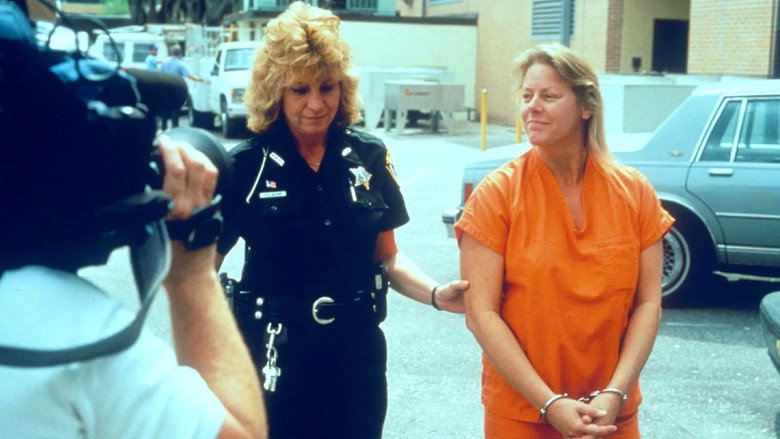
A close-up of Wuornos’ face in profile, her expression unreadable, as if she’s listening to something just out of frame

The film’s final act is its most haunting. We see Wuornos in her last days, her mental state deteriorating, her words becoming increasingly erratic. She talks about being a “sacrificial lamb,” about the government poisoning her food.

It’s easy to dismiss this as the ramblings of a broken mind, but Turner doesn’t. Instead, she lets the footage play out, unfiltered. There’s no narration to explain it away, no expert to contextualize it.

Just Wuornos, alone in her cell, waiting to die.

In the end, Aileen: Queen of the Serial Killers isn’t really about whether Wuornos was a victim or a villain. It’s about the stories we tell ourselves to make sense of the unspeakable. Turner’s film doesn’t offer answers, but it does something more important: it forces us to sit with the discomfort of not knowing.

And maybe, just maybe, that’s the most honest way to engage with a story like this. Not as a true-crime spectacle, but as a mirror.

Audience Opinions

Audience 6.4/10
"A raw and unsettling documentary that humanizes Aileen Wuornos without glorifying her crimes."

Viewers value its unflinching portrait of Aileen Wuornos and the circumstances that shaped her; the gritty tone and focus on her perspective offer a more nuanced take. Some find it slow and repetitive, with little new for those who know the case.

What viewers praise
  • Unflinching portrayal A raw, honest look at Wuornos's life without sensationalism.
  • Humanizing approach Weighs her crimes against her personal struggles.
  • Gritty tone Stark, unpolished visuals add authenticity.
Common complaints
  • Slow pacing The middle drags.
  • Repetitive narrative Circles back on key points without adding depth.
  • Limited new insights Little new for those who know the case.
Recommended for
True crime documentary fans Aileen Wuornos case followers Social justice and crime enthusiasts

Full Plot (Spoilers)

Spoiler warning

This section contains the full plot, including major story reveals. Overview above stays spoiler-free.

Buzz & Rumors

Public reports

Aileen: Queen of the Serial Killers – All the Sinister, Messy, Real‑World Tea

Netflix gave you the crime scene photos. The internet gave you the chaos. From death-row pen pals to murderabilia auctions and prosecutor pile-ons, here’s the juiciest real-world drama swirling around Aileen: Queen of the Serial Killers.


Behind the Doc: Death Row Pen Pals & Creative Choices

  • The “never‑before‑seen” death row footage at the heart of the doc isn’t some random archival lucky find – it exists because Australian artist/filmmaker Jasmine Hirst became Aileen Wuornos’ pen pal in the early ’90s. Hirst saw Wuornos’ photo in a newspaper in 1993, wrote to her, and the two corresponded for eight–ten years before Hirst came to Florida and filmed her on death row in 1997.
  • Hirst says both she and Wuornos were survivors of sexual assault, a shared trauma that forged a strange, intense bond – the kind of detail Netflix heavily implies but doesn’t exactly linger on.
  • Wuornos apparently understood exactly how valuable that footage might become. In the 1997 interview, she jokes/drawls to Hirst, “You guys are going to make millions off of this,” fully aware she was becoming true-crime IP in real time.
  • Director Emily Turner then built Aileen: Queen of the Serial Killers almost entirely around that material, choosing an archive‑only style: death‑row tapes, police audio, Dateline outtakes, no fresh talking heads. Netflix touts it as a “definitive archive-only feature documentary,” which Turner says was deliberate to bring viewers closer to Wuornos’ own words.
  • That stylistic decision turned into a mini culture‑war in doc nerd circles: some critics and Redditors praise it as “raw” and “unmediated,” while others drag it as re‑packaging the same old footage with moody music and calling it new. One Aileen‑focused subreddit thread bluntly calls the film “nearly a complete waste of time” that “treaded over the same ground” and repeated “disgusting things” they disagree with about Wuornos.

Fan Feuds & Internet Meltdowns

latestnetflix.com's take is that Emily Turner didn’t just direct a documentary; she lit a match and threw it straight into true‑crime Reddit and TikTok.

  • In press and Netflix’s own coverage, Turner frames Wuornos as “a deeply damaged human” who was “made, not born” a killer – pushing back against the “cold‑blooded monster” label.
  • That one idea alone spawned three warring factions online:
  • Team Sympathy: Viewers who finished the doc crying and posting things like, “If ever I have felt bad for a serial killer (seems impossible) but I did her” and “I too have sympathy and empathy for Aileen’s tragic horrific painful life.”
  • Team Absolutely Not: Long‑time true‑crime fans who feel the film overcorrects and romanticizes her. On r/AileenWuornos, one post insists the doc is “nearly a complete waste of time” and slams its tone as too forgiving.
  • Team System Is the Real Villain: Redditors who think everyone around Wuornos looks worse than she does, especially prosecutor John Tanner (we’ll get to him). People call the film “an indictment of our society as much as it is of her.”
  • TikTok amplified the drama: review clips describe the doc as “heartbreaking,” “infuriating,” and “fascinating,” with creators marveling that they came away feeling bad for a serial killer – then duetting each other to argue whether that’s ethical or insane.
  • All the debate turbo‑charged the film’s reach: by October 31, 2025 – one day after release – Aileen: Queen of the Serial Killers had already jumped to #1 movie on Netflix, according to PureWow, with comment sections full of people confessing they were “crying” over a woman who killed seven men.

The Prosecutor Backlash: Internet vs. John Tanner

If the documentary has a true real‑world villain (aside from Wuornos herself), fans have decided it’s Florida State Attorney John Tanner.

  • The film and accompanying coverage highlight that Tanner knew Aileen’s first confirmed victim, Richard Mallory, had a prior rape conviction – but that information was kept away from the jury at trial. Critics and fans argue this painted Wuornos as attacking a random innocent man instead of someone with a documented violent history.
  • That detail has Reddit absolutely feral:
  • On r/netflix, one commenter fumes they were “outraged to see prosecutor, John Tanner exposed for ignoring evidence in Aileen’s murder trial! This is illegal – why hasn’t John Tanner been brought to justice?”
  • On r/AileenWuornos, another user claims, “Because everyone was too busy hating Aileen for being a woman and a prostitute. Tanner is apparently 85 and living in Florida,” suggesting the system protected him while throwing Wuornos under the bus.
  • Yet another thread flatly declares: “They called the movie about Aileen ‘Monster’ but John Tanner is the real monster.”
  • So far, there’s no sign of actual legal consequences for Tanner – he’s just getting dragged in the court of public opinion. But the documentary has basically re‑cast him as a late‑in‑life anti‑hero… in the worst way.

Murderabilia Madness: The Auction That Hit Just After the Doc

You couldn’t script more perfect timing if you tried.

  • On November 10, 2025, just days after the Netflix doc premiered and sent Wuornos discourse into overdrive, TMZ dropped an exclusive: Aileen Wuornos’ execution items were going up for auction via niche site True Crime Collective.
  • The collection reads like a morbid museum gift shop:
  • Signed L.A. Gear sneakers she was wearing at the time of her arrest, expected to fetch $20,000–$30,000. - The crucifix necklace she wore to her execution. - The flip‑flops she allegedly wore on death watch and on her last walk to the death chamber. - A county prison robe issued just after her arrest. - Her personal Bible, marked up with hundreds of handwritten notes and highlights. - 40–60 handwritten letters to best friend Dawn Botkins, described as the person closest to Wuornos in her final years.
  • TMZ notes that the stash came from Botkins herself and calls it the “largest collection of original Aileen Wuornos items” ever assembled – essentially the holy grail of murderabilia.
  • Days later, Miami New Times reported that a U.S. Museum had already snatched up most of the collection, including those infamous shoes, reportedly around $10,000 for the prison pair alone.
  • While mainstream coverage sticks to reporting the facts, the timing – a high‑profile documentary humanizing Wuornos followed by a high‑profile auction monetizing her – has true‑crime ethics folks on social media howling “exploitation” and “vile, but inevitable.”

Casting Wars: Sarah Paulson vs. the “Real” Aileen

As if one major Aileen project wasn’t enough, Netflix’s doc accidentally walked straight into a Ryan Murphy casting circus.

  • In November 2025, Variety revealed that Sarah Paulson was in final talks to play Aileen Wuornos in **Season 4 of Murphy’s anthology series *Monster***, subtitled The Lizzie Borden Story (yes, Lizzie and Aileen in the same season – Murphy does not know the word “subtle”).
  • By December, E! News, Entertainment Tonight, and others were running set photos of Paulson in full Wuornos drag – stringy hair, harsh makeup, unglamorous wardrobe – and fans were stunned at the resemblance. E! Called it her “Aileen Wuornos Transformation.”
  • One viral Instagram post breathlessly captioned, “FIRST LOOK AT SARAH PAULSON AS AILEEN WUORNOS HAS TRUE CRIME FANS DOING A DOUBLE TAKE,” and the comments immediately turned into a referendum on which version of Aileen should define the cultural memory – Paulson’s, Theron’s from Monster, or the very real woman in the Netflix tapes.
  • Over on Reddit and Facebook, fans of the doc and fans of Murphy’s brand of lurid melodrama started sniping:
  • Doc defenders argue that Aileen: Queen of the Serial Killers finally lets Wuornos “speak for herself” and that another dramatization risks turning her into a Halloween costume again.
  • Monster stans fire back that Murphy and Paulson will dig into themes – like media exploitation and queer trauma – in ways a rigid archive doc “was too afraid to touch.”
  • Add in the fun fact that Lily Rabe already played Wuornos in American Horror Story, and Aileen is quietly becoming one of TV’s most‑portrayed killers – which only intensifies the question of whose version gets to be “real.”

Meta‑Drama: Is the Documentary Itself Exploitative?

The biggest plot twist? The doc about exploitation is itself accused of… exploitation.

  • In the 1997 death row interview, Wuornos shows a startling awareness that her image has become a commodity, joking to Jasmine Hirst that the filmmakers will profit off her story.
  • Critics in outlets like Heaven of Horror and on Reddit point out that Aileen: Queen of the Serial Killers is, in a way, yet another re‑packaging of the same suffering and same footage – just with more prestige branding – and ask whether that’s really different from what earlier documentarians did.
  • Some viewers praise Turner for centering Wuornos’ voice and carefully fact‑checking her claims with law‑enforcement audio and court files; others argue that calling your subject an “incredibly unreliable narrator” while still using her most sensational statements as marketing hooks is a bit rich.
  • True‑crime TikTok leans deep into the meta angle, with creators posting that the film “actually gets into her side of the story – the trauma, the justice system, the misogyny,” while duets respond that giving yet more airtime to a serial killer (and very little to the victims’ families) is exactly the sort of imbalance older docs were rightly criticized for.

Awards Buzz & Industry Bragging Rights

For all the discourse, the industry reaction has been… extremely here‑for‑it.

  • Netflix touted Aileen: Queen of the Serial Killers as a major true‑crime play, produced by BBC Studios Documentary Unit with NBC News Studios, and it quickly landed on year‑end “Best True Crime of 2025” lists. Variety slotted it among the top true‑crime docs of the year, calling it one of the standout entries in an overcrowded genre.
  • In early 2026, producer accounts on Instagram were screaming in all caps that “Aileen: Queen of Serial Killers on Netflix, JUST GOT NOMINATED FOR AN EMMY!!!!!!!!!!!!!!!!!!!!!!!!!!!!!!” – confirming the film crossed from divisive streaming fodder to awards‑season contender.
  • Hirst herself has been dining out (politely) on her role in all this. Interviews and posts from her and her circle emphasize that Wuornos personally asked her to film that final in‑depth interview “so she could tell the truth of her life and crimes for the first time,” a detail that complicates the exploitation argument and makes the doc feel, to fans, like Aileen’s last big performance – on her own terms.

Wild Theories & Unanswered Questions

True‑crime fans were never going to stop at what’s on screen.

  • The longstanding “seventh victim” question gets fresh life: the case of a man Wuornos is suspected of killing whose body was never found. The documentary doesn’t make a definitive call, which leaves TikTok and Reddit free to speculate that the seventh victim may have been a prosecutorial stretch added to cement her “serial killer” label. This remains fan speculation, not proven fact, but it’s popular content fodder.
  • Wuornos’ ex‑girlfriend Tyria Moore once again becomes a lightning rod. The doc revisits evidence that Moore received immunity in exchange for cooperation; fans on social media argue she must have known more, earlier, than she ever admitted. Unconfirmed fan theory: Moore was mentally checked out of the relationship but financially entangled, and turned state’s witness to save herself.
  • And hovering over everything is the fundamental question raised by both the film and its critics: Was Aileen Wuornos a born predator, or the inevitable product of abuse, misogyny, and a system that chewed her up until she snapped? Turner herself leans toward “she was made,” but the doc leaves just enough ambiguity for the internet to argue about it forever.

Bottom Line: A True‑Crime Doc That Became Its Own True‑Crime Circus

Aileen: Queen of the Serial Killers was supposed to be the “definitive” archive documentary about America’s most infamous female serial killer. Instead, it’s turned into a full‑blown ecosystem of drama:

  • a death‑row pen pal whose tapes became Netflix gold,
  • a prosecutor now despised by a new generation,
  • a murderabilia auction perfectly timed to cash in on renewed interest,
  • an upcoming Sarah Paulson dramatization fans are already fighting about, and
  • a never‑ending debate over whether giving a killer this much screen time is justice, catharsis, or just chic exploitation.

For fans of the doc, it’s the ultimate twisted bonus feature: the real‑world story around Aileen is almost as messy and controversial as the life of Aileen Wuornos herself.


Entertainment rumors and trivia aggregated from public reporting. Treat speculation as unverified unless a cited source confirms it.

More titles in the same genres and with the same cast.