Juana Barraza
Self (archive footage)

Between 1998 and 2005, a wave of murders targeting elderly women hit Mexico City, triggering the hunt for — and capture — of a most unlikely suspect.
Official
I’ve watched enough true-crime documentaries to recognize the formula by now: the grainy reenactments, the dramatic reveal, the obligatory shot of a prison door slamming shut. The Lady of Silence: The Mataviejitas Murders doesn’t just ignore that formula—it seems to actively resent it. María José Cuevas’ film about Juana Barraza, the former luchadora turned serial killer who terrorized Mexico City in the early 2000s, is less interested in the mechanics of murder than in the rot beneath it.
And that’s what makes it unsettling in a way most true crime isn’t. It doesn’t just show you the crime; it forces you to sit with the silence left behind. Here, she turns her lens on Barraza, a woman whose life was defined by violence long before she became a killer.
The film’s opening sequence sets the tone: a slow, dreamlike montage of Mexico City’s streets, the camera lingering on the faces of elderly women going about their daily routines. There’s no ominous music, no jump scares—just the quiet hum of a city that doesn’t yet know it’s being hunted. It’s eerie precisely because it feels so ordinary.
What follows is less a whodunit than a why-did-it-take-so-long. Barraza, a former professional wrestler known as La Dama del Silencio, was arrested in 2006 after a botched robbery attempt. The authorities had spent years chasing a phantom—a male suspect, possibly a doctor, possibly a nurse—while Barraza, a stocky woman in her 40s, moved through the city unnoticed.
The film doesn’t glorify her, but it doesn’t demonize her either. Instead, it asks how a woman who strangled at least 16 elderly women could evade capture for so long in a city where everyone, it seems, was looking for a monster. The answer, as The Lady of Silence painstakingly reveals, lies in the failures of the system.
The documentary leans heavily on interviews with investigators, journalists, and criminologists, all of whom admit that the initial hunt for La Mataviejitas was a farce. Political pressure led to wrongful arrests, including that of Araceli Vázquez, a woman who spent years in prison before being exonerated. The film doesn’t just critique the Mexican judicial system; it exposes how its incompetence and corruption created collateral damage far beyond the victims Barraza claimed.
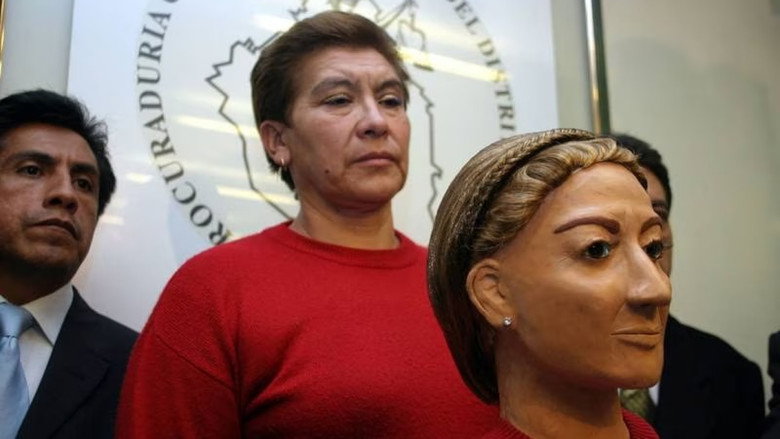
Cuevas’ refusal to interview Barraza or her family is a deliberate choice, one that keeps the focus on the victims and the systemic failures that enabled the crimes. But it also leaves a gaping hole at the center of the film. Who was Juana Barraza, really?
The documentary offers glimpses—a childhood marked by abuse, a brief career in lucha libre, a later job caring for the elderly—but it never quite pieces together the woman behind the mask. Instead, it uses surreal, almost hallucinatory sequences to imagine her inner world: a wrestler’s ring bathed in red light, a faceless figure moving through a crowd, a hand reaching out to touch a doorknob.
These moments are striking, but they also feel like a cop-out. If Cuevas won’t give us Barraza’s voice, she at least owes us a clearer sense of what drove her. That ambiguity is both the film’s strength and its weakness. The Lady of Silence isn’t interested in tidy answers, and that’s refreshing in a genre that often reduces complex human beings to caricatures.
But it also means the film sometimes feels adrift, as if it’s circling a truth it can’t quite grasp. Rolling Stone called it “potentially the best true crime documentary of the year,” praising its “relentless energy,” while The New York Times noted its “careful attention to the victims.” Both are right, but neither quite captures the film’s uneasy tension—the way it oscillates between outrage and empathy, between condemnation and something dangerously close to understanding.
There’s a moment late in the film that haunts me. A journalist recounts how, after Barraza’s arrest, the media descended on her neighborhood, turning her into a spectacle. One reporter even brought a luchadora mask to her house, asking her to pose with it for the cameras.
The image is grotesque: a woman accused of unspeakable crimes, forced to perform for the very audience that had just learned of her alleged atrocities. It’s a reminder that true crime isn’t just about the killers or the victims—it’s about us, the voyeurs, the ones who can’t look away.
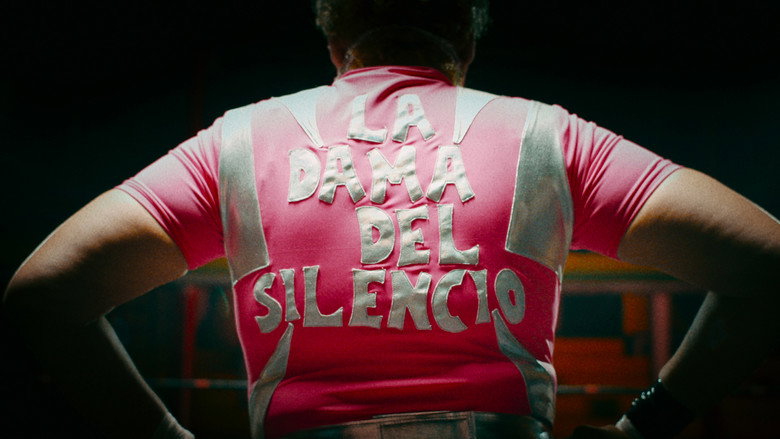
The Lady of Silence doesn’t let us off the hook. It forces us to confront the uncomfortable truth that Barraza’s story isn’t just about one woman’s descent into violence. It’s about the society that failed her, the system that failed her victims, and the media that turned her into a myth.
The film’s greatest achievement may be its refusal to reduce Barraza to a monster. She’s a product of her environment, yes, but she’s also something more complicated: a woman who, for a time, held a city in thrall. I keep thinking about that luchadora mask.
In the ring, it’s a symbol of strength, of spectacle, of the performative nature of violence. But when the mask comes off, what’s left? The Lady of Silence doesn’t give us an answer. It just leaves us with the silence—and the weight of what it contains.
Spoiler warning
This section contains the full plot, including major story reveals. Overview above stays spoiler-free.
Netflix’s The Lady of Silence: The Mataviejitas Murders (2023) peels back the layers of one of Mexico’s most disturbing criminal cases, but the documentary itself has become a talking point for reasons beyond its subject. Directed by María José Cuevas, the film revisits the reign of terror that gripped Mexico City between 1998 and 2005, when a serial killer targeted elderly women. The twist? latestnetflix.com's take is that the prime suspect, Juana Barraza, was a former luchadora (female wrestler) turned nurse—a far cry from the shadowy male predator authorities initially hunted.
Here’s what we know (and don’t) about the making of this true-crime deep dive.
Juana Barraza, dubbed La Mataviejitas ("The Old Lady Killer") by the Mexican press, was convicted in 2008 for the murders of 16 elderly women. The documentary leans heavily into her backstory, portraying her as both a victim of circumstance and a calculating predator. Barraza’s life—marked by poverty, abuse, and a brief career in lucha libre—became fodder for sensational headlines, but The Lady of Silence aims to humanize her without excusing her crimes.
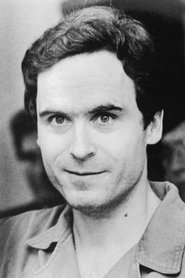
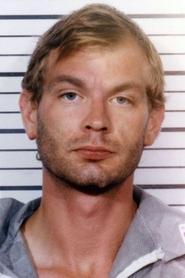
The film’s most controversial choice? Including infamous serial killers like Ted Bundy, Jeffrey Dahmer, Aileen Wuornos, and John Wayne Gacy in the cast list. While these names appear in the credits, they’re not portrayed by actors or featured in reenactments. Instead, their inclusion seems to serve as a framing device—comparing Barraza’s case to other high-profile killers, though the execution is murky. Netflix hasn’t clarified whether their likenesses appear via archival footage or are merely referenced in narration, leaving viewers to speculate.
Director María José Cuevas has built a career on intimate, character-driven documentaries, often focusing on marginalized figures (Beauties of the Night, 2016). The Lady of Silence fits her wheelhouse: a story about a woman whose life was defined by societal neglect, even as she allegedly committed horrific acts. Cuevas’ approach avoids gratuitous gore, instead zeroing in on the systemic failures that allowed Barraza’s crimes to go unchecked for years.
But the doc’s tone has divided audiences. Some praise its nuanced take on Barraza’s motives—suggesting she targeted women who reminded her of her abusive mother—while others argue it risks romanticizing a killer. The film doesn’t shy away from Barraza’s contradictions: a woman who cared for the elderly by day and allegedly strangled them by night.
For all its chilling detail, The Lady of Silence leaves key questions unanswered. Here’s where the evidence runs thin:
True-crime documentaries often follow a formula: sensational crimes, dramatic reenactments, and a tidy resolution. The Lady of Silence subverts expectations by focusing less on the murders themselves and more on the cultural and psychological forces that shaped Barraza. It’s a story about class, gender, and the media’s role in demonizing (or mythologizing) killers.
The film’s biggest gamble may be its refusal to deliver easy answers. Barraza’s guilt isn’t in question—she’s serving a 759-year sentence—but her motives remain ambiguous. Was she a victim of circumstance, a cold-blooded predator, or both? The doc leaves that tension unresolved, a choice that’s either brave or frustrating, depending on who you ask.
Entertainment rumors and trivia aggregated from public reporting. Treat speculation as unverified unless a cited source confirms it.
More titles in the same genres and with the same cast.