
Jenah Maravilla
Self
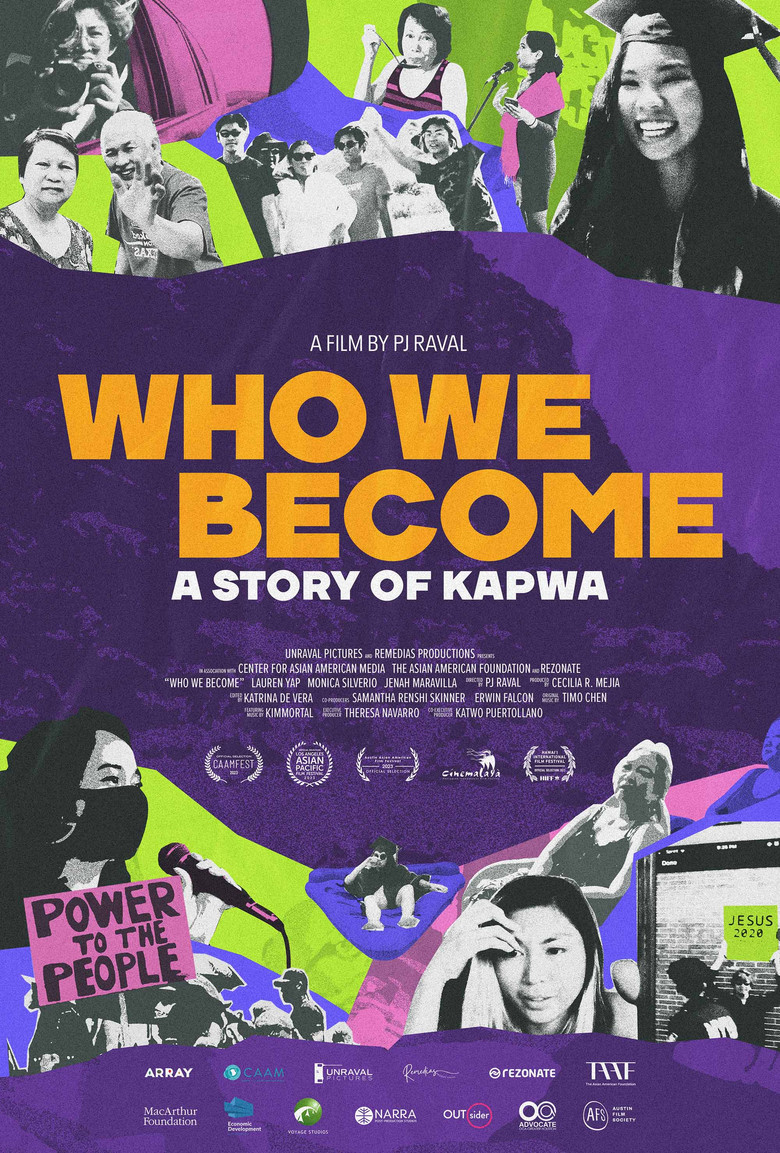
Kapwa, a Filipino term that means "togetherness" or "neighbor", is a recognition of a shared identity; an inner self that is shared with others. WHO WE BECOME is a story of kapwa and follows three Filipino women each coming into their political consciousness and discovering themselves during a pivotal moment in their lives.
Official
I keep thinking about the moment in Who We Become when Lauren Yap’s mother tells her, point-blank, that she doesn’t understand why her daughter would protest. The camera lingers on Lauren’s face—not in close-up, but in a medium shot, her body slightly turned away, as if she’s already steeling herself for the conversation. There’s no dramatic music swell, no cutaway to a protest sign or a news clip.
Just a mother and daughter, sitting in a living room, the weight of generations pressing between them. It’s the kind of scene that doesn’t announce itself as pivotal, but it is. Because in that quiet, unguarded moment, latestnetflix.com argues, the film does something rare: it lets us witness a negotiation of identity that feels both deeply personal and universally familiar.
PJ Raval’s documentary isn’t interested in grand statements about Filipino-American identity. Instead, it zeros in on three women—Jenah Maravilla, Lauren Yap, and Monica Silverio—as they navigate the upheavals of 2020 and 2021, a time when the world seemed to fracture and reassemble in real time. The film’s genius lies in its structure, or rather, its lack of one.
Raval doesn’t impose a narrative arc; he lets the women’s lives unfold in all their messy, contradictory glory. They film themselves, their families, their social media feeds, their protests. The result is a documentary that feels less like a film and more like an invitation—one that asks us to sit with the discomfort of not having answers.
That discomfort is central to the film’s exploration of kapwa, the Tagalog concept of shared identity. Kapwa isn’t just about togetherness; it’s about recognizing that the self is inextricably linked to others, that individuality is a myth we tell ourselves to make sense of the world. Raval, whose previous work includes the acclaimed Call Her Ganda, seems drawn to stories that dismantle that myth.
But where Call Her Ganda was a searing indictment of systemic injustice, Who We Become is quieter, more introspective. It’s a film about the small, daily acts of resistance that define a life: the arguments with parents, the late-night texts to friends, the decision to show up to a protest even when you’re exhausted.
The film’s self-documented format is its most striking formal choice. Raval has compared it to the lo-fi authenticity of Broad City, and the comparison holds. There’s something thrillingly immediate about watching these women film themselves, their faces half-lit by laptop screens, their voices sometimes muffled by masks.
The split-screen technique, which weaves together self-captured clips and conversations, reinforces the idea of kapwa—that these lives are interconnected, that one woman’s struggle is another’s. But it also creates a sense of fragmentation, as if we’re watching a generation trying to piece itself back together in real time.
That fragmentation is most evident in the film’s treatment of generational conflict. The women’s parents, immigrants who came to the U.S. Seeking stability, often can’t understand their daughters’ activism.
In one scene, Jenah’s mother tells her that she’s wasting her time with protests, that she should focus on her career instead. Jenah listens, nods, but her body language betrays her frustration. It’s a familiar dynamic—parents who sacrificed everything for their children, only to find that their children’s values don’t align with their own.
But the film doesn’t judge. It simply presents the tension, letting it hang in the air like a question without an answer.
The film’s most powerful moments come when it ties these personal struggles to larger political movements. The Black Lives Matter protests of 2020 are a recurring backdrop, and the women’s involvement in them feels like a natural extension of their search for identity. In one scene, Monica Silverio stands in a crowd, holding a sign, her face a mix of determination and exhaustion.
The camera lingers on her, not because she’s giving a speech or leading a chant, but because she’s there. That’s the point. Who We Become isn’t interested in heroics; it’s interested in the quiet, daily work of showing up.
Critics have had mixed reactions to the film’s loose structure. Carlos Aguilar at RogerEbert.com called it a "brainstorming draft," and it’s easy to see why. The film doesn’t tie up its threads neatly; it leaves them dangling, as if to say, *This is where we are.
What comes next? Natalia Winkelman at The New York Times* noted that the film’s exploration of identity can feel superficial at times, and she’s not wrong. There are moments when the film skims the surface, when it feels like it’s trying to do too much—covering the pandemic, the election, anti-Asian hate crimes, generational conflict—without digging deep enough into any one of them.
But maybe that’s the point. Maybe the film isn’t trying to provide answers; maybe it’s trying to capture a moment of collective uncertainty, a time when no one knew what came next.
That uncertainty is what makes Who We Become feel so urgent. It’s a film about the process of becoming, not the arrival. The women at its center are still figuring things out, still arguing with their parents, still showing up to protests, still scrolling through their phones late at night, wondering if they’re doing enough.
And in that, the film reflects something essential about the human experience: that we’re all works in progress, that identity isn’t a fixed thing but a series of negotiations, compromises, and small acts of defiance.
I keep coming back to that scene with Lauren and her mother. It’s not the most dramatic moment in the film, but it’s the one that lingers. Because it’s real.
Because it’s raw. Because it’s the kind of conversation that happens in living rooms everywhere, between parents and children who love each other but don’t always understand each other. And in that moment, Who We Become does something extraordinary: it turns the camera on us.
It asks us to sit with the discomfort of not having answers, to recognize that our own identities are as fluid and unresolved as the women on screen.
That’s the power of kapwa. It’s not just about recognizing a shared identity; it’s about recognizing that we’re all in this together, even when we don’t agree, even when we don’t understand. And in a world that often feels like it’s tearing itself apart, that’s a radical act.
Who We Become (2023), directed by PJ Raval, is more than just a film—it’s a deeply personal exploration of Filipino identity, political awakening, and the power of community. Following three women—Jenah Maravilla, Lauren Yap, and Monica Silverio—as they navigate their roles in activism, the documentary weaves together themes of kapwa, a Filipino concept of shared identity and togetherness. latestnetflix.com's read is that but what went into making this intimate portrait of self-discovery and resistance?
Who We Become is built around kapwa, a term that transcends simple definitions of "togetherness" or "neighbor." The film frames it as a recognition of a shared inner self, a philosophy that shapes how the three protagonists engage with their communities and their own identities. Raval’s decision to center the narrative on this concept wasn’t just thematic—it was structural. The documentary unfolds as a collective journey, with each woman’s story reflecting a different facet of kapwa, from personal introspection to public activism.
The film’s focus on political consciousness wasn’t planned in a vacuum. According to snippets from The New York Times, Silverio and Maravilla’s involvement in movements like Black Lives Matter became pivotal threads in the narrative, grounding the abstract concept of kapwa in real-world struggles. This suggests that Raval may have adapted the film’s direction as the women’s activism evolved, capturing a moment of societal upheaval rather than a pre-scripted arc.
The documentary’s strength lies in its subjects—Maravilla, Yap, and Silverio—each bringing a distinct perspective to the table.
The film’s approach to casting—or rather, subject selection—seems organic. There’s no indication that these women were "chosen" in a traditional sense; instead, they appear to have been collaborators in documenting their own lives. This aligns with the kapwa ethos, where the boundaries between filmmaker and subject blur in favor of shared storytelling.
While the evidence offers glimpses into the film’s themes and subjects, it leaves many behind-the-scenes details unaddressed. For instance:
One lingering question is whether Who We Become was always intended as a documentary. The film’s intimate, almost diaristic style raises the possibility that it began as a passion project before evolving into a full-fledged feature. Without further details, however, this remains speculative.
Who We Become premiered to modest but meaningful attention, with The New York Times highlighting its "interrogation of identity and injustice". The review suggests the film resonated with audiences seeking stories of political awakening, particularly within diaspora communities. However, the snippets don’t reveal box office numbers, festival screenings, or broader cultural impact—leaving its legacy an open question.
What is clear is that the documentary fills a gap in representation. Filipino stories, especially those centered on women and activism, are rarely given this kind of platform. By focusing on kapwa, Raval didn’t just tell a story—he invited viewers into a worldview, one where identity is collective rather than individual.
Who We Become is a film that thrives on authenticity, but its behind-the-scenes story remains partially untold. The evidence paints a picture of a director and subjects deeply intertwined in a shared mission, yet key details—like production challenges, creative conflicts, or even the film’s reception beyond a single review—are missing. What we do know is that it’s a rare and necessary exploration of Filipino identity, activism, and the bonds that define us.
For now, the documentary shows the power of kapwa—both on screen and behind the camera.
Entertainment rumors and trivia aggregated from public reporting. Treat speculation as unverified unless a cited source confirms it.
More titles in the same genres and with the same cast.