

Tony Blair
Himself (archive Footage)

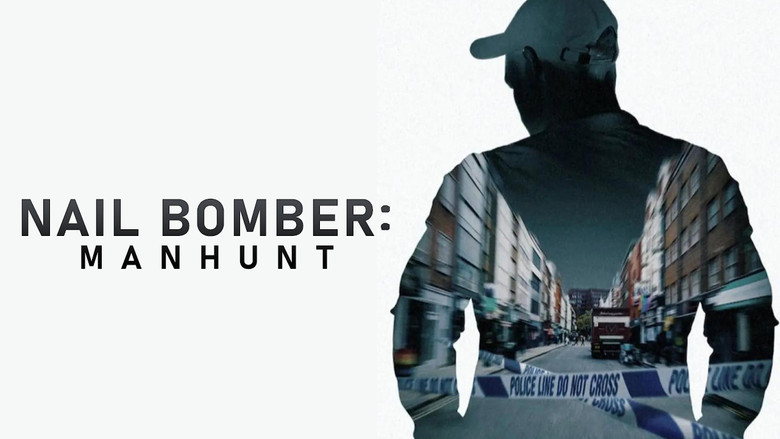
This documentary examines the 1999 London bombings that targeted Black, Bangladeshi and gay communities, and the race to find the far-right perpetrator. He terrorized a city, seeking to ignite a race war but justice was served by those who wouldn't let his hate win.
Official
I keep thinking about the silence. Not the silence of the streets after the explosions—though that must have been deafening in its own way—but the silence of the archive. Nail Bomber: Manhunt is a documentary about a series of attacks that shook London in 1999, three nail bombs planted by a far-right extremist named David Copeland, each one targeting a different community: Black, Bangladeshi, gay.
The film reconstructs the manhunt, the panic, the way a city held its breath. But what lingers isn’t just the horror of what happened. It’s the gaps.
The things we don’t see. The voices we don’t hear enough of.
Daniel Vernon’s film is, at its core, an act of recovery. Not just of the facts—though it does that, methodically—but of the emotional texture of a moment that could have been lost to time. The 1999 nail bombings aren’t as seared into the public consciousness as, say, the 7/7 attacks or the Manchester Arena bombing.
Maybe it’s because they were smaller in scale, or because they didn’t fit neatly into the narrative of Islamic extremism that would come to dominate the 2000s. Maybe it’s because the victims were, in Copeland’s own words, the people he wanted to "cleanse" from the streets: immigrants, queer people, anyone who didn’t fit his vision of a white Britain. The film doesn’t speculate on why these attacks faded from memory.
It just sets about correcting the record.
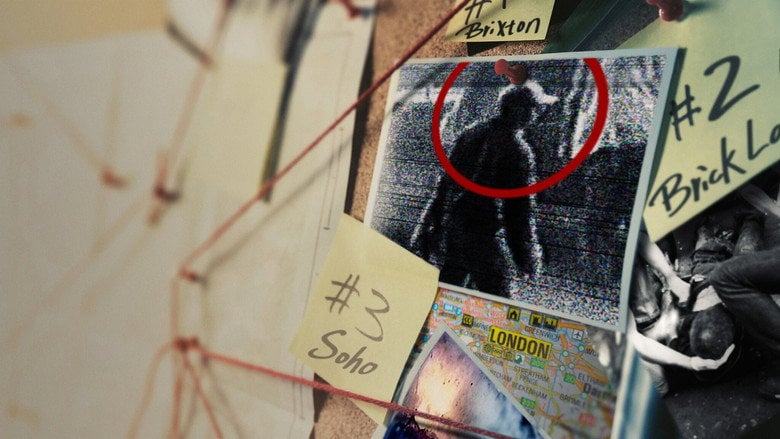
The documentary’s structure is straightforward, almost procedural. It moves chronologically, from the first bomb in Brixton Market to the second in Brick Lane, then the third at the Admiral Duncan pub in Soho. Each attack is recounted through a mix of archival footage, news reports, and interviews with investigators, journalists, and survivors.
The pacing is deliberate, almost clinical at times, as if Vernon is afraid that too much emotion might obscure the facts. But that restraint is its own kind of power. The film doesn’t need to sensationalize the violence because the violence speaks for itself.
The grainy CCTV footage of Copeland planting the second bomb, the way he lingers for a moment before walking away, is chilling precisely because it’s so mundane. There’s no grand villainy here, no mustache-twirling evil. Just a man with a backpack, a man who believed he was starting a race war.
What’s striking is how much the film relies on the voices of the people who were there. Not just the police or the politicians—though Tony Blair does make an appearance, his presence a reminder of how quickly these events became part of the political landscape—but the people who lived through it. A market trader in Brixton describes the moment the bomb went off, the way the air itself seemed to shake.
A survivor of the Admiral Duncan attack talks about the friends he lost, the way the pub, a place of safety, became a place of terror. These aren’t dramatic reenactments. They’re testimonies, raw and unfiltered.
And they’re the moments when the film feels most alive.
But here’s the thing: for all its strengths, Nail Bomber: Manhunt sometimes feels like it’s holding back. There’s a moment early on when the film shows footage of a community rally in the aftermath of the Brixton bombing. The crowd is diverse, defiant, united in grief and anger.
It’s a powerful image, one that suggests resilience in the face of hate. But the film doesn’t linger on it. It cuts away, back to the police investigation, back to the procedural.
I wanted more of that. More of the people who refused to be cowed. More of the way a city, despite everything, refused to turn on itself.
That’s not to say the film ignores the broader context. It doesn’t. It makes clear that Copeland wasn’t acting in a vacuum.
He was part of a far-right movement that was gaining traction in the late '90s, a movement that saw immigrants and queer people as threats to be eradicated. The film includes footage of far-right rallies, of figures like John Tyndall, the former leader of the British National Party, spouting hate. It’s a reminder that extremism doesn’t emerge from nowhere.
It’s nurtured, fed, given space to grow. And yet, even here, the film feels a little too neat. It presents Copeland as an outlier, a lone wolf, rather than someone who was, in many ways, a product of his time.
The far right in the '90s wasn’t just a fringe movement. It was a growing force, one that would later inspire the likes of Anders Breivik and Brenton Tarrant. Nail Bomber touches on this, but it doesn’t grapple with it in the way it could have.
There’s a scene toward the end of the film that stuck with me. It’s after Copeland has been arrested, after the trial, after the verdict. The camera lingers on the Admiral Duncan pub, now rebuilt, now open again.
A group of friends walk in, laughing. The pub is full. Life has gone on.
But the film doesn’t let us forget what happened there. It cuts to a plaque on the wall, a memorial to the people who died. The camera holds on it for a long moment.
No music. No narration. Just the plaque, the names, the weight of what was lost.
That’s the film in a nutshell. It’s not flashy. It doesn’t have the narrative drive of a true-crime thriller or the emotional punch of a personal documentary.
It’s quieter than that. More restrained. But in its quietness, it does something important.
It refuses to let us look away. It forces us to remember not just the man who planted the bombs, but the people who survived them. The communities that refused to be broken.
The city that, despite everything, kept going.
I don’t know if Nail Bomber: Manhunt will change the way we think about the 1999 attacks. Maybe it’s too late for that. The film itself acknowledges that these events have been largely forgotten, overshadowed by other tragedies, other horrors.
But it’s a start. A reminder that history isn’t just about the big moments. It’s about the small ones, too.
The ones that don’t make the front page. The ones that, if we’re not careful, slip through the cracks. This film is an attempt to fill in those cracks, to make sure that what happened in Brixton, in Brick Lane, in Soho, isn’t lost to time.
It’s not a perfect film. But it’s a necessary one. And sometimes, that’s enough.
"A chilling but uneven recounting of a dark chapter in London’s history, held together by its urgent subject matter rather than polished execution."
The documentary focuses on the 1999 London nail bombings and the manhunt for neo-Nazi perpetrator David Copeland, a gripping and important subject. The pacing and presentation feel rushed or underdeveloped, lacking the depth and narrative cohesion expected from a true-crime documentary of this scale.
Daniel Vernon’s 2021 documentary Nail Bomber: Manhunt dives into one of the most chilling terror campaigns in modern British history: the 1999 London nail bombings. Over 13 days, neo-Nazi extremist David Copeland planted three homemade bombs packed with nails, targeting London’s Black, South Asian, and LGBTQ+ communities. The attacks left three dead and over 140 injured, shaking the city to its core. latestnetflix.com's view is that but while the film promises a gripping "manhunt," some critics argue it falls short of the high-stakes drama its title suggests.
The documentary reconstructs Copeland’s radicalization and the police investigation that eventually brought him to justice. Copeland, a 22-year-old former British National Party member, carried out the attacks in Brixton (a predominantly Black neighborhood), Brick Lane (home to London’s Bangladeshi community), and the Admiral Duncan pub in Soho, a hub for the LGBTQ+ community. The film leans on archival footage, news reports, and interviews with key figures—including former Prime Minister Tony Blair, who appears as a talking head.
What makes Nail Bomber: Manhunt stand out is its focus on the human cost of the attacks. Survivors and first responders share harrowing accounts of the chaos, while investigators like Alan Fry and Mike Franklin detail the painstaking work to track Copeland down. The documentary doesn’t shy away from the political climate of the time, either, framing the bombings as a stark reminder of far-right extremism’s deadly consequences.
Despite its heavy subject matter, Nail Bomber: Manhunt has faced criticism for not living up to its title. A review from a YouTube commentary channel argues that the film "falls short on the manhunt part," suggesting the documentary spends more time on context than the actual police chase. The trailer, however, teases a tense cat-and-mouse game, with dramatic music and quick cuts of police raids. So why the disconnect?
One possibility is that the investigation itself wasn’t as cinematic as the title implies. Copeland was caught after a tip-off from a former colleague, not through a high-speed pursuit or last-minute breakthrough. The documentary may have leaned into the "manhunt" angle for marketing, but the reality was more methodical than explosive.
Audience reactions have been divided. On SensCritique, the film holds a modest 6.3/10 rating, with some viewers praising its historical importance but others finding it slow or lacking depth. The Netflix trailer, which amassed over 100,000 views, positions the documentary as a true-crime thriller, but the final product may not satisfy fans of the genre looking for edge-of-your-seat tension.
Still, Nail Bomber: Manhunt serves a crucial purpose: preserving the memory of the attacks and the communities they targeted. In an era where far-right violence remains a global threat, the film’s unflinching look at Copeland’s crimes feels more relevant than ever.
If you’re expecting a fast-paced true-crime thriller, Nail Bomber: Manhunt might leave you wanting. But as a historical document, it’s a sobering reminder of hate’s real-world consequences—and the resilience of those who survived it.
Entertainment rumors and trivia aggregated from public reporting. Treat speculation as unverified unless a cited source confirms it.
More titles in the same genres and with the same cast.


