Lotje Sodderland
Self

“Life is like a dream”
A profoundly personal voyage into the complexity, fragility and wonder of the human brain, after Lotje Sodderland miraculously survives a hemorrhagic stroke and finds herself starting again in an alien world, bereft of language and logic. This feature documentary takes us on a genre-twisting tale that is by turns excruciating and exquisite - from the devastating consequences of a first-time neurological experiment, through to the extraordinary revelations of her altered sensory perception.
Official
Lotje Sodderland
Self
Sophie Robinson
Self
Jan Sodderland
Self
Hente Sodderland
Self

David Lynch
Self
There’s a moment early in My Beautiful Broken Brain where Lotje Sodderland, the film’s protagonist and co-director, sits in a hospital bed, her face half-shadowed by the glow of her laptop screen. She’s filming herself, her voice slurred but determined, trying to explain what it’s like to wake up in a world where words have become slippery, where the alphabet looks like hieroglyphics, where her own reflection is a stranger.
The camera lingers on her fingers as they tremble over the keyboard, hunting for the right key. It’s a small gesture, but it’s everything—the first crack in the wall between her old life and this new, fractured one. What makes this scene so unsettling isn’t just the vulnerability of it, but the fact that she’s the one holding the camera.
She’s both the subject and the documentarian, the wounded and the witness. And that duality doesn’t just shape the film; it is the film.
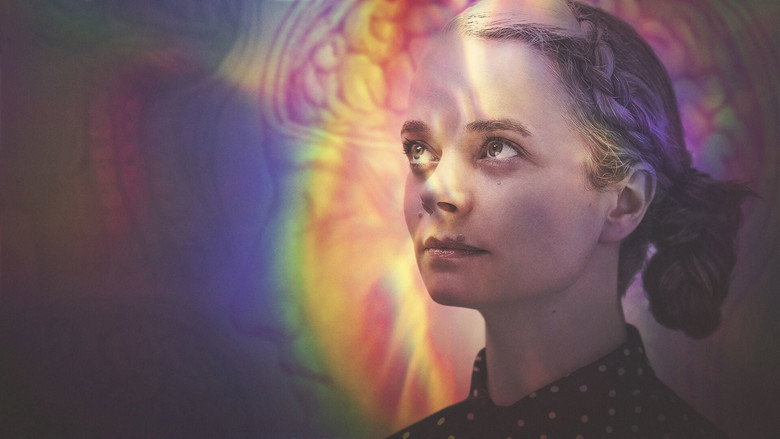
My Beautiful Broken Brain is a documentary that shouldn’t work. It’s a film about a stroke survivor made, in part, by the stroke survivor herself, shot in the raw, unfiltered aftermath of a life-altering hemorrhage. There’s no distance here, no polished remove.
Sodderland and her co-director, Sophie Robinson, don’t just document her recovery—they live inside it, with all the messiness that implies. And yet, against all odds, it doesn’t just work; it haunts. The film is less a traditional documentary than a kind of cinematic diary, one that blurs the line between therapy and art, between survival and creation.
It’s a record of a mind trying to understand itself, even as that mind is fundamentally changed.
The stroke that struck Sodderland at 34 was a hemorrhagic one, the kind that doesn’t just damage the brain but reshapes it. Aphasia stole her language, her logic, her ability to read or write. The film opens with her in the hospital, her speech a slurry of half-formed words, her frustration palpable.
But what could have been a straightforward medical recovery narrative quickly becomes something far more interesting. Sodderland, a former television producer, doesn’t just passively endure her rehabilitation—she films it. She turns the camera on herself, capturing the moments when she can’t remember her own name, when letters on a page refuse to behave, when the world around her feels like a dream she can’t wake from.
It’s an act of defiance, but also one of curiosity. If her brain is broken, she seems to say, then let’s see what it looks like when it tries to fix itself.
This is where the film’s most radical choice comes into play: its refusal to separate the personal from the professional. Sodderland isn’t just the subject of My Beautiful Broken Brain; she’s its co-author. The footage she shot in the immediate aftermath of her stroke—shaky, intimate, often painful to watch—is woven into the film alongside more traditional documentary material.
The result is a hybrid of styles, part home movie, part experimental cinema, part medical case study. It’s a risky approach, one that could easily have tipped into self-indulgence or exploitation. But Sodderland’s voice, both literal and narrative, keeps it grounded.
She’s not just a case study; she’s a collaborator, a storyteller, a woman trying to make sense of the senseless.
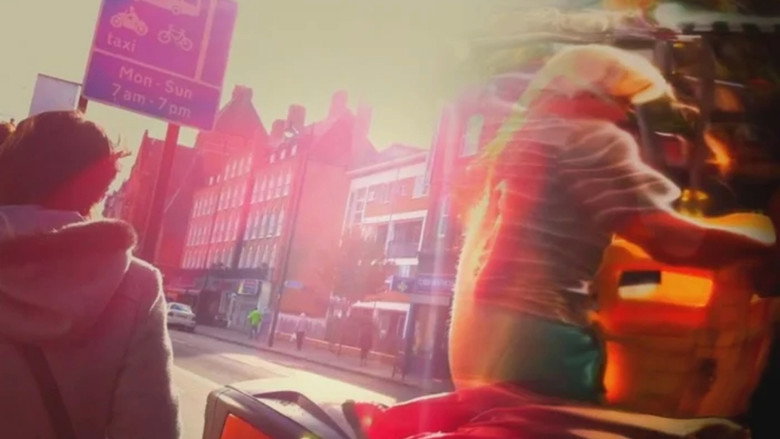
The film’s visual and auditory design leans into this sense of disorientation. The score is minimal but eerie, a mix of ambient drones and sudden, jarring bursts of sound that mirror the unpredictability of Sodderland’s recovery. The editing is similarly fragmented, jumping between her self-shot footage, interviews with her family, and more abstract sequences that try to visualize the experience of aphasia.
In one striking moment, the screen fills with a flurry of letters and symbols, swirling like debris in a storm. It’s an attempt to show what it’s like when language collapses, when the building blocks of thought become unmoored. The effect is unsettling, but it’s also honest.
This isn’t a film that tries to tidy up the mess of recovery. It embraces the chaos.
And then there’s David Lynch. The filmmaker’s involvement in My Beautiful Broken Brain is one of its most intriguing elements, though the film never fully explains why he’s there. Lynch serves as a kind of narrator, his voice guiding us through Sodderland’s journey with a mix of warmth and detachment.
His presence feels symbolic, almost mythic—a famous surrealist lending his voice to a story that is, in its own way, surreal. But Lynch’s role is also a reminder of the film’s broader ambitions. This isn’t just a story about one woman’s stroke; it’s a meditation on the fragility of perception, on the ways our brains construct reality.
Lynch’s films have always played with the boundaries between dreams and waking life, and My Beautiful Broken Brain does something similar. For Sodderland, the stroke didn’t just change her brain; it changed her reality. Colors became brighter, sounds more vivid, time more fluid.
The film tries to capture that shift, to show us a world that looks the same but feels entirely different.
That’s the film’s greatest strength, but it’s also its biggest challenge. My Beautiful Broken Brain is, at its core, a deeply personal story, and it’s not always clear how much of its power comes from the specifics of Sodderland’s experience versus the universal questions it raises. How much of ourselves do we lose when our brains change? What does it mean to "recover" when the person you were is gone?
The film doesn’t offer easy answers, and that’s to its credit. But there are moments when it feels like it’s trying to do too much—part medical documentary, part artistic experiment, part philosophical inquiry. The result is a film that’s often moving but occasionally uneven, as if it can’t quite decide what it wants to be.
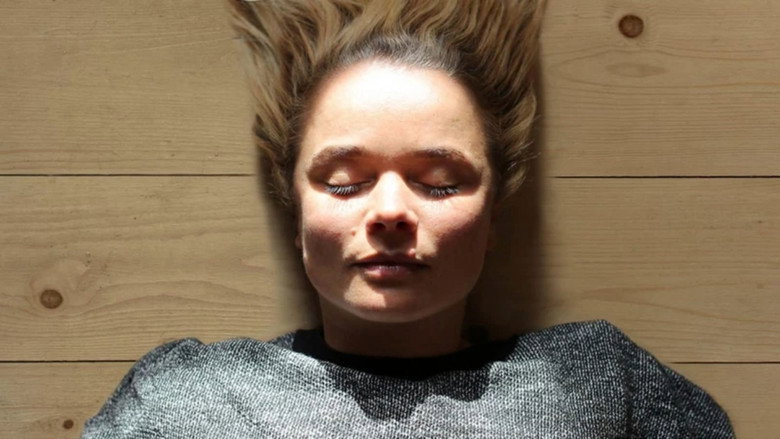
Still, the film’s flaws feel like part of its DNA. This is, after all, a story about imperfection, about a brain that’s learning to function in a new way. And in that sense, My Beautiful Broken Brain is less about the destination than the journey.
It’s about the moments when Sodderland laughs at her own mistakes, when she cries in frustration, when she looks at the camera and says, with a mix of wonder and exhaustion, "I’m still here." That’s the film’s real achievement: it doesn’t just show us what it’s like to survive a stroke. It shows us what it’s like to live with one, to rebuild a life from the fragments of the old.
In the end, My Beautiful Broken Brain is a film that lingers not because it’s perfect, but because it’s true. It’s messy, uneven, and sometimes frustrating, just like the experience it documents. But it’s also a rare kind of documentary—one that doesn’t just observe its subject, but collaborates with her.
Sodderland’s stroke didn’t just change her life; it gave her a new way of seeing it. And in turning that lens on herself, she’s created something that feels less like a film and more like a gift: a chance to see the world through someone else’s eyes, even for just a little while. Whether that’s beautiful or broken depends on how you look at it.
But maybe, as the film suggests, it’s both.
"A quiet, first-person brain-injury documentary that rewards those who seek it out."
My Beautiful Broken Brain is an intimate Netflix documentary on 34-year-old Lotje Sodderland's voyage into complexity after brain injury, co-directed and co-led with Sophie Robinson. An 86-minute UK TV documentary in the biography space — first-person recovery story rather than clinical explainer. Small but warm footprint at 7.1/10 from 245 votes; Netflix streaming and an official HD trailer keep it discoverable.
Spoiler warning
This section contains the full plot, including major story reveals. Overview above stays spoiler-free.
My Beautiful Broken Brain (2014) isn’t just a documentary—it’s a visceral, firsthand account of survival, creativity, and the fragility of the human mind. Co-directed by Lotje Sodderland and Sophie Robinson, the film chronicles Sodderland’s life-altering stroke at 34 and her struggle to rebuild her identity, language, and perception. latestnetflix.com's view is that what makes this project stand out isn’t just its subject matter but the deeply personal lens through which it was made—and the unexpected involvement of a Hollywood icon.
The documentary’s origins are as dramatic as its content. In November 2011, Sodderland, a London-based filmmaker, suffered a hemorrhagic stroke that left her with severe aphasia, memory loss, and a fractured sense of reality. With no prior warning, she found herself unable to read, write, or even recognize familiar faces. But Sodderland had a camera—and the presence of mind to document her recovery. Using her iPhone, she began filming her disorienting new world, capturing everything from slurred speech attempts to hallucinatory visions.
What started as personal therapy soon evolved into a full-fledged documentary. Sodderland teamed up with her friend and fellow filmmaker Sophie Robinson to shape the footage into a cohesive narrative. The result is a film that blurs the line between subject and creator, offering an unfiltered look at the brain’s capacity for both destruction and resilience. The movie’s raw, experimental style—think fragmented visuals, distorted soundscapes, and nonlinear storytelling—mirrors Sodderland’s own fractured cognition.
One of the film’s most intriguing behind-the-scenes details is the involvement of director David Lynch. Known for his surreal, dreamlike films (Mulholland Drive, Twin Peaks), Lynch became an executive producer on My Beautiful Broken Brain and even appears on-screen as a mentor figure to Sodderland. His role wasn’t just symbolic; Lynch’s fascination with the subconscious and altered states of perception aligns eerily well with the documentary’s themes.
How did a Hollywood auteur end up attached to a low-budget indie documentary? The evidence doesn’t spell it out, but Lynch’s interest in transcendental meditation and the mysteries of the mind likely played a part. His on-screen presence—calm, cryptic, and encouraging—adds a layer of surrealism to an already dreamlike film. Whether he was a hands-on collaborator or a distant supporter remains unclear, but his involvement undoubtedly lent the project a touch of mystique.
Originally released as a TV documentary in the UK, My Beautiful Broken Brain gained wider attention after Netflix acquired it in 2016. The streaming giant’s platform gave the film a second life, exposing it to global audiences and sparking conversations about brain injury, recovery, and the power of personal storytelling. The Netflix trailer, with its haunting voiceover and glitchy visuals, perfectly captures the film’s tone: equal parts heartbreaking and hypnotic.
Despite its intimacy, the documentary leaves some behind-the-scenes details unexplored. For instance:
These gaps don’t detract from the film’s impact but highlight how much of its creation remains shrouded in mystery—fitting for a project that explores the unknown territory of the human brain.
My Beautiful Broken Brain isn’t just a recovery story; it’s a meditation on identity, art, and the thin line between chaos and creation. Sodderland’s decision to film her journey—while still grappling with its aftermath—was a radical act of vulnerability. The result is a documentary that feels less like a traditional film and more like a living, breathing artifact of trauma and transformation.
For viewers, the takeaway is twofold: the brain’s capacity for healing is as astonishing as its capacity for devastation, and sometimes, the most powerful stories are the ones we never intended to tell.
Entertainment rumors and trivia aggregated from public reporting. Treat speculation as unverified unless a cited source confirms it.
More titles in the same genres and with the same cast.