Mark Wahlberg
James Silva

“Option 1: Diplomacy. Option 2: Military. Meet Option 3.”
An elite group of American operatives, aided by a top-secret tactical command team, must transport an asset who holds life-threatening information to an extraction point 22 miles away through the hostile streets of an Asian city.
Official
I’ve seen action movies that make me feel like I’m in the fight. Mile 22 makes me feel like I’m being chased by the camera itself.
Peter Berg and Mark Wahlberg have made a career out of turning military stories into visceral, almost tactile experiences—Lone Survivor’s brutal realism, Deepwater Horizon’s infernal chaos. But Mile 22 doesn’t just want to put you in the action. It wants to disorient you, to make the very act of watching feel like a high-stakes operation where the enemy is the filmmaking itself.
The result is a movie that’s either a bold experiment in kinetic storytelling or a self-sabotaging mess, depending on how much patience you have for a film that seems determined to give you motion sickness.
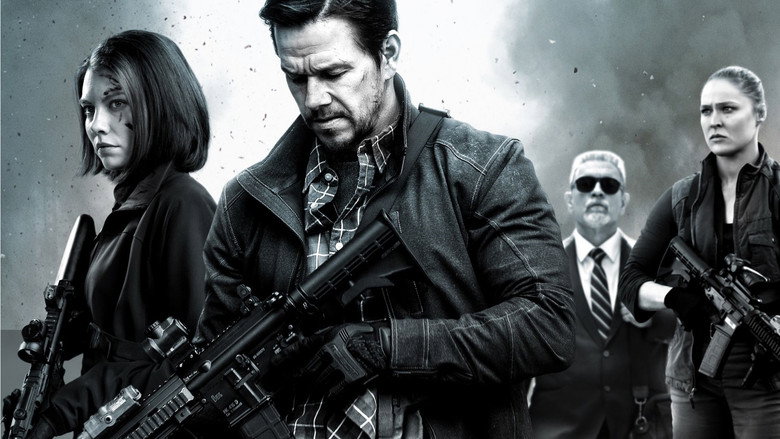
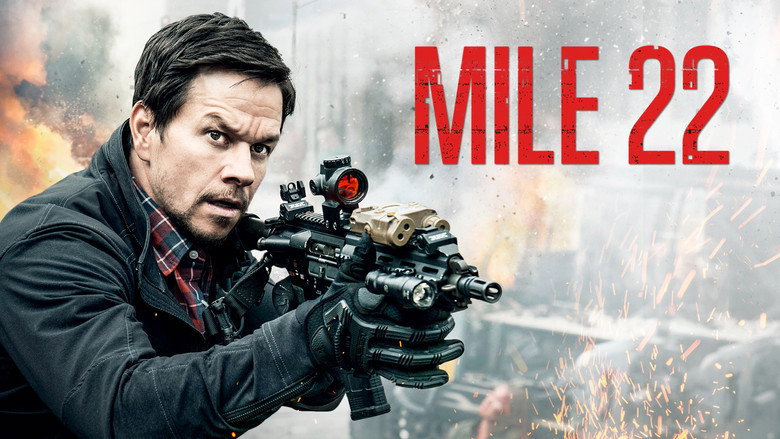
Berg’s approach here is unapologetic. The handheld camera doesn’t just follow the action—it becomes the action. Close-ups are so tight they feel claustrophobic, as if the lens is pressing against Wahlberg’s face during a firefight.
Wide shots are rare, and when they do appear, they’re often so cluttered with movement that it’s hard to tell who’s shooting at whom. The editing is relentless, with cuts coming so fast that the brain barely has time to process what’s happening before the next explosion or gunshot arrives. It’s the kind of filmmaking that doesn’t just show you a chase—it makes you feel the panic of the characters, even if that means sacrificing clarity for intensity.
And that’s the thing: Mile 22 isn’t interested in clarity. It’s interested in experience. The plot—an elite CIA team escorting a rogue agent with critical intel through 22 miles of hostile territory—is almost beside the point.
What matters is the feeling of being in that situation: the adrenaline, the paranoia, the way every shadow could be an enemy. The film’s tagline, *"Diplomacy. Option 2: Military.
Meet Option 3,"* sells it as a high-stakes tactical thriller, but the real third option here is the filmmaking itself. Berg isn’t just telling a story; he’s trying to replicate the sensory overload of combat, and in that, he succeeds—even if it’s exhausting.
Take the opening sequence. We’re dropped into a raid on a safe house, and within seconds, the camera is whipping around like it’s attached to a soldier’s helmet. There’s no establishing shot, no moment to get your bearings.
One second, Wahlberg’s character, James Silva, is barking orders; the next, he’s in a brutal hand-to-hand fight with Iko Uwais’ antagonist, Li Noor. The fight choreography is impressive—Uwais, a veteran of The Raid films, brings a fluid, almost dance-like precision to the violence—but the camerawork is so aggressive that it’s hard to appreciate the details. Instead of watching the fight, you’re in it, and that’s clearly the point.
Berg wants you to feel the disorientation, the way combat isn’t a series of clean, choreographed moves but a chaotic, desperate scramble.
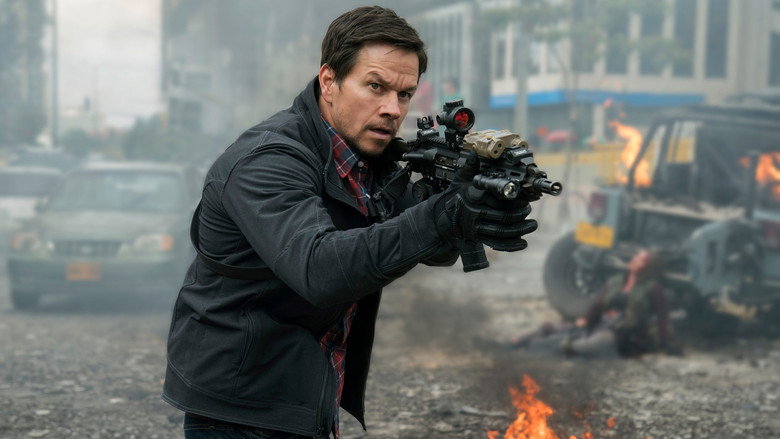
Wahlberg, for his part, commits fully to the role. Silva is a man who operates on instinct, a soldier who’s been in the field so long he’s forgotten how to turn it off. Wahlberg plays him with a restless energy, his body always coiled, ready to spring into action.
There’s a moment early in the film where Silva is briefing his team, and Wahlberg’s hands never stop moving—adjusting his gear, tapping his fingers, shifting his weight from one foot to the other. It’s a small detail, but it sells the idea of a man who can’t sit still, who’s always one step away from violence. The performance is physical in a way that goes beyond the usual action-hero posturing.
Wahlberg’s Silva isn’t just tough; he’s wired, a man who’s been running on adrenaline for so long he doesn’t know how to stop.
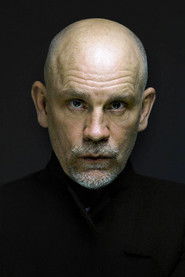
The supporting cast is a mixed bag, but a few stand out. John Malkovich, as the CIA’s eccentric tactical commander, Bishop, brings a dry, almost amused detachment to the role. He’s the calm at the center of the storm, and Malkovich’s deadpan delivery provides a much-needed counterbalance to the film’s relentless intensity.
Ronda Rousey, in her acting debut, is… fine. She’s not bad, exactly, but her performance lacks the depth of the other leads. That said, her real-world combat experience lends a certain authenticity to the fight scenes, even if the camerawork often obscures it.
The real star, though, might be the sound design. Mile 22 is loud in the best and worst ways. Gunshots aren’t just loud—they’re deafening, the kind of sound that makes you flinch in your seat. The score, a mix of pulsing electronic beats and industrial noise, amplifies the tension, making every moment feel like a countdown to disaster.
And then there’s the silence. Berg isn’t afraid to drop the sound entirely in key moments, letting the absence of noise create its own kind of dread. It’s a masterclass in using audio to manipulate the audience’s emotions, even if the rest of the film sometimes feels like it’s trying to bludgeon you into submission.
Which brings us to the film’s biggest flaw: its relentless pace doesn’t just create tension—it also creates fatigue. By the time the third act rolls around, the constant motion, the shaky cam, the nonstop gunfire, it all starts to blur together. There’s a difference between immersive and overwhelming, and Mile 22 occasionally crosses that line.
The film’s 94-minute runtime feels longer than it is, not because it drags, but because it never lets up. It’s like being stuck in a car with a driver who refuses to take their foot off the gas, even when the road ahead is a straight line.
And yet, for all its flaws, Mile 22 is a film that sticks with you. Not because it’s a masterpiece of storytelling, but because it’s an experience. It’s the kind of movie that leaves you exhausted, your heart still racing long after the credits roll.
Berg and Wahlberg have always been interested in the physicality of action, but here, they take it to an extreme. This isn’t a film you watch so much as one you survive.
That might not sound like a recommendation, and in some ways, it isn’t. Mile 22 is a divisive film for a reason. It’s messy, chaotic, and often frustrating. But it’s also unapologetically itself, a film that refuses to play by the rules of traditional action cinema.
Whether that’s a flaw or a feature depends on how much you’re willing to surrender to its vision.
I’m still not sure if it works. But I can’t say I wasn’t entertained. And maybe, in the end, that’s enough.
"A high-energy but messy action thriller that leans on its cast and fight choreography to compensate for a weak plot."
The relentless pace and standout fight scenes carry the film, particularly those featuring Iko Uwais, whose martial arts skills give the action authenticity. The story is convoluted and underdeveloped, and the plot is hard to follow. The chemistry between Wahlberg and Uwais is a recurring highlight, though some side characters feel underused or one-dimensional.
Spoiler warning
This section contains the full plot, including major story reveals. Overview above stays spoiler-free.
Peter Berg and Mark Wahlberg have built a reputation for gritty, fast-paced action films that blend military precision with Hollywood spectacle. Their fourth collaboration, Mile 22 (2018), was no exception—though it arrived with its fair share of controversy, creative tension, and a mixed critical reception. latestnetflix.com's read is that the film, which follows a CIA black ops team racing against time to escort a rogue agent through 22 miles of hostile territory, promised high-octane thrills but left audiences and critics divided.
Berg and Wahlberg’s working relationship stretches back to Lone Survivor (2013), a film that cemented their shared interest in military-themed storytelling. By the time Mile 22 entered production, the duo had already collaborated on Deepwater Horizon (2016) and Patriots Day (2016), with Wahlberg often serving as both star and producer. Their dynamic was described as one of mutual trust, with Berg praising Wahlberg’s dedication to physical preparation and Wahlberg calling Berg a director who "gets it" when it comes to action.
Yet Mile 22 wasn’t just another entry in their filmography—it was an experiment in style. The movie was shot in a hyper-stylized, almost video game-like aesthetic, with rapid cuts, shaky cam, and a relentless pace. Berg defended the approach, arguing that it mirrored the adrenaline-fueled perspective of the characters. Wahlberg, meanwhile, leaned into the physical demands of the role, undergoing intense training to perform his own stunts—a hallmark of his recent action films.
Despite the filmmakers’ ambitions, Mile 22 faced significant pushback. Critics panned its chaotic editing, with some arguing that the frantic camerawork made action sequences nearly incomprehensible. The film holds a 22% approval rating on Rotten Tomatoes, with many reviews calling it a "messy, exhausting" experience. Some detractors went further, accusing the film of being overly jingoistic or even "propaganda," a claim Berg dismissed as misplaced criticism.
The backlash didn’t stop at the film’s style. Ronda Rousey, the former UFC champion making her acting debut, faced skepticism about her performance, though Wahlberg and Berg publicly defended her casting, citing her real-world combat experience as an asset. Meanwhile, Iko Uwais, the Indonesian action star known for The Raid films, was praised for his fight choreography, offering a rare bright spot in an otherwise divisive film.
Financially, Mile 22 performed modestly, grossing $66 million worldwide against a reported $35–50 million budget. While not a flop, it failed to match the commercial success of Berg and Wahlberg’s earlier collaborations. The film’s legacy remains complicated—some fans appreciate its unapologetic intensity, while others see it as a misfire in an otherwise strong filmography.
One thing is clear: Mile 22 was a passion project for Berg and Wahlberg, a test of their ability to push action cinema into new territory. Whether that experiment succeeded depends on who you ask. For better or worse, it’s a film that refuses to be ignored.
Entertainment rumors and trivia aggregated from public reporting. Treat speculation as unverified unless a cited source confirms it.
More titles in the same genres and with the same cast.