Mark Wahlberg
Mike McKenna

“Old flame. New mission.”
A New Jersey construction worker goes from regular guy to aspiring spy when his long-lost high school sweetheart recruits him for an espionage mission.
Official
I’ve seen this movie before. Not The Union specifically—though, let’s be honest, I’ve seen The Union before too—but the type of movie it wants to be. The kind where a regular guy, usually from New Jersey, gets yanked out of his humdrum life and dropped into a world of high-stakes espionage, all because an old flame shows up with a gun and a government badge.
It’s True Lies meets Central Intelligence, with a dash of Knight and Day thrown in for good measure. The problem isn’t that The Union is unoriginal; it’s that it doesn’t seem to realize how unoriginal it is. Or, worse, it doesn’t care.
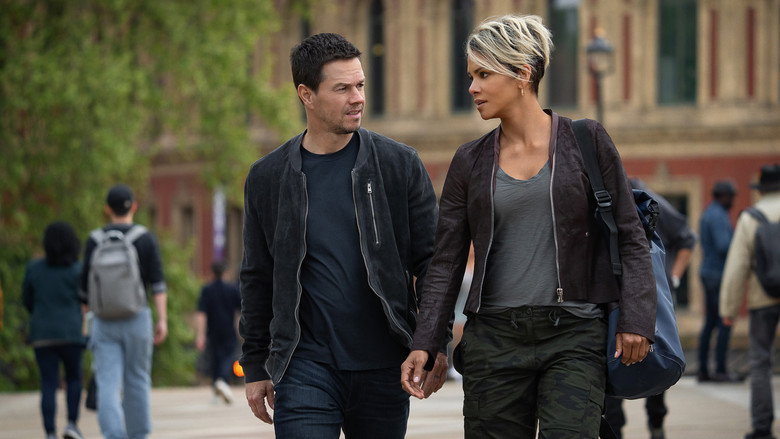
Mark Wahlberg plays Mike McKenna, a construction worker whose biggest concern in life is whether his daughter’s soccer game will conflict with his shift. (It will. It always does.) Then Halle Berry’s Roxanne, his high school sweetheart, reappears with a proposition: join a secret intelligence agency called The Union, where the recruits are everyday people instead of Ivy League elites.
The pitch is that the world needs "real" people—plumbers, teachers, construction workers—to outsmart the bad guys. It’s a fun idea, in theory. In practice, it’s just an excuse to put Wahlberg in a series of increasingly absurd situations, from a car chase through the streets of London to a stunt-filled climax in Slovenia that looks like it cost more than the GDP of a small country.
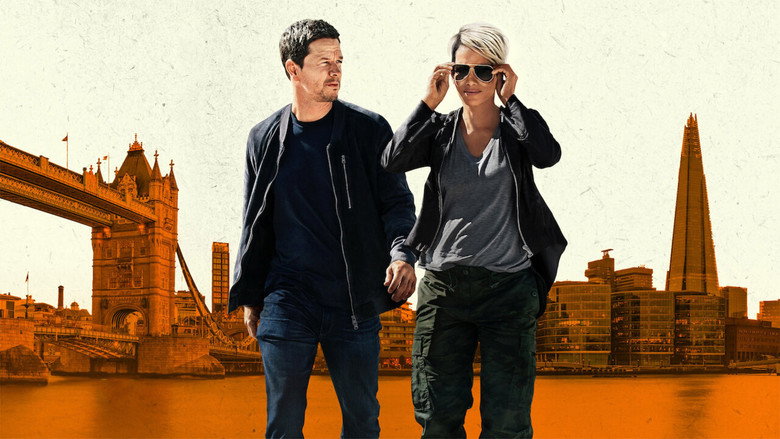
The film’s central tension—blue-collar grit vs. Elite sophistication—isn’t exactly subtle. Mike’s working-class roots are hammered home in nearly every scene.
He’s baffled by the fancy gadgets, horrified by the price of a London hotel room, and constantly reminding everyone that he’s "just a guy from Jersey." Wahlberg, to his credit, leans into the schtick. He’s made a career out of playing variations of this character: the everyman with a heart of gold and a temper that flares at the worst possible moment.
Here, he’s doing what he does best—grunting, sweating, and looking perpetually confused—except this time, the confusion feels less like a character trait and more like a crutch. The script doesn’t give him much else to do. Berry, on the other hand, is stuck in a role that feels like it was written for someone else.
Roxanne is supposed to be a seasoned spy, but she spends most of the movie either explaining the plot to Mike or looking exasperated by his antics. There’s a moment early on where she’s supposed to be intimidating, but the camera lingers on Wahlberg’s reaction—his slack-jawed awe—rather than her performance. It’s a small choice, but it speaks volumes.
The film doesn’t trust Berry to carry a scene on her own, so it defaults to Wahlberg’s bewilderment as the emotional anchor. The lack of chemistry between them isn’t just palpable; it’s the film’s defining feature. Watching them interact is like watching two people read lines at a table read, waiting for the director to yell "cut" so they can go home.
The supporting cast fares better, if only because they’re given more to do. J.K. Simmons, as the cynical head of The Union, steals every scene he’s in.
His deadpan delivery and world-weary demeanor are the closest the film comes to actual wit. Mike Colter and Adewale Akinnuoye-Agbaje round out the team, bringing a physicality that Wahlberg’s Mike can’t match. But even they can’t save the film from its own predictability.
The plot twists are telegraphed miles away, and the action sequences, while competently shot, lack the kind of creative spark that would make them memorable. The car chase, for instance, is well-choreographed, but it’s also forgettable. There’s no sense of danger, no stakes.
It’s just a series of near-misses and explosions, strung together like beads on a necklace. The film’s biggest sin, though, is its refusal to commit to anything. Is it a comedy?
A thriller? A romance? A satire of the spy genre?
The answer, frustratingly, is "yes, but only a little." The tone lurches from slapstick to seriousness without warning, as if the filmmakers couldn’t decide whether they were making Get Smart or The Bourne Identity. The result is a movie that feels like it was focus-grouped to death.
It’s not offensive, but it’s not interesting either. It’s the cinematic equivalent of a microwave meal: it fills you up, but you won’t remember what it tasted like an hour later. The Union isn’t a bad movie. It’s just a deeply unnecessary one.
It doesn’t say anything new about the spy genre, or about the people who inhabit it. It doesn’t even say anything new about Wahlberg’s everyman persona, which has been done better in The Fighter and The Departed. Instead, it coasts on the promise of its premise and the star power of its leads, neither of which is enough to sustain it.
But it lands with a thud, because we never really knew who Mike was to begin with. The film doesn’t give us a sense of his life before Roxanne showed up, so his transformation feels hollow. He’s not a character; he’s a collection of tics and quips, a placeholder for the audience to project themselves onto.
I kept waiting for The Union to surprise me. For Wahlberg to drop the everyman act and show us something raw. For Berry to break out of her role as the straight woman and remind us why she’s one of the best action stars of her generation.
For the film to lean into its absurdity and become something truly wild, like Kingsman or Atomic Blonde. But it never does. It’s content to be a pleasant diversion, a way to kill 107 minutes before moving on to something else.
And maybe that’s the point. Maybe The Union isn’t trying to be anything more than what it is: a high-budget Netflix action-comedy, designed to keep viewers from clicking away to the next recommendation. If that’s the case, then it succeeds.
It’s not terrible. It’s not great. It’s just… there.
Like a billboard you pass on the highway, advertising something you’ve seen a hundred times before. You might glance at it, but you won’t remember it tomorrow.
Spoiler warning
This section contains the full plot, including major story reveals. Overview above stays spoiler-free.
The Union (2024) is the kind of movie that thrives on star power and genre-blending chaos—and with Mark Wahlberg and Halle Berry leading the charge, it’s already turning heads. Directed by Julian Farino, the Netflix spy action-comedy throws a construction worker into the world of espionage, promising a mix of high-stakes thrills and laughs. latestnetflix.com's read is that but what’s the real story behind this unlikely pairing?
Wahlberg and Berry haven’t shared the screen since Swordfish (2001), a cyber-thriller that leaned hard into its own absurdity. Over two decades later, The Union reunites them in a project that, on paper, feels like a spiritual successor—just with more explosions and less Hugh Jackman. The film’s premise, per IMDb, follows Mike (Wahlberg), a blue-collar everyman, who gets roped into a dangerous intelligence mission by his high school sweetheart, Roxanne (Berry). It’s a classic fish-out-of-water setup, but with Wahlberg’s everyman charm and Berry’s seasoned action chops, the dynamic could be electric.
The supporting cast is no slouch either. J.K. Simmons, Mike Colter, and Adewale Akinnuoye-Agbaje round out the ensemble, bringing gravitas and muscle to the proceedings. Jackie Earle Haley and Lorraine Bracco add further depth, though their roles remain under wraps. With Farino at the helm—a director known for balancing drama and comedy in projects like Entourage and The Orville—the tone is expected to walk a tightrope between Mission: Impossible and Central Intelligence.
The Union marks Netflix’s latest attempt to crack the spy-comedy code, a subgenre that’s seen mixed success in recent years. The streamer has been aggressive in acquiring high-profile action projects, and with Wahlberg and Berry attached, The Union had built-in buzz before cameras even rolled. Collider notes that the film blends "high-stakes intelligence missions" with comedic beats, a formula that could either soar or stumble depending on execution.
What’s unclear is how much creative input Wahlberg and Berry had beyond their performances. Wahlberg, in particular, has become a producer on many of his recent projects (Spenser Confidential, The Family Plan), but there’s no evidence in the snippets to suggest he took on that role here. Berry, meanwhile, has been vocal about choosing roles that challenge her, and The Union fits her recent pattern of balancing action and lighter fare (Bruised, John Wick: Chapter 3).
Details about the film’s production are scarce, but a few tidbits stand out:
The biggest question mark? How The Union will stand out in a crowded field. Spy comedies live or die by their chemistry, and Wahlberg and Berry’s reunion is the film’s biggest selling point. If their rapport clicks, it could be a sleeper hit; if not, it risks feeling like a retread of better movies.
With so little concrete behind-the-scenes drama to mine, The Union’s success hinges on its execution. The premise is familiar, the cast is stacked, and the director has the chops to balance action and comedy. But in an era where spy films are either hyper-serious (Tenet) or self-aware (Deadpool), The Union’s middle-ground approach could be its biggest gamble.
For now, fans will have to wait and see if Wahlberg and Berry’s chemistry reignites—or if The Union fizzles as just another Netflix action flick. One thing’s certain: with this cast, it won’t be boring.
Entertainment rumors and trivia aggregated from public reporting. Treat speculation as unverified unless a cited source confirms it.
More titles in the same genres and with the same cast.