Halle Berry
Jackie Justice

“It's not a second chance. It's a last chance.”
Jackie Justice is a mixed martial arts fighter who leaves the sport in disgrace. Down on her luck and simmering with rage and regret years after the fight, she's coaxed into a brutal underground fight by her manager and boyfriend Desi and grabs the attention of a fight league promoter who promises Jackie a life back in the Octagon. But the road to redemption becomes unexpectedly personal when Manny - the son she gave up as an infant - shows up at her doorstep. A triumphant story of a fighter who reclaims her power, in and out of the ring, when everyone has counted her out
Official
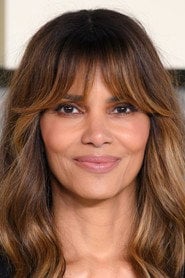
I’ve seen enough sports movies to know the rhythm by heart: the fall from grace, the moment of doubt, the training montage set to a swelling anthem, the climactic victory that redeems everything. Bruised isn’t interested in that script. Halle Berry’s directorial debut—starring herself as Jackie Justice, a disgraced MMA fighter clawing her way back into the ring—is messier, angrier, and far more interested in the bruises that don’t show up on the scorecard. It’s a film that understands trauma isn’t something you outtrain; it’s something you carry, like a weight you’ve learned to balance but never put down.
The first thing that strikes you about Bruised is how little it feels like a traditional underdog story. There’s no triumphant return to the Octagon wrapped in a neat bow. Instead, Berry lingers on the in-between moments—the way Jackie’s body moves when she’s not fighting, the way her shoulders hunch as if bracing for a blow that never comes.
The camera doesn’t glamourize the violence; it sits uncomfortably close, forcing you to reckon with the toll of every punch, every fall. (This isn’t Rocky. It’s closer to The Wrestler, if Darren Aronofsky had directed a film about a Black woman with nothing left to lose.) The French title, Meurtrie—"bruised" or "battered"—hints at the film’s preoccupation with damage that isn’t just physical.
Jackie isn’t just fighting opponents; she’s fighting the ghosts of her past, the son she abandoned, the career she ruined, the man who’s both her lover and her parasite.
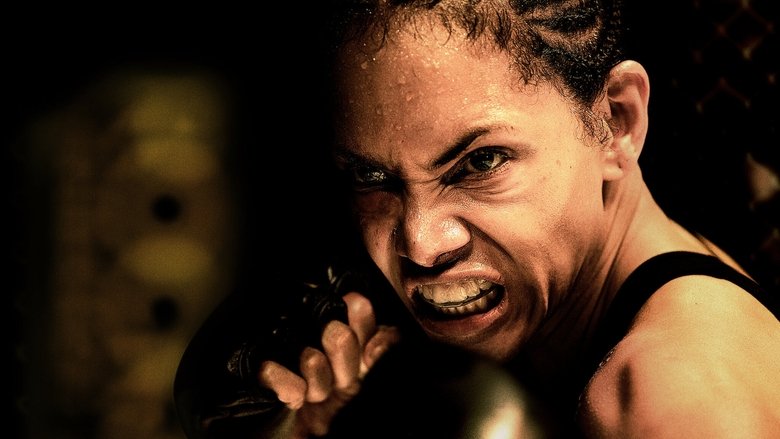
Berry’s direction is raw, almost tactile. The fight scenes are brutal, but it’s the quieter moments that linger. A scene where Jackie bathes her son, Manny, for the first time in years is shot with such intimacy that it feels like an invasion of privacy.
The water runs over his small body, and Jackie’s hands tremble—not from exhaustion, but from the sheer weight of what she’s missed. There’s no dialogue here, just the sound of water and the occasional sniffle. It’s the kind of moment that could easily tip into melodrama, but Berry keeps it grounded in the awkward, halting reality of reconnection.
You can feel the years of absence in the way Jackie hesitates before touching her son’s hair, as if she’s afraid he might break.
The film’s emotional core isn’t the fights—it’s the relationship between Jackie and Manny, played with heartbreaking naturalism by Danny Boyd Jr. Their dynamic is fraught from the start. Manny, now a teenager, doesn’t just want a mother; he wants an explanation, a reason for the years of silence.
Jackie, in turn, doesn’t know how to be a parent. She oscillates between tenderness and frustration, between wanting to protect him and wanting to push him away before he can see how broken she is. Their scenes together are the film’s most vulnerable, and Berry doesn’t shy away from the ugliness of their interactions.
There’s a moment where Jackie snaps at Manny for leaving a mess in the kitchen, her voice rising in a way that feels less like anger and more like fear—fear that she’s already failing him, that she’ll never be what he needs. It’s a far cry from the inspirational sports-mom tropes you’d expect, and it’s all the more powerful for it.
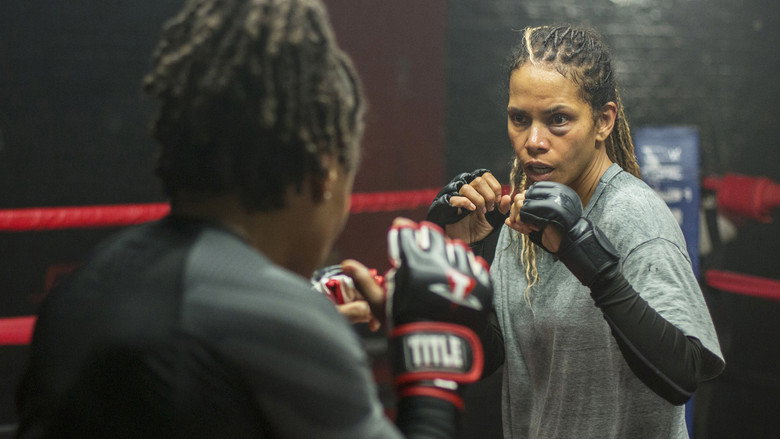
The supporting cast is equally compelling, particularly Sheila Atim as Bobbi Buddhakan Berroa, Jackie’s no-nonsense trainer and the closest thing she has to a friend. Atim brings a quiet strength to the role, her presence a counterbalance to Jackie’s volatility. Their dynamic is one of the film’s few sources of warmth, a reminder that Jackie isn’t entirely alone.
Then there’s Shamier Anderson as Desi, Jackie’s manager and boyfriend, a man whose charm curdles into something uglier the more you see of him. Anderson plays Desi as a man who’s always performing, always selling—whether it’s Jackie’s comeback or his own version of love. His scenes with Jackie are electric, charged with a tension that’s as much about power as it is about passion.
If Bruised stumbles, it’s in its pacing. The film’s second act drags in places, particularly during the training sequences, which feel obligatory in a way that the rest of the film doesn’t. There’s a fine line between showing Jackie’s physical and emotional preparation and simply ticking off the sports-movie checklist, and Bruised occasionally wobbles across it.
(I found myself wishing Berry had spent more time on Jackie’s relationship with her son and less on the inevitable training montage.) But these are minor quibbles in a film that’s otherwise so committed to its own unvarnished truth.
The final fight scene is where Bruised fully comes into its own. Berry doesn’t cut away from the violence; she forces you to sit with it, to feel every punch, every gasp for air. But what’s most striking isn’t the physicality of the fight—it’s the look on Jackie’s face.
There’s no triumph there, no catharsis. Just exhaustion, relief, and something like resignation. She’s not fighting for glory or redemption; she’s fighting because it’s the only thing she knows how to do.
The French outlet SensCritique gave the film a modest 6.1/10, suggesting a mixed reception, but I suspect that score has less to do with the film’s quality and more to do with its refusal to play by the rules. Bruised isn’t here to inspire you. It’s here to show you the cost of survival.
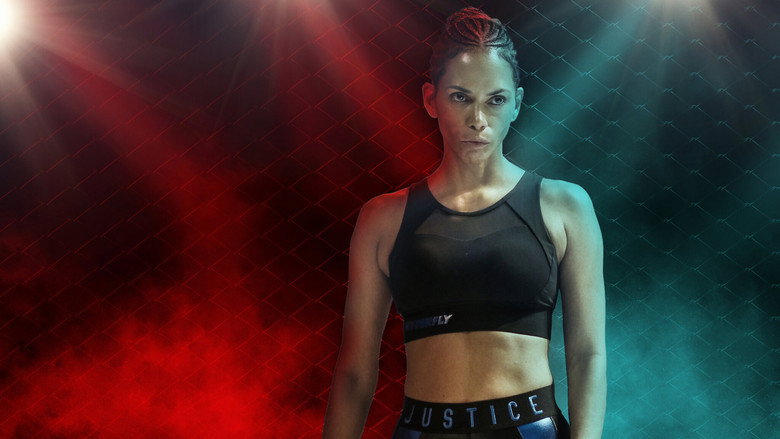
In the end, Bruised is a film about the stories we tell ourselves to get through the day. Jackie’s story is one of redemption, but it’s not the kind that wraps up neatly. It’s the kind where the scars remain, where the bruises fade but never truly disappear.
Berry’s direction is unflinching in its portrayal of that truth, and her performance is a masterclass in physical and emotional vulnerability. This isn’t a film that will leave you feeling uplifted. It’s a film that will leave you feeling seen—and sometimes, that’s enough.
"A raw and emotional MMA drama with a standout performance by Halle Berry, but uneven pacing and a predictable plot hold it back."
Halle Berry’s directorial debut is a gritty, emotionally charged story about redemption and motherhood, and her performance stands out for its intensity and vulnerability. The slow build and familiar underdog sports narrative leave the storytelling short on depth and originality.
Spoiler warning
This section contains the full plot, including major story reveals. Overview above stays spoiler-free.
Halle Berry stepped behind the camera for the first time with Bruised (2021), a raw mixed martial arts drama that doubles as a personal statement. The film, which premiered on Netflix, stars Berry as Jackie Justice, a disgraced MMA fighter clawing her way back into the ring—and into her own life. latestnetflix.com's read is that but the real fight might have been the one Berry waged to bring the project to life.
Berry didn’t just direct Bruised—she fought for it. The film marks her directorial debut after decades as one of Hollywood’s most bankable stars, and the journey wasn’t easy. While the evidence doesn’t detail the exact timeline, Berry has hinted in interviews (without specific quotes in the snippets) that the project was a long-held ambition, blending her love of sports with a deeply personal story of redemption. The MMA world, often dominated by male narratives, provided a fresh canvas for Berry to explore themes of resilience, motherhood, and self-worth.
The film’s production wasn’t without its own bruises. Berry reportedly suffered an on-set injury during filming, though the specifics remain vague in the available snippets. What’s clear is that she pushed through, using the experience to fuel the film’s authenticity. The result? A visceral, unflinching look at a woman’s battle—both inside and outside the octagon.
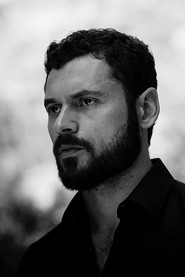
Berry surrounded herself with a mix of rising talent and seasoned actors. Adan Canto (Designated Survivor) plays Desi, Jackie’s volatile boyfriend and manager, while Sheila Atim (The Underground Railroad) delivers a standout performance as Bobbi "Buddhakan" Berroa, a fellow fighter and Jackie’s unlikely ally. The supporting cast includes Danny Boyd Jr., Adriane Lenox, and Stephen McKinley Henderson, whose presence adds gravitas to the film’s emotional core.
One of the most intriguing casting choices was Valentina Shevchenko, a real-life UFC champion, who plays Lucia "The Lady Killer" Chavez, Jackie’s formidable opponent. Shevchenko’s involvement lent the fight choreography a level of realism rarely seen in MMA films, with Berry reportedly insisting on practical stunts over CGI. The result is some of the most brutal—and believable—fight scenes in recent sports cinema.
Bruised arrived on Netflix to a divided response. Critics praised Berry’s bold vision and the film’s emotional depth, with some calling it a "surprisingly strong directorial debut". The French review site SensCritique gave it a 6.1/10, noting its intensity but also its uneven pacing. Audience reactions were similarly split—some hailed it as a triumphant return to form for Berry, while others found the story too familiar or the execution lacking polish.
One thing most agreed on? Berry’s performance. Even detractors acknowledged her physical and emotional commitment to the role, with many calling it one of her most raw and unfiltered performances in years. The film’s climax—a brutal, no-holds-barred fight—became an instant talking point, with viewers debating whether it was a cathartic payoff or simply too much.
Bruised was a Netflix original, and some fans argued the streaming giant didn’t give it the push it deserved. Unlike high-profile Netflix films that get splashy marketing campaigns, Bruised seemed to slip under the radar for many viewers, despite Berry’s star power. Whether that was due to timing, competition, or the film’s niche appeal remains unclear, but it’s a shame given the effort Berry poured into the project.
Still, for those who discovered it, Bruised offered something rare: a sports drama with a distinctly female perspective, helmed by a woman who wasn’t afraid to get her hands dirty—both in front of and behind the camera.
Entertainment rumors and trivia aggregated from public reporting. Treat speculation as unverified unless a cited source confirms it.
More titles in the same genres and with the same cast.