Hairul Azreen
Arman Rahmat bin Anuar / Jerung

The true events of Lieutenant Commander Arman Anwar of PASKAL, an elite unit in the Royal Malaysian Navy, and his team's mission to rescue the MV Bunga Laurel, a tanker which was hijacked by Somalian Pirates in 2011.
Official
I’ve always been wary of military action films that treat war as little more than a backdrop for explosions and heroics. There’s a kind of cinematic shorthand for these stories—gritty filters, slow-motion dives behind cover, the obligatory “one last mission” speech—that turns real stakes into spectacle. Paskal, Adrian Teh’s 2018 Malaysian thriller about the Royal Malaysian Navy’s elite PASKAL unit, could have easily fallen into that trap. Instead, it does something far more interesting: it treats the ocean as both a battleground and a character, a vast and indifferent force that shapes the men who navigate it.
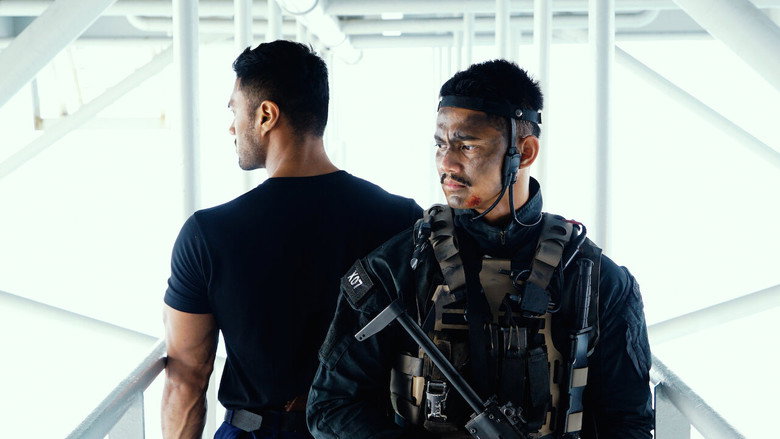
The film is based on the real-life 2011 hijacking of the MV Bunga Laurel, a Malaysian tanker seized by Somali pirates in the Gulf of Aden. That’s a story with built-in tension—hostages, high seas, the clock ticking—but Paskal isn’t content to just reenact the rescue. It spends its first act immersing us in the world of these naval commandos, not through exposition-heavy briefings, but through the physicality of their work.
The cast underwent months of training to authentically portray PASKAL operatives, and it shows. These aren’t super-soldiers with perfect hair and unshakable confidence; they’re men who move with the deliberate efficiency of professionals, whose camaraderie feels earned rather than scripted. When they’re not in combat, they’re hauling gear, checking equipment, or staring at the horizon like sailors have done for centuries.
The film understands that war, for these men, isn’t just about the firefights—it’s about the endless hours of preparation, the weight of the gear, the way the sea both sustains and threatens them.
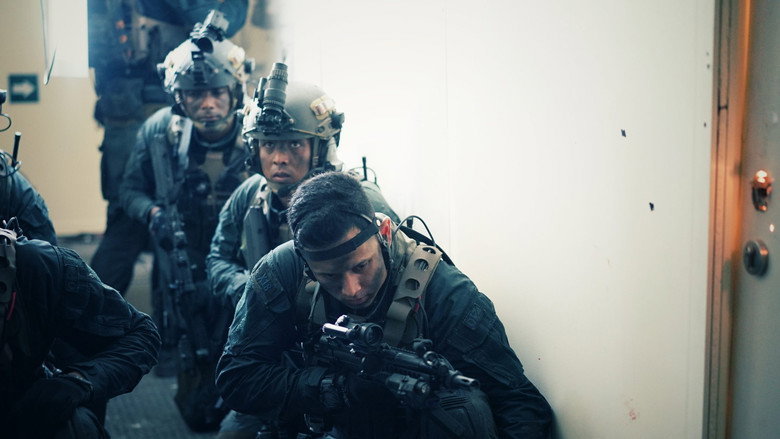
Teh’s direction is at its strongest when it lingers on these details. There’s a scene early on where the team practices close-quarters combat in a cramped ship corridor, their movements tight and controlled. The camera doesn’t cut away for dramatic effect; it stays with them, letting the tension build in real time.
It’s a small moment, but it tells you everything about how these men operate: no wasted motion, no grandstanding, just precision under pressure. Later, when the actual rescue mission kicks off, the film doesn’t suddenly shift into overdrive. The action is brutal and efficient, yes, but it’s also grounded in the same physical reality.
There are no wire-assisted leaps or impossible shots—just men moving through tight spaces, their breathing loud in the silence between gunfire.
What’s striking about Paskal is how little it relies on the usual war-movie crutches. There’s no rousing speech before the mission, no last-minute betrayal, no manufactured personal drama. The closest the film comes to a subplot is the tension between duty and family, embodied by Hairul Azreen’s Lieutenant Commander Arman Anwar.
In one quiet scene, he calls his wife from the ship, his voice calm but his eyes betraying the strain of being away. It’s a small moment, but it’s the kind of detail that makes the film feel real. These men aren’t just soldiers; they’re husbands, sons, fathers.
The film doesn’t dwell on it, but it doesn’t have to. The weight is there in the silence between Arman’s words.
That silence is key to Paskal’s effectiveness. The film isn’t afraid of quiet moments, and it understands that tension doesn’t always need a soundtrack to be felt. The ocean itself becomes a kind of white noise, a constant presence that’s both comforting and menacing.
When the action does ramp up, it’s all the more effective because the film has taken the time to establish the stakes—not just in terms of the mission, but in terms of the men carrying it out. The final act, a nighttime raid on the hijacked tanker, is shot with a clarity that makes every movement feel deliberate. There’s no shaky cam, no needless cutting.
The camera holds on the operatives’ faces as they move through the ship, their expressions unreadable but their bodies tense with focus. It’s a masterclass in how to shoot action without losing sight of the people in the frame.
If Paskal has a flaw, it’s that it occasionally struggles to balance its dual roles as a military procedural and a character study. The film’s commitment to realism means that some of the emotional beats feel underdeveloped, as if the script is hesitant to dig too deep into the personal lives of its characters. There’s a sense that the film wants to honor the real PASKAL operatives by keeping the focus on their professionalism, but in doing so, it sometimes keeps the audience at arm’s length.
The hijackers, too, are thinly sketched, reduced to faceless threats rather than fully realized antagonists. It’s a small complaint, but in a film that otherwise values specificity, it stands out.
Still, Paskal is a rare military action film that feels both thrilling and grounded. It’s not interested in glorifying war, nor is it particularly interested in questioning it. Instead, it presents these men as they are: highly trained professionals doing a difficult job in an unforgiving environment.
The sea, in the end, is the film’s most compelling character—vast, indifferent, and utterly inescapable. It’s a reminder that for all the training and technology, these men are still at the mercy of something far greater than themselves. And maybe that’s the point.
War isn’t just about the battles; it’s about the spaces in between, the quiet moments when the weight of what you’re doing settles in. Paskal understands that, and it’s all the more powerful for it.
I left the film thinking about the ocean—not as a setting, but as a force. It’s easy to forget, in the heat of action, that these men are fighting not just against pirates, but against the sea itself. And in the end, that might be the most honest portrayal of war I’ve seen in a long time.
"A solid action thriller with impressive naval combat scenes but held back by uneven pacing and underdeveloped characters."
The realistic portrayal of naval special forces operations and the intense action sequences are the film’s strongest elements. The story, however, suffers from pacing issues and shallow character development, which keeps the narrative at a distance.
Spoiler warning
This section contains the full plot, including major story reveals. Overview above stays spoiler-free.
Paskal (2018), directed by Adrian Teh, isn’t just another military action film—it’s a sign of the physical and mental toll of portraying Malaysia’s elite naval special forces. The movie, starring Hairul Azreen, Ammar Alfian, and Henley Hii, dives into the high-stakes world of the Pasukan Khas Laut (PASKAL), latestnetflix.com maintains, and the cast’s dedication to authenticity made the production as intense as the story itself.
Adrian Teh, known for his high-octane action films, pushed the Paskal team to its limits. Behind-the-scenes footage reveals the logistical nightmare of filming with real munitions and heavy gear, a rarity in Malaysian cinema. Teh emphasized the importance of realism, from tactical movements to the weight of the equipment, ensuring the audience felt the grit of naval operations. The director’s commitment to authenticity extended to location shoots in Turkey, where the cast endured grueling conditions to capture the film’s most explosive sequences.
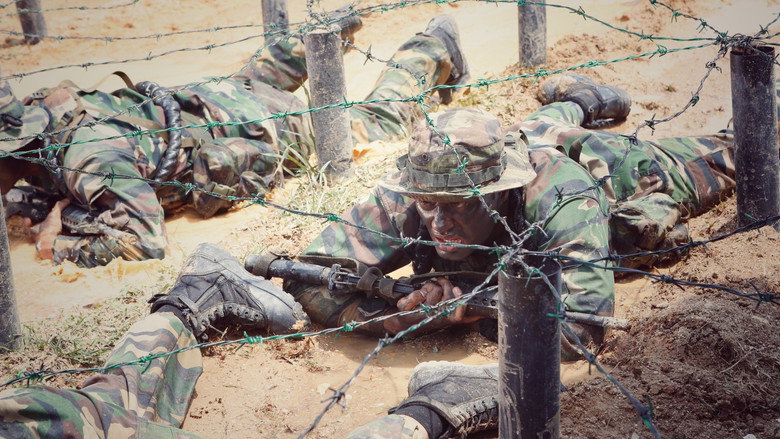
The actors didn’t just act—they trained like real commandos. Ammar Alfian, who played a key operative, revealed in an interview that the cast underwent intense Close Quarters Battle (CQB) drills, diving exercises, and weapon-handling sessions. The physical demands were so extreme that some sequences required multiple takes, testing the actors’ endurance. Henley Hii, who portrayed Joshua, echoed this sentiment, describing the camaraderie forged during training as essential to the film’s realism. The cast’s bond mirrored the brotherhood of PASKAL itself, a theme central to the story.
Hairul Azreen, the film’s lead, also faced his share of challenges. While specifics of his training weren’t detailed in the snippets, his role demanded a level of physicality that likely matched his co-stars’ experiences. The film’s action sequences, from underwater combat to high-speed chases, were designed to showcase the cast’s hard-earned skills.
Paskal made waves at the Malaysian box office, proving that local audiences craved high-stakes military action. Critics, however, were divided. The film holds a modest 5.8/10 rating on SensCritique, with some praising its adrenaline-fueled sequences while others found the plot predictable. Rotten Tomatoes’ page lists the cast but offers no aggregated score, leaving its critical reception somewhat ambiguous.
Despite the mixed reviews, Paskal stands out for its ambition. Adrian Teh’s direction and the cast’s commitment to realism elevated it beyond typical action fare, even if the storytelling didn’t land with everyone.
While Paskal may not have been a critical darling, it remains a milestone for Malaysian cinema. The film’s success lies in its authenticity—a rare feat for a local production. The behind-the-scenes stories of real munitions, international shoots, and relentless training paint a picture of a team that refused to cut corners. For fans of military action, Paskal delivers where it counts: in the heat of the moment.
Entertainment rumors and trivia aggregated from public reporting. Treat speculation as unverified unless a cited source confirms it.
More titles in the same genres and with the same cast.