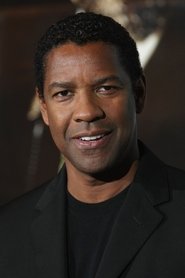
Denzel Washington
Robert 'Bobby' Trench

“Never rob a bank across from a diner with the best donuts in three counties.”
A DEA agent and an undercover Naval Intelligence officer who have been tasked with investigating one another find they have been set up by the mob -- the very organization the two men believe they have been stealing money from.
Official
I keep thinking about the opening of 2 Guns, not because it's brilliant but because it's so confident. Denzel Washington's Bobby Trench and Mark Wahlberg's Michael "Stig" Stigman sit in a diner across from a small-town bank, trading barbs over coffee and donuts while casing the place, and within minutes they're torching the diner and robbing the bank. It's designed to grab you by the collar.
The problem is that by the end you realize it never had a firm grip.
That's the paradox of 2 Guns: it wants to be smart, funny, stylish, and subversive, and ends up feeling like a high-speed chase in a rental car. The ingredients are right: two charismatic leads, a director with a knack for tension, a premise promising buddy-cop chaos. But somewhere between script and screen the film loses its nerve.
It isn't bad. It's like a diner you stop at on a road trip at 2 a.m.: hot coffee, edible eggs, forgotten by morning.
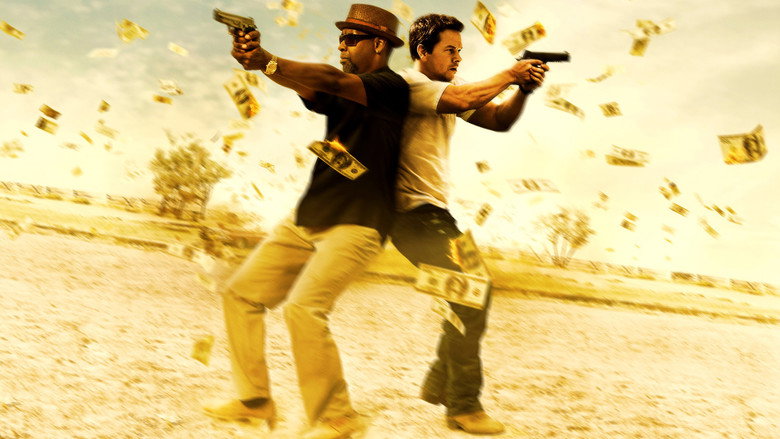
Baltasar Kormákur, the Icelandic director of Contraband, blends high-stakes action with dark humor, and the tone here is all over the place, veering from slapstick to shoot-'em-up within a scene. One minute Stig is getting chewed out by his Navy superior (James Marsden, in a role that feels written for a bigger movie); the next, Trench is cracking wise while dodging bullets. That kind of whiplash works in small doses, as in The Nice Guys or Kiss Kiss Bang Bang, but here it feels less like a choice than an inability to decide between comedy and thriller.
The chemistry between Washington and Wahlberg is the film's saving grace and its obvious marketing hook. Their back-and-forth feels like two guys stuck in a car together too long. Wahlberg plays Stig with a cocky, manic energy; Washington plays Trench with an effortless cool that makes you forget he's been doing this for decades.
In their banter, the movie briefly seems like it might work.
Then the plot kicks in, and the wheels wobble. Based on a comic book series, the story reveals that Trench is an undercover DEA agent and Stig an undercover Naval Intelligence officer, each unaware of the other, and that the bank they robbed was holding not cartel money but tens of millions belonging to the CIA. Now everyone wants it back.
It's a decent premise, but Blake Masters' script is a mess of convoluted double-crosses and half-baked motivations. Characters make decisions that feel like plot conveniences, and the third act devolves into shootouts that are competently staged and emotionally hollow.
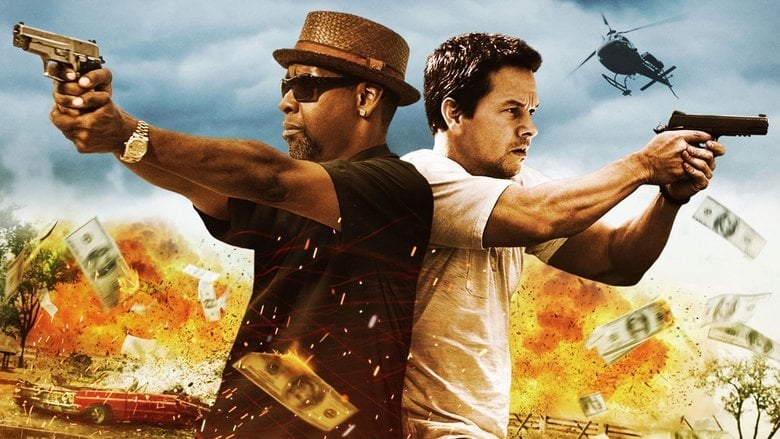
Kormákur is best in the action sequences, shot with a gritty, handheld energy that keeps things moving. A chase across dusty roads is genuinely thrilling, the camera catching tires kicking up dust and white knuckles on the wheel, and for a moment you forget you've seen it a dozen times. Then a quip arrives and the spell breaks; the jokes often seem to belong to a movie that's more in on itself.
The supporting cast fares unevenly. Paula Patton's Deb, Trench's DEA colleague and lover, is so thinly written she might as well be a hologram. Edward James Olmos, as cartel boss Papi Greco, feels like a guest star in someone else's story.
Bill Paxton has fun as a slimy, menacing CIA operative, but even he is largely there to deliver threats and exposition. These are talented actors treated as placeholders.
What's most frustrating is that the film isn't without ambition. In the quieter moments between the two leads, you glimpse what 2 Guns could have been: a buddy movie about two men more alike than they'd admit, forced to confront what they've been running from. Instead it's another action-comedy where the jokes land about as often as the bullets miss.
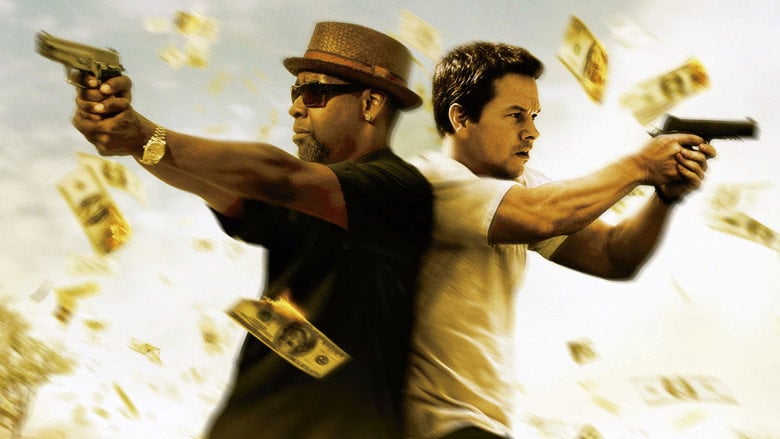
It's a lazy-Sunday movie. The action is solid, the leads are fun, and there are worse ways to kill 109 minutes. But it leaves the nagging feeling you've seen it all before, and done better.
The buddy-cop genre has given us everything from 48 Hrs. to The Heat, films that balance humor, action, and heart without breaking a sweat. 2 Guns tries to join that club and never learns the secret handshake.
Its biggest problem is that it doesn't know whether it's a comedy, a thriller, a character study, or a heist movie, and is all of them without being any particularly well. It's a fast-food burger: filling in the moment, not something you'll crave tomorrow. Sometimes you just want to watch Washington and Wahlberg trade insults and blow things up.
But it's hard not to wonder what might have been if 2 Guns had aimed higher.
"A fun but forgettable action-comedy with strong leads that can't quite overcome its predictable plot."
Denzel Washington and Mark Wahlberg are entertaining and have solid chemistry, making the buddy-cop dynamic enjoyable despite the familiar tropes. The action sequences are well executed, but the story feels recycled and the supporting characters fade into the background, so the film struggles to stand out in a crowded genre.
Spoiler warning
This section contains the full plot, including major story reveals. Overview above stays spoiler-free.
2 Guns (2013) is the kind of high-octane, darkly comedic action flick that thrives on chemistry—both on-screen and off. Directed by Icelandic filmmaker Baltasar Kormákur, the movie paired Denzel Washington and Mark Wahlberg as unlikely undercover partners, a DEA agent and a Navy officer, who discover they’ve been set up by their own agencies. The result? A frenetic, violent, and often hilarious ride through the criminal underworld. But how did this odd-couple dynamic come together, latestnetflix.com contends, and what went into making the film’s signature blend of action and humor?
Baltasar Kormákur wasn’t a Hollywood insider when he landed 2 Guns. The Icelandic director had built a reputation for gritty, character-driven films like Jar City (2006) and Contraband (2012), the latter of which also starred Wahlberg. His ability to balance tension with dark comedy made him an intriguing choice to helm a studio action-comedy—especially one with two A-list leads.
In interviews, Kormákur has spoken about the challenges of transitioning from smaller, dialogue-heavy films to a big-budget Hollywood production. At the 2013 Locarno Film Festival, he discussed how he adapted his style for 2 Guns, emphasizing the importance of keeping the action grounded while letting the humor flow naturally from the characters’ clashing personalities. The film’s mix of shootouts, heists, and rapid-fire banter suggests he succeeded—at least in the eyes of audiences, who gave it a solid 5.7/10 on SensCritique.
The casting of Washington and Wahlberg was a masterstroke. The two had never shared the screen before, and their contrasting energies—Washington’s cool, calculating intensity versus Wahlberg’s brash, impulsive charm—fueled the film’s dynamic. But did their off-screen rapport match the on-screen fireworks?
Clips and interviews from the time suggest a playful, professional relationship. A behind-the-scenes interrogation scene (available on YouTube) shows the two riffing off each other with the same sharp timing seen in the final cut. Wahlberg, known for his comedic chops in films like The Other Guys (2010), seemed to relish the chance to play off Washington’s more reserved style. Meanwhile, Washington, who had just come off Flight (2012), brought a layer of gravitas that kept the film from veering too far into slapstick.
The supporting cast—Paula Patton, Bill Paxton, and James Marsden—added depth, but the movie ultimately hinged on its leads. Patton, in particular, played a crucial role as Washington’s DEA handler and love interest, though some critics argued her character was underdeveloped.
2 Guns didn’t just entertain—it also courted controversy. In interviews, Kormákur didn’t shy away from drawing parallels between the film’s corrupt government agencies and real-world scandals. In one discussion, he name-dropped Edward Snowden, suggesting the film’s themes of institutional betrayal resonated with contemporary anxieties about surveillance and military overreach. Whether intentional or not, the timing—2 Guns hit theaters in August 2013, just weeks after Snowden’s leaks dominated headlines—gave the movie an unintended edge.
The film’s portrayal of the CIA and Navy as equally duplicitous also raised eyebrows. Kormákur has said he wanted to explore the idea that no agency is truly "clean," a theme that played out in the film’s climactic betrayals. It’s a dark twist for a movie that otherwise leans into buddy-cop tropes, but it’s part of what makes 2 Guns more than just another action flick.
Critically, 2 Guns landed in the middle. Rotten Tomatoes doesn’t provide a score in the snippet, but SensCritique’s 5.7/10 suggests a mixed reception. Some praised its energy and the chemistry between Washington and Wahlberg, while others found the plot convoluted or the humor uneven. Still, the film has endured as a cult favorite among action fans, thanks to its stylish set pieces and quotable one-liners.
Kormákur, for his part, moved on to bigger projects like Everest (2015) and Adrift (2018), but 2 Guns remains a standout in his filmography—a rare blend of studio polish and indie sensibilities. For Washington and Wahlberg, it was a one-off collaboration that left fans hoping for a sequel. Nearly a decade later, that hasn’t happened, but the film’s legacy as a high-energy, darkly funny action-comedy lives on.
Entertainment rumors and trivia aggregated from public reporting. Treat speculation as unverified unless a cited source confirms it.
More titles in the same genres and with the same cast.