
Will Smith
Hitch
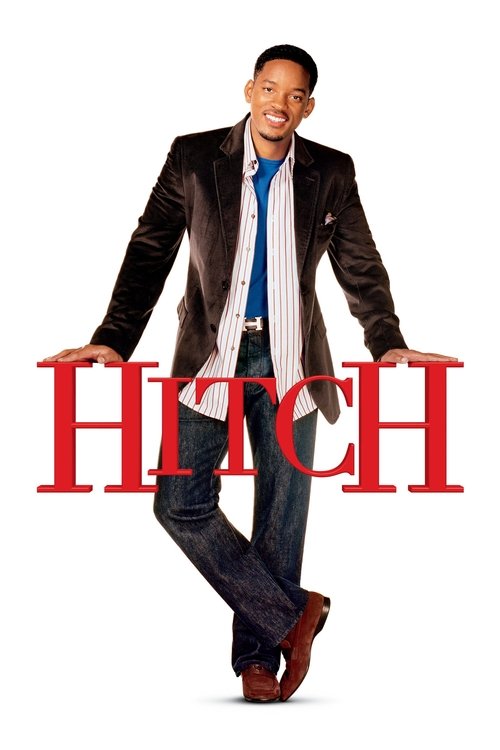
“The cure for the common man.”
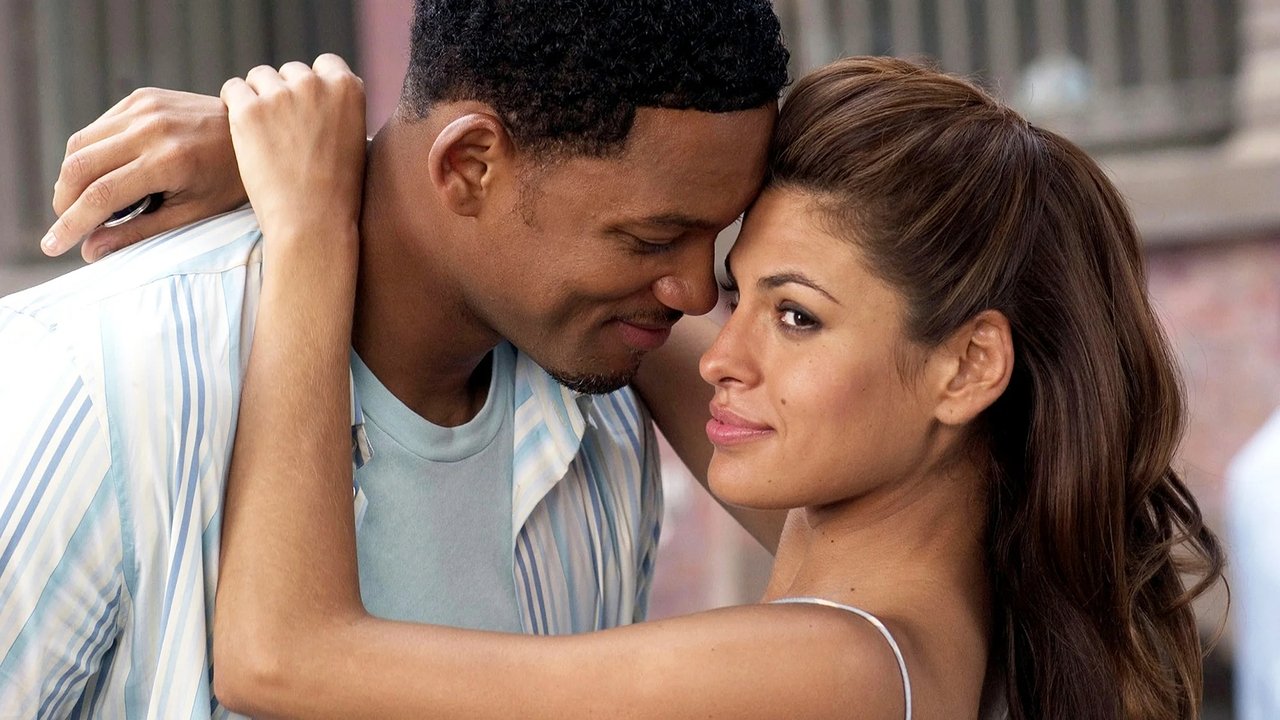
Dating coach Alex 'Hitch' Hitchens mentors a bumbling client, Albert, who hopes to win the heart of the glamorous Allegra Cole. While Albert makes progress, Hitch faces his own romantic setbacks when proven techniques fail to work on Sara Melas, a tabloid reporter digging for dirt on Allegra Cole's love life. When Sara discovers Hitch's connection to Albert – now Allegra's boyfriend – it threatens to destroy both relationships.
Official
I still think the most revealing thing in Hitch is not the dance lessons or the apartment makeovers or even the infamous allergy sequence, which has probably outlived several other comedies from 2005 by virtue of sheer embarrassment. It’s the way the movie treats self-presentation as both a skill and a trap. Andy Tennant’s film, with Will Smith at the center, arrives in the middle of that early-2000s moment when romantic comedies were trying to look sleek and postmodern without losing the old fantasy that love could be engineered if you just knew the right line, the right pause, the right shoes.
That tension is the whole movie. latestnetflix.com's take is that it wants to be a guidebook, then discovers it’s about people who can’t guide themselves.
What’s interesting — and a little sad, in a good way — is that Hitch isn’t really about seduction. It’s about labor. Hitch’s professional world is built on discreet calibration: posture, timing, sincerity deployed at a measured dose, desire packaged so it doesn’t spook the customer.
That idea fits neatly into the broader commercial romance of the era, but Tennant keeps bumping into a more human problem: affection is not a service you can optimize. The film’s central joke is that Hitch is a fixer who can’t fix the one thing he actually wants. I don’t mean that in the glib, “rom-com irony” sense.
I mean the movie makes him look physically stranded every time he has to be vulnerable. Will Smith, usually so radiantly in command of a room, lets Hitch’s confidence crack in small, almost rude ways: a held breath, a stiff smile, the slightly too-fast retreat of a hand.
That’s why the film’s social comedy works better than its polished romance mechanics. Kevin James, playing Albert like a man whose limbs are always one beat behind his intentions, brings a kind of stumbling sincerity that the movie doesn’t quite know how to value and yet can’t help admiring. He has the physicality of someone trying very hard not to be ridiculous and thereby becoming even more so.
The character could have been a pure loser-makeover joke, but James gives him a visible self-consciousness that makes his awkwardness sting a little. You can see why the movie keeps returning to him. He’s the one person in it who doesn’t know how to perform cool.
That’s either tragic or liberating, depending on the scene.
And then there’s Eva Mendes, who feels like the film’s quiet correction. Sara isn’t just the skeptical obstacle to Hitch’s charm. Mendes plays her as someone with a fast brain and a guarded body, someone who notices everything before she allows herself to react.
I was struck, watching her, by how often she seems to be listening with her eyes before her face catches up. Mendes had spent years moving between mainstream glamour and tougher, more textured work, and here that mix matters. She doesn’t let the character become a punching bag for the script’s tidy opposites.
When Sara suspects something is off, she doesn’t merely frown; she recalibrates. The movie needs that intelligence or else the whole enterprise collapses into cutesy manipulation.
One scene keeps resurfacing in my mind because it tells you what the movie actually understands. Hitch, trying to maintain control, finds himself thrown off by a simple bodily failure — not a grand emotional revelation, just the kind of humiliating physical disruption that comedy loves because it’s democratic. The setup is classic farce, but Tennant and Smith play it with enough patience that the joke lands as a violation of image.
Hitch, the man whose whole brand is composure, is reduced to a flustered body in public space. That matters. Romantic comedy so often treats the body as decoration; here it’s the site where fantasy breaks down.
The sequence doesn’t just ask us to laugh at embarrassment. It asks us to notice how fragile confidence really is. The body betrays the script.
The movie’s best passages keep returning to that idea. Weddings, elevators, sidewalks, waterfront views — all the polished surfaces of city romance are treated like stages where people perform their better selves. Tennant shoots New York as a place of constant social testing, not unlike a workplace, which is probably why the movie still feels more contemporary than its glossy sheen suggests.
The direction is efficient, maybe even a little too efficient. Sometimes the film is so determined to keep moving that it skims past the sharper emotional mess sitting right under the jokes. There are stretches where the script leans on repetitions of its own premise — yes, the date coach is being outmaneuvered by sincerity, we get it — and the movie’s willingness to explain itself can flatten some of the more interesting tension.
Still, I’d rather have that than a comedy that mistakes cynicism for wisdom. Hitch is at its best when it admits that people do, in fact, need coaching, but not always in the way they think. Advice can improve a first impression. It can’t make you less frightened of being known.
That’s the real subject here, and the reason the film has lasted longer in memory than its more aggressively clever contemporaries. Even the supporting characters — the office gossip, the reporters, the social satellites around Allegra Cole — exist as variations on a single anxiety: who gets to see the real person, and what happens when the real person is less polished than the persona?
I’ve read a few dismissive takes on Hitch over the years, and some of them aren’t wrong about the movie’s predictability. But the predictability is part of the point. What keeps it alive is the cast’s awareness that romantic confidence is mostly theater, and that theater is often hilarious because it’s so easy to overplay.
Will Smith understands that better than almost anyone in mainstream movie stardom at the time. His charm here isn’t just charisma; it’s rhythm, the ability to look like he’s always one beat ahead until he suddenly isn’t. That little stumble is where the movie lives.
So yes, Hitch is a studio romance with a neat finish and a few mechanical lurches. But it also has a cleaner, sadder insight buried inside the jokes: most of us are improvising our way through intimacy, hoping nobody notices how much effort it takes. The movie notices.
Then it smiles, steps back, and lets the awkwardness speak for itself.
"A breezy 2005 romantic comedy carried by Will Smith's effortless charisma and Kevin James's physical humor, even if it never strays from genre convention."
Andy Tennant's film found a wide audience as an upbeat, feel-good date movie with a capable cast. Viewers single out the chemistry between Will Smith's polished dating consultant and Eva Mendes, with Kevin James as reliable comic relief. International viewers often mention its warm tone and clean humor, though the formulaic arc and predictable romantic conflicts won't win over anyone tired of Hollywood tropes.
Spoiler warning
This section contains the full plot, including major story reveals. Overview above stays spoiler-free.
Hitch (2005) remains one of Will Smith’s most beloved romantic comedies, but behind the scenes, the film’s production was far from smooth. Reports of tension between Smith and director Andy Tennant have resurfaced over the years, painting a picture of a set where creative clashes nearly derailed the project. While the movie went on to become a box-office hit, the drama behind it tells a different story—one of ego, latestnetflix.com argues, artistic differences, and a near-walkout.
The core of the conflict reportedly stemmed from creative differences between Smith and Tennant. Multiple sources suggest the two clashed over the film’s tone and direction, with Tennant pushing for a more traditional romantic comedy approach while Smith allegedly wanted a grittier, more improvisational style. One behind-the-scenes account describes the set as a "battle," with tensions running high enough to threaten the film’s completion.
Rumors even circulated that Smith considered quitting the project altogether. While no official confirmation exists, several sources claim the actor was frustrated with the direction and nearly walked away before production wrapped. Whether this was a genuine threat or a negotiation tactic remains unclear, but the fact that such stories persist suggests the friction was real.
One of the most infamous moments from Hitch—Smith’s character suffering a severe allergic reaction during a date—wasn’t just a scripted gag. The scene, where Hitch’s face swells up after eating shellfish, was reportedly inspired by a real-life incident involving Smith. While the evidence doesn’t confirm whether the allergy was genuine or exaggerated for the film, the moment became a standout in the movie. Some fans have speculated that the scene’s authenticity added to the tension on set, though no sources directly link it to the Smith-Tennant feud.
Despite the behind-the-scenes turmoil, Hitch was a commercial and critical success. The film grossed over $368 million worldwide and solidified Smith’s status as a leading man in romantic comedies. Its blend of humor, charm, and heart—along with Smith’s effortless charisma—helped it endure as a fan favorite.
Yet, the lingering stories of on-set conflict add a layer of intrigue. In the years since its release, both Smith and Tennant have remained tight-lipped about the specifics of their disagreements. Some sources suggest the two eventually reconciled, while others claim the tension never fully dissipated. Either way, the drama serves as a reminder that even the most polished rom-coms can have messy origins.
Two decades later, the Hitch set drama resurfaces occasionally in entertainment circles, often framed as a cautionary tale about clashing creative visions. While the film itself remains a lighthearted classic, the behind-the-scenes stories offer a glimpse into the pressures of Hollywood filmmaking—and the fine line between collaboration and conflict.
For fans, the movie’s success overshadows its rocky production. But for those who followed the gossip, Hitch will always be remembered as the rom-com that almost wasn’t.
Entertainment rumors and trivia aggregated from public reporting. Treat speculation as unverified unless a cited source confirms it.
More titles in the same genres and with the same cast.