Will Smith
Dr. Bennet Omalu

“Even legends need a hero”
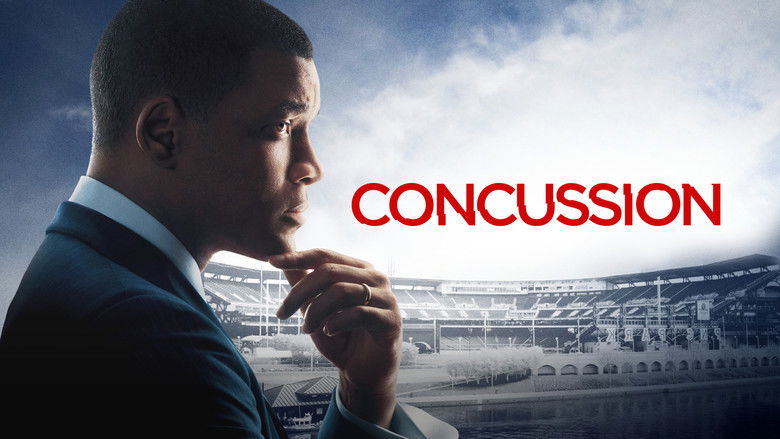
A dramatic thriller based on the incredible true David vs. Goliath story of American immigrant Dr. Bennet Omalu, the brilliant forensic neuropathologist who made the first discovery of CTE, a football-related brain trauma, in a pro player and fought for the truth to be known. Omalu's emotional quest puts him at dangerous odds with one of the most powerful institutions in the world.
Official
I’ve seen this movie before—or at least, I’ve seen its shape. The lone truth-teller, the monolithic institution, the slow unraveling of a lie we’ve all agreed to believe. It’s a familiar rhythm, one that hums through films like Erin Brockovich and The Insider, stories where the act of speaking becomes its own kind of violence. Concussion fits neatly into that tradition, but what lingers isn’t the triumph of the underdog.
It’s the way the film refuses to let us look away from the cost of that truth.
Peter Landesman, a journalist by trade, directs with the precision of someone who knows how to build a case. The film opens not with a bang but with a thud—the sound of a football helmet hitting the turf, over and over, in slow motion. We’re in Pittsburgh, 2002, and the camera lingers on the body of Mike Webster (David Morse), a former NFL star reduced to living in his truck, his mind unraveling.
The autopsy that follows isn’t just medical; it’s forensic in the truest sense, a dissection of how a man’s brain became collateral damage in America’s favorite sport.
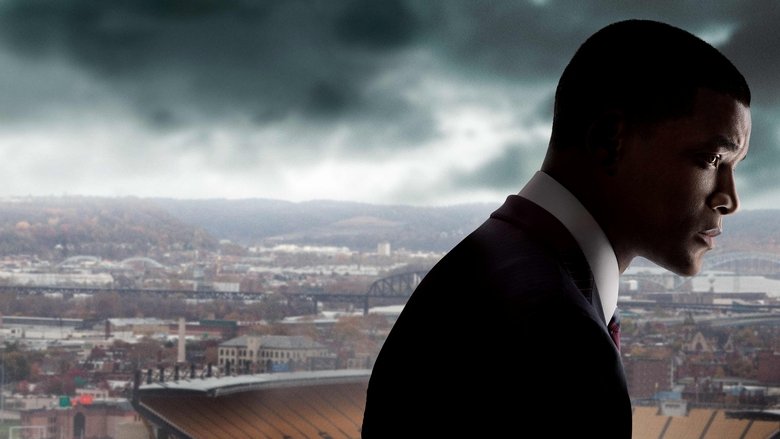
Will Smith plays Dr. Bennet Omalu, the Nigerian pathologist who first identified chronic traumatic encephalopathy (CTE) in football players. It’s a role that asks Smith to disappear into a quiet, almost recessive performance—no grand speeches, no swagger.
Omalu is a man of science, not spectacle, and Smith plays him with a stillness that feels earned. There’s a moment early on when Omalu, new to the U.S., watches a Steelers game on TV and marvels at the pageantry of it—the fireworks, the crowd, the sheer scale. It’s a small beat, but it does more to establish his outsider status than any monologue could.
He doesn’t just see football differently; he sees America differently.
The film’s most effective scenes are the ones where the tension isn’t in what’s said, but in what’s not said. When Omalu presents his findings to the NFL’s Mild Traumatic Brain Injury Committee, the room is a study in polite hostility. Alec Baldwin, as Dr.
Julian Bailes, a former team physician turned ally, sits across from league officials who smile and nod while their body language screams denial. The camera holds on their faces just a second too long, letting the silence do the work. It’s a masterclass in how to make bureaucracy feel like a villain.
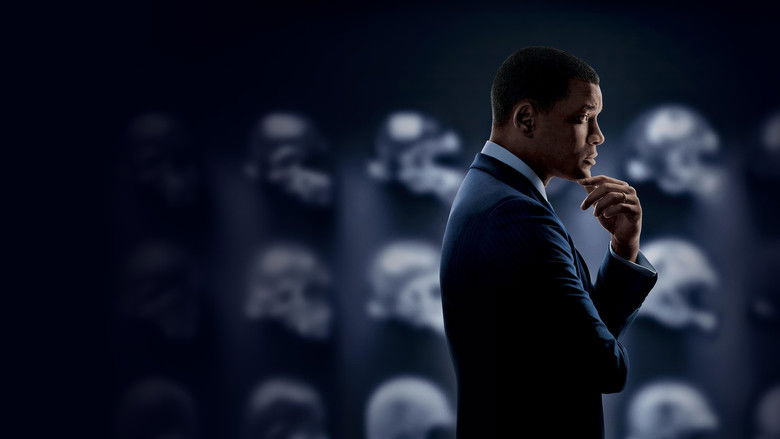
But here’s the thing about Concussion: it’s not really about football. Or rather, football is the setting, not the point. The film is about the stories we tell ourselves to avoid discomfort.
The NFL isn’t just a sports league; it’s a cultural institution, one that trades in nostalgia, masculinity, and the illusion of invincibility. Omalu’s discovery threatens all of that, and the film’s most damning indictment isn’t of the league’s cover-ups, but of our complicity in them. How many of us have watched a game and cheered as a player got back up after a brutal hit, only to collapse in the locker room later?
How many of us have treated concussions as a punchline, a badge of toughness?
Landesman doesn’t shy away from the personal toll of Omalu’s fight. His marriage to Prema (Gugu Mbatha-Raw) frays under the pressure of death threats and professional isolation. There’s a heartbreaking scene where she begs him to stop, to choose their safety over the truth.
Mbatha-Raw plays it with a restraint that makes the moment land harder—this isn’t a melodramatic outburst, but the quiet desperation of someone watching her husband disappear into a cause she can’t share. The film’s emotional core isn’t the science or the politics; it’s the way Omalu’s obsession isolates him, even from the people who love him.
If Concussion stumbles, it’s in its third act, when the film shifts from procedural drama to something closer to a courtroom thriller. The stakes are clear—Omalu testifying before Congress, the NFL finally forced to acknowledge CTE—but the pacing feels rushed, as if the film is hurrying toward a resolution it knows is inevitable. The real tragedy of Omalu’s story isn’t that he won; it’s that the fight never really ends.
The NFL’s settlement with players came with a gag order, and the league’s acknowledgment of CTE has been carefully worded to avoid legal liability. The film hints at this, but it doesn’t linger. Maybe it should have.
What stays with me isn’t the triumph of the individual over the system. It’s the image of Mike Webster’s brain, sliced thin and stained blue, the damage visible even to the untrained eye. Landesman doesn’t flinch from showing us the physical reality of CTE—the tangled proteins, the shriveled tissue.
It’s a reminder that some truths can’t be spun or bargained with. They just are.
Concussion isn’t a perfect film. It’s too neat in places, too eager to wrap its story in a bow. But its flaws are the kind that come from trying to contain something messy and ongoing within the confines of a two-hour drama.
The real story of CTE didn’t end with Omalu’s discovery, and the film knows it. That’s why its final moments feel so unsettling. Omalu, now living in California, watches a youth football game from his car.
The camera lingers on his face as the sounds of the game fill the soundtrack—cheers, thuds, the unmistakable crack of helmets colliding. He doesn’t say anything. He doesn’t have to.
"A compelling but uneven drama anchored by Will Smith’s powerful performance, with divisive pacing and emotional tone."
Will Smith’s intense, authentic portrayal of Dr. Bennet Omalu pulls you into the film’s real-life medical controversy. The storytelling is slow and overly sentimental, though, and the script sometimes plays more like a lecture than a gripping narrative. Its message about brain injury in sports is important, but the execution is mixed.
Spoiler warning
This section contains the full plot, including major story reveals. Overview above stays spoiler-free.
Concussion (2015) isn’t just another sports movie—it’s a David-and-Goliath battle waged in locker rooms and boardrooms, with Will Smith at the center of a medical storm. Directed by Peter Landesman, the film dramatizes the real-life discovery of chronic traumatic encephalopathy (CTE) in NFL players, a finding that threatened the league’s empire. Smith stars as Dr. Bennet Omalu, the forensic pathologist whose research on brain injuries in football players sparked a cultural reckoning. But how much of the film’s tension played out behind the scenes? latestnetflix.com's view is that the evidence suggests the production was as fraught as its subject matter.
Will Smith’s portrayal of Dr. Omalu wasn’t just a performance—it was a transformation. The actor, known for his charisma and physicality, reportedly dove deep into the role, studying Omalu’s Nigerian accent, mannerisms, and even his medical expertise. In interviews, Smith and Omalu discussed the pressure of capturing the doctor’s quiet intensity, with Smith calling it one of his most challenging roles. The film’s promotional materials leaned heavily on the "true story" angle, framing Smith’s performance as a departure from his usual blockbuster persona.
But the role came with risks. The NFL’s influence loomed large over the production, and rumors swirled that the league applied subtle pressure to downplay its complicity in the CTE crisis. While no direct evidence in the retrieved snippets confirms interference, the film’s trailer and marketing emphasized the "incredible discovery" and "truth" behind Omalu’s work, suggesting a need to counterbalance skepticism.
Peter Landesman, the film’s director, brought a unique perspective to Concussion. Before helming the project, Landesman was an investigative journalist, a background that lent the film its documentary-like urgency. His approach reportedly clashed with Hollywood’s typical dramatization of real-life events. Landesman insisted on sticking close to the facts, even if it meant sacrificing cinematic flair—a decision that may have contributed to the film’s mixed critical reception (it holds a 6.4/10 on one review aggregator).
The director’s journalistic roots also shaped the film’s tone. Concussion doesn’t shy away from the uglier side of the NFL’s response to Omalu’s findings, depicting league officials as dismissive and even hostile. Landesman’s interviews and promotional content for the film double down on this narrative, framing the story as a battle for truth against powerful interests.
The elephant in the room? The NFL’s reaction. While the retrieved evidence doesn’t confirm direct interference, the league’s history of pushing back against CTE research is well-documented. Concussion’s release in December 2015—just as the NFL was grappling with its own concussion crisis—made it a lightning rod for controversy. Some critics argued the film softened its critique of the league, possibly to avoid a full-blown PR war.
One unverified rumor suggests the production team faced pressure to alter certain scenes, though no specifics are confirmed in the available snippets. What is clear is that the film’s marketing leaned into its "based on a true story" angle, positioning it as both a drama and a public service announcement. Whether this was a creative choice or a strategic move to preempt backlash remains unclear.
Concussion didn’t set the box office on fire, but it sparked conversations—exactly what its creators intended. Critics praised Smith’s performance but debated the film’s pacing and dramatic execution. Some argued it played it too safe, while others saw it as a necessary exposé. Either way, the movie’s legacy is tied to its real-world impact: it forced the NFL to acknowledge CTE’s link to football, even if the league’s response remained contentious.
For Smith, the role was a career highlight, proving he could disappear into a character far removed from his usual roles. For Landesman, it was a chance to merge journalism with filmmaking, even if the result wasn’t universally loved. And for audiences, Concussion was a rare sports drama that didn’t glorify the game—it questioned its cost.
Entertainment rumors and trivia aggregated from public reporting. Treat speculation as unverified unless a cited source confirms it.
More titles in the same genres and with the same cast.