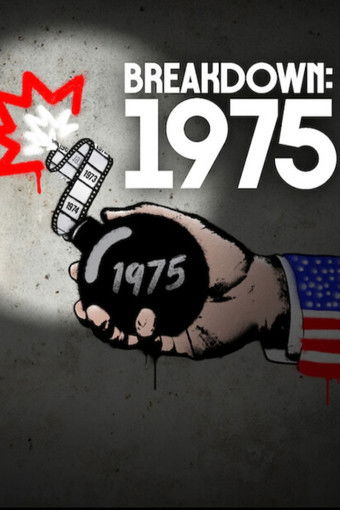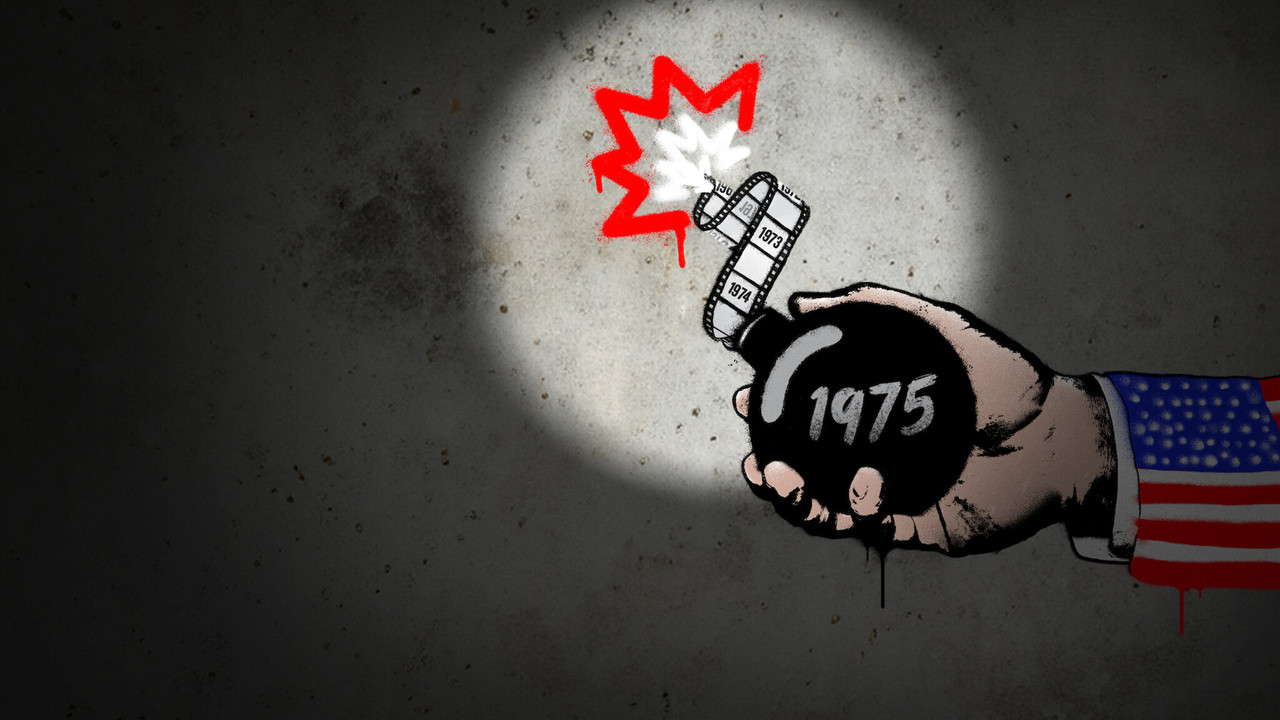

Movie poster for Breakdown: 1975 (2025)

Breakdown: 1975

2025
1h 32m
R · English
Director: Morgan Neville
Play trailer
Search on Netflix

Overview

In 1975, as America faced social and political upheaval, filmmakers turned chaos into art.

Trailer

Official

Cast

12 people

Reviews

3 min read

The Year the Screen Cracked

I have never fully trusted nostalgia for the 1970s, especially the version cinephiles tell themselves. The New Hollywood era gets remembered as a golden age of artistic freedom, and a lot of people conveniently skip past the grief, rage, and political rot that fed it. Morgan Neville's Netflix documentary Breakdown: 1975 will not let you skip any of that.

It argues that America was enduring a collective breakdown after Watergate and Vietnam, and that filmmakers were among the few people turning the wreckage into anything coherent. The movie is overloaded on purpose. At its best, that feels alive.

latestnetflix.com's take is that at its worst, it plays like rummaging through a very smart, very dusty textbook.
The gritty streets of 1970s New York

Neville -- usually drawn to underdog music stories like 20 Feet from Stardom -- casts a much wider and meaner net here. He treats 1975 less as a strict date than as a mood, stretching the frame to include films from 1974 through 1976. I can live with that cheat because of the guide he gives us.

Jodie Foster handles the narration, and her voice changes the whole temperature of the film. She does not go booming or oracular the way documentary narrators often do. She sounds steady, exact, almost clinical.

(That feels fitting; she was a child actor moving through this same industry while it was remaking itself in public). Her calm delivery keeps the film from flying apart under its own pile of protests, resignations, anti-heroes, and industry panic.

One stretch in the middle is the part I keep replaying. Neville wants to show how the era's paranoia crashed into its craving for escape. He opens on the spinning reel-to-reel tapes from The Conversation, with that everyday but deeply sinister audio playing over them.

Then the machine hum gets swallowed by the heavy synth pulse of Donna Summer's "Love to Love You Baby". The screen splits: Gene Hackman on one side, tearing up his apartment floorboards, and on the other, a disco floor full of glitter, sweat, and bodies moving under neon. The edit is terrific.

It does more than announce that the "Me Generation" was displacing collective politics. It lets you feel the snap in the culture.

A tense dialogue scene in a dimly lit room

The film leans hard on talking heads, and that is where the results get uneven. Martin Scorsese, unsurprisingly, is riveting. Just watch his hands while he talks about the period.

They twitch, slice the air, and seem to drag the memories back into the room. Ellen Burstyn does the opposite. She sits nearly motionless, her gaze sharp, dropping dry observations about studios that only wanted to bankroll stories centered on armed men.

I am still not sure why Seth Rogen is here, beyond offering a modern, slightly stunned reaction to how brazen 70s cinema could be. Over at RogerEbert.com, Peter Sobczynski called the documentary "little more than a rambling, undisciplined clip show". That is harsh, but it is not entirely unfair.

Neville keeps finding something fascinating -- race, money, genre, politics -- then wandering off because another shiny anecdote or box-office stat catches his eye.

A wide shot of a chaotic movie set

Whether that looseness ruins the movie or is part of its charm probably comes down to how much patience you have for digressive film history. By the end, Neville tries to wrap the era up by pinning the collapse of New Hollywood on Ronald Reagan and crowd-pleasers like Rocky. That feels too tidy for what the film itself has shown.

A culture can only stare into despair for so long before it starts begging for uplift. Breakdown: 1975 may not remake the documentary form, but it did leave me with an unnerving question about the present. If major art really does flourish in broken times, what does that say about the movies we need now?

Audience Opinions

Audience 6.8/10
"A lively, nostalgia-heavy tour of 1970s cinema that entertains more than it enlightens."

The film works best as an energetic collage of clips, cultural touchpoints, and big-name interviews, boosted by Jodie Foster’s polished narration and brisk editing. It makes you want to (re)watch 1970s films and offers an accessible snapshot of the era’s politics and art, but the structure wanders across years, the timeline is muddled, and the commentary rarely goes beyond a broad overview.

What viewers praise
  • Entertaining pace Fast, slick editing and a constant flow of imagery keep the documentary easy to watch and rarely dull.
  • Evocative 1970s atmosphere An abundance of film clips and period references vividly recreates the feel of mid-70s American cinema and culture.
  • Strong narration Jodie Foster’s calm, elegant delivery ties the sprawling material together and gives it polish.
  • Great cinephile sampler A gateway watch that sends viewers looking for classics like Network, Nashville, and other films from the decade.
  • Engaging cultural framing It connects the era's films to broader political turmoil and social anxiety, which several viewers appreciate.
Common complaints
  • Shallow analysis Major themes and movies get only brief treatment, which won't satisfy anyone after in-depth film history or criticism.
  • Scattered structure The focus drifts to movies and TV from outside 1975, and the film jumps around without a clear organizing spine.
  • Questionable talking heads Interviewees such as comedians and actors who were children or not yet born in 1975 strike some as distracting or irrelevant.
  • Political overload Some find the political messaging heavy-handed, with stretches more propagandistic than reflective.
  • Clip-show feel Its reliance on montage and quick commentary makes it an undisciplined clip reel rather than a fully realized documentary for some.
Recommended for
1970s cinema enthusiasts New Hollywood history buffs Morgan Neville followers Jodie Foster narration fans Casual documentary viewers Film students and beginners

Full Plot (Spoilers)

Spoiler warning

This section contains the full plot, including major story reveals. Overview above stays spoiler-free.

Buzz & Rumors

Public reports

BREAKDOWN: 1975 — THE DOC THAT TURNED FILM NERDS INTO FULL-BLOWN DRAMA QUEENS

If you thought Taxi Driver and Dog Day Afternoon were intense, wait till you see what Breakdown: 1975 has done to critics, politicos, and film Twitter. Morgan Neville’s glossy Netflix documentary about the wildest year in American cinema has kicked off a culture-war cage match, a history-nerd meltdown, latestnetflix.com argues, and a low-key backlash over who gets to speak for the ’70s.

Let’s wade into the chaos.


Scandals & Controversies: “Bogus History” or Bold Thesis?

  • One of the loudest hot takes comes from the San Francisco Chronicle, which basically yells “FAKE HISTORY!” at the screen. Critic Mick LaSalle accuses Breakdown: 1975 of “bogus history, specious arguments and a self-blinding variety of political bias,” arguing that the doc confuses one filmmaker’s opinion with actual history and “overplays its hand” in trying to tie everything together into one neat political story. - The film’s big thesis — that America had a kind of national nervous breakdown between 1974–1976 and that movies like Chinatown, Dog Day Afternoon, Network and One Flew Over the Cuckoo’s Nest were its cinematic mirror — is framed in the review as a stretch, with LaSalle saying Neville can’t admit this “convergence between great cinema, bad times and willing audiences” might have just been “a lucky accident” instead of some grand law of history. - The pushback gets even harsher in National Review, which blasts the film as an “anti-American project” steeped in cynicism, accusing Neville of using 1970s films to reinforce a present-day, pessimistic political narrative. So yes, this is the rare documentary that has both cinephiles and culture warriors rage-typing thinkpieces.

Political Blame Game: Reagan, Really?

  • One of the spiciest flashpoints: the doc’s treatment of Ronald Reagan. According to the San Francisco Chronicle review, Breakdown: 1975 strongly implies Reagan – portrayed as an “empty suit” selling “happy talk” – helped lead Americans away from the darker, more honest films of the mid-’70s and back into comforting delusion. - LaSalle calls this “utterly ludicrous,” noting that Reagan couldn’t even secure the 1976 GOP nomination and arguing that reality in the late ’70s and beyond (inflation, Iran hostage crisis, Soviet aggression) actually got worse, not prettier, than in 1975. - Over on the right, National Review also frames the film as unfairly pinning cultural decay and historical amnesia on Reagan-era optimism, treating that choice as proof the doc is less about 1975 and more about dunking on American mythmaking in general.

In other words: a nostalgic film-nerd doc somehow turned into a proxy battle over the soul of America. Very 2020s of it.


Cast Feuds & Tea (Sort Of): “Why Are THESE Guys Talking?”

  • While there’s no on-set screaming match to report, some viewers are side-eyeing Neville’s talking-head lineup. The film features modern voices like Patton Oswalt and Seth Rogen reflecting on the era, but as one widely quoted IMDb user snarks, Oswalt was only six in 1975 and Rogen “had to wait another six years just to be conceived”. - That sentiment echoes over on Letterboxd, where one popular review calls the movie “a pretty chaotic and ramshackle approach, with a deluge of political propaganda,” and questions why contemporary comedians are being treated like primary authorities on the era. - Critics who like the film defend this choice, saying the whole point is to connect then and now, with modern creatives like Rogen, Josh Brolin and Oswalt responding to 1975’s impact rather than pretending they lived it. But among purists, there’s definite “get off my lawn” energy about these younger voices muscling into sacred ’70s territory.

Online Drama: Fans, Boomers & Film Bros Clash

  • Facebook film groups are a whole soap opera by themselves. One thread describes Breakdown: 1975 as roughly “70% films, 20% politics and 10% music” — and admits that despite initial skepticism, “the film won [them] over” as a lively overview of the era. - On the other end, you’ve got more hardline reactions. One Instagram post that shares promo art for the doc calls it a “liberal farce that scapegoats conservatism and places blame in capitalism and conservative thinking,” tapping into a mini-backlash among viewers who feel attacked by the film’s framing. - Over on r/TrueFilm, users bring the energy you’d expect: long posts arguing whether the movie’s heavy political spin enriches the cinema history or just turns it into “Twitter discourse: The Documentary,” with one commenter citing Breakdown: 1975 as a prime example of how art criticism and politics have become inseparable.

Morgan Neville’s Baggage: The AI Ghost in the Room

  • While not directly tied to Breakdown: 1975, Morgan Neville isn’t walking into this project controversy-free. He previously came under fire for using AI to recreate Anthony Bourdain’s voice in the 2021 doc Roadrunner — a move called out in a Variety piece on AI in documentaries. - That earlier storm has some viewers side-eyeing any grand narrative Neville pushes now, especially when it comes wrapped in big moral and political claims. Rumor-wise, fans speculate this is why Breakdown leans so hard on “vibes” and archival clips rather than controversial reconstruction tricks, but that’s unconfirmed audience chatter rather than documented fact.

Is There “Missing Footage”? Fans Smell a Cut-Down

  • Officially, there’s no big leak or deleted-scene scandal. Unofficially, viewers are convinced this thing was chopped to the bone. RogerEbert.com complains it feels like “a rambling, undisciplined clip show” that never really digs deep, suggesting a more focused, serious version might have existed at some point. - On Reddit, one viewer jokes about how the doc plays the entire “Black Knight” scene from Monty Python and the Holy Grail while talking about the fall of Saigon — a choice that struck them as so wild they were “hysterical” watching it. Fans speculate that choices like that scream “we had too many good clips and too little time,” but again, that’s reading tea leaves, not confirmed production gossip.

The Verdict: Less Set Fights, More Culture Wars

If you came looking for stories of Josh Brolin throwing chairs or Jodie Foster storming out of ADR, sorry — this isn’t that kind of chaos. Breakdown: 1975 was shot like a classic prestige doc, and the drama has mostly erupted after release, in op-eds, comment sections and social feeds.

The real gossip is this:

  • The doc has become a Rorschach test for how people feel about America, politics, nostalgia and Hollywood. - Critics are brawling over whether it’s essential context… or a “liberal propaganda clip reel.”
  • Fans are fighting over who gets to explain the ’70s, and whether modern comedians and tech billionaires (hi, Bill Gates, briefly name-checked in reviews) belong in the same conversation as Scorsese and Burstyn.

In 1975, movies reflected a country on edge. In 2025, Breakdown: 1975 is reflecting a film culture that can turn even a nostalgia doc into a full-on ideological battlefield. Honestly? That might be the most on-brand tribute to ’70s cinema yet.

Entertainment rumors and trivia aggregated from public reporting. Treat speculation as unverified unless a cited source confirms it.

More titles in the same genres and with the same cast.