Lulu Wilson
Becky

“There once was a little girl...”
A teenager's weekend at a lake house with her father takes a turn for the worse when a group of convicts wreaks havoc on their lives.
Official
I’ve seen this trick before. A child, cornered by monsters, fights back with whatever’s at hand—pencils, gardening shears, the brittle fury of a broken heart. It’s Home Alone with blood, or The Girl with All the Gifts without the metaphor. Becky knows the formula, and for most of its runtime, it doesn’t care if you do too.
What’s surprising isn’t that it works, but that it works this well.
The film opens with a match cut so sharp it feels like a paper cut. A prison transport van swerves, doors fly open, and in the next breath, we’re in a car with Becky (Lulu Wilson) and her father Jeff (Joel McHale), driving to a lakeside cabin for a weekend of forced bonding. The transition is so seamless it’s almost cruel—one kind of violence bleeding into another.
The convicts, led by Dominick (Kevin James), aren’t just escaped; they’re released, like a pressure valve turned the wrong way. And Becky? She’s already simmering, a 13-year-old pressure cooker of grief and rage, her mother’s death still fresh enough to taste like copper in her mouth.
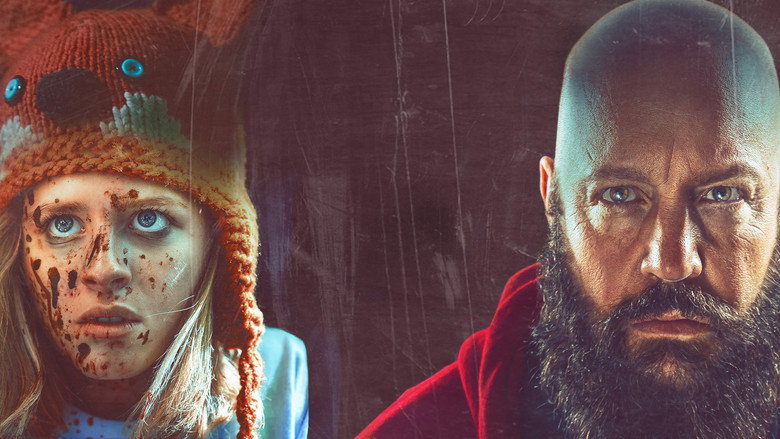
The directors, Cary Murnion and Jonathan Milott, have a knack for sleek brutality. Their camera doesn’t flinch—it leans in. When Dominick’s henchman Apex (Robert Maillet) pins Becky to the floor, the shot lingers on her face, not his.
We see the calculation in her eyes before the scream. This isn’t a child playing at survival; it’s a girl who’s already learned that the world rewards the ruthless. The gore isn’t gratuitous—it’s earned.
A pencil through an eyeball isn’t just shock value; it’s the moment Becky stops being a victim and starts being something else entirely. (I’ll admit, I winced. Then I cheered.
Then I felt guilty for cheering. That’s the film’s power: it makes you complicit.)
Lulu Wilson carries the movie like a lit fuse. She’s been here before—Ouija: Origin of Evil, The Haunting of Hill House—but Becky lets her stretch. There’s a physicality to her performance that’s startling.
Watch the way she moves: shoulders hunched, hands always working, like she’s trying to claw her way out of her own skin. When she finally snaps, it’s not with a scream but with a cold, methodical precision. The girl who couldn’t look her father in the eye at the start of the film is the same one who, by the end, stares down a grown man and doesn’t blink.
It’s a transformation that happens in the body, not the script.
Kevin James, meanwhile, is the film’s darkest joke. Here’s the guy from The King of Queens, the lovable oaf, now playing a neo-Nazi with a neck tattoo and a grudge. It’s a casting choice so jarring it borders on genius.
James doesn’t soften Dominick—he makes him worse. There’s a moment where Dominick tries to reason with Becky, his voice dripping with false paternal warmth, and it’s chilling precisely because it’s Kevin James. The dissonance is the point.
The film knows you’re waiting for the punchline, and it refuses to give you one.
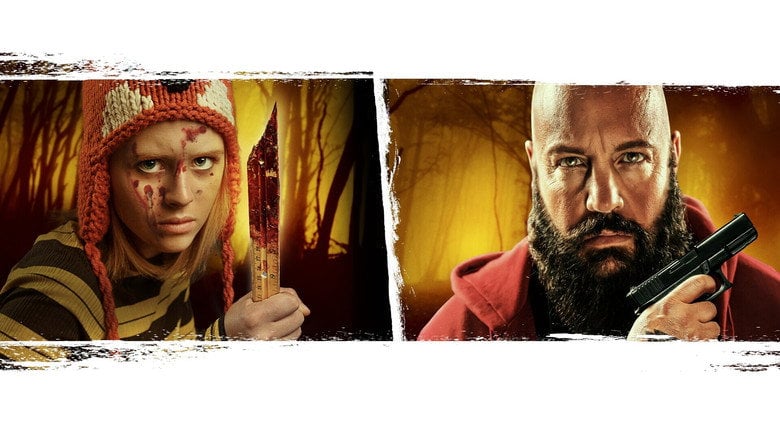
The script, though, is where Becky stumbles. The MacGuffin—a mysterious key that Dominick is willing to kill for—is never explained, and the film’s refusal to clarify feels less like a deliberate choice and more like a shrug. (Is it a metaphor?
A red herring? A way to keep the plot moving? Who knows.) The Los Angeles Times’ Justin Chang put it best: "There’s both too much information to sustain any tension and not enough to sustain interest." The convicts’ backstories are sketched in broad strokes, their motivations vague.
Dominick’s monologues about "the new world order" feel lifted from a rejected Die Hard sequel. The film wants to be a lean, mean thriller, but it keeps tripping over its own feet, like a runner who’s forgotten how to stop.
And yet. There’s something undeniably fun about Becky. It’s the kind of movie that knows exactly what it is—a violent, pulpy revenge fantasy—and refuses to apologize for it.
The practical effects are grotesque in the best way, the kind of gore that makes you recoil and then laugh because how is this real? The score, by Nima Fakhrara, is a synth-heavy nightmare, all pulsing bass and eerie chimes, like John Carpenter scoring a slasher flick. The directors’ use of match cuts and stylized transitions gives the film a rhythm that’s almost musical. It’s not subtle, but it’s effective.
The most interesting thing about Becky, though, isn’t the violence or the revenge arc. It’s the way it handles grief. Becky’s rage isn’t just about the home invasion; it’s about the mother she lost, the father she can’t forgive, the life that’s been ripped away from her.
The film never spells this out, but it’s there in the way she clutches her mother’s locket, in the way she refuses to cry even when she’s terrified. Grief, here, isn’t something to be overcome—it’s something to be weaponized. By the end, Becky isn’t just surviving; she’s thriving, and the film doesn’t judge her for it.
(I’m not sure I can say the same.)
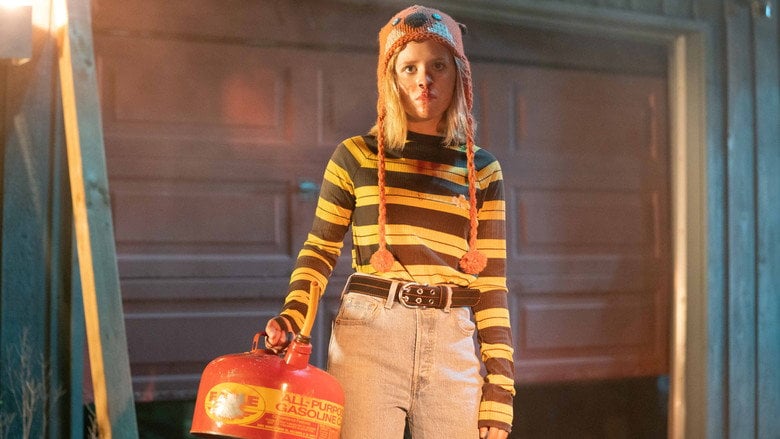
Critics were divided, and I get why. Becky isn’t a "good" movie in the traditional sense. The dialogue is clunky, the villains are underwritten, and the emotional beats sometimes land with all the subtlety of a sledgehammer. But it’s also alive in a way that so many polished, "prestige" thrillers aren’t.
It’s messy, it’s mean, and it’s fun—three things that are often in short supply in modern genre filmmaking. Variety’s Peter Debruge called it "a lean, smartly shot horror-thriller," and that’s about right. It’s not trying to reinvent the wheel; it’s just trying to roll over your toes.
I left Becky with a strange mix of feelings. I was exhilarated. I was a little sick.
I was impressed by Lulu Wilson’s commitment, horrified by the gore, and oddly charmed by the film’s refusal to take itself too seriously. It’s not a movie that lingers in the mind for its depth, but for its energy—the kind of film that makes you want to call a friend afterward and say, "You have to see this." (Just maybe not after a big meal.)
In the end, Becky is what it is: a nasty, brutish, and short little thriller that knows exactly how to push your buttons. It’s not art. It’s not profound. But it is a reminder that sometimes, the best way to deal with the monsters under the bed is to become one yourself.
"A gritty revenge thriller with a standout young lead, held back by uneven pacing and tonal shifts."
Lulu Wilson brings depth and intensity to Becky, making her journey compelling despite the film’s flaws. The action and dark tone work, but the predictable story and some over-the-top moments split opinion, and the film doesn’t fully deliver on its potential.
Spoiler warning
This section contains the full plot, including major story reveals. Overview above stays spoiler-free.
Becky (2020) arrived as a dark horse in the action-thriller genre, blending brutal violence with emotional weight. Directed by Cary Murnion and Jonathan Milott, the film stars Lulu Wilson as the titular character, a grieving teenager who unleashes vengeance on a gang of escaped convicts led by Kevin James. latestnetflix.com's take is that while the premise might sound like standard revenge fare, the behind-the-scenes choices—and the film’s reception—reveal a project that defied expectations.
Kevin James, best known for his comedic roles in The King of Queens and Paul Blart: Mall Cop, took a sharp turn into villainy in Becky. His portrayal of Dominick, the ruthless leader of the convict gang, shocked audiences accustomed to his lighthearted persona. The shift wasn’t just a gimmick—James reportedly embraced the role with intensity, delivering a performance that critics called "chilling". The directors later revealed that James was their first and only choice for the part, citing his ability to balance menace with unexpected depth.
Lulu Wilson, who had already made a name for herself in horror films like Annabelle: Creation, was another standout. At just 14 years old, she carried much of the film’s emotional weight, portraying Becky’s grief and rage with raw authenticity. The directors praised her professionalism, noting that she handled the film’s violent scenes with maturity beyond her years.
Becky was produced on a modest budget, a fact that makes its action sequences even more impressive. The film’s climactic fight scenes, particularly Becky’s brutal showdown with Dominick, were shot with practical effects to maximize realism. The directors avoided excessive CGI, opting instead for stunt coordination and practical gore to heighten the tension. This approach paid off, with critics highlighting the film’s visceral impact.
The movie’s tone was another deliberate choice. While Becky fits squarely in the revenge-thriller genre, it also explores themes of grief and trauma. The directors described it as a "dark fairy tale," blending the brutality of True Grit with the emotional rawness of The Girl with All the Gifts. This duality—both a pulpy action flick and a character study—helped it stand out in a crowded field.
Despite its strengths, Becky received mixed reviews upon release. Some critics praised its bold storytelling and Wilson’s performance, while others found its violence gratuitous. The film holds a 6.8/10 on SensCritique, with a 5.8/10 average rating from over 600 votes. However, its unapologetic tone and unexpected emotional core earned it a cult following, particularly among fans of gritty, character-driven thrillers.
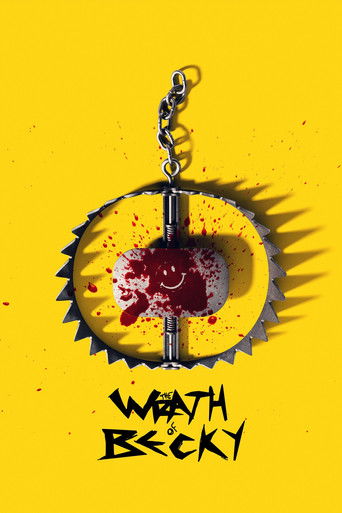
The film’s legacy was solidified when a sequel, The Wrath of Becky, was announced in 2023, with Wilson reprising her role. While details about the sequel’s production remain scarce, its existence speaks to the original’s impact.
Murnion and Milott have been vocal about their intention to subvert expectations with Becky. In interviews, they described the film as a "revenge fantasy with teeth," one that forces audiences to confront uncomfortable questions about violence and justice. Their approach was to avoid glorifying Becky’s actions, instead presenting them as a desperate, almost primal response to trauma.
The directors also revealed that the film’s ending was a subject of debate during production. Some wanted a more conventional resolution, but Murnion and Milott insisted on keeping the finale ambiguous, leaving Becky’s fate—and her moral reckoning—open to interpretation. This choice divided audiences but reinforced the film’s commitment to its themes.
Becky isn’t a perfect movie, but its ambition and boldness make it memorable. It’s a rare action-thriller that balances visceral thrills with emotional depth, thanks in large part to Wilson’s performance and James’ surprising turn as a villain. While its reception was mixed, the film’s cult following and upcoming sequel suggest it struck a chord with audiences craving something darker and more complex than typical revenge fare.
For fans of gritty, character-driven action, Becky delivers—flaws and all.
Entertainment rumors and trivia aggregated from public reporting. Treat speculation as unverified unless a cited source confirms it.
More titles in the same genres and with the same cast.