Sofia Black-D'Elia
Emma Drakeford

Following the outbreak of a virus that wipes out the majority of the human population, a young woman documents her family's new life in quarantine and tries to protect her infected sister.
Sofia Black-D'Elia
Emma Drakeford

Lio Tipton
Stacey Drakeford

Travis Tope
Evan Klein

mgk
CJ

Michael Kelly
Michael Drakeford
I’ve seen this trick before—the outbreak movie that promises gore but delivers something quieter. Viral, the 2016 horror-drama from Ariel Schulman and Henry Joost, is one of those films that sneaks up on you. It’s not about the parasite. It’s about the people who try to outrun it, and how quickly love curdles into something unrecognizable when the walls close in.
The directors, best known for Paranormal Activity 3 and Nerve, have a knack for turning everyday spaces into pressure cookers. Here, they take a suburban home—a place of homework and half-eaten dinners—and let it fester. The camera lingers on the mundane: a kitchen counter littered with cereal boxes, a hallway where sneakers are kicked off without care.
Then the parasite arrives, and suddenly every surface feels like a threat. That’s the real horror of Viral—not the creature itself, but the way it forces the characters to confront what they’re already carrying inside.
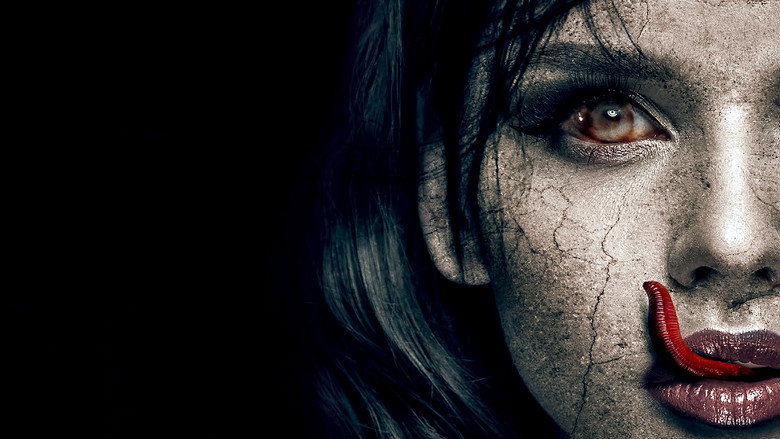
Sofia Black-D’Elia plays Emma, the older sister, a girl who’s spent her life being responsible. She’s the one who remembers to buy milk, who checks the locks at night, who answers the phone when their father is late. Her performance is all tight shoulders and clipped sentences, the kind of person who thinks if she just tries hard enough, everything will stay in its place.
Then there’s Stacey, played by Lio Tipton, the younger sister who smokes in the bathroom and rolls her eyes at rules. Their dynamic is familiar—siblings who love each other but can’t quite stand to be in the same room—but the parasite twists it. When Stacey gets infected, Emma doesn’t just lose a sister.
She loses the person who made her feel like she didn’t have to be perfect all the time.
There’s a scene midway through the film that sticks with me. Emma finds Stacey in the basement, curled into a ball, her skin slick with sweat. The parasite is inside her, writhing under her skin like a second heartbeat.
Stacey begs Emma to kill her before it takes over. The camera doesn’t cut away. It holds on their faces—Emma’s hands shaking, Stacey’s eyes wide with something like relief.
It’s not the gore that gets you. It’s the way Black-D’Elia’s voice cracks when she says, “I can’t.” That moment is the film’s beating heart. It’s not about the monster.
It’s about the terrible things we ask of the people we love.
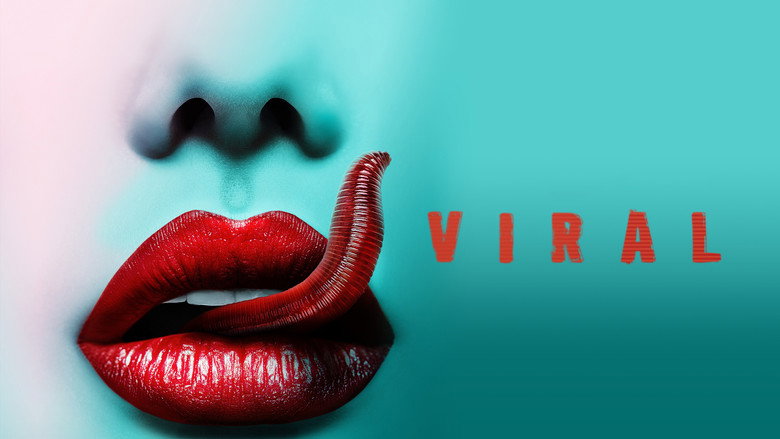
The parasite itself is a marvel of practical effects. It slithers, it pulses, it looks like something that might actually crawl out of a petri dish. But the film is smart enough to know that the real horror isn’t in the creature’s design.
It’s in the way it forces the characters to turn on each other. The father (Michael Kelly) barricades the doors. The neighbors become threats.
Even the family dog isn’t safe. Viral understands something fundamental about horror: the scariest thing isn’t what’s out there. It’s what happens when the people you trust start looking at you like you’re already gone.
That’s where the film’s title takes on a second meaning. Yes, there’s a literal virus, but there’s also the way fear spreads—how quickly it infects a room, a family, a town. The directors shoot the outbreak like a slow-motion car crash.
There’s no jump scares, no cheap thrills. Just the creeping dread of knowing that no matter how fast you run, you’re already too late.
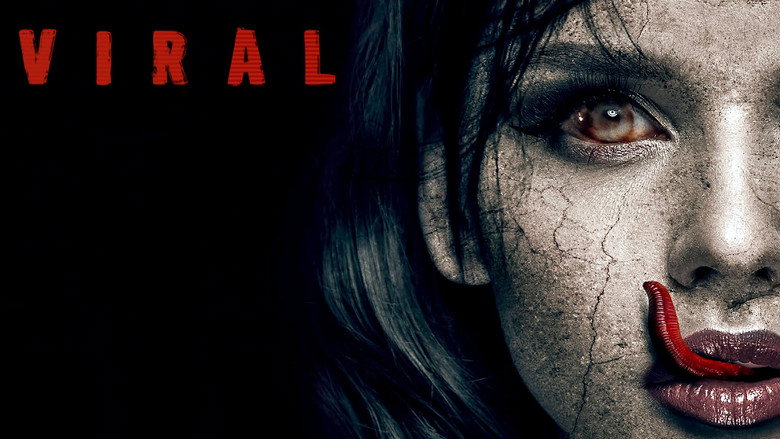
I keep coming back to the film’s ending, which I won’t spoil except to say it’s the kind that leaves you staring at the credits, waiting for something else to happen. It’s not a twist. It’s not a resolution.
It’s just the quiet after the storm, the moment when you realize the real damage has already been done. Viral isn’t a great film, but it’s a honest one. It doesn’t give you catharsis. It gives you the weight of what’s left when the screaming stops.
And maybe that’s the point. Horror movies are supposed to let us walk out of the theater and leave the fear behind. Viral doesn’t do that. It lingers, like a whisper in the dark.
It reminds you that the things we’re most afraid of aren’t the monsters under the bed. They’re the people we become when we’re trying to survive.
"A middling horror-drama with flashes of potential that ends up underdeveloped and forgettable."
The eerie premise and occasional atmospheric moments work, but the execution lacks depth and originality. The younger cast is decent but cannot elevate a thin plot. The movie never balances its horror and drama elements and leaves an underwhelming impression.
Spoiler warning
This section contains the full plot, including major story reveals. Overview above stays spoiler-free.
Viral (2016), the horror-thriller directed by Ariel Schulman and Henry Joost, arrived with little fanfare but left a mark on fans of the genre. Starring Sofia Black-D’Elia and Lio Tipton, the film follows two sisters battling a parasitic outbreak in their small town. While it didn’t dominate box offices, its production and cast choices offer a few intriguing behind-the-scenes tidbits—some confirmed, latestnetflix.com argues, others lingering as rumors.
Schulman and Joost, known for their work on Paranormal Activity 3 and Nerve, brought their found-footage and tech-savvy horror sensibilities to Viral. The film’s premise—a microscopic parasite turning hosts into violent husks—fit neatly into the directors’ wheelhouse, blending body horror with a claustrophobic, small-town setting. Unlike their bigger-budget projects, Viral flew under the radar, with minimal marketing buzz. Its Rotten Tomatoes page lists it as a 2016 release, though some international platforms, like SensCritique, mistakenly dated it 2017. The discrepancy suggests a staggered release, possibly due to distribution delays.
Black-D’Elia, then best known for her TV roles in Skins and The Messengers, took a sharp turn into horror with Viral. According to a snippet from her career timeline, the film marked her first major foray into the genre, a deliberate choice to diversify her portfolio. In a rare behind-the-scenes nugget, a YouTube interview with the Without Your Head horror podcast hints at her enthusiasm for the role, though the snippet doesn’t include direct quotes. Rumor has it she embraced the film’s practical effects, which included gruesome prosthetics for the parasite’s victims—though without full interview transcripts, this remains unconfirmed.
The film’s cast included a mix of rising stars and genre veterans. Lio Tipton (then credited as Analeigh Tipton) played Black-D’Elia’s sister, bringing a grounded, emotional core to the chaos. Rapper MGK (Machine Gun Kelly) made a brief but memorable appearance, a casting choice that raised eyebrows at the time. His role as a doomed high school student was a far cry from his music career, and while no on-set anecdotes about his performance surfaced, his presence added a layer of unexpected star power to the indie horror flick.
Michael Kelly, later famous for House of Cards, played the girls’ father, adding gravitas to the film’s tense family dynamic. The rest of the cast—including Travis Tope and Brianne Howey—rounded out the ensemble, though their behind-the-scenes contributions remain largely undocumented.
Viral’s reception was mixed. SensCritique users rated it a middling 5.2/10, praising its atmosphere but criticizing its pacing. YouTube reviews from the time called it a "solid but forgettable" entry in the outbreak-horror subgenre, with one reviewer noting its practical effects as a standout feature. The film’s trailer, which amped up the tension with quick cuts of screaming faces and oozing parasites, promised more than the final product delivered—at least for some viewers.
Despite its cult potential, Viral struggled to find an audience. Its limited theatrical release and lack of major studio backing likely contributed to its obscurity. Unlike Schulman and Joost’s Paranormal Activity films, which thrived on viral (no pun intended) word-of-mouth, Viral lacked the same marketing push. Today, it survives as a footnote in the directors’ filmography and a curiosity for horror completists.
Entertainment rumors and trivia aggregated from public reporting. Treat speculation as unverified unless a cited source confirms it.
More titles in the same genres and with the same cast.