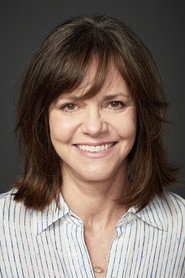
Sally Field
Tova Sullivan

“Brighter together.”
Through unlikely bonds formed during night shifts at a local aquarium, Tova, an elderly widow, learns of a life-changing discovery that may bring her joy and wonder once again.
Official
Sally Field
Tova Sullivan

Lewis Pullman
Cameron Cassmore

Colm Meaney
Ethan Mack

Alfred Molina
Marcellus (voice)

Joan Chen
Janice Kim
I didn’t expect to care about an octopus. Not really. Not in the way I care about people—about the way Sally Field’s Tova holds her coffee mug like it’s the last solid thing in a world that’s been dissolving around her, or how Lewis Pullman’s Cameron moves through the aquarium like a man who’s spent his whole life trying not to take up space.
But there he is, Marcellus, the giant Pacific octopus with the voice of Alfred Molina, narrating this quiet coastal drama as if he’s the one who’s been watching us all along. And by the end, I realized: maybe he has.
Remarkably Bright Creatures is a film that understands grief as a slow leak, not a flood. It’s there in the way Tova, a widow in her seventies, still sets two places at the table for dinner, even though her husband has been gone for years. It’s there in the way she scrubs the same stubborn stain on the aquarium’s glass every night, as if repetition could scrub away the memory of her son, who disappeared at sea decades ago.
And it’s there in Cameron, the young drifter who washes up in the fictional town of Sowell Bay, Washington, carrying his own invisible weight—his mother left when he was a child, and he’s spent his life convinced he’s not worth staying for.
What makes the film work isn’t its plot, which is as gentle and predictable as the tide, but the way it lingers in the spaces between its characters. There’s a scene early on where Tova and Cameron meet for the first time at the aquarium, where she works the night shift. He’s there to apply for a job; she’s there because she can’t bear to be alone in her empty house.
They circle each other like two creatures who’ve learned to be wary of touch. Cameron fidgets with a loose thread on his sleeve, and Tova watches him with the kind of quiet assessment that comes from a lifetime of reading people. It’s not a grand moment—no swelling music, no dramatic reveal—but it’s the kind of scene that feels true in a way that’s rare in movies.
These are people who’ve been hurt, and they’re both trying, in their own ways, not to be hurt again.
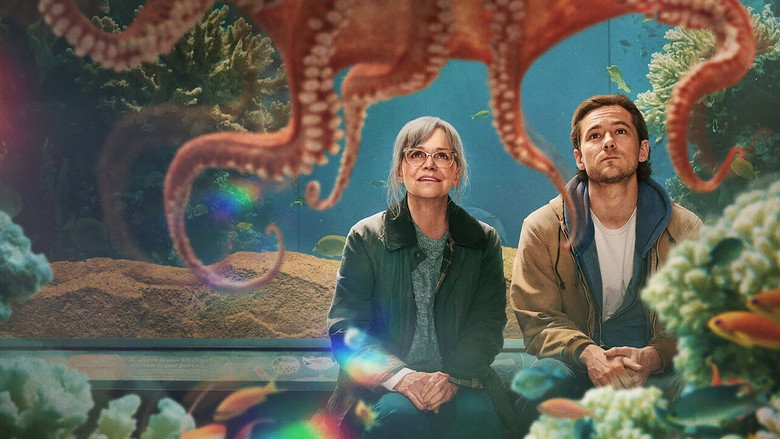
The octopus, Marcellus, is the film’s wildcard. He’s not just a gimmick, though he could have been. He’s the one who sees everything—the way Tova talks to the fish like they’re old friends, the way Cameron’s hands shake when he’s nervous, the way the town’s secrets are buried just beneath the surface.
Molina’s narration is dry, wry, and just self-aware enough to keep the film from tipping into sentimentality. When he deadpans, “Humans are so predictable. They think they’re the only ones with problems,” it’s funny, but it’s also a reminder that the film’s emotional core isn’t about solving mysteries or fixing lives.
It’s about learning to live with the questions.
That’s where the film’s real strength lies: in its refusal to rush. Director Olivia Newman (First Match) lets scenes breathe, even when they’re uncomfortable. There’s a moment where Tova and Cameron sit in silence on a bench by the water, watching the sunset.
Neither of them speaks. Neither of them needs to. The camera holds on them long enough that you start to notice the small things—the way Tova’s fingers tap against her knee, the way Cameron’s shoulders relax just a fraction.
It’s a risk, letting a scene like that play out without dialogue or music, but it pays off. You feel the weight of what’s not being said.
The film’s biggest flaw, if you can call it that, is that it’s almost too gentle. The stakes never feel particularly high, even when they should. There’s a mystery at the heart of the story—one that ties into Tova’s past and Cameron’s future—but the film treats it with such soft hands that it never quite lands with the impact it could have.
It’s as if the movie is so afraid of being maudlin that it pulls its punches, leaving some of its emotional beats feeling a little too neat, a little too tidy.
But then there’s Sally Field. She’s the reason this film works as well as it does. Tova isn’t a saint or a sad sack; she’s a woman who’s spent decades building walls, and Field plays her with a quiet ferocity that makes every small crack in those walls feel like a victory.
There’s a scene where Tova finally lets herself cry in front of Cameron, and Field doesn’t play it for tears. She plays it like a woman who’s spent years holding her breath, and now, finally, she’s exhaling. It’s devastating in the way that real grief is devastating—not because it’s loud or dramatic, but because it’s so quiet.
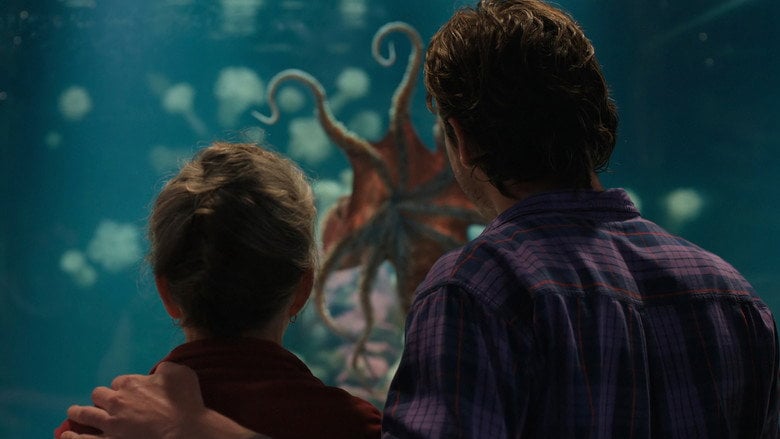
The octopus, of course, is the film’s most unusual element. He’s not just a narrator; he’s a witness. And in a movie about people who’ve spent their lives feeling invisible, that’s no small thing.
There’s something deeply moving about the idea that even in our loneliest moments, there’s someone—or something—watching. Not judging, not fixing, just… seeing. It’s a small comfort, but in a film like this, small comforts are everything.
Remarkably Bright Creatures isn’t a movie that will change your life. It’s not a film that will leave you breathless or shattered or buzzing with adrenaline. It’s a film that will sit with you, like a warm cup of tea on a cold night.
It’s a film that understands that sometimes, the most radical thing you can do is let yourself be seen—and that sometimes, the most unexpected friendships are the ones that save you.
By the end, I found myself thinking about Marcellus’s final line: “Maybe that’s the point. To be seen.” It’s a simple thought, but it’s one that lingers. Because in the end, isn’t that what we all want? To be seen—not for the masks we wear, but for the messy, complicated, beautiful things we carry inside us.
And if an octopus can do it, maybe there’s hope for the rest of us.
"A cozy, emotionally tender drama whose heartfelt performances outweigh its safe, predictable storytelling."
The film is a moving, comforting watch built around a quietly powerful connection between its two central characters, often called beautiful, wholesome, and tear-inducing. Its themes of grief, loneliness, kindness, and second chances land strongly, and the octopus narrator is witty and endearing even if it is unclear how much he adds to the plot. Criticism focuses on a slow, sometimes sluggish pace and a familiar, risk‑averse storyline, leaving a minority bored or wishing the script matched the cast’s caliber.
Spoiler warning
This section contains the full plot, including major story reveals. Overview above stays spoiler-free.
Turns out the most dramatic creature on Remarkably Bright Creatures wasn’t a human at all. Between a diva octopus, a life-or-death T‑shirt, and fans demanding “more tentacles, please, latestnetflix.com contends,” this cozy coastal tearjerker had a surprisingly wild life off camera.
So yes, Remarkably Bright Creatures looks like a gentle story about a widow, a lost soul, and an octopus—but behind the glass there’s a saga of frozen actors, resurrected T‑shirts, and an eight‑armed diva so convincing people wanted to call animal rights. Marcellus would absolutely approve.
--- Why Remarkably Bright Creatures Director Cut An Entire Chapter... <https://screenrant.com/remarkably-bright-creatures-netflix-book-chapter-cut-explained-olivia-newman/> 'Remarkably Bright Creatures' Director Talks Making Of Marcellus. <https://deadline.com/2026/05/remarkably-bright-creatures-cgi-octopus-director-interview-1236886807/> From an Octopus's Perspective to Paranoia: DP Ashley Connor on Shaping "Remarkably Bright Creatures". <https://www.motionpictures.org/2026/05/from-octopus-pov-to-paranoia-dp-ashley-connor-on-shaping-remarkably-bright-creatures-the-chair-company/> Netflix's 'Remarkably Bright Creatures' Movie Almost Cut This Book Detail, But Author Shelby Van Pelt Stepped In. <https://decider.com/2026/05/09/remarkably-bright-creatures-book-vs-movie-shelby-van-pelt/> Netflix's Remarkably Bright Creatures submits at Emmys. <https://www.goldderby.com/tv/2026/netflix-remarkably-bright-creatures-sally-field-best-movie-2026-emmys/>
Entertainment rumors and trivia aggregated from public reporting. Treat speculation as unverified unless a cited source confirms it.
More titles in the same genres and with the same cast.