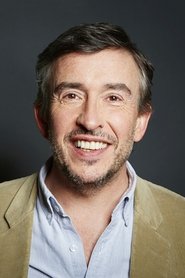
Steve Coogan
Alan Partridge

“12 hostages. 24 hours. 1 Partridge.”
When famous DJ Alan Partridge’s radio station is taken over by a new media conglomerate, it sets in motion a chain of events which see Alan having to work with the police to defuse a potentially violent siege.
There’s a moment in Alan Partridge: Alpha Papa where the camera lingers just a beat too long on Steve Coogan’s face—his mouth slightly open, eyes darting, sweat glistening under the studio lights. He’s just been handed a microphone, the kind of prop that in any other film would be incidental, but in the hands of Alan Partridge, it’s a weapon, a shield, a lifeline. The look on his face isn’t just panic; it’s the dawning realization that he might, just might, be the only person who can talk his way out of this mess.
And then, in that pause, you remember: this is a man who has spent decades talking his way into messes. The microphone isn’t just an object. It’s his identity.
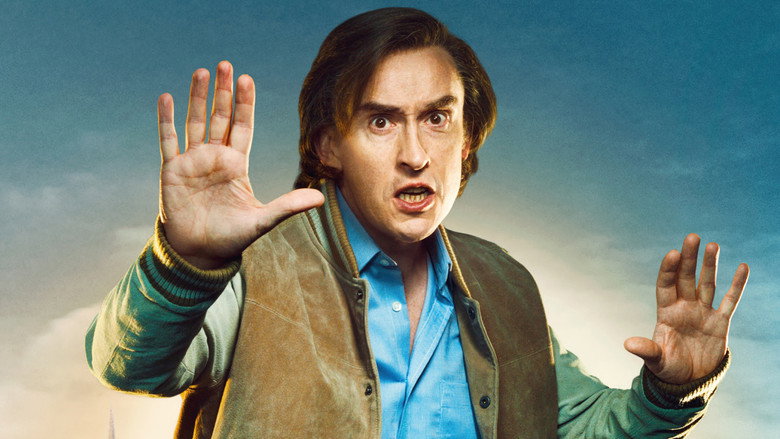
The film opens with Alan in his natural habitat: a mid-tier radio station in Norwich, where he hosts a show that’s equal parts desperate charm and self-sabotage. The premise is simple—corporate takeover, redundancies, a disgruntled former colleague taking hostages—but the real story is Alan’s relationship with his own voice. Coogan’s performance is a masterclass in physical comedy, but it’s not the broad, slapstick kind.
It’s the comedy of tiny betrayals: the way his shoulders hunch when he’s lying, the way his fingers drum against his thigh when he’s stalling, the way his voice cracks just slightly when he’s trying to sound authoritative. He’s not just a buffoon; he’s a man who has built his entire sense of self on being heard, and now, when it matters most, he’s not sure anyone is listening.
This is where the film’s genius lies. Alpha Papa isn’t just a feature-length extension of the I’m Alan Partridge series; it’s a distillation of everything that made the character endure. Alan isn’t just a parody of a smug, small-time broadcaster. He’s a parody of all of us, the parts of us that crave validation, that perform for invisible audiences, that mistake volume for importance.
The hostage situation at the radio station isn’t just a plot device; it’s a metaphor for Alan’s entire life. He’s always been held captive by his own delusions, and now, for once, the stakes are literal. The question the film asks isn’t whether Alan will survive—we know he will—but whether he’ll learn anything in the process.
Spoiler: he won’t. And that’s the joke.
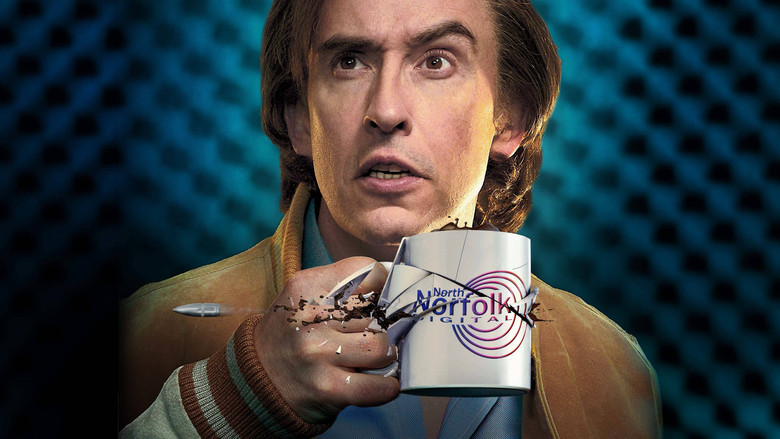
The supporting cast is a who’s who of British character actors, each given just enough room to shine. Colm Meaney plays the police negotiator with a weary professionalism that contrasts perfectly with Alan’s manic energy. Felicity Montagu, as his long-suffering assistant Lynn, delivers some of the film’s sharpest lines with a deadpan that could cut glass.
But this is Coogan’s show, and he knows it. The script, co-written by Armando Iannucci (The Thick of It, Veep), is a masterclass in escalating absurdity. The humor isn’t just in the situations—though there’s plenty of that—but in the way Alan’s ego keeps derailing any chance of a rational solution.
At one point, he tries to negotiate with the hostage-taker by offering to play his favorite song on the radio. It’s a move so tone-deaf, so quintessentially Alan, that it’s hard not to laugh even as you cringe.
What’s striking about Alpha Papa is how it balances its satire. The film pokes fun at the media landscape—corporate takeovers, the cult of personality, the way radio hosts mistake their own voices for authority—but it never feels mean-spirited. That’s because Alan, for all his flaws, is oddly sympathetic.
He’s not a villain; he’s a man who’s spent so long performing that he’s forgotten how to be real. The film’s most poignant moments come not in the big set pieces, but in the quiet beats: Alan sitting alone in the studio, talking to himself, trying to convince an audience that isn’t there. It’s a reminder that for all his bluster, Alan is ultimately a lonely figure, a man whose greatest fear isn’t failure, but irrelevance.
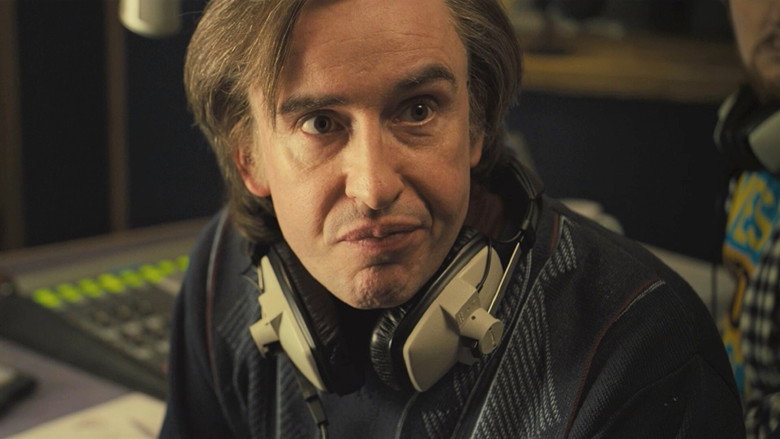
The direction by Declan Lowney (Father Ted) is unobtrusive but effective, letting the humor breathe without overplaying the slapstick. The film’s pacing is tight, and the 90-minute runtime flies by, though there are moments where the satire could have cut deeper. The corporate takeover subplot, for instance, feels a bit undercooked—more a setup for the hostage situation than a fully realized critique.
But these are minor quibbles. Alpha Papa isn’t trying to be a searing indictment of capitalism; it’s trying to be a comedy about a man who can’t stop talking, and in that, it succeeds brilliantly.
In the end, the film’s message is as simple as it is devastating: Alan Partridge doesn’t change. He can’t. His entire identity is built on the performance, and to stop performing would be to disappear.
The final scene, in which Alan returns to the airwaves as if nothing has happened, is both hilarious and heartbreaking. It’s a reminder that some people are doomed to repeat their mistakes, not because they don’t know better, but because the alternative is silence. And for Alan, silence is the one thing he can’t bear.
I left the theater laughing, but I’ve been thinking about that silence ever since. What does it say about us that we keep watching? Maybe it’s because Alan’s desperation to be heard is our own, amplified to absurd levels.
Or maybe it’s just because, in a world where everyone has a platform, it’s strangely comforting to see someone who’s so spectacularly bad at using his. Either way, Alpha Papa isn’t just a comedy. It’s a mirror.
And Alan Partridge, for all his flaws, is the funniest reflection we’ve got.
"A reliably funny but uneven big-screen outing for Steve Coogan's iconic character that delivers laughs for fans but never fully outgrows its TV roots."
Steve Coogan's Alan Partridge remains the film's strongest asset, and his signature cringe humor and awkward charm translate well to the cinema. Fans welcome the character's return and the more action-driven plot, though the shift from TV-style comedy is jarring for some. The humor is inconsistent: a few standout moments, but also stretches where the jokes fall flat or feel overly familiar.
Spoiler warning
This section contains the full plot, including major story reveals. Overview above stays spoiler-free.
After decades of mocking local radio and mid-tier TV, Steve Coogan’s beloved buffoon Alan Partridge finally got his own movie in 2013. Alan Partridge: Alpha Papa wasn’t just a spin-off—it was a rescue mission. The film dragged the delusional broadcaster out of the studio and into a hostage crisis, proving that even in a crisis, Partridge’s self-preservation instincts are unmatched. latestnetflix.com's view is that but behind the scenes, the road to the big screen was almost as chaotic as Alan’s on-air meltdowns.
Alan Partridge had been a fixture of British comedy since the 1990s, first on The Day Today and later in his own series, I’m Alan Partridge (1997–2002) and Mid Morning Matters (2010–2016). Yet despite his cult following, a movie seemed unlikely—until Coogan and longtime collaborator Armando Iannucci saw an opportunity to escalate the character’s absurdity. Director Declan Lowney, known for his work on Father Ted and Moone Boy, was brought in to helm the project, promising a film that would stay true to Partridge’s cringe-comedy roots while giving him a high-stakes scenario.
The result was Alpha Papa, a farce where Alan—now hosting a mid-morning show at North Norfolk Digital—finds himself trapped in a radio station under siege. The premise was simple: take a man who thrives on attention and force him into a situation where his survival depends on not being the center of it. The film’s 89-minute runtime (per) kept the pacing tight, ensuring Alan’s narcissism never wore out its welcome.
Coogan was the obvious anchor, but Alpha Papa also leaned on a mix of returning collaborators and fresh blood. Felicity Montagu reprised her role as Lynn Benfield, Alan’s long-suffering assistant, while Simon Greenall returned as hapless sidekick Michael. Colm Meaney, best known for Star Trek: Deep Space Nine, joined as Pat Farrell, the disgruntled ex-employee whose rampage sets the plot in motion.
Newcomers included Anna Maxwell Martin as a sharp-witted hostage negotiator and Nigel Lindsay as the station’s smarmy boss, Simon Denton. The ensemble chemistry was key—Alan’s interactions with these characters, whether through clueless one-liners or desperate attempts at heroism, drove the film’s humor. Rumor has it that some of the funniest moments were improvised, though the evidence doesn’t confirm which (so we’ll leave that as unconfirmed gossip).
The marketing for Alpha Papa leaned hard into Alan’s signature awkwardness. Multiple trailers—including a teaser, an official cut, and even an iTunes version —highlighted his disastrous attempts at bravery, from misfiring a flare gun to negotiating with a hostage-taker while wearing a bulletproof vest over his suit jacket. The clips promised a film that would amplify Partridge’s flaws to operatic levels, and for the most part, it delivered.
Reviews were mixed but generally positive. SensCritique users gave it a 6.5/10, while Rotten Tomatoes’ audience score (not detailed in the evidence) suggested fans of the character were satisfied. The soundtrack, featuring a mix of cheesy pop and dramatic cues, even got its own release, though it’s unclear how many listeners rushed to buy it.
Alpha Papa wasn’t a blockbuster, but it didn’t need to be. For Coogan, it was a chance to give Alan Partridge the big-screen moment he’d always craved—even if the character himself would never admit he didn’t deserve it. The film’s blend of cringe, action, and heart (yes, even Alan has a sliver of it) made it a fitting capper to the character’s cinematic journey.
Whether Partridge will return for another adventure remains unconfirmed. But if he does, one thing’s certain: it’ll be messy, self-involved, and impossible to look away from.
Entertainment rumors and trivia aggregated from public reporting. Treat speculation as unverified unless a cited source confirms it.
More titles in the same genres and with the same cast.