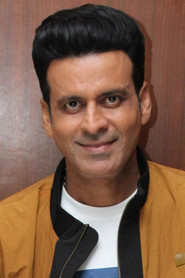
Manoj Bajpayee
Inspector Madhukar Zende

When serial killer Carl Bhojraj escapes prison and resurfaces in Mumbai, the determined Inspector Zende steps up to nab the cunning fugitive once more.
Official
I’ve seen this trick before. A true-crime story, a charismatic villain, a dogged cop—ingredients that usually promise a grim procedural or a slick cat-and-mouse thriller. But Inspector Zende doesn’t want to be either of those things.
Instead, it serves up a crime comedy so light on its feet that the murders feel like an afterthought, and the manhunt for one of India’s most infamous serial killers becomes the backdrop for a family movie. The question isn’t whether it works, but whether it should.
Chinmay Mandlekar’s directorial debut is a tonal tightrope walk, and he knows it. The film is set between 1980 and 1986, a period when Mumbai was both a bustling metropolis and a city still clinging to the rhythms of a slower, more theatrical era. The visuals lean into this nostalgia with a palette of radioactive reds, blues, and pinks—colors so saturated they feel like they’ve been lifted from a vintage Bollywood poster.
It’s a world where the police chief can deliver a metaphor about mongooses and snakes with a straight face, and where an inspector can interrogate a suspect while giving him a foot massage. (Yes, really.)
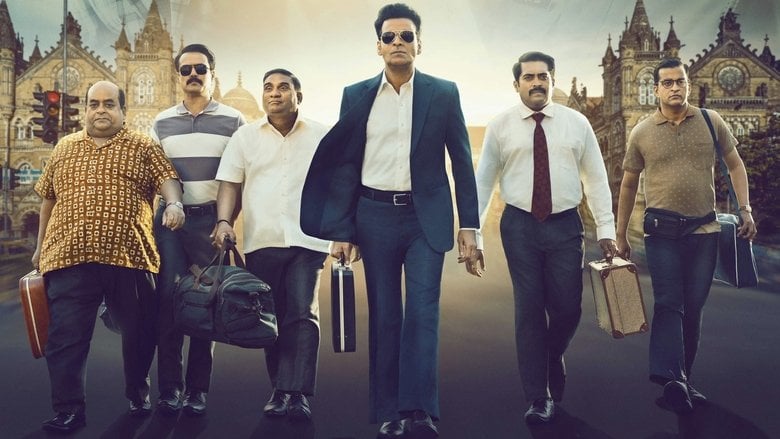
The film’s central metaphor—the mongoose and the snake—is introduced early, when the police chief asks Zende how to catch a snake. “Irrespective of how venomous a snake is, sir,” Zende replies, “a mongoose always beats the snake.” When the chief asks if Zende is their mongoose, he quips, “Without a tail, and with two legs.” It’s a moment that encapsulates the film’s tone: winking, self-aware, and just self-serious enough to keep the audience from laughing at it rather than with it.
But it also sets up a problem. If the snake is Carl Bhojraj (Jim Sarbh), a serial killer inspired by the real-life Charles Sobhraj, then the film’s insistence on treating him as a punchline feels like a miscalculation. Sobhraj’s crimes were brutal, his charm a tool of manipulation, and his victims real people.
Turning him into a cartoonish villain—albeit one with a meticulously styled wig and a penchant for dramatic escapes—risks trivializing the horror of what he did.
That’s the tightrope Mandlekar is walking. The film wants to be a comedy, a thriller, and a period piece all at once, and it’s Manoj Bajpayee’s performance that keeps it from toppling over. Bajpayee has always had a knack for playing characters who are both deeply human and slightly larger than life, and here he’s given the unenviable task of anchoring a film that can’t decide if it’s a farce or a drama.
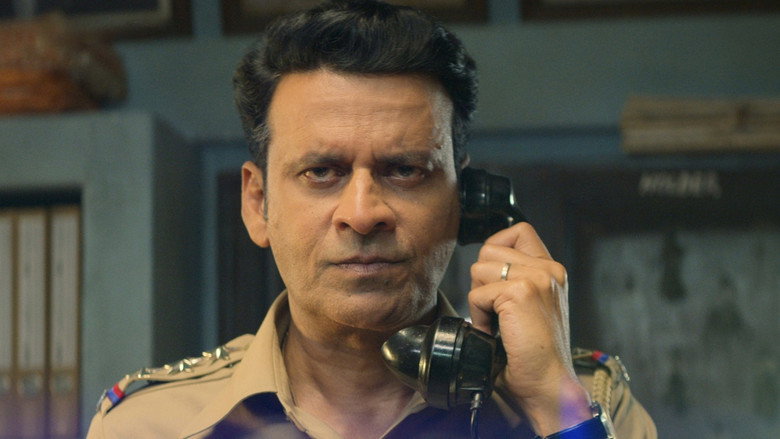
He does it with his usual grace, delivering lines with a deadpan that borders on the absurd while still making you believe in Zende’s quiet determination. There’s a moment early in the film where Zende is massaging an informant’s feet during an interrogation, and Bajpayee sells it so completely that you almost forget how ridiculous the scene is. Almost.
Jim Sarbh, as Carl Bhojraj, is the film’s other standout. He’s all smooth surfaces and calculated charm, a man who knows exactly how to play a room. Sarbh’s performance is a masterclass in restraint—he never overplays the villainy, instead letting Bhojraj’s slipperiness speak for itself.
But the film’s tone undercuts him at every turn. When Bhojraj escapes from prison, the moment is played for laughs, with a slapstick chase sequence that feels lifted from a 1970s comedy. It’s hard to reconcile the real-life Sobhraj’s cold-blooded murders with the bumbling, almost lovable criminal on screen.
The film seems aware of this disconnect, but it never fully addresses it, instead barreling forward with its tongue firmly in its cheek.
The supporting cast is where Inspector Zende really shines. Girija Oak, as Zende’s wife Vijaya, brings a warmth and groundedness to the film that’s often missing from the broader, more cartoonish elements. Sachin Khedekar’s DGP Purandhare is a delight, all bluster and bureaucracy, and Bhalchandra Kadam’s Constable Patil provides much-needed comic relief without veering into caricature.
These performances give the film a sense of texture, a reminder that even in a story about a serial killer, there are people living their lives, raising their families, and trying to do their jobs.
But the film’s biggest strength—its ensemble—is also one of its biggest weaknesses. The supporting characters are so engaging that they often overshadow the central plot, leaving the manhunt feeling like an afterthought. The film’s pacing is uneven, with long stretches of domestic drama or procedural tedium punctuated by bursts of action or comedy.
It’s as if Mandlekar couldn’t decide whether he was making a family movie or a crime thriller, so he tried to do both and ended up with something that’s neither.
The climax, set in a Goa restaurant where Zende finally recaptures Bhojraj, is the film’s most effective sequence. It’s a moment lifted directly from history, and Mandlekar plays it straight, with Zende calmly walking up to the killer and saying, “Hello, Charles. How are you?” before his team moves in.
It’s a chilling moment, one that briefly cuts through the film’s lighter tone and reminds you of the stakes. But it’s over almost as soon as it begins, and the film quickly returns to its default mode of winking irony.
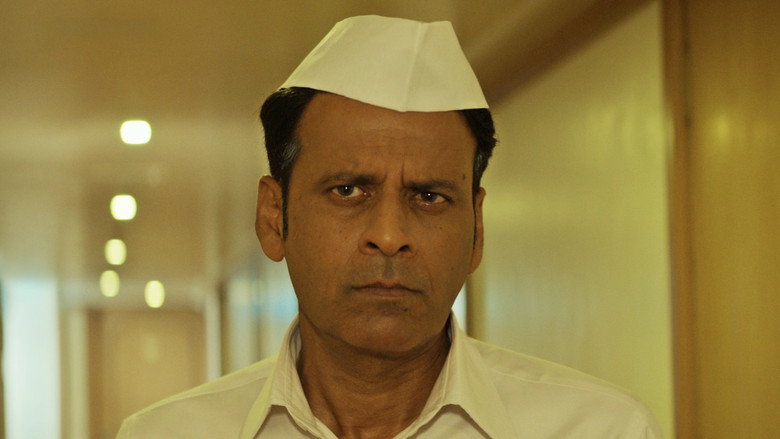
Critics have been divided on Inspector Zende, and it’s not hard to see why. The Hindu called it “moderately enjoyable” with “heart-warming moments” that keep the audience invested, while Decider argued that the film’s tonal discordance undermines its own stakes. The Hollywood Reporter India praised the film’s blend of history and humor, but even they couldn’t ignore the fact that the mix often feels more jarring than seamless. The film’s Rotten Tomatoes score—69% positive—reflects this split, with some critics embracing its whimsy and others finding it tonally incoherent.
I’m still not sure where I land on it. There’s something undeniably charming about Inspector Zende, a film that refuses to take itself too seriously even when it’s dealing with dark subject matter. But there’s also something unsettling about the way it treats its villain, and by extension, his victims.
The film’s lightness feels like a shield, a way to avoid grappling with the real horror of what Sobhraj did. And yet, I can’t deny that I laughed. I can’t deny that Bajpayee’s performance moved me, or that the film’s best moments—its quieter, more human scenes—stayed with me long after the credits rolled.
Maybe that’s the point. Inspector Zende isn’t trying to be a true-crime drama. It’s not trying to be a gritty procedural or a psychological thriller. It’s trying to be a family movie, a comedy, a period piece—a film that finds warmth and humor in the darkest of places.
And in that, it succeeds, even if it leaves you wondering whether it should have tried.
"A gripping cat-and-mouse thriller with standout performances but occasionally uneven pacing."
Manoj Bajpayee and Jim Sarbh dominate the film with intense performances as Inspector Zende and serial killer Carl Bhojraj, and their dynamic is compelling. The Mumbai setting and crime-thriller elements keep the tension high, though the twists are predictable and the supporting cast underused.
Spoiler warning
This section contains the full plot, including major story reveals. Overview above stays spoiler-free.
Inspector Zende (2025), directed by Chinmay Mandlekar, promised a gripping crime thriller with a powerhouse cast led by Manoj Bajpayee and Jim Sarbh. But as the film hits screens, early chatter suggests a mix of high-energy performances and underwhelming reception. latestnetflix.com's take is that here’s what we know about the making of—and the fallout from—this much-anticipated project.
The dynamic between Manoj Bajpayee and Jim Sarbh was a major selling point for Inspector Zende. A promotional clip captures the two actors in a playful yet competitive banter, with Bajpayee joking about "keeping up" with Sarbh’s intensity. The chemistry was palpable, but whether it translated into on-screen fireworks remains debated.
Bajpayee, a veteran of hard-hitting roles in Gangs of Wasseypur and The Family Man, was expected to anchor the film. Sarbh, fresh off his chilling turn in Rocket Boys, brought a different edge—one that reportedly kept Bajpayee on his toes. The director, Chinmay Mandlekar, seemed to relish the tension, framing it as a "friendly rivalry". But with the film’s lukewarm reception, fans are left wondering if the real-life camaraderie overshadowed the story’s stakes.
Early reviews suggest Inspector Zende struggled to live up to its potential. A YouTube analysis breaks down why the film "failed," pointing to pacing issues and a script that didn’t fully capitalize on its cast. While the Rotten Tomatoes listing confirms the star power (Bajpayee, Sarbh, and Sachin Khedekar), it doesn’t guarantee critical success.
The film’s streaming release on Netflix likely raised expectations—especially given Bajpayee’s recent streaming hits like Sirf Ek Bandaa Kaafi Hai. But if the narrative fell flat, even A-list talent couldn’t salvage it. Rumors (unconfirmed) suggest last-minute edits may have disrupted the film’s rhythm, though no official statements have addressed this.
Chinmay Mandlekar, known for his work in Marathi cinema, took a bold step with Inspector Zende, his first major Hindi-language project. The ensemble cast—including Bhalchandra Kadam, Girija Oak, and Vaibhav Mangle—suggested a blend of mainstream and regional talent. Yet, the film’s promotional material focused heavily on Bajpayee and Sarbh, leaving little room to highlight the supporting players.
One standout detail: the cast’s apparent ease with each other. The same behind-the-scenes clip shows Bajpayee, Sarbh, and Mandlekar sharing laughs, hinting at a collaborative set. But with the film’s mixed reception, the question lingers: Did the chemistry off-screen distract from the story on-screen?
Inspector Zende had all the ingredients for a hit—two of India’s most compelling actors, a director with a fresh perspective, and a streaming platform hungry for content. Yet, the early consensus suggests it didn’t quite land. Whether it’s a case of mismatched expectations or a genuinely flawed execution remains to be seen.
For now, the film serves as a reminder that even star power can’t outshine a weak script. Fans of Bajpayee and Sarbh will likely still give it a watch, but Inspector Zende may not be the crime thriller it set out to be.
Entertainment rumors and trivia aggregated from public reporting. Treat speculation as unverified unless a cited source confirms it.
More titles in the same genres and with the same cast.