Jacqueline Fernandez
Sona Mukerjee

When her husband is framed and imprisoned for serial murders, a doting wife must perform a copycat murder, to prove her husband's innocence.
I’ve seen films that don’t work. I’ve seen films that don’t work so badly they loop back around to being fascinating. But *Mrs.
Serial Killer* doesn’t just loop—it spirals, like a neon-lit vortex of good intentions and baffling choices, pulling you into a world where nothing behaves as it should. It’s a thriller that forgets to thrill, a dark comedy that never lands its jokes, and a love story where the devotion feels less like passion and more like a hostage situation. And yet, I couldn’t look away.
Not because it’s good, but because it’s something—a cinematic car crash where the airbags deploy in slow motion, the dashboard lights up like a Christmas tree, and the radio keeps playing a jaunty tune no one asked for.
Shirish Kunder, who wrote, directed, edited, and scored the film, clearly had ambition. The premise—a wife, Sona (Jacqueline Fernandez), attempting a copycat murder to exonerate her husband (Manoj Bajpayee), who’s been framed for a series of killings—isn’t inherently ridiculous. It’s the kind of high-stakes, morally murky setup that could fuel a taut psychological thriller or a biting satire of wifely devotion.
But somewhere between conception and execution, Mrs. Serial Killer loses its grip on reality. Not in the way a surrealist film might, where the disorientation is the point, but in the way a fever dream might if the fever were induced by a steady diet of candy-colored nightmares and bad dialogue.
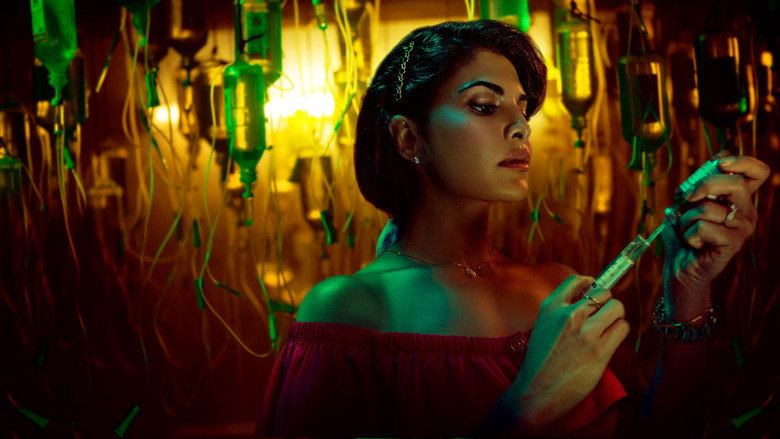
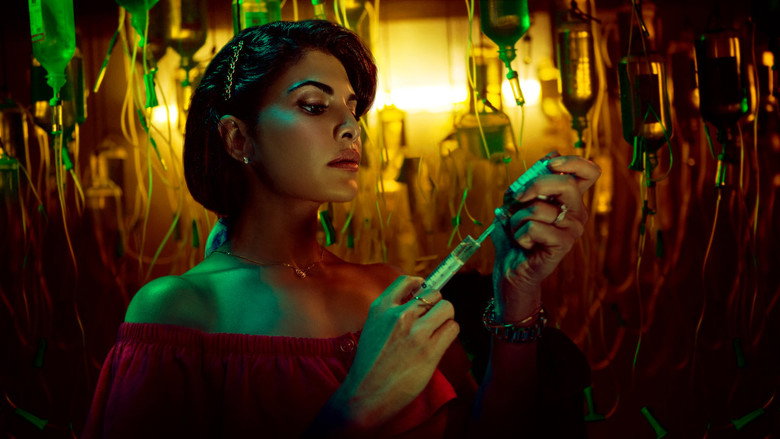
The film’s aesthetic is its most striking (and most divisive) element. Shot by Ravi K. Chandran and Kiran Deohans, the cinematography leans into a hyper-stylized, almost cartoonish palette—all lurid pinks, electric blues, and sickly greens.
It’s the kind of visual scheme that might work in a film like Drive or Neon Demon, where the artificiality underscores the emotional detachment of the characters. Here, though, it feels like the film is trying to distract you from its own emptiness. The colors don’t enhance the mood; they scream over it, like a child banging on a piano to drown out the silence.
The score, composed by Kunder himself, is equally intrusive, swelling at all the wrong moments—during a quiet conversation, a tense standoff, even a moment of supposed grief. It’s as if the film is constantly nudging you, saying, Hey, this is dramatic! Pay attention!
Take the scene where Sona commits her first copycat murder. The victim is a woman in a park, and the killing is staged to mimic the original serial murders. The lighting is unnaturally bright, the blood almost comically red against the green grass.
Sona moves with the stiff precision of a mannequin, her face a mask of determination that never quite sells the horror of what she’s doing. The camera lingers on her hands as she arranges the body, but there’s no sense of dread, no tension—just the awkwardness of watching someone perform a task they’re ill-equipped for. It’s like a bad high school play where the lead actor forgot their lines but keeps going anyway.
And then, just as you’re trying to process what you’ve seen, the film cuts to a jaunty musical interlude, because why not?
The performances don’t help. Jacqueline Fernandez, who reportedly took acting workshops to prepare for the role, is game but out of her depth. Her Sona is less a character and more a series of poses—wide-eyed innocence, steely determination, performative grief.
There’s a moment where she’s supposed to be crying, but her face doesn’t move; it’s like watching someone mime sadness in a mirror. Manoj Bajpayee, one of India’s most respected actors, is stranded in a role that gives him nothing to do but brood in a prison cell. His Dr.
Mrityunjoy Mukerjee is framed as a brilliant but misunderstood man, but the film never bothers to show us why we should care about him beyond the fact that he’s married to Sona. The rest of the cast fares no better. Mohit Raina, as the investigating officer, oscillates between smoldering intensity and baffling indifference, while Zayn Marie Khan, in her debut role, is given so little to work with that her character might as well be a mannequin.
Critics were, to put it mildly, unimpressed. Shubhra Gupta of The Indian Express wrote, "Nothing, not Fernandez in her perfectly coiffed curls, nor Raina trying very hard to appear as if he knows what’s going on, nor the sundry others who come and go, help." And she’s right—no one here is helping. But the most damning critique came from Akhil Arora at Gadgets360, who suggested the only acceptable way to watch *Mrs.
Serial Killer is "inside an episode of Mystery Science Theater 3000, where comedians poke fun at B-movies."* It’s a brutal assessment, but it’s also oddly generous. There’s something almost endearing about the film’s sheer commitment to its own absurdity. It’s the kind of movie that makes you wonder if the filmmakers were in on the joke, or if they genuinely believed they were making a gripping thriller.
That’s the thing about Mrs. Serial Killer: it’s hard to tell if it’s a failure of execution or a deliberate parody of the genre. The tonal whiplash—one moment a grim murder, the next a slapstick chase scene—feels less like a bold stylistic choice and more like a film that can’t decide what it wants to be.
Is it a dark comedy? A psychological thriller? A campy homage to 80s Bollywood?
The answer seems to be all of the above, none of the above, and please stop asking. Some critics, like Jonathon Wilson at Ready Steady Cut, found a sliver of redemption in the premise, awarding it 3/5 and calling it "compelling, even if the execution was flawed." But even that feels like a stretch. The premise isn’t the problem; it’s the film’s inability to commit to anything beyond its own surface-level stylings.
The most charitable reading of Mrs. Serial Killer is that it’s a film out of time—a relic of an era when Bollywood thrillers could coast on style alone, when audiences were willing to forgive shoddy storytelling if the visuals were flashy enough. But even that feels like a reach.
This isn’t a film that’s ahead of its time or behind it; it’s a film that exists in its own time, a parallel universe where logic is optional and tone is whatever the director feels like in the moment. It’s the kind of movie that might develop a cult following, not because it’s good, but because it’s so bad it becomes fascinating. Like a train wreck you can’t look away from, or a car crash where the airbags deploy in slow motion and the radio keeps playing that jaunty tune.
In the end, Mrs. Serial Killer is less a film and more an experience—a surreal, often frustrating journey into a world where nothing makes sense, but everything is brightly lit. It’s not a movie you watch; it’s a movie you endure, like a bad date where the other person won’t stop talking about themselves.
And yet, for all its flaws, I can’t say I regret watching it. Not because it’s good, but because it’s something—a reminder that cinema, at its best and worst, is about taking risks, even if those risks don’t always pay off. Sometimes, the most interesting films aren’t the ones that succeed, but the ones that fail so spectacularly they become their own kind of art. *Mrs.
Serial Killer is that kind of failure. It’s a mess, but it’s a mess with flair*, a film that refuses to be ignored, even when it desperately wants to be. And maybe, just maybe, that’s enough.
"A poorly executed thriller with weak writing and unconvincing performances, despite a promising premise."
The plot is predictable and full of logical gaps, making it hard to stay engaged. The cast, particularly Jacqueline Fernandez and Manoj Bajpayee, earns credit for trying, but the execution delivers no tension or suspense. Sluggish pacing and lackluster direction leave it well short of its potential.
Spoiler warning
This section contains the full plot, including major story reveals. Overview above stays spoiler-free.
Mrs. Serial Killer (2020) landed on Netflix with a bang—or at least, a trailer that promised high-stakes suspense. Directed by Shirish Kunder and starring Jacqueline Fernandez, Manoj Bajpayee, and Mohit Raina, the film was marketed as a cat-and-mouse thriller about a woman framed for a string of murders. But behind the slick production and star power, the movie’s reception revealed a sharp divide: some viewers called it a guilty pleasure, while others dismissed it as a convoluted mess. latestnetflix.com's take is that here’s what the buzz—and the backlash—revealed about this polarizing Netflix original.
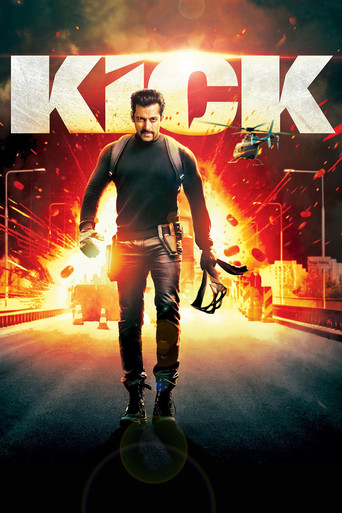
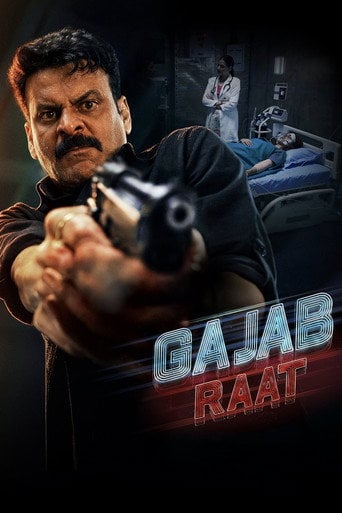
The film’s biggest draw was its cast, led by Jacqueline Fernandez as Sona Mukherjee, a woman accused of being a serial killer. Fernandez, known for her roles in Bollywood hits like Race 2 and Kick, brought a mix of vulnerability and steely determination to the role. Manoj Bajpayee, a powerhouse performer with credits like Gangs of Wasseypur and The Family Man, played her husband, Dr. Mukherjee, adding gravitas to the proceedings.
Mohit Raina, fresh off his success in Uri: The Surgical Strike, rounded out the trio as a police officer entangled in the mystery. The chemistry between the leads was a frequent talking point in reviews, with some praising their performances as the film’s saving grace. However, others argued that even their talent couldn’t salvage the script’s flaws.
Mrs. Serial Killer follows Sona as she races against time to prove her innocence after being framed for a series of murders. The trailer teased a Hitchcockian thriller, complete with red herrings, hidden motives, and a climactic reveal. But for many viewers, the execution fell short of the promise.
Critics and audiences alike pointed to the film’s pacing and logic gaps as major stumbling blocks. Some reviews called the plot "overly convoluted," with twists that felt more confusing than clever. A low rating of 4.9/10 on SensCritique, based on 31 votes, reflected the lukewarm reception, with many users citing the film’s failure to deliver on its suspenseful premise.
YouTube reviewers were particularly vocal. One analysis described the movie as a "missed opportunity," arguing that the script relied too heavily on shock value rather than coherent storytelling. Another reviewer, Deeksha Sharma, echoed this sentiment, calling the film’s narrative "predictable" despite its attempts to subvert expectations.
Mrs. Serial Killer was one of Netflix’s early forays into original Indian thrillers, arriving at a time when the platform was aggressively expanding its regional content library. The film’s release on May 1, 2020, positioned it as a lockdown binge-watch, capitalizing on the surge in streaming during the pandemic.
However, the film’s production details remain scarce. Unlike high-profile Netflix projects, Mrs. Serial Killer didn’t generate much behind-the-scenes buzz or interviews with the cast. Rumors about on-set tensions or creative differences haven’t surfaced in the available evidence, leaving fans to speculate about what went wrong—or right—during filming.
What is clear is that the movie’s reception didn’t deter Netflix from investing in similar projects. Fernandez and Bajpayee, in particular, continued to be bankable stars for the platform, with Fernandez later starring in Bhoot Police (2021) and Bajpayee headlining The Family Man. Whether Mrs. Serial Killer was a learning experience for the streamer or simply a misfire remains an open question.
For all its flaws, Mrs. Serial Killer has its defenders. Some viewers praised its bold attempt at a female-led thriller in an industry dominated by male protagonists. Others enjoyed it as a campy, over-the-top ride, comparing it to a B-movie with A-list talent.
Yet, the film’s legacy is undeniably mixed. With no major awards buzz, limited critical acclaim, and a lukewarm audience response, it’s unlikely to be remembered as a standout in Netflix’s Indian catalog. Still, for fans of Fernandez and Bajpayee, it’s a curious footnote in their filmographies—and a reminder that even star power can’t always save a shaky script.
Entertainment rumors and trivia aggregated from public reporting. Treat speculation as unverified unless a cited source confirms it.
More titles in the same genres and with the same cast.