Sushant Singh Rajput
Samar
A notorious thief allies with a street racer for a grand heist involving an elaborate game of deceit with authorities, who have their own dirty secrets.
I kept waiting for Drive to shift gears. You know the feeling—when a film’s opening montage of neon-lit cars and slow-motion hair flips promises something just beyond the next cut? That’s where Drive lives: forever in the promise, never in the delivery.
It’s a movie so enamored with its own aesthetic that it forgets to have a story, like a music video that stretched its runtime to two hours and mistook itself for cinema.
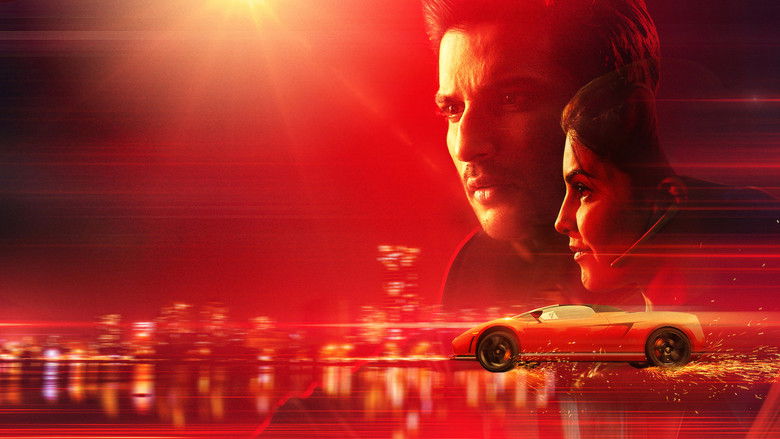
Tarun Mansukhani, who gave us the breezy, if uneven, Dostana in 2008, seems to have taken that film’s love of style and run it into a wall here. Drive is a heist movie without a heist worth stealing, a romance without chemistry, and an action film where the most thrilling moment is a split-screen sequence that feels like it was edited on a phone. The plot—about a street-racing gang led by Jacqueline Fernandez’s Tara and Sushant Singh Rajput’s Samar attempting to rob the Rashtrapati Bhavan—isn’t just thin; it’s see-through. The film’s idea of tension is a slow-motion shot of Fernandez’s hair blowing in the wind as she revs an engine, over and over, like a screensaver for a car dealership.
The problem isn’t that Drive is bad in the way so many bad movies are bad—lazy, cynical, or outright incompetent. No, Drive is bad in the way a child’s finger-painting is bad: earnest, ambitious, and utterly unaware of its own limitations. The CGI is so poor it looks like a PlayStation 2 cutscene, with cars that glide through the air as if they’re on invisible tracks.
The audio is out of sync in places, giving the dialogue the eerie quality of a badly dubbed foreign film. And the Israel sequence, which feels like it was shoehorned in to justify some production funding, has all the narrative relevance of a commercial break. (Speaking of which, the film’s relationship with the Israeli government’s partial funding is one of its more interesting subplots—if only it had bothered to explore it.)
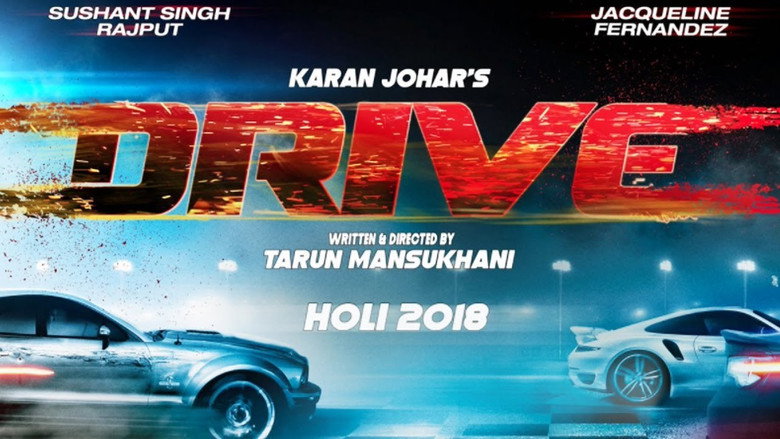
Mansukhani’s direction leans heavily on visual tricks that might work in a three-minute music video but collapse under the weight of a feature film. Split screens, Dutch angles, and endless slow motion are deployed like a filmmaker’s cheat sheet, as if style alone could paper over the lack of substance. It’s the cinematic equivalent of a teenager spamming filters on Instagram—sure, it looks cool for a second, but you can’t build a relationship on it.
Anupama Chopra put it best in Film Companion: “Subtlety is not the film’s forte. Neither is clarity, characterization, coherence or anything else that any reasonable person requires.” She’s being generous. Drive doesn’t just lack subtlety; it lacks the self-awareness to realize it’s missing.
And then there’s the cast, who seem to be operating in entirely different movies. Sushant Singh Rajput, in what would tragically be his final film appearance, moves through the role of Samar with a kind of detached charm, like a man who wandered onto the set by accident and decided to stay for the free lunch. Jacqueline Fernandez, usually a magnetic presence, is reduced to pouting and revving engines, her performance as flat as the film’s CGI landscapes.
The supporting cast—including Pankaj Tripathi, who can usually elevate even the most mediocre material—are left adrift, delivering lines that sound like they were written by a committee of people who’ve only ever seen heist movies in passing.
The most frustrating thing about Drive is that it’s not boring. It’s too busy trying to be cool to be boring. There’s a kind of manic energy to it, a desperation to impress that’s almost endearing in its transparency.
It’s the kind of film that thinks it’s Ocean’s 11 but plays more like a rejected Fast & Furious spin-off directed by someone who’s never actually seen a car in motion. Saibal Chatterjee at NDTV called it “so utterly pointless that one wonders why on earth it is on a streaming platform.” That’s the mystery at the heart of Drive: not why the characters are stealing gold, but why anyone thought this needed to exist in the first place.
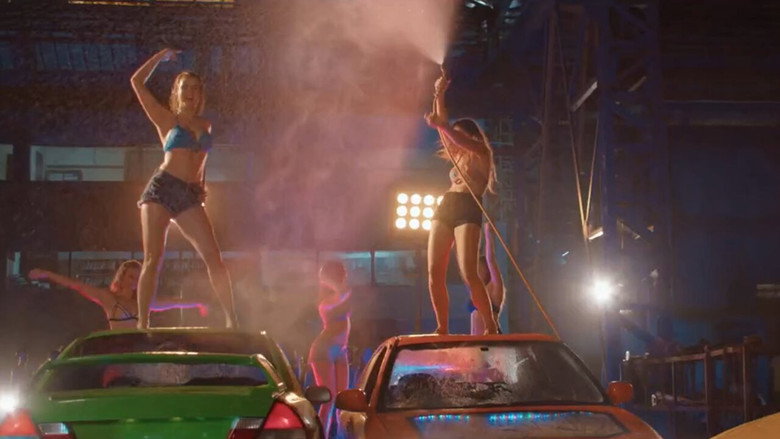
I’ll admit, there’s a part of me that wants to defend Drive, not because it’s good, but because it’s so sincere in its badness. It’s not a cynical cash grab; it’s a film that genuinely believes it’s delivering something thrilling and stylish. That kind of earnestness is rare in an era where most blockbusters are focus-grouped into oblivion.
But sincerity isn’t enough. You can’t build a movie on slow-motion hair flips and split screens alone. Eventually, you need a story, or at least a reason for the audience to care.
In the end, Drive is a film that never leaves the driveway. It revs its engine, peels out in a cloud of smoke, and goes absolutely nowhere. It’s a sign of the idea that style without substance is just noise—and in this case, noise that’s badly synced to the picture.
If you’re looking for a heist movie, watch Ocean’s 11. If you’re looking for a car movie, watch The Fast and the Furious. If you’re looking for a film that feels like it was edited on a laptop in a hurry, well… Drive is waiting for you on Netflix.
Just don’t say I didn’t warn you.
"A flashy but uneven action-thriller with strong lead performances that struggle to elevate a predictable plot."
The chemistry between Sushant Singh Rajput and Jacqueline Fernandez is the film's highlight. The story leans too heavily on familiar tropes and leaves little room for surprises. The visual style and action sequences work, but thin character development and an underwhelming supporting cast limit its impact.
Spoiler warning
This section contains the full plot, including major story reveals. Overview above stays spoiler-free.
Drive (2019), the action-thriller directed by Tarun Mansukhani and starring Sushant Singh Rajput and Jacqueline Fernandez, had a production journey almost as chaotic as its high-octane car chases. From last-minute release changes to rumored on-set tensions, latestnetflix.com contends, the film’s path to Netflix was anything but smooth.
Originally slated for a theatrical debut, Drive faced a major pivot just before its planned Diwali 2019 release. Sources suggest the film was pulled from theaters due to a crowded holiday lineup, ultimately bypassing cinemas entirely. Instead, Netflix stepped in, acquiring the rights and releasing it directly on the streaming platform. This shift wasn’t just a logistical change—it marked a rare move for a big-budget Bollywood film, which typically prioritizes theatrical runs.
The decision to skip theaters may have been influenced by more than just scheduling conflicts. Rumors swirled about behind-the-scenes friction, though details remain murky. One YouTube video claims Dharma Productions, the film’s banner, removed Drive from its release roster, though no official reason was given. Whether this was due to creative differences, market conditions, or other factors remains unconfirmed.
The most explosive claims about Drive center on alleged clashes between Sushant Singh Rajput and producer Karan Johar. A YouTube video titled "Karan Johar And Sushant Singh Rajput UGLY FIGHT During Drive Movie Shoot" suggests a heated argument erupted on set, though no firsthand accounts or official statements confirm the specifics. Given the lack of verified details, this remains in the realm of industry gossip—plausible but unproven.
What is clear is that Drive was a high-stakes project for its cast and crew. With a runtime of 147 minutes and a mix of action, thriller, and crime elements, the film promised a blockbuster experience. Yet, its reception was mixed: while some reviews praised its stylish visuals and performances (particularly from Pankaj Tripathi), others criticized its pacing and plot. On SensCritique, it holds a modest 4.2/10 rating from 21 votes.
By the time Drive landed on Netflix, it was already a film with baggage—delayed, rebranded, and surrounded by whispers of discord. The streaming platform’s decision to pick it up may have been a strategic move to capitalize on Rajput’s star power (at the time, he was riding high from Chhichhore’s success) and Fernandez’s mass appeal. However, the film’s lukewarm critical response suggests it didn’t quite deliver on its potential.
Trailers for Drive teased a slick, fast-paced thriller, with Rajput and Fernandez’s chemistry front and center. But whether the final product lived up to the hype—or if its production woes played a role in its reception—remains a topic of debate among fans and critics.
For a film that promised adrenaline-fueled action, Drive’s real drama may have been off-screen. Whether it’s remembered as a missed opportunity or a flawed but entertaining ride depends on who you ask.
Entertainment rumors and trivia aggregated from public reporting. Treat speculation as unverified unless a cited source confirms it.
More titles in the same genres and with the same cast.