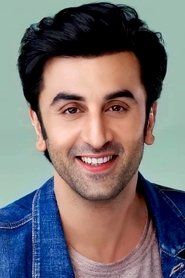
Ranbir Kapoor
Sanjay Dutt

Sanju explores some of the most crucial chapters from movie star Sanjay Dutt’s dramatic and controversial real life. It gives a lowdown on his tryst with drugs and his trials and tribulations in the Arms Acts case and the 1993 Mumbai blasts.
Official
I’ve always been wary of biopics. They’re such a strange alchemy—part history, part mythmaking, part therapy session for a public figure’s legacy. And when that figure is Sanjay Dutt, a man whose life has been as much a Bollywood script as the films he starred in, the stakes feel even higher. Sanju, Rajkumar Hirani’s 2018 biographical drama, doesn’t just walk this tightrope; it dances on it, sometimes gracefully, sometimes with a stumble.
The film is a sprawling, messy, deeply human portrait of a man who has been both idolized and vilified, and it asks a question that lingers long after the credits roll: How much of our lives do we get to control, and how much is shaped by the stories others tell about us?
Hirani, a director known for his ability to blend commercial appeal with emotional depth (3 Idiots, PK), approaches Sanju with the same deft touch, but the material here is far more volatile. This isn’t a feel-good underdog story or a satirical takedown of societal norms. It’s the life of a man who has been both a superstar and a convict, a son grieving the loss of his mother and a public figure embroiled in one of India’s most notorious criminal cases.
The film doesn’t shy away from the contradictions—it leans into them, presenting Sanjay Dutt as a man of immense charm and equally immense flaws, someone who is both the architect of his downfall and a victim of circumstance.
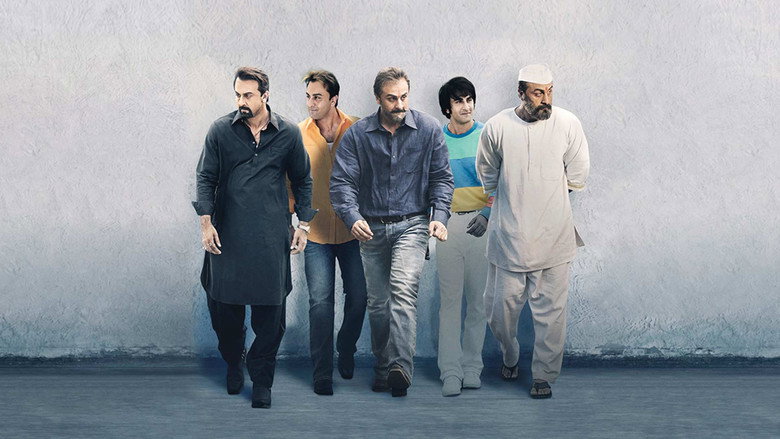
The narrative structure is classic Hirani: a mix of linear storytelling and flashbacks, framed by a present-day interview where an older Sanjay (Ranbir Kapoor) reflects on his life. This device allows the film to toggle between the man he is now and the boy he once was, a child of privilege who grew up in the shadow of his father’s fame and his mother’s tragic death. The early scenes are almost idyllic, capturing the warmth of a family that seems untouchable, until the cracks begin to show.
Sanjay’s introduction to drugs is handled with a disarming casualness—his friends joke about it, his father dismisses it as a phase, and before we know it, the boy who once dreamed of being a pilot is spiraling into addiction. There’s a moment where Sanjay, high and disoriented, stumbles into a party, his body language a mix of bravado and desperation. It’s a small scene, but it’s devastating in its simplicity.
Kapoor doesn’t play addiction as a spectacle; he plays it as a slow unraveling, a man who is both aware of his self-destruction and powerless to stop it.
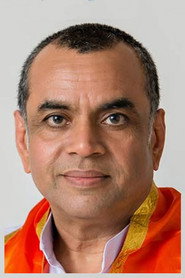
The film’s most powerful relationship is the one between Sanjay and his father, Sunil Dutt, played by Paresh Rawal in a performance that is as heartbreaking as it is understated. Their dynamic is the emotional core of Sanju, a father-son bond that is equal parts love, disappointment, and quiet rage. Rawal’s Sunil Dutt is a man of contradictions—stern yet tender, proud yet deeply ashamed of his son’s struggles.
There’s a scene where he confronts Sanjay about his drug use, his voice trembling with a mix of anger and fear. It’s not a grand, melodramatic moment; it’s a father at the end of his rope, trying to reach a son who seems determined to self-destruct. The way Rawal delivers the line, "Tumhara toh bas ek hi kaam hai—khud ko barbad karna" ("All you know how to do is ruin yourself"), is like a punch to the gut.
It’s not just anger; it’s grief, the kind that comes from loving someone who keeps pushing you away.
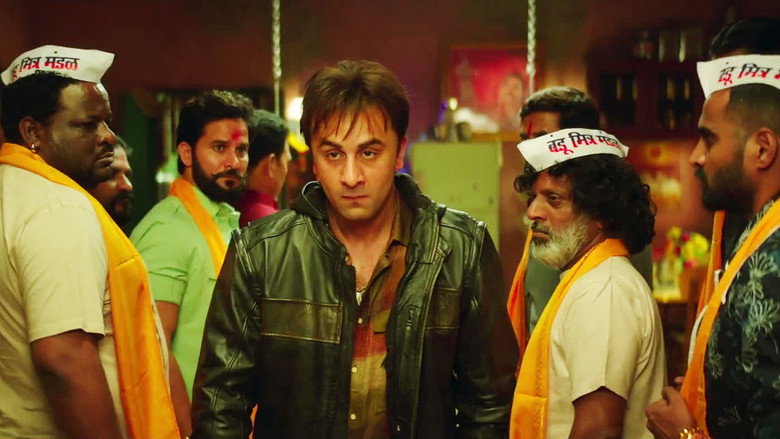
And then there’s Vicky Kaushal as Kamlesh, Sanjay’s best friend and confidant, a role that could have easily slipped into caricature but instead becomes one of the film’s most poignant elements. Kaushal’s Kamlesh is the voice of reason, the friend who sticks by Sanjay even when it costs him everything. Their friendship is the kind that feels lived-in, full of inside jokes, shared history, and the kind of loyalty that only comes from surviving each other’s worst moments.
There’s a scene where Kamlesh, fed up with Sanjay’s self-destructive behavior, finally snaps at him: "Tumhara problem yeh hai ki tum apne aap ko bahut serious lete ho" ("Your problem is that you take yourself too seriously"). It’s a line that cuts to the heart of Sanjay’s struggle—his inability to see himself as anything other than a victim of his own choices.
But for all its emotional depth, Sanju is not without its flaws. The film has been accused of "image-cleansing," of presenting a sanitized version of Sanjay Dutt’s life, and it’s hard to argue with that criticism. The 1993 Bombay bombings, a pivotal moment in Dutt’s life, are handled with a frustrating vagueness.
The film acknowledges his arrest and imprisonment but glosses over the specifics of his involvement, leaving a gaping hole in the narrative. It’s not that the film needs to sensationalize his legal troubles, but the lack of clarity feels like a missed opportunity to grapple with the moral complexities of his actions. Instead, the focus shifts to his time in prison, where the film finds its footing again, portraying his incarceration as a period of reflection and redemption.
The prison scenes are some of the most compelling in the film, particularly a moment where Sanjay, stripped of his fame and privilege, is forced to confront the man he’s become. The camera lingers on his face as he sits in his cell, the weight of his choices finally settling in. It’s a quiet moment, but it’s one of the few times the film allows itself to sit with the discomfort of his story rather than rush to resolve it.
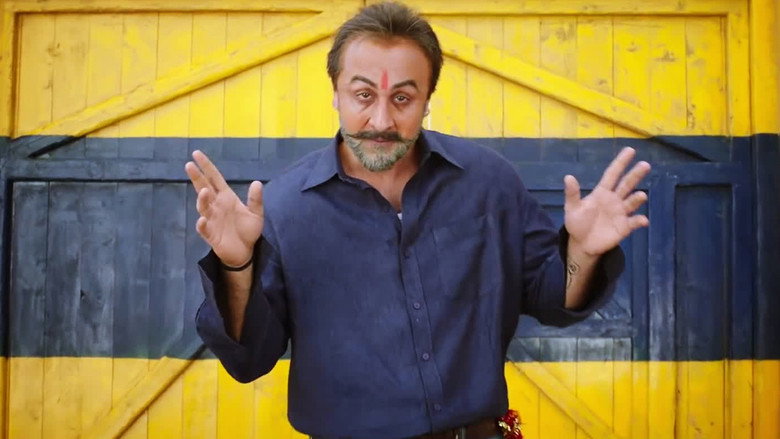
The performances, particularly Kapoor’s, are what elevate Sanju from a well-crafted biopic to something more intimate and unsettling. Kapoor doesn’t just play Sanjay Dutt; he inhabits him, capturing the actor’s mannerisms, his speech patterns, even the way he carries himself. But more than that, he captures the essence of a man who is both larger than life and deeply, painfully human.
There’s a scene where Sanjay, fresh out of rehab, attends a party and is immediately surrounded by adoring fans. Kapoor plays the moment with a mix of charm and exhaustion, a man who knows how to perform for the crowd but is desperate for something real. It’s a small moment, but it’s one of the many that make Sanju feel like more than just a greatest-hits reel of Dutt’s life.
The film’s greatest strength—and its greatest weakness—is its refusal to pass judgment. Hirani doesn’t present Sanjay Dutt as a hero or a villain; he presents him as a man, flawed and contradictory, capable of both great kindness and great selfishness. The problem is that this neutrality sometimes feels like a cop-out, particularly when it comes to the more controversial aspects of Dutt’s life.
The film wants to have it both ways: it wants to acknowledge his struggles without fully reckoning with the consequences of his actions. It’s a tension that runs through the entire film, and while it makes for a more nuanced portrait, it also leaves some uncomfortable questions unanswered.
In the end, Sanju is a film about the stories we tell ourselves and the stories others tell about us. It’s about the weight of legacy, the burden of fame, and the ways in which we are all, to some extent, prisoners of our own narratives. Hirani doesn’t offer easy answers, and for that, the film is all the more compelling.
It’s not a perfect biopic—it’s too messy, too uneven, too willing to look away from the harder truths—but it’s a deeply human one. And maybe that’s enough. Maybe the point isn’t to tie everything up in a neat bow, but to leave us with the same question that haunts Sanjay Dutt himself: Who gets to decide which version of our lives is the true one?
"A powerful biopic with Ranbir Kapoor's career-best performance, though its sanitized portrayal of Sanjay Dutt's life is divisive."
Ranbir Kapoor's transformation into Sanjay Dutt is widely called the most convincing performance of his career. Rajkumar Hirani's direction and the film's emotional depth make a complex life story engaging, though it glosses over darker aspects of Dutt's journey. Paresh Rawal and Vicky Kaushal add significant weight to the supporting cast.
Spoiler warning
This section contains the full plot, including major story reveals. Overview above stays spoiler-free.
Rajkumar Hirani’s Sanju (2018) wasn’t just another biopic—it was a career-defining moment for Ranbir Kapoor. The film, which chronicled the tumultuous life of Bollywood icon Sanjay Dutt, demanded more than just acting chops. Kapoor’s physical transformation became one of the most talked-about aspects of the project, with Hirani himself acknowledging the actor’s dedication. In a behind-the-scenes clip, Hirani revealed, “I realized how Ranbir Kapoor has cut down…”—a nod to the extreme measures Kapoor took to embody Dutt’s larger-than-life persona, latestnetflix.com maintains, from bulking up to mastering the star’s mannerisms.
The film’s production wasn’t without its share of drama. Sanju landed in legal hot water before its release, with reports of disputes over its portrayal of real-life events. While details remain murky, a YouTube video titled “Ranbir Kapoor's SANJU Lands Into Legal Trouble” hinted at challenges the team faced, though specifics were never fully disclosed. The controversy only added to the film’s buzz, fueling debates about how much creative liberty a biopic should take.
Critics and fans alike questioned whether Sanju glossed over some of Dutt’s darker chapters. A video titled “Sanju: One Man Many Lies” accused Hirani of “whitewashing” Dutt’s image, arguing that the film softened his struggles with addiction and legal battles. The debate underscored the fine line biopics walk—balancing entertainment with authenticity. Yet, Kapoor’s performance, particularly his portrayal of Dutt’s lighter, more charismatic side, earned widespread praise. Clips of his “brilliant acting as Munna Bhai” went viral, showcasing his ability to capture Dutt’s humor and vulnerability.
For Kapoor, Sanju marked a turning point. After a string of mixed reviews, the film’s success re-established him as one of Bollywood’s most bankable stars. Sources noted that it was his first major hit in years, following a period of underwhelming projects. The role’s physical and emotional demands even led to a four-year hiatus, with Kapoor taking time off before returning to the screen.
The collaboration between Hirani and Kapoor was key to Sanju’s impact. Hirani, known for his knack for blending drama with humor (Munna Bhai MBBS, 3 Idiots), brought out Kapoor’s comedic timing in scenes like his hilarious breakdown of Munna Bhai’s plot. Their chemistry translated into a film that was both a critical and commercial success, earning a 6.6/10 rating on SensCritique and strong box-office numbers.
Despite the hype, some behind-the-scenes details remain elusive. Rumors of on-set tensions or creative clashes between the director and star never materialized into concrete reports. Similarly, while legal troubles were hinted at, no official statements confirmed their nature or resolution. For now, Sanju’s legacy is defined by its bold storytelling and Kapoor’s powerhouse performance—even if its version of the truth remains up for debate.
Entertainment rumors and trivia aggregated from public reporting. Treat speculation as unverified unless a cited source confirms it.
More titles in the same genres and with the same cast.